Stefan Wolff – författare
310 kr
Läs direkt efter köp
696 kr
Läs direkt efter köp
1 581 kr
Skickas inom 5-8 vardagar
696 kr
Läs direkt efter köp
1 091 kr
Läs direkt efter köp
695 kr
Skickas inom 10-15 vardagar
716 kr
Skickas inom 10-15 vardagar
709 kr
Skickas inom 10-15 vardagar
2 113 kr
Skickas inom 10-15 vardagar
2 184 kr
Skickas inom 10-15 vardagar
2 394 kr
Skickas inom 10-15 vardagar
2 467 kr
Skickas inom 10-15 vardagar
695 kr
Skickas inom 10-15 vardagar
695 kr
Skickas inom 10-15 vardagar
695 kr
Skickas inom 10-15 vardagar
2 183 kr
Skickas inom 10-15 vardagar
639 kr
Skickas inom 10-15 vardagar
2 648 kr
Skickas inom 10-15 vardagar
794 kr
Skickas inom 10-15 vardagar
1 341 kr
Skickas inom 10-15 vardagar
415 kr
Läs direkt efter köp
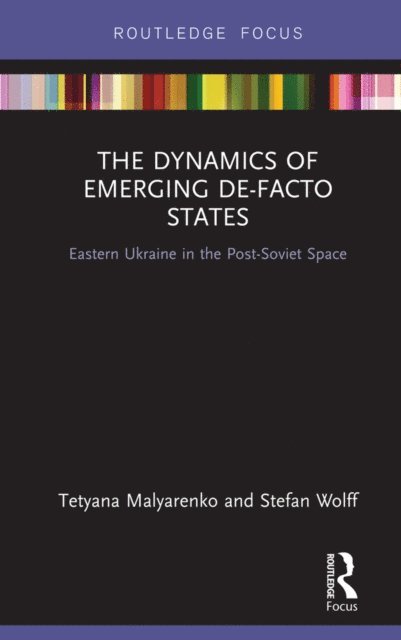
What are the causes and consequences of the crisis in Ukraine, and what has been the nature of local, national, and external actors’ involvement in it? These are the questions that the authors examine in this comprehensive analysis of the situation in Ukraine.
The crisis evolved from peaceful protests to full-scale military conflict and to an unstable ceasefire frequently interrupted by, at times, intense clashes between government forces and separatist rebels. Tracing the emergence of two new de-facto state entities in the post-Soviet space—the self-declared Donetsk and Luhansk People’s Republics—from the chaos of the early days after Russia’s annexation of Crimea in Spring 2014 to the second Minsk Agreement in February 2015, and focusing on the actions of the immediate conflict parties and their external backers, the authors investigate the feasibility and viability of several prominent ‘scenarios’ for a possible future settlement of the conflict.
As an in-depth case study of the complex dynamics of the conflict at local, national, regional, and global levels of analysis, the book complements and advances existing scholarship on civil war and international crisis management and also provides insights for the policy community and the wider interested public.
415 kr
Läs direkt efter köp
What are the causes and consequences of the crisis in Ukraine, and what has been the nature of local, national, and external actors’ involvement in it? These are the questions that the authors examine in this comprehensive analysis of the situation in Ukraine.
The crisis evolved from peaceful protests to full-scale military conflict and to an unstable ceasefire frequently interrupted by, at times, intense clashes between government forces and separatist rebels. Tracing the emergence of two new de-facto state entities in the post-Soviet space—the self-declared Donetsk and Luhansk People’s Republics—from the chaos of the early days after Russia’s annexation of Crimea in Spring 2014 to the second Minsk Agreement in February 2015, and focusing on the actions of the immediate conflict parties and their external backers, the authors investigate the feasibility and viability of several prominent ‘scenarios’ for a possible future settlement of the conflict.
As an in-depth case study of the complex dynamics of the conflict at local, national, regional, and global levels of analysis, the book complements and advances existing scholarship on civil war and international crisis management and also provides insights for the policy community and the wider interested public.
885 kr
Skickas inom 5-8 vardagar
366 kr
Skickas inom 5-8 vardagar
358 kr
Skickas inom 10-15 vardagar
615 kr
Skickas inom 10-15 vardagar
758 kr
Läs direkt efter köp
758 kr
Läs direkt efter köp
688 kr
Läs direkt efter köp
This volume brings together expert case studies on a range of experiences of third-party interventions in civil wars. The chapters consider the role of a variety of organisations, including the United Nations, NATO, the European Union, the Shanghai Cooperation Organisation, the Organisation of the Islamic Conference, the African Union, and the Organization of American States.
Each case study features a presentation and analysis of empirical data in two dimensions: the organisation’s general capabilities to carry out intervention in civil wars and, specific to one particular intervention, the conflict context in which it happened. This serves two purposes. First, to offer insights into the dynamics of each individual case and helping us understand the specific outcome of an intervention effort, i.e., why did a mission (partially) succeed or fail. Second, it enables us to make real comparisons between the cases and draw policy-relevant conclusions about the conditions under which military, civilian and hybrid intervention missions are likely to succeed.
This book was originally published as a special issue of Civil Wars.
682 kr
Läs direkt efter köp
This volume brings together expert case studies on a range of experiences of third-party interventions in civil wars. The chapters consider the role of a variety of organisations, including the United Nations, NATO, the European Union, the Shanghai Cooperation Organisation, the Organisation of the Islamic Conference, the African Union, and the Organization of American States.
Each case study features a presentation and analysis of empirical data in two dimensions: the organisation’s general capabilities to carry out intervention in civil wars and, specific to one particular intervention, the conflict context in which it happened. This serves two purposes. First, to offer insights into the dynamics of each individual case and helping us understand the specific outcome of an intervention effort, i.e., why did a mission (partially) succeed or fail. Second, it enables us to make real comparisons between the cases and draw policy-relevant conclusions about the conditions under which military, civilian and hybrid intervention missions are likely to succeed.
This book was originally published as a special issue of Civil Wars.