Florian Bieber – författare
2 183 kr
Skickas inom 10-15 vardagar
2 394 kr
Skickas inom 10-15 vardagar
695 kr
Skickas inom 10-15 vardagar
2 183 kr
Skickas inom 10-15 vardagar
757 kr
Läs direkt efter köp
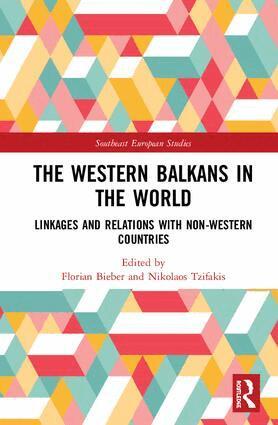
This book provides a detailed understanding of how different types of engagements impact upon the reform and EU integration of the Western Balkan region. It examines the influence of Russia, China, Turkey and the UAE in the region and analyses the range of existing links.
Contributors offer an academic and multifaceted perspective of the role of external and non-Western actors in the region that goes beyond, on the one hand, the tendency of some Western decision makers to perceive all engagement by third powers as a sinister threat and, on the other, the view of regional governments of all external involvement as a boon coming at a time of Western neglect and reduced foreign investments. By looking at the importance of Russia, Turkey, China and the UAE in the Western Balkans, the book sheds light on one key arena of global competition, offers new insights on the strengths and weaknesses of Euro–Atlantic integration and advances our knowledge of foreign policy and its economic, social and security dimensions for small and medium-sized countries.
It will be of interest to academics, postgraduate and research students, and think-tankers with research interest in IR and Southeast European Studies. European decision makers will also gain an insight into the extent of non-Western influence in the region.
757 kr
Läs direkt efter köp
This book provides a detailed understanding of how different types of engagements impact upon the reform and EU integration of the Western Balkan region. It examines the influence of Russia, China, Turkey and the UAE in the region and analyses the range of existing links.
Contributors offer an academic and multifaceted perspective of the role of external and non-Western actors in the region that goes beyond, on the one hand, the tendency of some Western decision makers to perceive all engagement by third powers as a sinister threat and, on the other, the view of regional governments of all external involvement as a boon coming at a time of Western neglect and reduced foreign investments. By looking at the importance of Russia, Turkey, China and the UAE in the Western Balkans, the book sheds light on one key arena of global competition, offers new insights on the strengths and weaknesses of Euro–Atlantic integration and advances our knowledge of foreign policy and its economic, social and security dimensions for small and medium-sized countries.
It will be of interest to academics, postgraduate and research students, and think-tankers with research interest in IR and Southeast European Studies. European decision makers will also gain an insight into the extent of non-Western influence in the region.
2 465 kr
Skickas inom 10-15 vardagar
716 kr
Skickas inom 10-15 vardagar
658 kr
Skickas inom 10-15 vardagar
639 kr
Skickas inom 10-15 vardagar
795 kr
Läs direkt efter köp
This volume examines how European institutions, the European Union in particular through its policy of conditionality, have shaped the post-conflict reconstruction of the Western Balkans. From state-building to democratization and environmental policies, this book explores whether and in what ways the EU has been successful in consolidating states and democracy in the Balkans. In addition to requiring countries to be ready to join the European Union, the EU has also set new conditions in an effort to become the prime international organization involved in stabilizing the Western Balkans after the wars of the 1990s. Its record has been mixed: the conditions of the EU have often been haphazard and were frequently not followed through. In addition, enlargement towards the Western Balkans has been slow and marred by open questions over the stability of some countries in the region.
This volume assesses the EU''s struggle to transform the societies through conditionality and whether the offer of EU membership is enough to build stable democracies.
This book was published as a special issue of Europe-Asia Studies.
824 kr
Läs direkt efter köp
This volume examines how European institutions, the European Union in particular through its policy of conditionality, have shaped the post-conflict reconstruction of the Western Balkans. From state-building to democratization and environmental policies, this book explores whether and in what ways the EU has been successful in consolidating states and democracy in the Balkans. In addition to requiring countries to be ready to join the European Union, the EU has also set new conditions in an effort to become the prime international organization involved in stabilizing the Western Balkans after the wars of the 1990s. Its record has been mixed: the conditions of the EU have often been haphazard and were frequently not followed through. In addition, enlargement towards the Western Balkans has been slow and marred by open questions over the stability of some countries in the region.
This volume assesses the EU''s struggle to transform the societies through conditionality and whether the offer of EU membership is enough to build stable democracies.
This book was published as a special issue of Europe-Asia Studies.
849 kr
Läs direkt efter köp
849 kr
Läs direkt efter köp
2 183 kr
Skickas inom 10-15 vardagar
695 kr
Skickas inom 10-15 vardagar
774 kr
Läs direkt efter köp
774 kr
Läs direkt efter köp
824 kr
Läs direkt efter köp
This volume conceptualizes the dynamics underlying electoral politics in ethnically divided societies, providing empirical evidence and analysis of recent elections in such societies on a comparative and single-case basis, including case studies of Macedonia, Slovakia, Belgium, Malaysia, Singapore, Rwanda, Guyana and Trinidad and Tobago.
Free and fair elections are one of the most fundamental characteristics of democratic systems. In ethnically divided societies, elections and the rules and regulations on which they are based assume special importance because they provide important levers to guarantee, or prevent, adequate representation of different communal groups in the key institutions of the state. Hence not only are elections contested vigorously, but also the electoral systems according to which they are conducted.
This book was previously published as a special issue of Ethnopolitics.
824 kr
Läs direkt efter köp
This volume conceptualizes the dynamics underlying electoral politics in ethnically divided societies, providing empirical evidence and analysis of recent elections in such societies on a comparative and single-case basis, including case studies of Macedonia, Slovakia, Belgium, Malaysia, Singapore, Rwanda, Guyana and Trinidad and Tobago.
Free and fair elections are one of the most fundamental characteristics of democratic systems. In ethnically divided societies, elections and the rules and regulations on which they are based assume special importance because they provide important levers to guarantee, or prevent, adequate representation of different communal groups in the key institutions of the state. Hence not only are elections contested vigorously, but also the electoral systems according to which they are conducted.
This book was previously published as a special issue of Ethnopolitics.
346 kr
Läs direkt efter köp
359 kr
Läs direkt efter köp
1 074 kr
Skickas inom 10-15 vardagar
358 kr
Skickas inom 5-8 vardagar
316 kr
Skickas inom 5-8 vardagar
932 kr
Skickas inom 10-15 vardagar
343 kr
Läs direkt efter köp
343 kr
Läs direkt efter köp
757 kr
Läs direkt efter köp
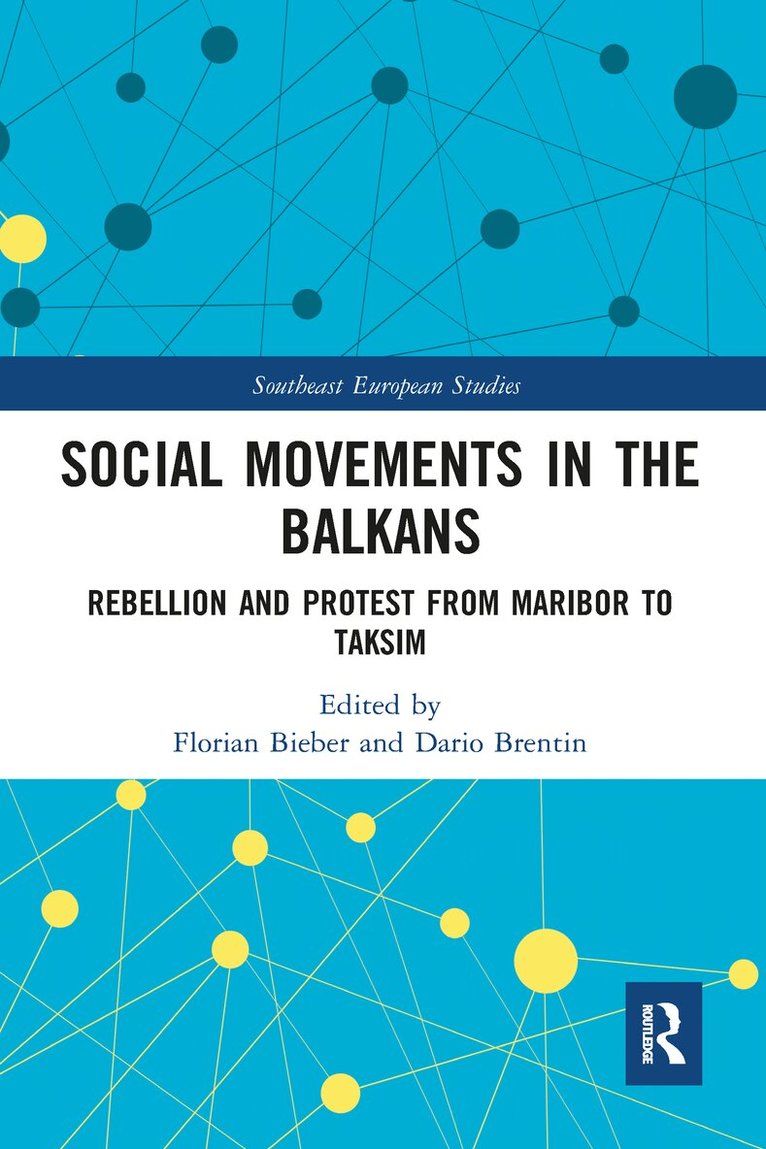
From Slovenia to Turkey, social movements and protests have shaken the political systems of Southeast Europe. Confronting issues such as austerity, the provision and privatisation of welfare, public utilities and public space, corruption, bureaucratic inefficiency, environmental concerns and authoritarian tendencies, these revolts have also served as conduits for broader social and political discontent. While they have contributed to the defeat of unpopular policies and practices and the fall of governments, perhaps their most significant impact has been in creating dynamic political and social actors and contributing to the realignment of the political space.
This volume sheds new light on the wave of protests and emerging social movements. Placing individual protests in a wider context, it highlights connections between different social movements and discusses parallels with similar movements from recent history. The contributors include both well-established scholars and up-and-coming researchers who engage with both activist and academic perspectives to identify the similar and varying dynamics of both the protests and the governments’ responses to them.
Building upon studies of social movements, the book will be of interest to scholars examining political dissent, protests and mechanisms of mobilisation in the region.
757 kr
Läs direkt efter köp
From Slovenia to Turkey, social movements and protests have shaken the political systems of Southeast Europe. Confronting issues such as austerity, the provision and privatisation of welfare, public utilities and public space, corruption, bureaucratic inefficiency, environmental concerns and authoritarian tendencies, these revolts have also served as conduits for broader social and political discontent. While they have contributed to the defeat of unpopular policies and practices and the fall of governments, perhaps their most significant impact has been in creating dynamic political and social actors and contributing to the realignment of the political space.
This volume sheds new light on the wave of protests and emerging social movements. Placing individual protests in a wider context, it highlights connections between different social movements and discusses parallels with similar movements from recent history. The contributors include both well-established scholars and up-and-coming researchers who engage with both activist and academic perspectives to identify the similar and varying dynamics of both the protests and the governments’ responses to them.
Building upon studies of social movements, the book will be of interest to scholars examining political dissent, protests and mechanisms of mobilisation in the region.