Stefani Engelstein - Böcker
Visar alla böcker från författaren Stefani Engelstein. Handla med fri frakt och snabb leverans.
6 produkter
6 produkter
1 275 kr
Skickas inom 7-10 vardagar
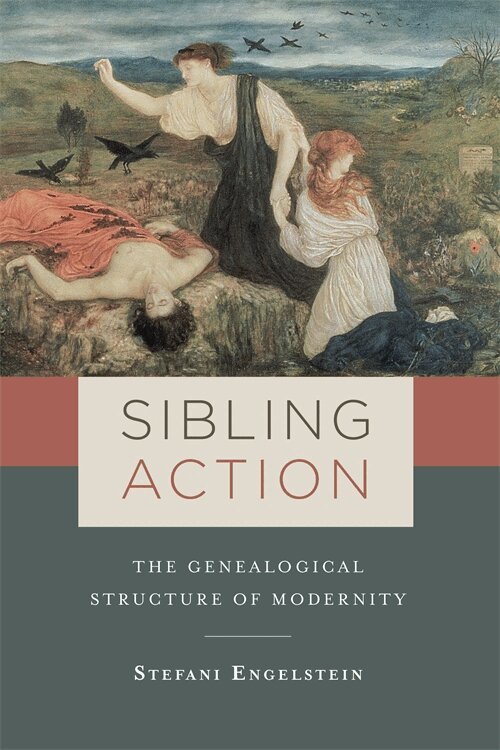
Beginning in the late eighteenth century, Europeans embarked on a new way of classifying the world, devising genealogies that determined degrees of relatedness by tracing heritage through common ancestry. This methodology organized historical systems into family trees, transforming the closest contemporaneous terms on trees of languages, religions, races, nations, species, or individuals into siblings. Encompassing political fraternity, sister languages, racial discourse on brotherhood, evolutionary sibling species, and intense, often incestuously inclined brother-sister bonds in literature, siblinghood stands out as a ubiquitous-yet unacknowledged-conceptual touchstone across the European long nineteenth century. In all such systems the sibling term, not-quite-same and not-quite-other, serves as an active fault line, necessary for and yet continuously destabilizing definition and classification. In her provocative book, Stefani Engelstein explores the pervasive significance of sibling structures and their essential role in the modern organization of knowledge and identity.Sibling Action argues that this relational paradigm came to structure the modern subject, life sciences, human sciences, and collective identities such as race, religion, and gender. Engelstein considers theoretical constructions of subjectivity through Sophocles' Antigone; fraternal equality and its exclusion of sisters in political rhetoric; the intertwining of economic and kinship theory by Friedrich Engels and Claude Levi-Strauss; Darwin and his contemporaries' accounts of speciation; anthropological and philological depictions of Muslims and Jews at the margins of Europe; and evolutionary psychology's theorizing around the incest taboo. Integrating close readings across the disciplines with panoramic intellectual history and arresting literary interpretations, Sibling Action presents a compelling new understanding of systems of knowledge and provides the foundation for less confrontational formulations of belonging, identity, and agency.
325 kr
Skickas inom 7-10 vardagar
The sibling stands out as a ubiquitous—yet unacknowledged—conceptual touchstone across the European long nineteenth century. Beginning in the late eighteenth century, Europeans embarked on a new way of classifying the world, devising genealogies that determined degrees of relatedness by tracing heritage through common ancestry. This methodology organized historical systems into family trees in a wide array of new disciplines, transforming into siblings the closest contemporaneous terms on trees of languages, religions, races, nations, species, or individuals. In literature, a sudden proliferation of siblings—often incestuously inclined—negotiated this confluence of knowledge and identity. In all genealogical systems the sibling term, not quite same and not quite other, serves as an active fault line, necessary for and yet continuously destabilizing definition and classification.In her provocative book, Stefani Engelstein argues that this pervasive relational paradigm shaped the modern subject, life sciences, human sciences, and collective identities such as race, religion, and gender. The insecurity inherent to the sibling structure renders the systems it underwrites fluid. It therefore offers dynamic potential, but also provokes counterreactions such as isolationist theories of subjectivity, the political exclusion of sisters from fraternal equality, the tyranny of intertwined economic and kinship theories, conflicts over natural kinds and evolutionary speciation, and invidious anthropological and philological classifications of Islam and Judaism. Integrating close readings across the disciplines with panoramic intellectual history and arresting literary interpretations, Sibling Action presents a compelling new understanding of systems of knowledge and provides the foundation for less confrontational formulations of belonging, identity, and agency.
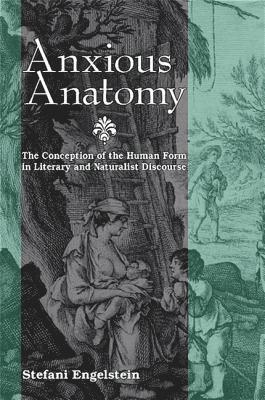
Anxious Anatomy
The Conception of the Human Form in Literary and Naturalist Discourse
Inbunden, Engelska, 2008
1 215 kr
Tillfälligt slut
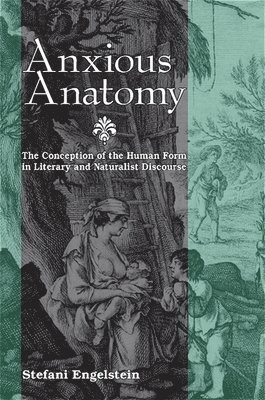
Examines the body in literature and science in late eighteenth- and early nineteenth-century Europe.In Anxious Anatomy, Stefani Engelstein reconstructs the late eighteenth- and early nineteenth-century human body to offer startling new readings of major works by Goethe, Blake, Heinrich von Kleist, E. T. A. Hoffmann, Mary Shelley, and Jane Austen. Engelstein links research on reproduction both to the ability of organisms such as hydra, snails, and newts to replace severed heads and gouged out eyes, and also to technical advances in battlefield amputation and artificial limbs. Readings of German and British literature, alongside natural history, surgery, aesthetics, and art, illuminate the importance of investigations into the body for emerging theories of human subjectivity, gender, volition, ethical behavior, and political organization. Engelstein also demonstrates how attempts to explain the structural characteristics of the body developed into biological justifications for ideologies of race, gender, and social hierarchies.
Anxious Anatomy
The Conception of the Human Form in Literary and Naturalist Discourse
Häftad, Engelska, 2009
429 kr
Skickas
Examines the body in literature and science in late eighteenth- and early nineteenth-century Europe.In Anxious Anatomy, Stefani Engelstein reconstructs the late eighteenth- and early nineteenth-century human body to offer startling new readings of major works by Goethe, Blake, Heinrich von Kleist, E. T. A. Hoffmann, Mary Shelley, and Jane Austen. Engelstein links research on reproduction both to the ability of organisms such as hydra, snails, and newts to replace severed heads and gouged out eyes, and also to technical advances in battlefield amputation and artificial limbs. Readings of German and British literature, alongside natural history, surgery, aesthetics, and art, illuminate the importance of investigations into the body for emerging theories of human subjectivity, gender, volition, ethical behavior, and political organization. Engelstein also demonstrates how attempts to explain the structural characteristics of the body developed into biological justifications for ideologies of race, gender, and social hierarchies.
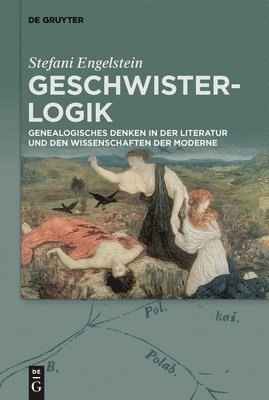
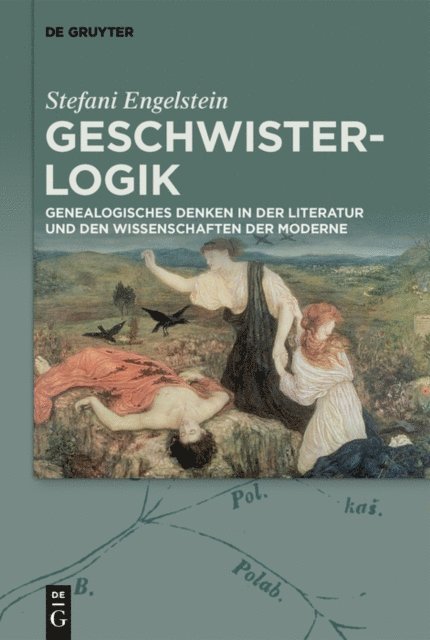
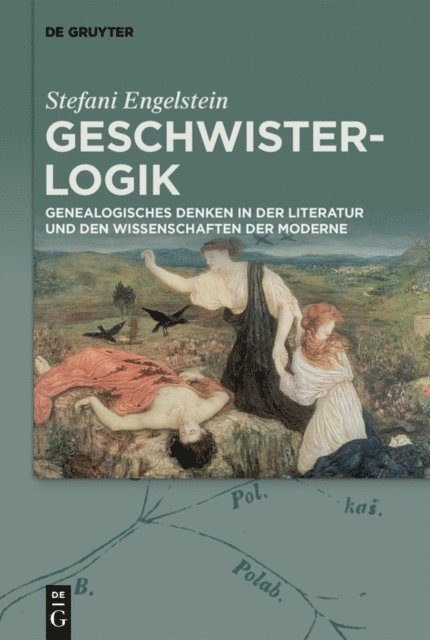
Geschwister-Logik
Genealogisches Denken in Der Literatur Und Den Wissenschaften Der Moderne
Inbunden, Tyska, 2024
1 929 kr
Skickas inom 3-6 vardagar
Del 79 - Amsterdamer Beiträge zur neueren Germanistik
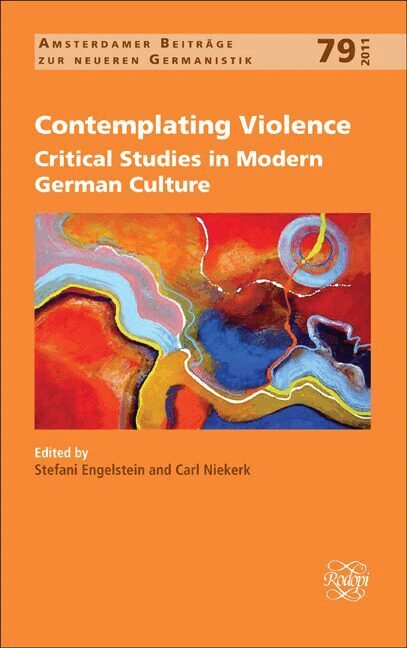
Contemplating Violence
Critical Studies in Modern German Culture
Inbunden, Engelska, 2011
1 685 kr
Skickas inom 5-8 vardagar
This volume illuminates the vexed treatment of violence in the German cultural tradition between two crucial, and radically different, violent outbreaks: the French Revolution, and the Holocaust and Second World War. The contributions undermine the notion of violence as an intermittent or random visitor in the imagination and critical theory of modern German culture. Instead, they make a case for violence in its many manifestations as constitutive for modern theories of art, politics, identity, and agency. While the contributions elucidate trends in theories of violence leading up to the Holocaust, they also provide a genealogy of the stakes involved in ongoing discussions of the legitimate uses of violence, and of state, individual, and collective agency in its perpetration. The chapters engage the theorization of violence through analysis of cultural products, including literature, museum planning, film, and critical theory. This collection will be of interest to scholars in the fields of Literary and Cultural Studies, Critical Theory, Philosophy, Gender Studies, History, Museum Studies, and beyond.