Stefano Pippa - Böcker
Visar alla böcker från författaren Stefano Pippa. Handla med fri frakt och snabb leverans.
3 produkter
3 produkter
1 343 kr
Skickas inom 10-15 vardagar
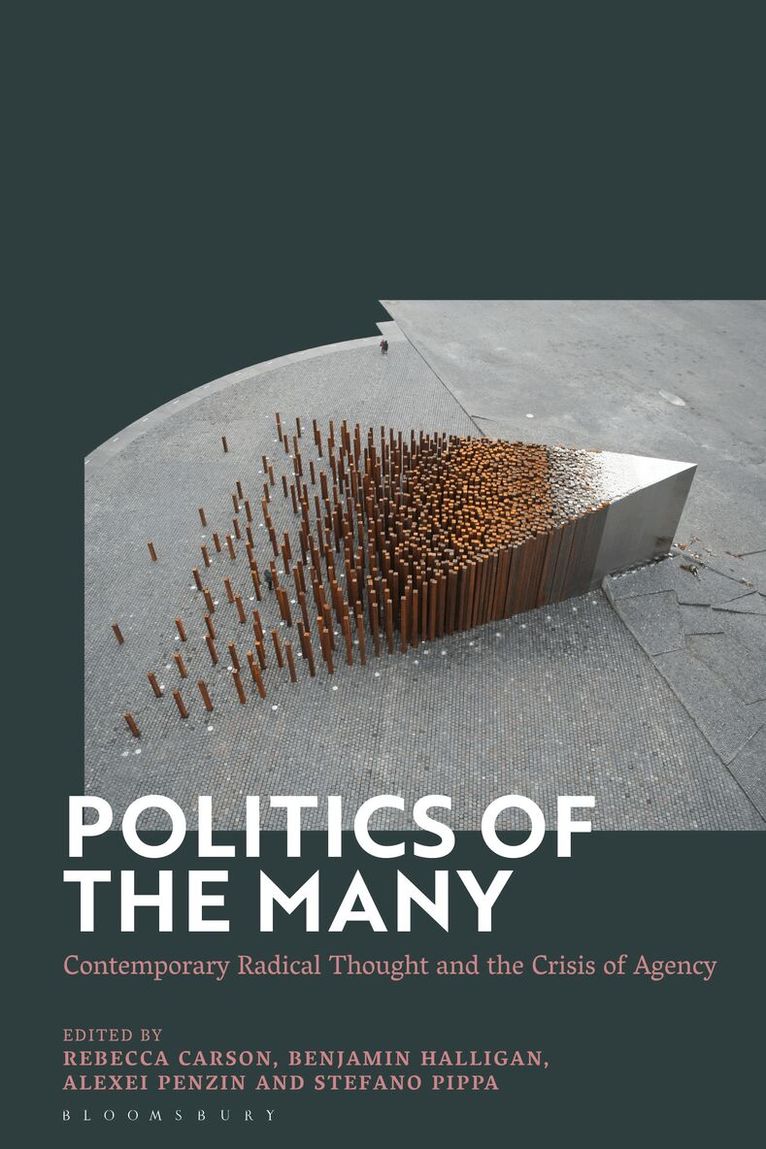
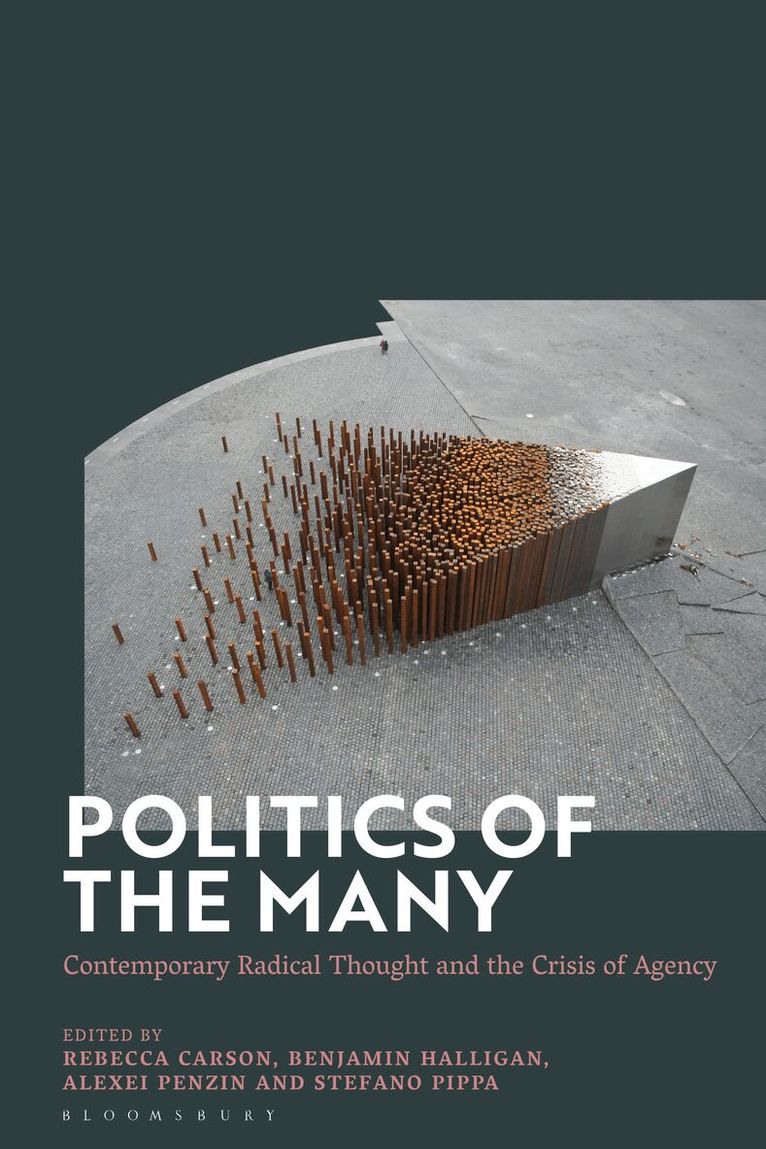
Politics of the Many draws inspiration from Percy Bysshe Shelley’s celebrated call to arms: ‘Ye are many – they are few!’ This idea of the Many, as a general form of emancipatory subjectivity that cannot be erased for the sake of the One, is the philosophical and political assumption shared by contributors to this book. They raise questions of collective agency, and its crisis in contemporary capitalism, via new engagements with Marxist philosophy, psychoanalysis, theories of social reproduction and value-form, and post-colonial critiques, and drawing on activist thought and strategies. This book interrogates both established and emergent formations of the Many (the people, classes, publics, crowds, masses, multitudes), tracing their genealogies, their recent failures and victories, and their potentials to change the world. The book proposes and explores an intense and provoking series of new or reinvented concepts, figures, and theoretical constellations, including dividuality, the centaur, unintentional vanguard, insomnia at work, always-on capitalism, multitude (from its ‘voiding’ to a ‘(non)emergence’), crowds, necropolitics, and the link between political subjectivity and value-form. The contributors to Politics of the Many are both acclaimed and emergent thinkers including Carina Brand, Rebecca Carson, Luhuna Carvalho, Lorenzo Chiesa, Jodi Dean, Dario Gentili, Benjamin Halligan, Marc James Léger, Paul Mazzocchi, Alexei Penzin, Stefano Pippa, Gerald Raunig, and Stevphen Shukaitis.
408 kr
Skickas inom 10-15 vardagar
Politics of the Many draws inspiration from Percy Bysshe Shelley’s celebrated call to arms: ‘Ye are many – they are few!’ This idea of the Many, as a general form of emancipatory subjectivity that cannot be erased for the sake of the One, is the philosophical and political assumption shared by contributors to this book. They raise questions of collective agency, and its crisis in contemporary capitalism, via new engagements with Marxist philosophy, psychoanalysis, theories of social reproduction and value-form, and post-colonial critiques, and drawing on activist thought and strategies. This book interrogates both established and emergent formations of the Many (the people, classes, publics, crowds, masses, multitudes), tracing their genealogies, their recent failures and victories, and their potentials to change the world. The book proposes and explores an intense and provoking series of new or reinvented concepts, figures, and theoretical constellations, including dividuality, the centaur, unintentional vanguard, insomnia at work, always-on capitalism, multitude (from its ‘voiding’ to a ‘(non)emergence’), crowds, necropolitics, and the link between political subjectivity and value-form. The contributors to Politics of the Many are both acclaimed and emergent thinkers including Carina Brand, Rebecca Carson, Luhuna Carvalho, Lorenzo Chiesa, Jodi Dean, Dario Gentili, Benjamin Halligan, Marc James Léger, Paul Mazzocchi, Alexei Penzin, Stefano Pippa, Gerald Raunig, and Stevphen Shukaitis.
344 kr
Tillfälligt slut
The notion of contingency plays a central role in Althusser’s attempt to recast Marxist philosophy and to free the Marxist conception of history from notions such as teleology, necessity and origin. Drawing on a wealth of published and unpublished material, Stefano Pippa discusses how Althusser’s unfaltering commitment to contingency should encourage us to revisit our understanding of his conceptions of structural change, ideology, politics and materialism. As grounded on contingency, Althusser’s so-called ‘Structural Marxism’ originates in fact a ‘logic of interruption’ and a notion of structurally under-determined becoming; just like his theory of ideology is radically reinterpreted on the basis of his notion of ‘overinterpellation’. Though constant, Althusser’s relationship with contingency has not been monolithic throughout his career. As observed by Pippa, it is possible to distinguish a ‘political’ and a ‘philosophical’ moment in Althusser’s late materialism of contingency. Perhaps, as this volume suggests, the problematic coexistence of these two aspects might account for the unstable character of Althusser’s late philosophical project.