Stefano Poggi – författare
Visar alla böcker från författaren Stefano Poggi. Handla med fri frakt och snabb leverans.
7 produkter
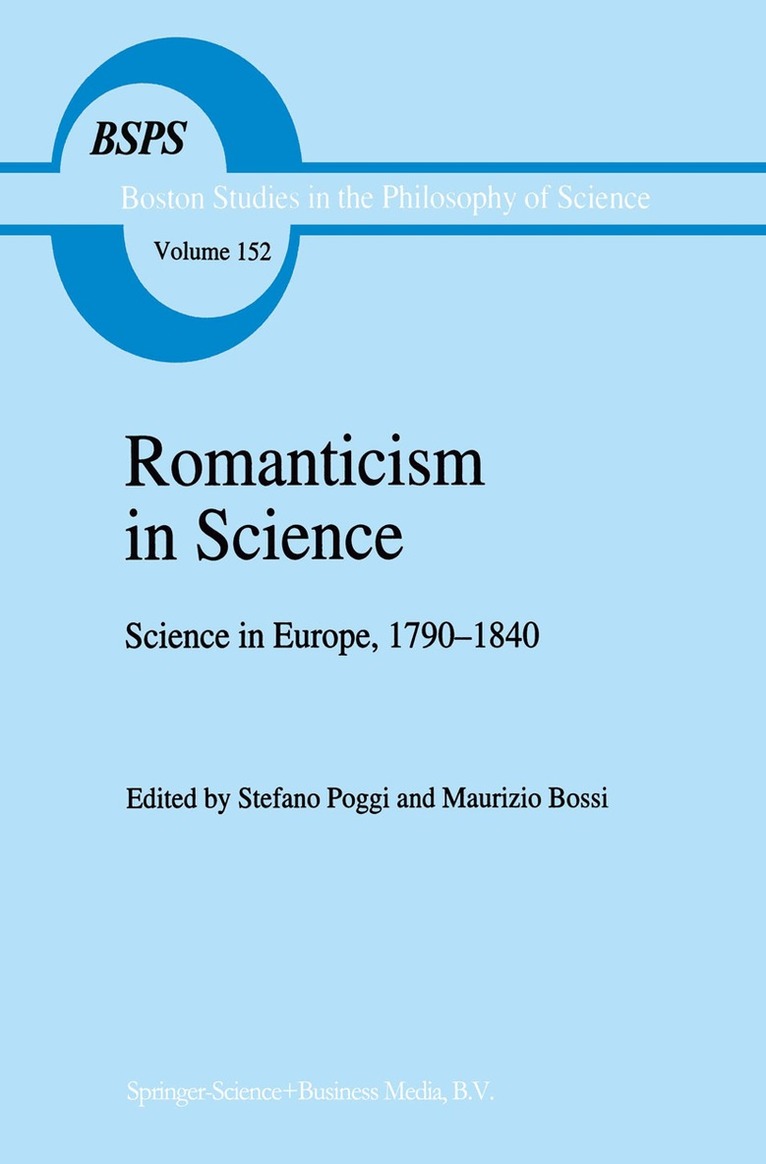
Romanticism in Science
Science in Europe, 1790–1840
Av Stefano Poggi, Maurizio Bossi m. fl.
Inbunden, 1994
1095 kr
Lägg i varukorg
Romanticism in all its expression communicated a vision of the essential interconnectedness and harmony of the universe. The romantic concept of knowledge was decidedly unitary, but, in the period between 1790 and 1840, the special emphasis it placed on observation and research led to an …
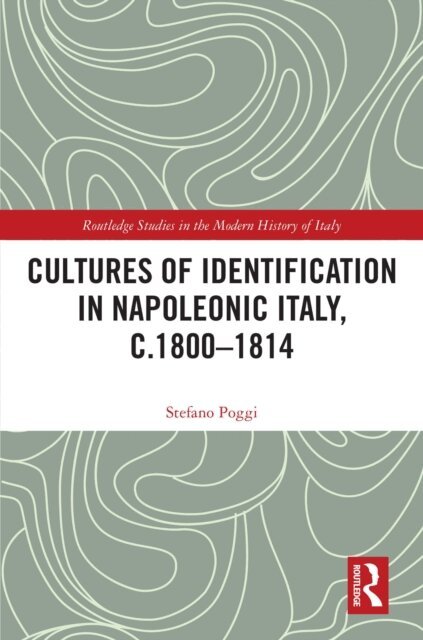
Cultures of Identification in Napoleonic Italy, c.1800–1814
Inbunden, 2024
2578 kr
Lägg i varukorg
Through the lens of identification procedures, this book examines how the processes of state-building affected European societies during the Napoleonic period. By focusing on the Kingdom of Italy, the author shows how the top-down change usually associated with Napoleonic state-building had to …
Cultures of Identification in Napoleonic Italy, c.1800–1814
Häftad, 2026
725 kr
Lägg i varukorg
Through the lens of identification procedures, this book examines how the processes of state-building affected European societies during the Napoleonic period. By focusing on the Kingdom of Italy, the author shows how the top-down change usually associated with Napoleonic state-building had to …
Cultures of Identification in Napoleonic Italy, c.1800-1814
E-bok, 2024
856 kr
Lägg i varukorg
Through the lens of identification procedures, this book examines how the processes of state-building affected European societies during the Napoleonic period. By focusing on the Kingdom of Italy, the author shows how the top-down change usually associated with Napoleonic state-building had to …
Cultures of Identification in Napoleonic Italy, c.1800-1814
E-bok, 2024
856 kr
Lägg i varukorg
Through the lens of identification procedures, this book examines how the processes of state-building affected European societies during the Napoleonic period. By focusing on the Kingdom of Italy, the author shows how the top-down change usually associated with Napoleonic state-building had to …
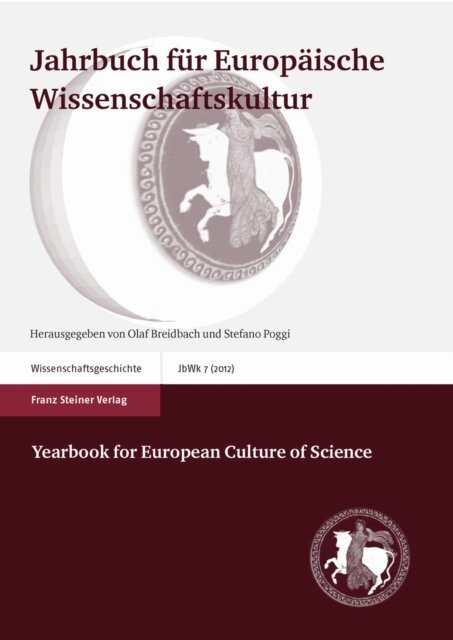
Jahrbuch für Europäische Wissenschaftskultur 7 (2012) / Yearbook for European Culture of Science 7 (2012)
Sprachen der Wissenschaften 1600–1850 / Scientific Languages 1600–1850. Teil 2: Sprachliche Differenzierung und wissenschaftliche Nationalisierung / Part 2: Linguistic Compartmentalization and Scientific Nationalization
Av Stefano Poggi, Olaf Breidbach
E-bok, 2014
731 kr
Lägg i varukorg
Der neueste Band des Jahrbuchs für Europäische Wissenschaftskultu r setzt den Themenschwerpunkt "Sprachen der Wissenschaften 1600–1850" fort. In zwei Bänden des Jahrbuchs untersuchen 15 Autoren die Wechselwirkungen von Sprache und Wissenschaft in der Entstehungsphase des modernen …
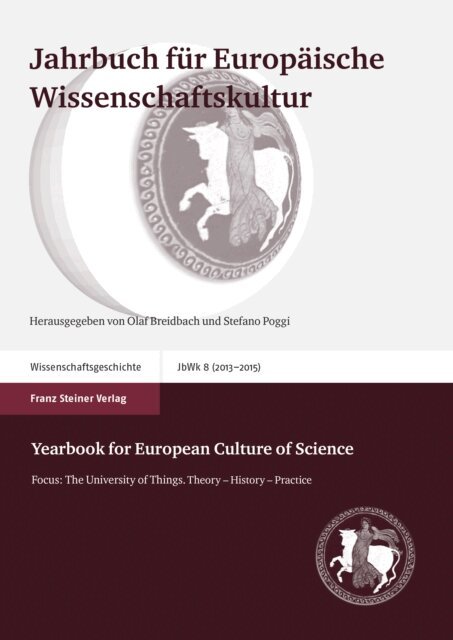
Jahrbuch für Europäische Wissenschaftskultur 8 (2013–2015)
The University of Things. Theory – History – Practice
Av Stefano Poggi, Olaf Breidbach
E-bok, 2016
774 kr
Lägg i varukorg
Academic collections – spanning the arts, sciences, and medicine – are a prominent feature of many major universities. But the history of these collections, and the cultures that have cultivated them, has been strangely neglected. This interdisciplinary volume explores aspects of the history of …