Stephanie Amsel – författare
Visar alla böcker från författaren Stephanie Amsel. Handla med fri frakt och snabb leverans.
3 produkter
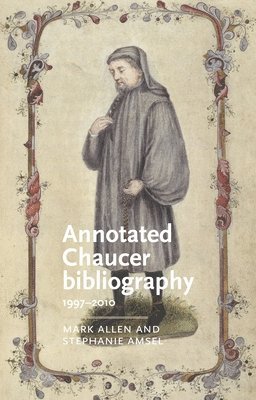
Annotated Chaucer Bibliography
1997–2010
Av Mark Allen, Stephanie Amsel
Inbunden, 2015
1411 kr
Lägg i varukorg
Author of The Canterbury Tales and foundation of the English literary tradition, Geoffrey Chaucer has been popular with readers, writers and scholars for over 600 years. More than 4600 books, essays, poems, stories, recordings and websites pertaining to Chaucer were published between 1997 and 2010, …
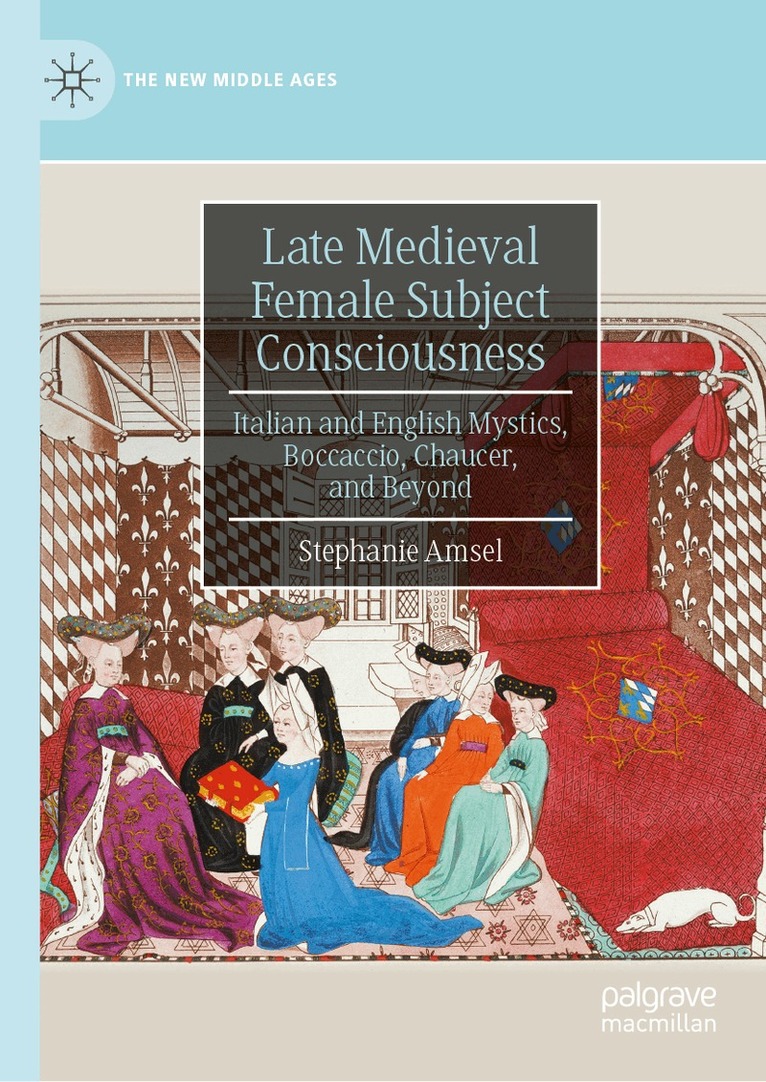
Late Medieval Female Subject Consciousness
Italian and English Mystics, Boccaccio, Chaucer, and Beyond
Inbunden, 2026
1445 kr
Lägg i varukorg
Late Medieval Female Subject Consciousness: Italian and English Mystics brings together disparate feminist theoretical approaches to explore the formation of medieval female subject consciousness in writings by female mystics including Angela of Foligno, Catherine of Siena, and Margery Kempe, as …
Late Medieval Female Subject Consciousness
Italian and English Mystics, Boccaccio, Chaucer, and Beyond
E-bok, 2026
1955 kr
Lägg i varukorg
Late Medieval Female Subject Consciousness: Italian and English Mystics brings together disparate feminist theoretical approaches to explore the formation of medieval female subject consciousness in writings by female mystics including Angela of Foligno, Catherine of Siena, and Margery Kempe, as …