Stephen Acabado - Böcker
Visar alla böcker från författaren Stephen Acabado. Handla med fri frakt och snabb leverans.
4 produkter
4 produkter
Indigenous Peoples, Heritage and Landscape in the Asia Pacific
Knowledge Co-Production and Empowerment
Inbunden, Engelska, 2021
2 113 kr
Skickas inom 10-15 vardagar
This book demonstrates how active and meaningful collaboration between researchers and local stakeholders and indigenous communities can lead to the co-production of knowledge and the empowerment of communities.Focusing on the Asia Pacific region, this interdisciplinary volume looks at local and indigenous relations to the landscape, showing how applied scholarship and collaborative research can work to empower indigenous and descendant communities. With cases ranging across Indonesia, Thailand, Taiwan, the Philippines, Cambodia, Pohnpei, Guam, and Easter Island, this book demonstrates the many ways in which co-production of knowledge is reconnecting local and indigenous relations to the landscape, and diversifying the philosophy of human-land relations. In so doing, the book is enriching the knowledge of landscape, and changing the landscape of knowledge.This important contribution to our understanding of knowledge production will be of interest to readers across Anthropology, Archaeology, Development, Geography, Heritage Studies, Indigenous Studies, and Policy Studies.
Indigenous Peoples, Heritage and Landscape in the Asia Pacific
Knowledge Co-Production and Empowerment
Häftad, Engelska, 2023
578 kr
Skickas inom 10-15 vardagar
This book demonstrates how active and meaningful collaboration between researchers and local stakeholders and indigenous communities can lead to the co-production of knowledge and the empowerment of communities.Focusing on the Asia Pacific region, this interdisciplinary volume looks at local and indigenous relations to the landscape, showing how applied scholarship and collaborative research can work to empower indigenous and descendant communities. With cases ranging across Indonesia, Thailand, Taiwan, the Philippines, Cambodia, Pohnpei, Guam, and Easter Island, this book demonstrates the many ways in which co-production of knowledge is reconnecting local and indigenous relations to the landscape, and diversifying the philosophy of human-land relations. In so doing, the book is enriching the knowledge of landscape, and changing the landscape of knowledge.This important contribution to our understanding of knowledge production will be of interest to readers across Anthropology, Archaeology, Development, Geography, Heritage Studies, Indigenous Studies, and Policy Studies.
686 kr
Skickas inom 7-10 vardagar
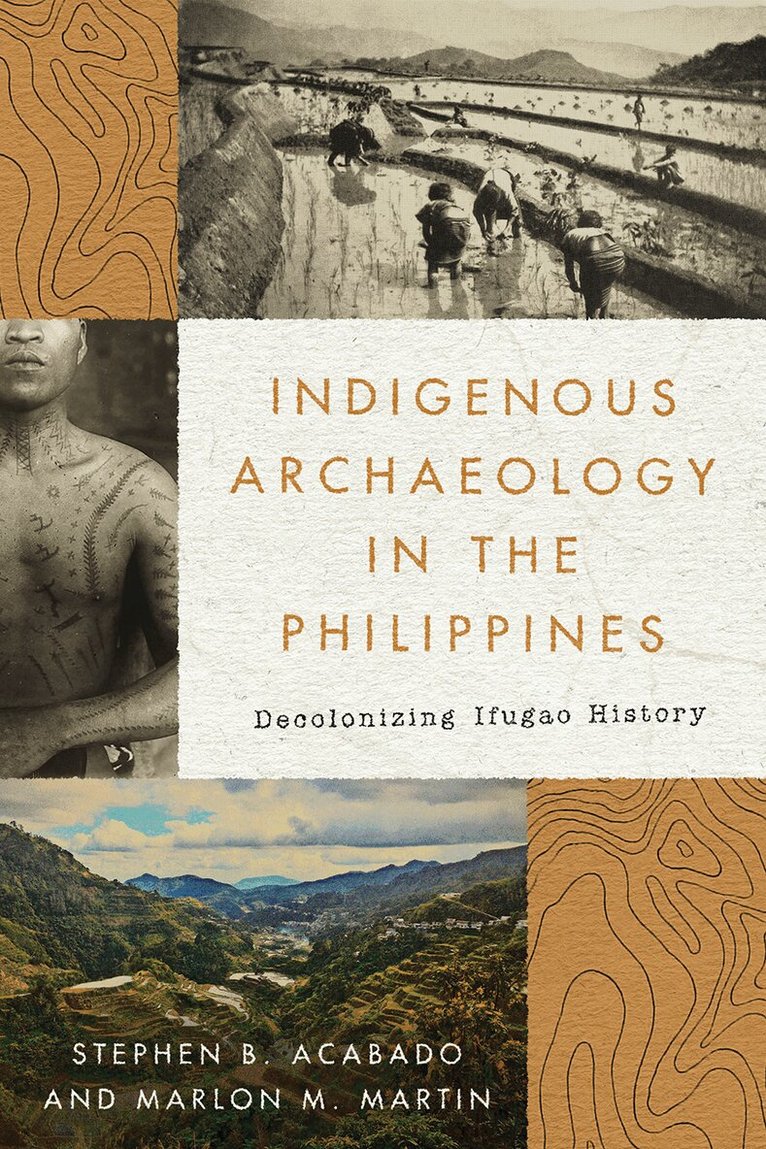
Dominant historical narratives among cultures with long and enduring colonial experiences often ignore Indigenous histories. This erasure is a response to the colonial experiences. With diverse cultures like those in the Philippines, dominant groups may become assimilationists themselves. Collaborative archaeology is an important tool in correcting the historical record. In the northern Philippines, archaeological investigations in Ifugao have established more recent origins of the Cordillera Rice Terraces, which were once understood to be at least two thousand years old. This new research not only sheds light on this UNESCO World Heritage site but also illuminates how collaboration with Indigenous communities is critical to understanding their history and heritage.Indigenous Archaeology in the Philippines highlights how collaborative archaeology and knowledge co-production among the Ifugao, an Indigenous group in the Philippines, contested (and continue to contest) enduring colonial tropes. Stephen B. Acabado and Marlon M. Martin explain how the Ifugao made decisions that benefited them, including formulating strategies by which they took part in the colonial enterprise, exploiting the colonial economic opportunities to strengthen their sociopolitical organization, and co-opting the new economic system. The archaeological record shows that the Ifugao successfully resisted the Spanish conquest and later accommodated American empire building.This book illustrates how descendant communities can take control of their history and heritage through active collaboration with archaeologists. Drawing on the Philippine Cordilleran experiences, the authors demonstrate how changing historical narratives help empower peoples who are traditionally ignored in national histories.
374 kr
Skickas inom 7-10 vardagar
Dominant historical narratives among cultures with long and enduring colonial experiences often ignore Indigenous histories. This erasure is a response to the colonial experiences. With diverse cultures like those in the Philippines, dominant groups may become assimilationists themselves. Collaborative archaeology is an important tool in correcting the historical record. In the northern Philippines, archaeological investigations in Ifugao have established more recent origins of the Cordillera Rice Terraces, which were once understood to be at least two thousand years old. This new research not only sheds light on this UNESCO World Heritage site but also illuminates how collaboration with Indigenous communities is critical to understanding their history and heritage. Indigenous Archaeology in the Philippines highlights how collaborative archaeology and knowledge co-production among the Ifugao, an Indigenous group in the Philippines, contested (and continue to contest) enduring colonial tropes. Stephen B. Acabado and Marlon M. Martin explain how the Ifugao made decisions that benefited them, including formulating strategies by which they took part in the colonial enterprise, exploiting the colonial economic opportunities to strengthen their sociopolitical organization, and co-opting the new economic system. The archaeological record shows that the Ifugao successfully resisted the Spanish conquest and later accommodated American empire building. This book illustrates how descendant communities can take control of their history and heritage through active collaboration with archaeologists. Drawing on the Philippine Cordilleran experiences, the authors demonstrate how changing historical narratives help empower peoples who are traditionally ignored in national histories.