Stephen J Campbell - Böcker
Visar alla böcker från författaren Stephen J Campbell. Handla med fri frakt och snabb leverans.
5 produkter
5 produkter
574 kr
Skickas inom 7-10 vardagar
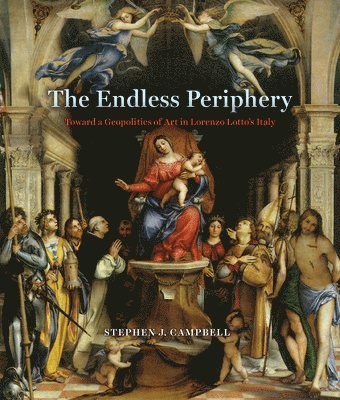
While the masterpieces of the Italian Renaissance are usually associated with Italy's historical seats of power, some of the era's most characteristic works are to be found in places other than Florence, Rome, and Venice. They are the product of the diversity of regions and cultures that makes up the country. In Endless Periphery, Stephen J. Campbell examines a range of iconic works in order to unlock a rich series of local references in Renaissance art that include regional rulers, patron saints, and miracles, demonstrating, for example, that the works of Titian spoke to beholders differently in Naples, Brescia, or Milan than in his native Venice. More than a series of regional microhistories, Endless Periphery tracks the geographic mobility of Italian Renaissance art and artists, revealing a series of exchanges between artists and their patrons, as well as the power dynamics that fueled these exchanges. A counter history of one of the greatest epochs of art production, this richly illustrated book will bring new insight to our understanding of classic works of Italian art.
1 485 kr
Skickas inom 7-10 vardagar
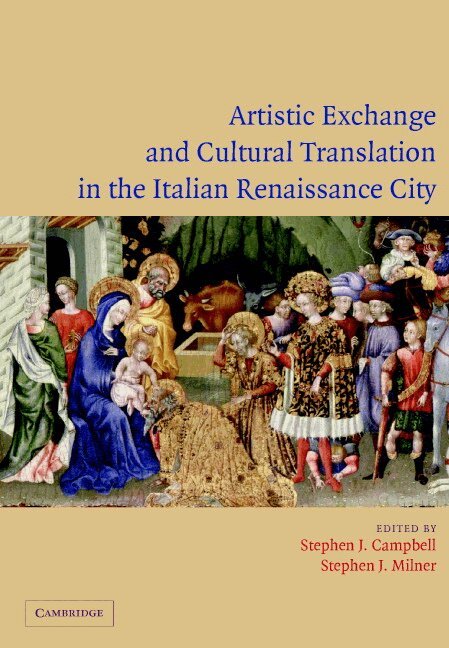
This book considers the reception of the early modern culture of Florence, Rome, and Venice in other centers of the Italic peninsula, such as Ferrara, Bologna, Ancona, San Gimignano, and Pistoia, which had flourishing local cultures of their own. Offering a perspective that focuses on dialogue and exchange between different urban centers and cultural groups, it also involves a reexamination of the Renaissance itself as a form of translation of a past culture, one that attempted to assimilate the lost or fragmentary world of the Roman emperors, the Greek Platonists, and the ancient Egyptians. Collectively the essays examine how the processes of cultural self-definition varied between the Italian urban centers in the early modern period, well before the formation of a distinct Italian national identity. Exploring how artistic forms made the transition from one Italian city to another, attention is also focused on the subtle modification of practice required by local conditions and priorities.
307 kr
Skickas inom 7-10 vardagar
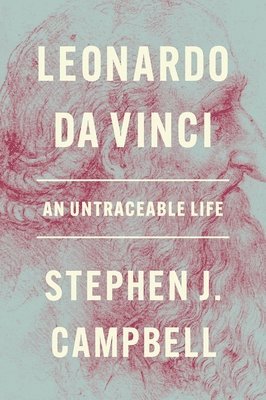
How our image of the Renaissance’s most famous artist is a modern mythLeonardo da Vinci (1452–1519) never signed a painting, and none of his supposed self-portraits can be securely ascribed to his hand. He revealed next to nothing about his life in his extensive writings, yet countless pages have been written about him that assign him an identity: genius, entrepreneur, celebrity artist, outsider. Addressing the ethical stakes involved in studying past lives, Stephen J. Campbell shows how this invented Leonardo has invited speculation from figures ranging from art dealers and curators to scholars, scientists, and biographers, many of whom have filled in the gaps of what can be known of Leonardo’s life with claims to decode secrets, reveal mysteries of a vanished past, or discover lost masterpieces of spectacular value.In this original and provocative book, Campbell examines the strangeness of Leonardo’s words and works, and the distinctive premodern world of artisans and thinkers from which he emerged. Far from being a solitary genius living ahead of his time, Leonardo inhabited a vibrant network of artistic, technological, and literary exchange. By investigating the politics and cultural tensions of the era as well as the most recent scholarship on Leonardo’s contemporaries, workshop, and writings, Campbell places Leonardo back into the milieu that shaped him and was shaped by him. He shows that it is in the gaps and contradictions of what we know of Leonardo’s life that a less familiar and far more historically significant figure appears.
3 361 kr
Skickas inom 10-15 vardagar
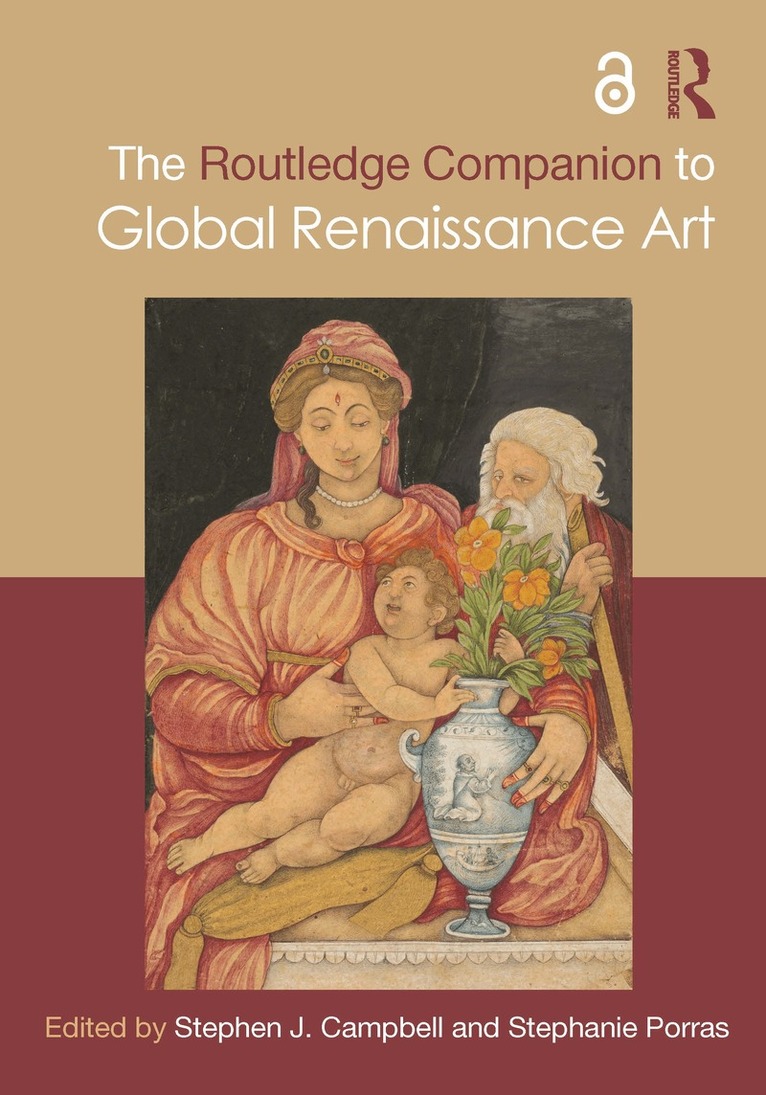
This companion examines the global Renaissance through object-based case studies of artistic production from Africa, Asia, the Americas, and Europe in the early modern period.The international group of contributors take an art historical approach characterized by close analysis of form and meaning as well as function, and a focus on questions of crosscultural dialogue and adaptation. Seeking to de-emphasize the traditional focus on Europe, this book is a critical guide to the literature and the state of the field. Chapters outline new questions and agendas while pushing beyond familiar material. Main themes include workshops, the migrations of artists, objects, technologies, diplomatic gifts, imperial ideologies, ethnicity and indigeneity, sacred spaces and image cults, as well as engaging with the open questions of "the Renaissance" and "the global."This will be a useful and important resource for researchers and students alike and will be of interest to scholars working in art history, visual culture, material culture, and Renaissance studies.The Open Access version of this book, available at www.taylorfrancis.com, has been made available under a Creative Commons [Attribution-Non Commercial-No Derivatives (CC-BY-NC-ND)] 4.0 license
770 kr
Kommande
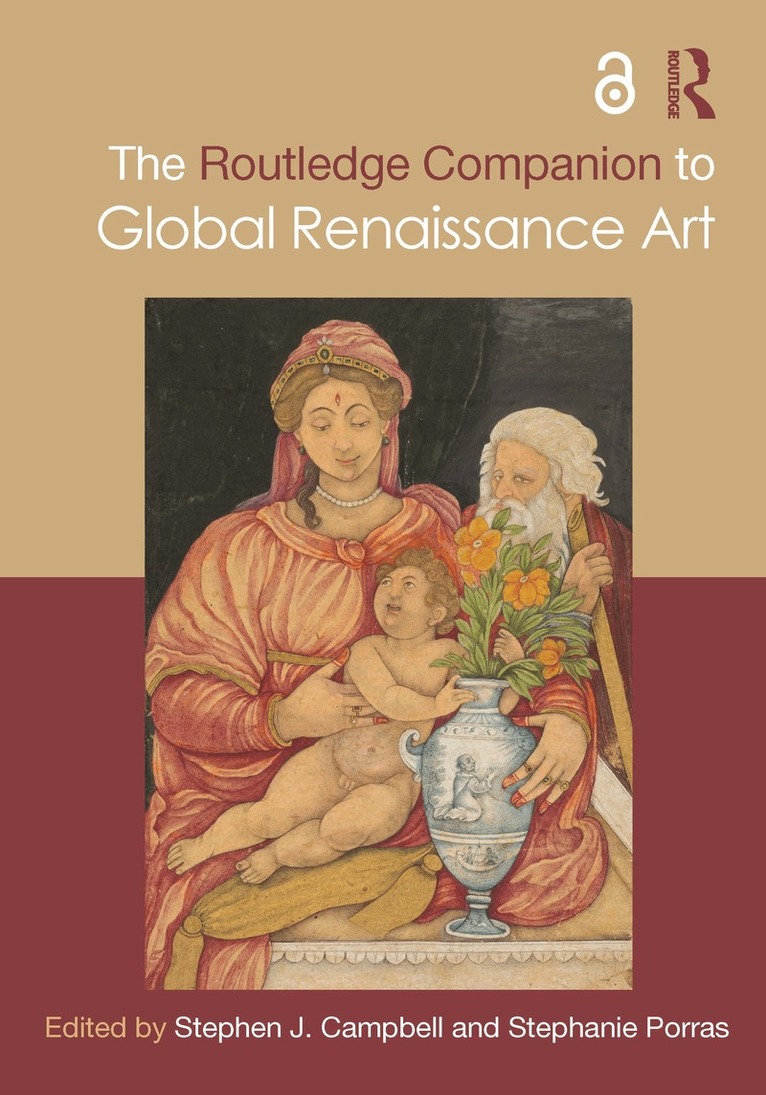
This companion examines the global Renaissance through object-based case studies of artistic production from Africa, Asia, the Americas, and Europe in the early modern period.The international group of contributors take an art historical approach characterized by close analysis of form and meaning as well as function, and a focus on questions of crosscultural dialogue and adaptation. Seeking to de-emphasize the traditional focus on Europe, this book is a critical guide to the literature and the state of the field. Chapters outline new questions and agendas while pushing beyond familiar material. Main themes include workshops, the migrations of artists, objects, technologies, diplomatic gifts, imperial ideologies, ethnicity and indigeneity, sacred spaces and image cults, as well as engaging with the open questions of "the Renaissance" and "the global."This will be a useful and important resource for researchers and students alike and will be of interest to scholars working in art history, visual culture, material culture, and Renaissance studies.The Open Access version of this book, available at www.taylorfrancis.com, has been made available under a Creative Commons [Attribution-Non Commercial-No Derivatives (CC-BY-NC-ND)] 4.0 license