Stephanie Porras - Böcker
Visar alla böcker från författaren Stephanie Porras. Handla med fri frakt och snabb leverans.
6 produkter
6 produkter
1 087 kr
Skickas inom 7-10 vardagar
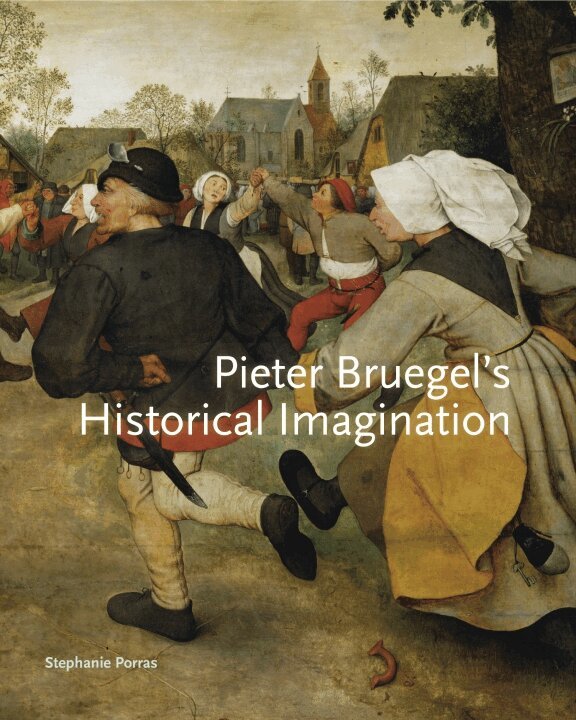
The question of how to understand Bruegel’s art has cast the artist in various guises: as a moralizing satirist, comedic humanist, celebrator of vernacular traditions, and proto-ethnographer. Stephanie Porras reorients these apparently contradictory accounts, arguing that the debate about how to read Bruegel has obscured his pictures’ complex relation to time and history. Rather than viewing Bruegel’s art as simply illustrating the social realities of his day, Porras asserts that Bruegel was an artist deeply concerned with the past. In playing with the boundaries of the familiar and the foreign, history and the present, Bruegel’s images engaged with the fraught question of Netherlandish history in the years just prior to the Dutch Revolt, when imperial, religious, and national identities were increasingly drawn into tension. His pictorial style and his manipulation of traditional iconographies reveal the complex relations, unique to this moment, among classical antiquity, local history, and art history. An important reassessment of Renaissance attitudes toward history and of Renaissance humanism in the Low Countries, this volume traces the emergence of archaeological and anthropological practices in historical thinking, their intersections with artistic production, and the developing concept of local art history.
1 195 kr
Skickas inom 7-10 vardagar
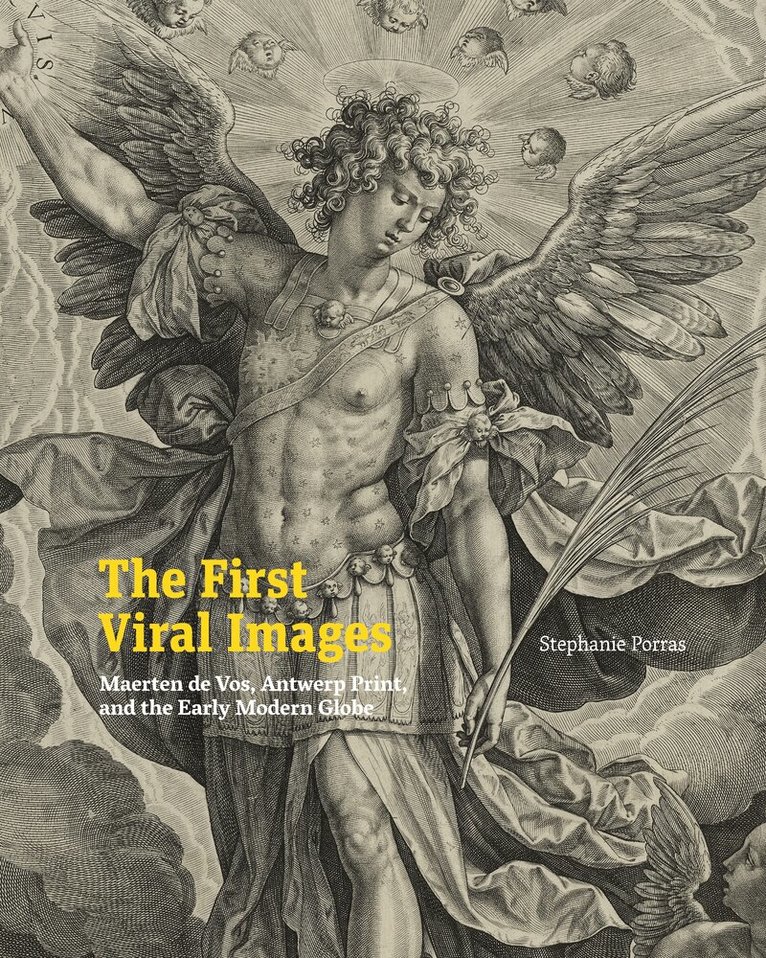
As a social phenomenon and a commonplace of internet culture, virality provides a critical vocabulary for addressing questions raised by the global mobility and reproduction of early modern artworks. This book uses the concept of virality to study artworks’ role in the uneven processes of early modern globalization.Drawing from archival research in Asia, Europe, and the Americas, Stephanie Porras traces the trajectories of two interrelated objects made in Antwerp in the late sixteenth century: Gerónimo Nadal’s Evangelicae historiae imagines, an illustrated devotional text published and promoted by the Society of Jesus, and a singular composition by Maerten de Vos, St. Michael the Archangel. Both were reproduced and adapted across the early modern world in the seventeenth century. Porras examines how and why these objects traveled and were adopted as models by Spanish and Latin American painters, Chinese printmakers, Mughal miniaturists, and Filipino ivory carvers. Reassessing the creative labor underpinning the production of a diverse array of copies, citations, and reproductions, Porras uses virality to elucidate the interstices of the agency of individual artists or patrons, powerful gatekeepers and social networks, and economic, political, and religious infrastructures. In doing so, she tests and contests several analytical models that have dominated art-historical scholarship of the global early modern period, putting pressure on notions of copying, agency, context, and viewership. Vital and engaging, The First Viral Images sheds new light on how artworks, as agents of globalization, navigated and contributed to the emerging and intertwined global infrastructures of Catholicism, commerce, and colonialism.
440 kr
Skickas
As a social phenomenon and a commonplace of internet culture, virality provides a critical vocabulary for addressing questions raised by the global mobility and reproduction of early modern artworks. This book uses the concept of virality to study artworks’ role in the uneven processes of early modern globalization.Drawing from archival research in Asia, Europe, and the Americas, Stephanie Porras traces the trajectories of two interrelated objects made in Antwerp in the late sixteenth century: Gerónimo Nadal’s Evangelicae historiae imagines, an illustrated devotional text published and promoted by the Society of Jesus, and a singular composition by Maerten de Vos, St. Michael the Archangel. Both were reproduced and adapted across the early modern world in the seventeenth century. Porras examines how and why these objects traveled and were adopted as models by Spanish and Latin American painters, Chinese printmakers, Mughal miniaturists, and Filipino ivory carvers. Reassessing the creative labor underpinning the production of a diverse array of copies, citations, and reproductions, Porras uses virality to elucidate the interstices of the agency of individual artists or patrons, powerful gatekeepers and social networks, and economic, political, and religious infrastructures. In doing so, she tests and contests several analytical models that have dominated art-historical scholarship of the global early modern period, putting pressure on notions of copying, agency, context, and viewership. Vital and engaging, The First Viral Images sheds new light on how artworks, as agents of globalization, navigated and contributed to the emerging and intertwined global infrastructures of Catholicism, commerce, and colonialism.
3 361 kr
Skickas inom 10-15 vardagar
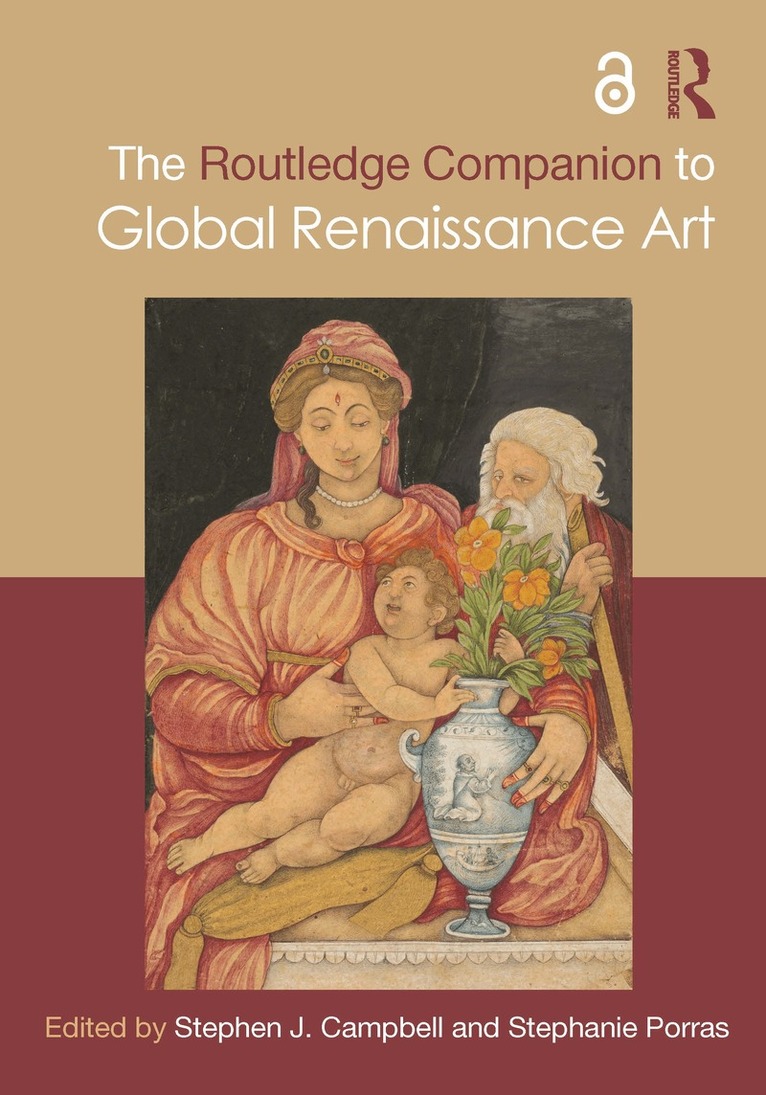
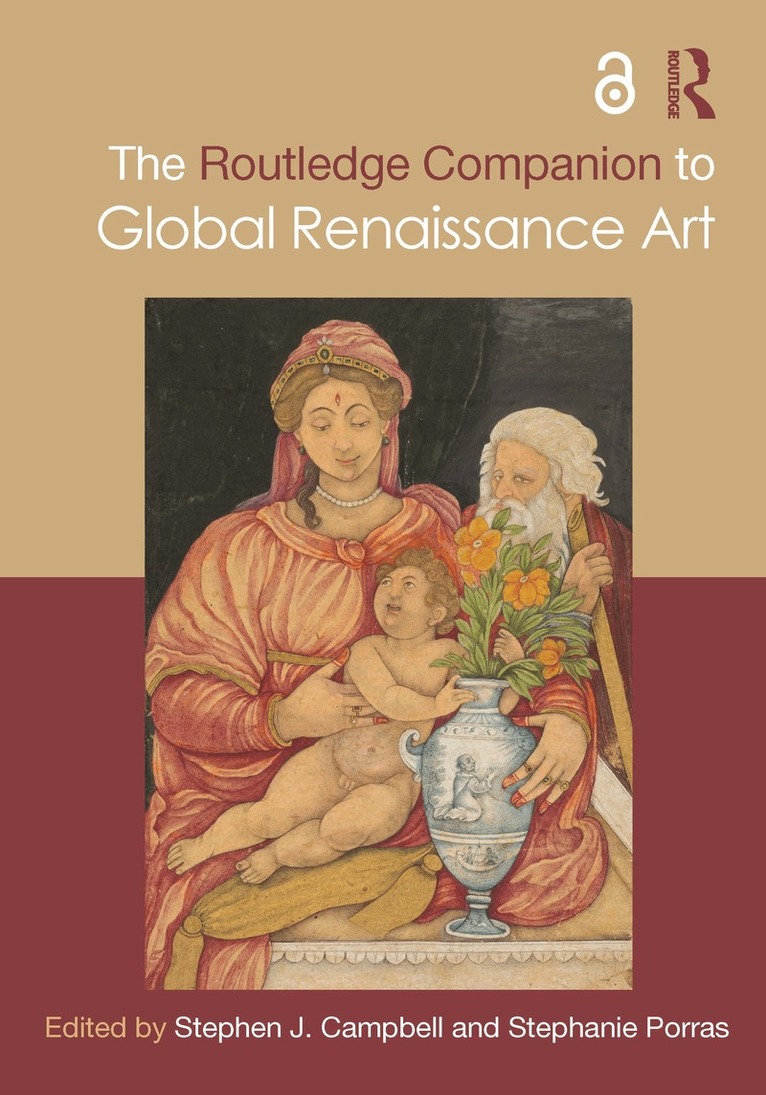
This companion examines the global Renaissance through object-based case studies of artistic production from Africa, Asia, the Americas, and Europe in the early modern period.The international group of contributors take an art historical approach characterized by close analysis of form and meaning as well as function, and a focus on questions of crosscultural dialogue and adaptation. Seeking to de-emphasize the traditional focus on Europe, this book is a critical guide to the literature and the state of the field. Chapters outline new questions and agendas while pushing beyond familiar material. Main themes include workshops, the migrations of artists, objects, technologies, diplomatic gifts, imperial ideologies, ethnicity and indigeneity, sacred spaces and image cults, as well as engaging with the open questions of "the Renaissance" and "the global."This will be a useful and important resource for researchers and students alike and will be of interest to scholars working in art history, visual culture, material culture, and Renaissance studies.The Open Access version of this book, available at www.taylorfrancis.com, has been made available under a Creative Commons [Attribution-Non Commercial-No Derivatives (CC-BY-NC-ND)] 4.0 license
770 kr
Kommande
This companion examines the global Renaissance through object-based case studies of artistic production from Africa, Asia, the Americas, and Europe in the early modern period.The international group of contributors take an art historical approach characterized by close analysis of form and meaning as well as function, and a focus on questions of crosscultural dialogue and adaptation. Seeking to de-emphasize the traditional focus on Europe, this book is a critical guide to the literature and the state of the field. Chapters outline new questions and agendas while pushing beyond familiar material. Main themes include workshops, the migrations of artists, objects, technologies, diplomatic gifts, imperial ideologies, ethnicity and indigeneity, sacred spaces and image cults, as well as engaging with the open questions of "the Renaissance" and "the global."This will be a useful and important resource for researchers and students alike and will be of interest to scholars working in art history, visual culture, material culture, and Renaissance studies.The Open Access version of this book, available at www.taylorfrancis.com, has been made available under a Creative Commons [Attribution-Non Commercial-No Derivatives (CC-BY-NC-ND)] 4.0 license
463 kr
Skickas inom 7-10 vardagar
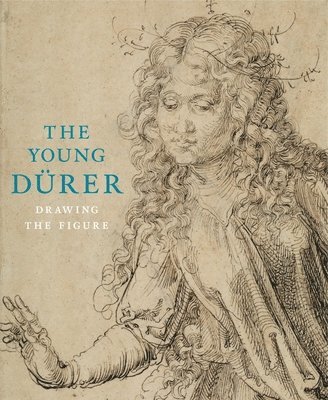
Accompanying a landmark exhibition at the Courtauld Gallery, this book examines the remarkable drawings made by Durer as a young man from 1490 to 1495, especially those made during his journeyman years, or Wanderjahre – considered the final part of a craftsman’s training – and a second shorter trip which immediately followed and seems to have brought the artist to Italy. These trips form the framework for the book, which focuses on the young artist’s figure studies and has at its heart the Courtauld Gallery’s double-sided drawing of a Wise Virgin and Two studies of the artist’s left leg. This superbly ambitious work serves as a springboard to explore in depth the role of drawing at this stage of Durer’s career. It allows us to address a series of crucial questions: how Durer formed ‘his hand’, how he responded to artistic challenges presented by contemporary and earlier art (both on a stylistic and an iconographic level), how his pursuit of professional success was linked with the quest for an individual artistic identity, and how the strategy of recording his own creative achievements in drawings dovetails with his claim for a new status for the artist in his city. The scholarly and beautifully illustrated catalogue is introduced with five essays by distinguished experts. Stephanie Buck examines the documentary evidence and attempts to reconstruct the motivations and activities of Durer’s travels as a young man. David Freedberg discusses Durer’s obsessive observation and recording of himself in portraits and in studies of his limbs. These represent the first critical steps in the artist’s developing understanding of the body, and of the ways in which its movements could not just show emotion, but rouse the equivalent sense of torsion, tension and pathos in the bodies and minds of his viewers. Stephanie Porras looks at Durer’s copies of drawings or prints circulating in Nuremberg workshops or acquired during the Wanderjahre, which were used as a means of seeking inspiration, of challenging himself to draw more sophisticated figures and dynamic compositions. Michael Roth asks the question of how the three strands of the art of the line – drawing, engraving and woodcut – structurally correspond in Durer’s work and, consequently, how drawing merges with certain manual aspects of printing. A final essay presents new technical research on Durer’s early drawings undertaken collaboratively in a number of leading collections of the artist’s work, and aims to enrich our understanding of the young Durer’s approach to the medium of drawing.