Stephanie Buck - Böcker
Visar alla böcker från författaren Stephanie Buck. Handla med fri frakt och snabb leverans.
10 produkter
10 produkter
292 kr
Skickas inom 7-10 vardagar
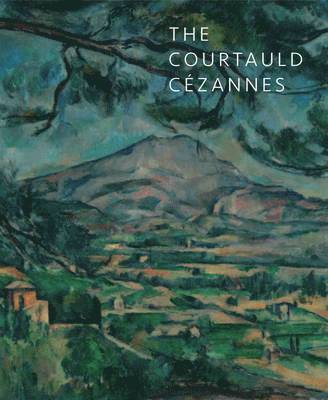
The Courtauld Gallery holds the finest group of works by Paul Cézanne (1839–1906) in Britain. This is the catalogue to an exhibition showing the entire collection together for the first time, marking the culmination of The Courtauld Institute of Art’s 75th anniversary. The importance of the collection lies not only in its exceptionally high quality but also in its wide range, with seminal paintings and rarely seen drawings and watercolors from the major periods of the artist’s long career. The collection includes such masterpieces as the iconic Montagne Sainte-Victoire, c. 1887 – one of the finest examples of Cézanne’s treatment of this subject – and Card Players, c. 1892–95, which show Cézanne working at the height of his powers. Through examination of such works, this book will chart the development of the artist’s revolutionary approach that would later see him acclaimed as the father of modern art. Extensive new research by the Courtauld’s Department of Conservation and Technology will add fresh insights into the artist’s working methods and techniques. Also under scrutiny are an important group of nine handwritten letters, held by the Courtauld, in which Cézanne reflects upon the fundamental principles of his artistic practice. In a letter to Emile Bernard Cézanne famously advised his protégé to “treat nature in terms of the cylinder, the sphere and the cone”. This celebrated statement would become a theoretical underpinning for the move towards abstraction in the twentieth century.
464 kr
Skickas inom 7-10 vardagar
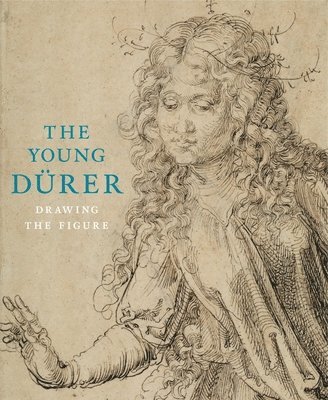
Accompanying a landmark exhibition at the Courtauld Gallery, this book examines the remarkable drawings made by Durer as a young man from 1490 to 1495, especially those made during his journeyman years, or Wanderjahre – considered the final part of a craftsman’s training – and a second shorter trip which immediately followed and seems to have brought the artist to Italy. These trips form the framework for the book, which focuses on the young artist’s figure studies and has at its heart the Courtauld Gallery’s double-sided drawing of a Wise Virgin and Two studies of the artist’s left leg. This superbly ambitious work serves as a springboard to explore in depth the role of drawing at this stage of Durer’s career. It allows us to address a series of crucial questions: how Durer formed ‘his hand’, how he responded to artistic challenges presented by contemporary and earlier art (both on a stylistic and an iconographic level), how his pursuit of professional success was linked with the quest for an individual artistic identity, and how the strategy of recording his own creative achievements in drawings dovetails with his claim for a new status for the artist in his city. The scholarly and beautifully illustrated catalogue is introduced with five essays by distinguished experts. Stephanie Buck examines the documentary evidence and attempts to reconstruct the motivations and activities of Durer’s travels as a young man. David Freedberg discusses Durer’s obsessive observation and recording of himself in portraits and in studies of his limbs. These represent the first critical steps in the artist’s developing understanding of the body, and of the ways in which its movements could not just show emotion, but rouse the equivalent sense of torsion, tension and pathos in the bodies and minds of his viewers. Stephanie Porras looks at Durer’s copies of drawings or prints circulating in Nuremberg workshops or acquired during the Wanderjahre, which were used as a means of seeking inspiration, of challenging himself to draw more sophisticated figures and dynamic compositions. Michael Roth asks the question of how the three strands of the art of the line – drawing, engraving and woodcut – structurally correspond in Durer’s work and, consequently, how drawing merges with certain manual aspects of printing. A final essay presents new technical research on Durer’s early drawings undertaken collaboratively in a number of leading collections of the artist’s work, and aims to enrich our understanding of the young Durer’s approach to the medium of drawing.
349 kr
Skickas inom 7-10 vardagar
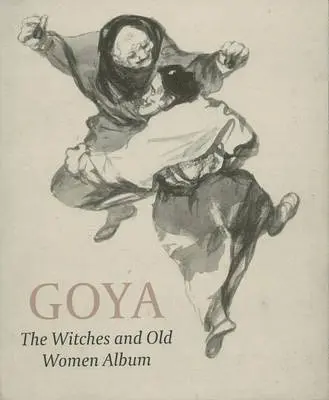
One of the masterpieces of The Courtauld Gallery’s collection of Spanish drawings is a sheet known as Cantar y bailar (Singing and dancing), page 3 from Goya’s Album D, also known as the ‘Witches and Old Women’ album. Bringing together all the extant album pages, currently numbered up to 23, this catalogue proposes a reconstruction of the album that would include the sheets from which Goya’s page numbers have been erased or trimmed away. Goya began to create ‘journal albums’ of drawings relatively late in life, after the shattering illness that left him stone deaf before the age of fifty. It was a practice he would sustain until his death, creating eight albums (named with letters A to H) that originally included a total of some 550 drawings. Visually, technically and intellectually coherent, these albums are unified in their discrete techniques and types of support, and paginated (after the first). In these album pages Goya committed to paper his views, with or without written comments, on human nature and the world around him. Each album has its own distinctive subject matter, style and technique. The later history of the eight albums, already expertly chronicled, remains under investigation. The disbound album sheets were remounted in large volumes by Goya’s son, then sold en bloc by his grandson. Following their final dispersal by Federico de Madrazo and Valentín Carderera in the 1860s and 1870s, many gaps remain in all the albums. This exhibition and the research underpinning it on Album D are the pilot for an international project for the reconstruction of Goya’s graphic oeuvre. The publication will test the extent of Album D and explore the possible sequence and thematic coherence of the sheets. The individual Album D drawings will be reproduced as a proposed reconstructed sequence, each with detailed catalogue entry and technical information. In addition, the publication will define the context of the album by including a number of closely related works by Goya.
407 kr
Skickas inom 7-10 vardagar
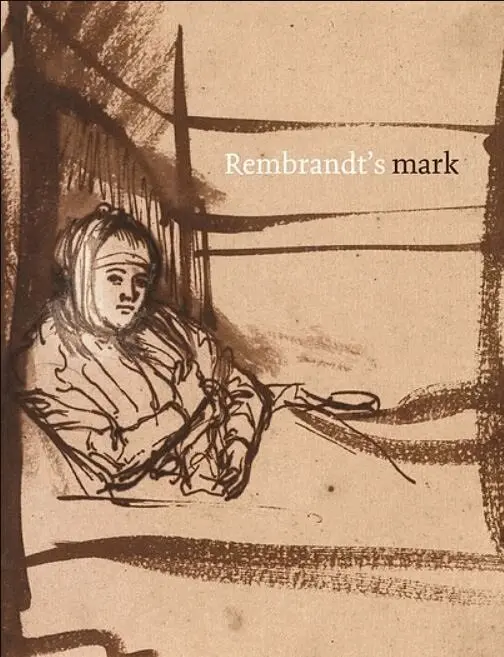
2019 marks the 350th anniversary of Rembrandt’s death (1606–1669). The Dresden Kupferstich-Kabinett, which possesses one of the most important collections of Rembrandt’s drawings and prints in the world, will take the occasion to celebrate Rembrandt as artist, printmaker and draughtsman. The exhibition and catalog cast a fresh light on this innovative ‘artists’ artist’, who continues to inspire and engage artists and audiences three and a half centuries after his death. The Dresden collection’s singular group of Rembrandt works – about 20 drawings attributed to the master today and the nearly complete oeuvre of etchings– will provide the basis for this remarkable publication. It will have a particular focus on Rembrandt’s narrative compositions, printed self-portraits, studies of his wife Saskia, and will include works from all periods of his oeuvre plus prints and drawings by artists from his workshop and followers. The list of artists who understood Rembrandt as a dynamic authority and source of inspiration is long, reaching from his immediate followers to masters of the 18th century, from Giovanni Benedetto Castiglione to Jonathan Richardson to the kindred spirit Francisco de Goya, into the 20th century and up to the present day. Examples include Edouard Manet, Henri Toulouse-Lautrec, Lovis Corinth, Käthe Kollwitz, Max Beckmann, Pablo Picasso, as well as Marlene Dumas and William Kentridge and artists from the GDR such as A.R. Penck. By including works by these artists, the exhibition and catalog foreground Rembrandt as one of the most important ‘artists’ artist’ of all time. Select juxtapositions will help the reader better understand the fireworks of creativity that Rembrandt not only lit in his own time but those he continues to ignite today. Rembrandt remains eternally captivating, not only because of his radical choices and unconventional interpretations of Christian and profane pictorial subjects, but also because of his joy in experimentation, especially in the use of printing and drawing techniques, and his reflective, humorous intellect, complemented by his sensually direct approach to the world. With a light hand, he broke open the conventions of his era. The pictorial worlds that he created with his free, decisive mark convey his near inexhaustible interest in nature as creation, whether it be the human exterior or interior, and offer a wealth of connecting points and constellations for other artists as well as for the viewer.
521 kr
Skickas inom 7-10 vardagar
In 2020, the Dresden Kupferstich-Kabinett—a collection of prints, drawings, and photographs—is celebrating its three hundredth anniversary with a rare exhibition, showcasing the collection's fragile and light-sensitive works on paper. The anniversary offers an occasion to present a number of little-seen masterpieces, including exceptional works by Jan van Eyck, Dürer, Verrocchio, Grünewald, Cranach, Holbein, Rembrandt, Caspar David Friedrich, Ludwig Richter, Toulouse-Lautrec, Mondrian, Hermann Glöckner, Gerhard Altenbourg, A. R. Penck, Georg Baselitz, and Evelyn Richter. Keeping in the Present invites us to explore eighty-four masterpieces from the oldest publicly accessible specialist collection for art on paper in the German-speaking countries. Founded in 1720, the Kupferstich-Kabinett was intended as a universal collection, open to works from all periods and countries, and the current collection holds true to that past, featuring old masters and young, unknown artists alike. Works that were contemporary and still unknown at the time of their purchase are now among the most treasured items, held in equal esteem with works that entered the collection as acknowledged masterpieces. Keeping in the Present illustrates the innovative and democratic nature of the Kupferstich-Kabinett as a place of creativity, knowledge, critical thinking, and aesthetic pleasure.
471 kr
Skickas inom 7-10 vardagar
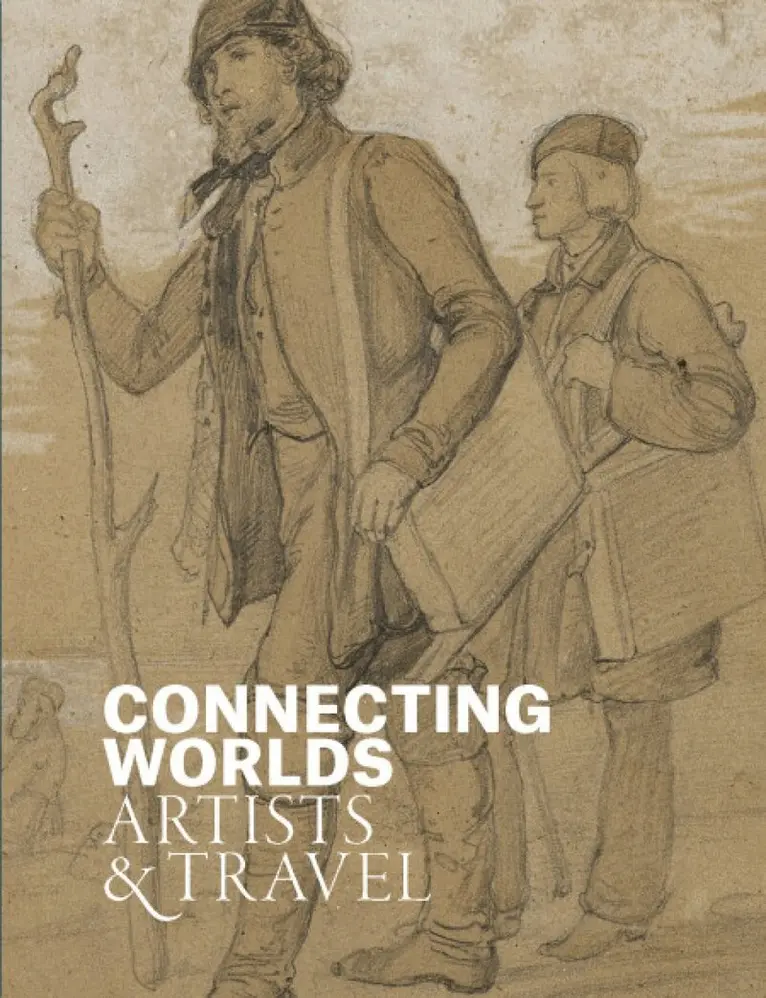
Artists and travel have for centuries been intertwined where the desire to explore beyond the confines of one’s home has provoked a truly astonishing outpouring of creativity, much of which was captured through drawings and prints. Comprising over 100 such works, Connecting Worlds: Artists& Travel will be the first exhibition to approach the subject through the lens of artists’ experiences of travel from the Renaissance to the nineteenth century, before the establishment of the railroad and use of photography as a means of recording changed these experiences deeply. A collaboration between the Kupferstich-Kabinett, Staatliche Kunstsammlungen Dresden, and the Katrin Bellinger Collection, London, the exhibition will include works by major artists, lesser known professionals as well as amateurs, mostly from Northern Europe, amongst them Albrecht Dürer, Hans Holbein the Younger, Pieter Bruegel the Elder, Wenceslaus Hollar, Zacharias Wagner, Valentin Klotz, Maria Sibylla Merian, Angelika Kauffmann, Franz Pforr, Augusta von Buttlar, Julie von Egloffstein,Ludwig Richter, and Friedrich Preller the Elder. Divided into three sections, “On the road”, “Destination Rome”, and “Dresden”, the exhibition begins by exploring artists on the road and what they regarded as important to record in sketchbooks and individual sheets. The second section looks at Rome as one of the most important destinations for Northern travellers, with its incomparable remains of antiquity and as the seat of the Catholic Church that celebrated its religious and administrative life through processions and public spectacle. The journey ends in Dresden, as a centre for collecting, cultural exchange and glamorous festivities, ambitiously competing with other international courts since the time of Augustus the Strong. A different kind of travel, made possible by collecting images and stories of landscapes, flora, fauna, and cultures previously unknown in Europe, is explored. This section closes with the story of the IndonesianRomantic artist Raden Saleh, who first visited Dresden in 1839, and was warmly welcomed by the Saxon court. The richly illustrated catalogue will feature essays by an international panel of experts addressing such topics as the uses of artist sketchbooks across time, written and visual accounts of travel in books and prints, encounters with the Ottoman world, travel and collecting at the Saxon court.
158 kr
Skickas inom 7-10 vardagar
516 kr
Skickas inom 3-6 vardagar
516 kr
Skickas inom 3-6 vardagar
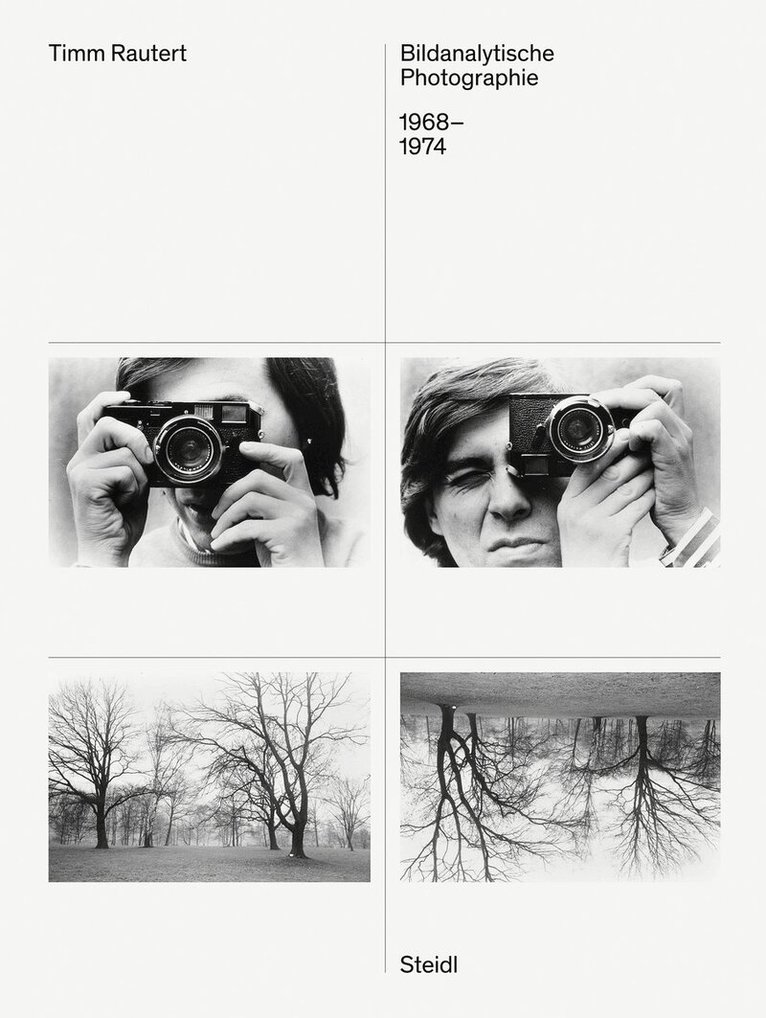
Timm Rautert (Bilingual edition)
Bildanalytische Photographie / Image-Analytical Photography, 1968–1974
Inbunden, Engelska, 2020
521 kr
Skickas inom 7-10 vardagar