Stephen Longrigg – författare
Visar alla böcker från författaren Stephen Longrigg. Handla med fri frakt och snabb leverans.
4 produkter
4 produkter
673 kr
Skickas inom 10-15 vardagar
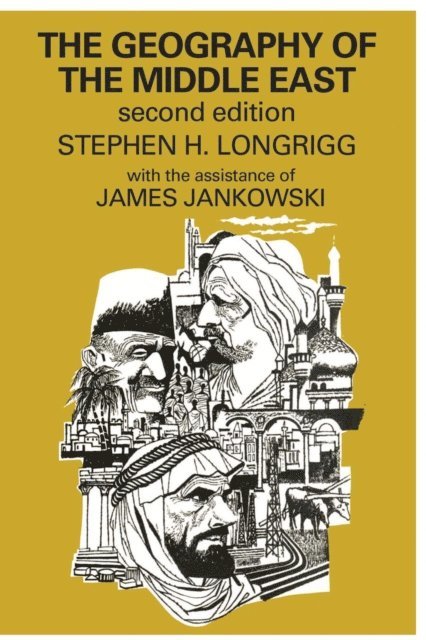
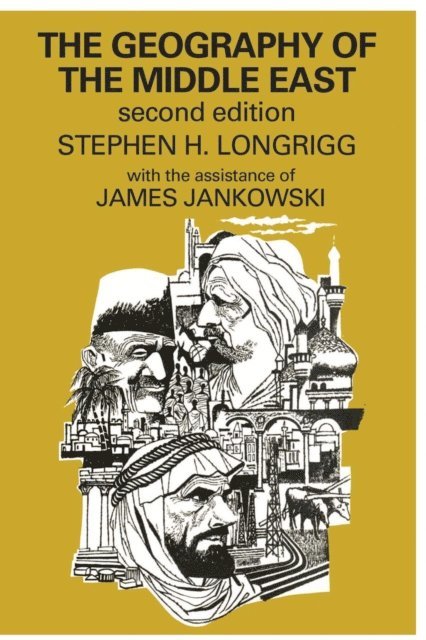
Much of the Middle East is in a continuing state of visible, often revolutionary, change in almost every field--social, cultural, economic, political. Although time will have greatly modified the conditions here presented, the author emphasizes those aspects which, being the least ephemeral, were likely to remain valid for some years and indicates the areas in which the most change can be expected. Therefore, in evaluating any change that has occurred, the reader will at least be informed of the conditions out of which--or because of which--such an event occurred.In some cases Longrigg passes over important aspects of the Middle Eastern region and its component countries, almost or entirely in silence: among such aspects being those of military resources, prominent personalities, constitutional or legal issues, budgets and balances of trade. And even on matters upon which he has said something fairly specific--topography, races and languages, religions, climates, natural resources and agronomy, industry, communications--there may be too little detailed information to satisfy a reader desirous of a full picture of a given aspect of things in this or that territory. For most of such detail, and not less for an appreciation which may be widely different from the author's, the student can very easily look elsewhere: the literature of these countries is abundant and accessible.Longrigg's attempt has been to offer an objective but informed account of the different nationalities and social forces found in Middle Eastern environments, urban and rural, in terms of the particular circumstances, problems and hopes of the dozen separate and more or less divided states of the region. The non-specialist reader may from all this learn something true and perhaps suggestive, while the expert may find not too much to offend him.
2 317 kr
Skickas inom 10-15 vardagar
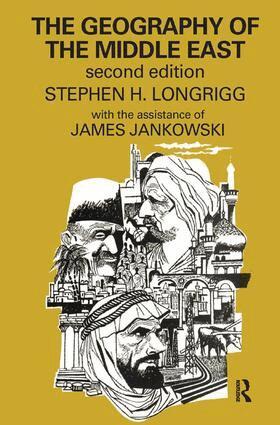
Much of the Middle East is in a continuing state of visible, often revolutionary, change in almost every field--social, cultural, economic, political. Although time will have greatly modified the conditions here presented, the author emphasizes those aspects which, being the least ephemeral, were likely to remain valid for some years and indicates the areas in which the most change can be expected. Therefore, in evaluating any change that has occurred, the reader will at least be informed of the conditions out of which--or because of which--such an event occurred.In some cases Longrigg passes over important aspects of the Middle Eastern region and its component countries, almost or entirely in silence: among such aspects being those of military resources, prominent personalities, constitutional or legal issues, budgets and balances of trade. And even on matters upon which he has said something fairly specific--topography, races and languages, religions, climates, natural resources and agronomy, industry, communications--there may be too little detailed information to satisfy a reader desirous of a full picture of a given aspect of things in this or that territory. For most of such detail, and not less for an appreciation which may be widely different from the author's, the student can very easily look elsewhere: the literature of these countries is abundant and accessible.Longrigg's attempt has been to offer an objective but informed account of the different nationalities and social forces found in Middle Eastern environments, urban and rural, in terms of the particular circumstances, problems and hopes of the dozen separate and more or less divided states of the region. The non-specialist reader may from all this learn something true and perhaps suggestive, while the expert may find not too much to offend him.
2 176 kr
Skickas inom 10-15 vardagar
This book examines the nature and the causes of the 1929 depression, tracing its background and the broad conditions from which the depression emerged. As an infl uence on economic activity, Robbins sees World War I, and the political changes that followed it, as a series of shifts in the fundamental conditions of demand and supply, to which economic activity had to adapt. Th e needs of the war had called a huge apparatus of mechanical equipment into being, which the resumption of peace rendered in large part superfl uous. The war also disrupted world markets, and its settlement created conditions that aggravated this disruption. Th us, the struggle that was to end nationalist friction in fact gave nationalism new scope.The depression of 1929 and beyond dwarfed all preceding economic disruptions, both in magnitude and in intensity. In 1929 the index of security prices in the United States was in the neighborhood of 200-210; in 1932 it had fallen to 30-40. Commodity prices in general fell by 30 to 40 percent, and in some commodity markets the drop was even more catastrophic. Production in the chief manufacturing countries of the world from 30 to 50 percent, and the value of world trade in 1932 was a third of what it was three years before. Worldwide, something like 30 million people were unemployed.There have been many economic downturns in modern economic history, but never anything to compare with the years of the Great Depression. Few books have conveyed that period with greater clarity and precision than this masterpiece by Lionel Robbins. Murray Weidenbaum's masterful new introduction adds to its contemporary value.
735 kr
Skickas inom 10-15 vardagar
This book examines the nature and the causes of the 1929 depression, tracing its background and the broad conditions from which the depression emerged. As an infl uence on economic activity, Robbins sees World War I, and the political changes that followed it, as a series of shifts in the fundamental conditions of demand and supply, to which economic activity had to adapt. Th e needs of the war had called a huge apparatus of mechanical equipment into being, which the resumption of peace rendered in large part superfl uous. The war also disrupted world markets, and its settlement created conditions that aggravated this disruption. Th us, the struggle that was to end nationalist friction in fact gave nationalism new scope.The depression of 1929 and beyond dwarfed all preceding economic disruptions, both in magnitude and in intensity. In 1929 the index of security prices in the United States was in the neighborhood of 200-210; in 1932 it had fallen to 30-40. Commodity prices in general fell by 30 to 40 percent, and in some commodity markets the drop was even more catastrophic. Production in the chief manufacturing countries of the world from 30 to 50 percent, and the value of world trade in 1932 was a third of what it was three years before. Worldwide, something like 30 million people were unemployed.There have been many economic downturns in modern economic history, but never anything to compare with the years of the Great Depression. Few books have conveyed that period with greater clarity and precision than this masterpiece by Lionel Robbins. Murray Weidenbaum's masterful new introduction adds to its contemporary value.