Stephen R. Graubard - Böcker
Visar alla böcker från författaren Stephen R. Graubard. Handla med fri frakt och snabb leverans.
20 produkter
20 produkter
531 kr
Skickas inom 5-8 vardagar
2 088 kr
Skickas inom 10-15 vardagar
At a time of tremendous flux throughout Europe, this book provides solid analyses of the events and trends that are rapidly reshaping the region. Originally published as an edition of Dcedalus, this updated volume brings together leading scholars to examine such issues as the major paradigmatic shifts occurring in Eastern Europe, the long-te
617 kr
Skickas inom 10-15 vardagar
This book provides solid analyses of the events and trends that are reshaping Europe. It examines such issues as the major paradigmatic shifts occurring in Eastern Europe, the long-term role of Gorbachev, and the effects of glasnost and perestroika on the future of Europe.
354 kr
Skickas inom 5-8 vardagar
Kissinger: Portrait of a Mind provides the fullest view possible of the development of Kissinger's approach to foreign policy. It is essential reading for courses that deal with American foreign relations in the twentieth century.
410 kr
Skickas inom 3-6 vardagar
Appeared originally in the winter and spring 1971 issues of Ddalus.
329 kr
Skickas inom 5-8 vardagar
This "stimulating and comprehensive" (Kirkus Reviews) collection of original essays on twentieth-century Japan's history and culture provides a unique mix of American and Japanese perspectives on Showa. With an important, substantial Introduction by Carol Gluck, the volume explores the strengths of the Japanese economy, the issue of democracy and Japan's political culture, Japan's achievements in technology and the arts, and its relations with other Asian nations and the United States.
350 kr
Skickas inom 5-8 vardagar
299 kr
Skickas inom 5-8 vardagar
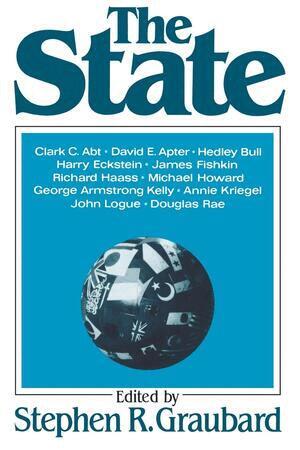
Essays discuss the nature of the modern state and its relationship to society justice, defense, terrorism, war and world affairs.
639 kr
Skickas inom 10-15 vardagar
"This book covers well the issues and problems of the U.S. academic profession in the second half of the twentieth century." -- Contemporary ScienceThe tale of the American academic profession-that large company of men and women, unprecedented in its size and diversity-needs to be written. A large historical literature on America's colleges and universities exists, but much of it is unashamedly hagiographic. On the other hand, more critical works see American universities as being in dire need of massive reform. This charge is not sustained by the contributors to The American Academic Profession, who hope to shatter the code of silence that passes for discretion, by focusing on the forces that have conspired to create the American academic profession.Graubard includes contributions from important scholars around the world: "How the Academic Profession is Changing" by Arthur Levine; "Small Worlds, Different Worlds: The Uniqueness and Troubles of American Academic Professions" by Burton R. Clark; "The Elusive Academic Profession: Complexity and Change" by Francis Oakley; "Uncertainties in the Changing Academic Profession" by Walter E. Massey; "Stewards of Opportunity: America's Public Community Colleges" by Patrick M. Callan; "Public Universities as Academic Workplaces" by Patricia J. Gumport; "Survival of the Fittest? Postgraduate Education and the Professoriate at the Fin de Sibcle" by R. M. Douglas; "Reflections on the Culture Wars" by Eugene Goodheart; "A Blow Is Like an Instrument" by Charles Bernstein; "The Science Wars and the Future of the American Academic Profession" by Jay A. Labinger; "The Scientist as Academic" by Cheryl B. Leggon; "The 'Place' of Knowledge in the American Academic Profession" by Sheldon Rothblatt; "Border Crossings: Organizational Boundaries and Challenges to the American Professoriate" by Theodore R. Mitchell; "The Development of Information Technology in American Higher Education" by Martin Trow; and "An International Academic Crisis? The American Professoriate in Comparative Perspective" by Philip G. Altbach.The American Academic Profession is not sanguine about what is currently happening in higher education, or what it imagines the future portends. It simply asks the question: Can a society truly understand its universities and colleges when it has moved too quickly from uncritical admiration to uniformed and ungenerous complaint? This volume intends to dispel some long-persistent myths in favor of objective truth. It is a must for anyone interested in academic problems, for those who work in higher education, and for everyone interested in American ideas, traditions, and social and intellectual history.Stephen R. Graubard is editor of the American Academy of Arts and Sciences and its journal, Daedalus, and professor of history emeritus at Brown University.
468 kr
Skickas inom 10-15 vardagar
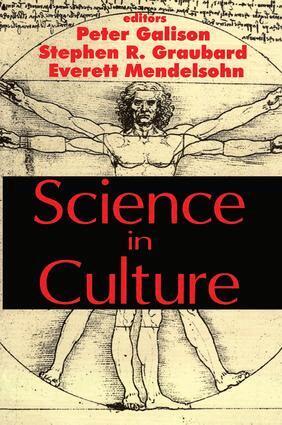
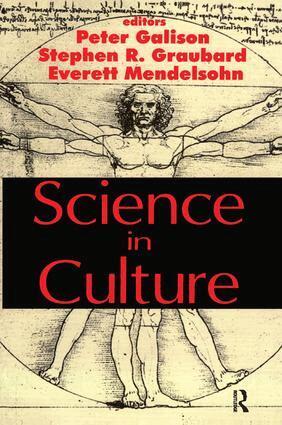
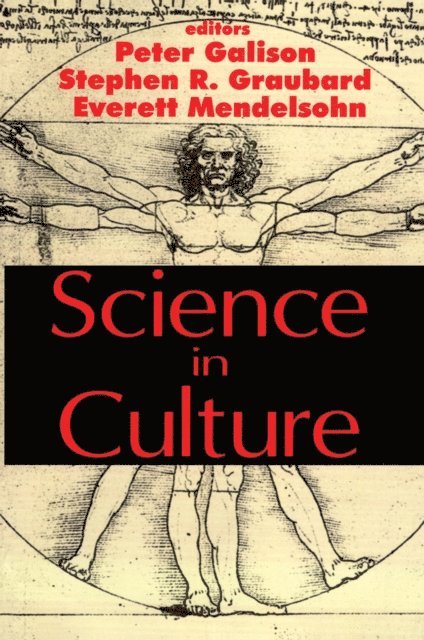
Twenty-five years ago, Gerald Holton's Thematic Origins of Scientific Thought introduced a wide audience to his ideas. Holton argued that from ancient times to the modern period, an astonishing feature of innovative scientific work was its ability to hold, simultaneously, deep and opposite commitments of the most fundamental sort. Over the course of Holton's career, he embraced both the humanities and the sciences. Given this background, it is fitting that the explorations assembled in this volume reflect both individually and collectively Holton's dual roots.In the opening essay, Holton sums up his long engagement with Einstein and his thematic commitment to unity. The next two essays address this concern. In historicized form, Lorraine Daston returns the question of the scientific imagination to the Enlightenment period when both sciences and art feared imagination. Daston argues that the split whereby imagination was valued in the arts and loathed in the sciences is a nineteenth-century divide. James Ackerman on Leonardo da Vinci meshes perfectly with Daston's account, showing a form of imaginative intervention where it is irrelevant to draw analogies between art and science. Historians of religion Wendy Doniger and Gregory Spinner pursue the imagination into the bedroom with literary-theological representations. Science, culture, and the imagination also intersect with biologist Edward Wilson and physicist Steven Weinberg. Both tackle the big question of the unity of knowledge and worldviews from a scientific perspective while art historian Ernst Gombrich does the same from the perspective of art history. To emphasize the nitty-gritty of scientific practice, chemists Bretislav Fredrich and Dudley Herschback provide a remarkable historical tour at the boundary of chemistry and physics. In the concluding essay, historian of education Patricia Albjerg Graham addresses pedagogy head-on.In these various reflections on science, art, literature, philosophy, and education, this volume gives us a view in common: a deep and abiding respect for Gerald Holton's contribution to our understanding of science in culture.Peter Galison is Mallinckrodt Professor of History of Science and of physics at Harvard University. Stephen R. Graubard is editor of the American Academy of Arts and Sciences and its journal, Daedalus, and professor of history emeritus at Brown University. Everett Mendelsohn is director of the History of Science Program at Harvard University.
639 kr
Skickas inom 10-15 vardagar
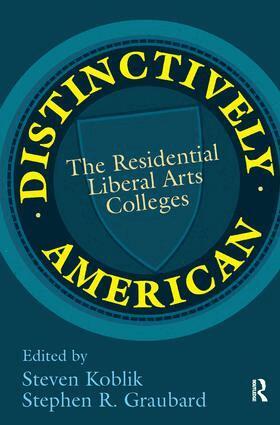
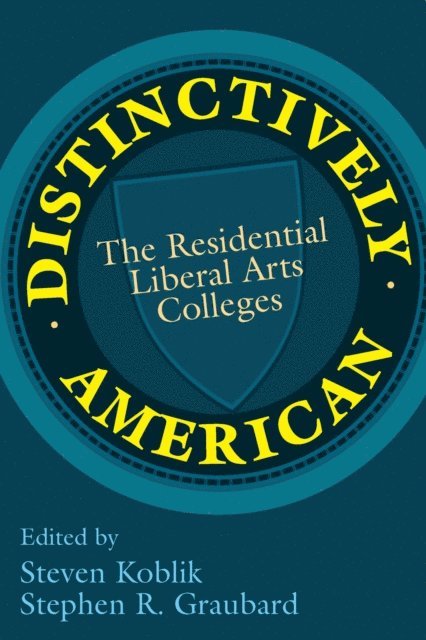
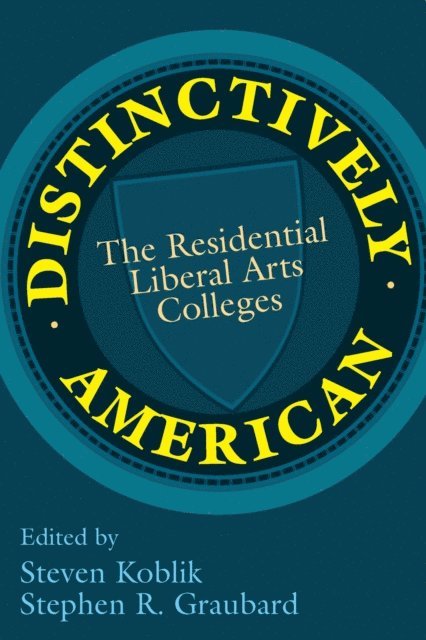
There is much change underway in American higher education. New technologies are challenging the teaching practices of yesterday, distance learning is lauded, and private firms offer to certify the educational credentials that businesses and others will deem satisfactory. In this new environment, America's liberal arts colleges propound a quite different set of values. Their continuing faith in the liberal arts--not as the nineteenth century chose to define them but as the twenty-first century will be obliged to reconsider them--is being tested.Distinctively American examines the American liberal arts college as an institution, from its role in the lives of students, to its value as a form of education. It explores the threats faced by liberal arts colleges as well as the transformative role, both positive and negative, information technology will play in their future development and survival. In the preface introducing the volume, Stephen Graubard examines the history of the American liberal arts colleges, from their early disdained reputations in comparison to European schools, to their slow rise to becoming "world-class universities."This important volume explores the triumphs and challenges of one segment of the American higher educational universe. It also addresses a larger question: What ought this country be teaching its young, the many millions who now throng its colleges and universities? Distinctively American is essential reading for all concerned with the future of higher education.
322 kr
Skickas inom 7-10 vardagar
The drastically changed climate in which research universities and other institutions of higher education now function has led to grave doubts about how these institutions will operate in the future. In "The Research University In A Time Of Discontent", distinguished scholars address this concern, drawing examples and making recommendations based on their own experiences as academic administrators and faculty members. (Education)
266 kr
Skickas inom 3-6 vardagar
2 098 kr
Skickas inom 10-15 vardagar
Libraries are experiencing a technological revolution that goes well beyond anything that has existed since the invention of printing. Not surprisingly, the digital library, with all that it portends for the future of the book and the periodical, but also with all that it implies for the kinds of information that will be collected and disseminated, will necessarily preoccupy those responsible for libraries in the new century. Everything from copyright, access, and cost to the nature of the reading public itself is now up for re-examination.'Books, Bricks, and Bytes' brings together an extraordinary array of authors at the cutting edge of these concerns, not only within the United States, but experts drawn from Germany, France, Russia, the United Kingdom, Brazil, and India. James H. Billington discusses the Library of Congress in the information age; Ann S. Okerson outlines two models for securing scholarly information; Donald S. Lamm discusses the shaky partnership of publishers and librarians hi this new environment; Klaus-Dieter Lehmann provides a framework for maintaining the intellectual heritage of the past in a digitized future. Each contributor shows hi concrete detail and vivid illustration that the library as a world of holdings is increasingly valued as an incomparable place to access information. In his preface to the book, Stephen Graubard reminds us that whether or not one believes in the reality of the information revolution that is said to be overtaking the world, it is obvious that the libraries being built today do not resemble those marble sanctuaries constructed hi the Victorian age or in the early twentieth entury. This is a work that shows how libraries have been transformed from "refuges" from the external world, to places that reflect the social and intellectual values of specific societies. The idea that the library is a public trust and public resource is at the center of this unusually fine collection at the cutting edge of professional and public life.
2 039 kr
Skickas inom 10-15 vardagar
There is much change underway in American higher education. New technologies are challenging the teaching practices of yesterday, distance learning is lauded, and private firms offer to certify the educational credentials that businesses and others will deem satisfactory. In this new environment, America's liberal arts colleges propound a quite different set of values. Their continuing faith in the liberal arts--not as the nineteenth century chose to define them but as the twenty-first century will be obliged to reconsider them--is being tested.Distinctively American examines the American liberal arts college as an institution, from its role in the lives of students, to its value as a form of education. It explores the threats faced by liberal arts colleges as well as the transformative role, both positive and negative, information technology will play in their future development and survival. In the preface introducing the volume, Stephen Graubard examines the history of the American liberal arts colleges, from their early disdained reputations in comparison to European schools, to their slow rise to becoming "world-class universities."This important volume explores the triumphs and challenges of one segment of the American higher educational universe. It also addresses a larger question: What ought this country be teaching its young, the many millions who now throng its colleges and universities? Distinctively American is essential reading for all concerned with the future of higher education.
1 368 kr
Skickas inom 10-15 vardagar
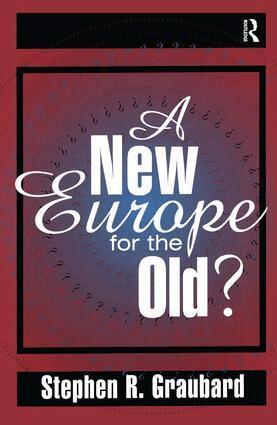
This book presents pertinent questions regarding the current state of the European world as it has evolved since 1989. It provides greater sympathy for the complexity of societies, and argues for greater balance of those that are small, and that do not cast a long shadow in the world today.
1 322 kr
Skickas inom 10-15 vardagar
Twenty-five years ago, Gerald Holton's Thematic Origins of Scientific Thought introduced a wide audience to his ideas. Holton argued that from ancient times to the modern period, an astonishing feature of innovative scientific work was its ability to hold, simultaneously, deep and opposite commitments of the most fundamental sort. Over the course of Holton's career, he embraced both the humanities and the sciences. Given this background, it is fitting that the explorations assembled in this volume reflect both individually and collectively Holton's dual roots.In the opening essay, Holton sums up his long engagement with Einstein and his thematic commitment to unity. The next two essays address this concern. In historicized form, Lorraine Daston returns the question of the scientific imagination to the Enlightenment period when both sciences and art feared imagination. Daston argues that the split whereby imagination was valued in the arts and loathed in the sciences is a nineteenth-century divide. James Ackerman on Leonardo da Vinci meshes perfectly with Daston's account, showing a form of imaginative intervention where it is irrelevant to draw analogies between art and science. Historians of religion Wendy Doniger and Gregory Spinner pursue the imagination into the bedroom with literary-theological representations. Science, culture, and the imagination also intersect with biologist Edward Wilson and physicist Steven Weinberg. Both tackle the big question of the unity of knowledge and worldviews from a scientific perspective while art historian Ernst Gombrich does the same from the perspective of art history. To emphasize the nitty-gritty of scientific practice, chemists Bretislav Fredrich and Dudley Herschback provide a remarkable historical tour at the boundary of chemistry and physics. In the concluding essay, historian of education Patricia Albjerg Graham addresses pedagogy head-on.In these various reflections on science, art, literature, philosophy, and education, this volume gives us a view in common: a deep and abiding respect for Gerald Holton's contribution to our understanding of science in culture.Peter Galison is Mallinckrodt Professor of History of Science and of physics at Harvard University. Stephen R. Graubard is editor of the American Academy of Arts and Sciences and its journal, Daedalus, and professor of history emeritus at Brown University. Everett Mendelsohn is director of the History of Science Program at Harvard University.
2 030 kr
Skickas inom 10-15 vardagar
"This book covers well the issues and problems of the U.S. academic profession in the second half of the twentieth century." -- Contemporary ScienceThe tale of the American academic profession-that large company of men and women, unprecedented in its size and diversity-needs to be written. A large historical literature on America's colleges and universities exists, but much of it is unashamedly hagiographic. On the other hand, more critical works see American universities as being in dire need of massive reform. This charge is not sustained by the contributors to The American Academic Profession, who hope to shatter the code of silence that passes for discretion, by focusing on the forces that have conspired to create the American academic profession.Graubard includes contributions from important scholars around the world: "How the Academic Profession is Changing" by Arthur Levine; "Small Worlds, Different Worlds: The Uniqueness and Troubles of American Academic Professions" by Burton R. Clark; "The Elusive Academic Profession: Complexity and Change" by Francis Oakley; "Uncertainties in the Changing Academic Profession" by Walter E. Massey; "Stewards of Opportunity: America's Public Community Colleges" by Patrick M. Callan; "Public Universities as Academic Workplaces" by Patricia J. Gumport; "Survival of the Fittest? Postgraduate Education and the Professoriate at the Fin de Sibcle" by R. M. Douglas; "Reflections on the Culture Wars" by Eugene Goodheart; "A Blow Is Like an Instrument" by Charles Bernstein; "The Science Wars and the Future of the American Academic Profession" by Jay A. Labinger; "The Scientist as Academic" by Cheryl B. Leggon; "The 'Place' of Knowledge in the American Academic Profession" by Sheldon Rothblatt; "Border Crossings: Organizational Boundaries and Challenges to the American Professoriate" by Theodore R. Mitchell; "The Development of Information Technology in American Higher Education" by Martin Trow; and "An International Academic Crisis? The American Professoriate in Comparative Perspective" by Philip G. Altbach.The American Academic Profession is not sanguine about what is currently happening in higher education, or what it imagines the future portends. It simply asks the question: Can a society truly understand its universities and colleges when it has moved too quickly from uncritical admiration to uniformed and ungenerous complaint? This volume intends to dispel some long-persistent myths in favor of objective truth. It is a must for anyone interested in academic problems, for those who work in higher education, and for everyone interested in American ideas, traditions, and social and intellectual history.Stephen R. Graubard is editor of the American Academy of Arts and Sciences and its journal, Daedalus, and professor of history emeritus at Brown University.
439 kr
Tillfälligt slut
Since 1989, it has been possible to review what has been published both at home and abroad on the communist states of Central and Eastern Europe and, no less importantly, on the Soviet Union itself, from a new perspective. Few have chosen to engage in this Herculean task, whether out of a residual civility in not wishing to mock certain aging scholars whose research would appear curiously dated, or out of a sense of fatigue with the whole subject of casting aspersions on mistaken views. A New Europe for the Old? asks whether the master narratives that circulated so widely in the West in the half-century since 1945 remain valid. Stephen Graubard's volume raises pertinent questions regarding the current state of the European world as it has evolved since 1989. He includes contributions from important scholars around the world: "A New Europe for the Old?" by Martin Malia; "The Serbs: The Sweet and Rotten Smell of History" by Tim Judah; "Illyrianism and the Croatian Quest for Statehood" by Marcus Tanner; "To Be or Not to Be Balkan: Romania's Quest for Self-Definition" by Tom Gallagher; "Ukraine: From an Imperial Periphery to Sovereign State" by Roman Szporlunk; "Ethnic Nationalism in the Russian Federation" by Anatoly M. Khazanov; "Im Osten viel Neues: Plenty of News from the Eastern Lnder" by Barbara Ischinger; "Discourse and (Dis)Integration in Europe: The Cases of France, Germany, and Great Britain" by Vivien A. Schmidt; "The European Debate on Citizenship" by Dominique Schnapper; "Has the Nation Died? The Debate Over Italy's Identity (and Future)" by Dario Biocca; and "Postwar Europe" by Arne Roth.A New Europe for the Old? provides greater sympathy for the complexity of societies, and argues for greater tolerance of those that are small, and that do not cast a long shadow in the world of today. In the twenty-first as in the twentieth century, they may be engines of change, both as a result of the disorder that they produce as well as the ways in which their values, however seemingly antiquated, survive and prosper, and not only in their native lands. This volume will intrigue historians and European studies scholars alike.Stephen R. Graubard is editor of the American Academy of Arts and Sciences and its journal, Daedalus, and professor of humanities at Brown University.
662 kr
Skickas inom 10-15 vardagar
Libraries are experiencing a technological revolution that goes well beyond anything that has existed since the invention of printing. Not surprisingly, the digital library, with all that it portends for the future of the book and the periodical, but also with all that it implies for the kinds of information that will be collected and disseminated, will necessarily preoccupy those responsible for libraries in the new century. Everything from copyright, access, and cost to the nature of the reading public itself is now up for re-examination.'Books, Bricks, and Bytes' brings together an extraordinary array of authors at the cutting edge of these concerns, not only within the United States, but experts drawn from Germany, France, Russia, the United Kingdom, Brazil, and India. James H. Billington discusses the Library of Congress in the information age; Ann S. Okerson outlines two models for securing scholarly information; Donald S. Lamm discusses the shaky partnership of publishers and librarians hi this new environment; Klaus-Dieter Lehmann provides a framework for maintaining the intellectual heritage of the past in a digitized future. Each contributor shows hi concrete detail and vivid illustration that the library as a world of holdings is increasingly valued as an incomparable place to access information. In his preface to the book, Stephen Graubard reminds us that whether or not one believes in the reality of the information revolution that is said to be overtaking the world, it is obvious that the libraries being built today do not resemble those marble sanctuaries constructed hi the Victorian age or in the early twentieth entury. This is a work that shows how libraries have been transformed from "refuges" from the external world, to places that reflect the social and intellectual values of specific societies. The idea that the library is a public trust and public resource is at the center of this unusually fine collection at the cutting edge of professional and public life.