Stephen Spiess - Böcker
Visar alla böcker från författaren Stephen Spiess. Handla med fri frakt och snabb leverans.
4 produkter
4 produkter
1 263 kr
Kommande
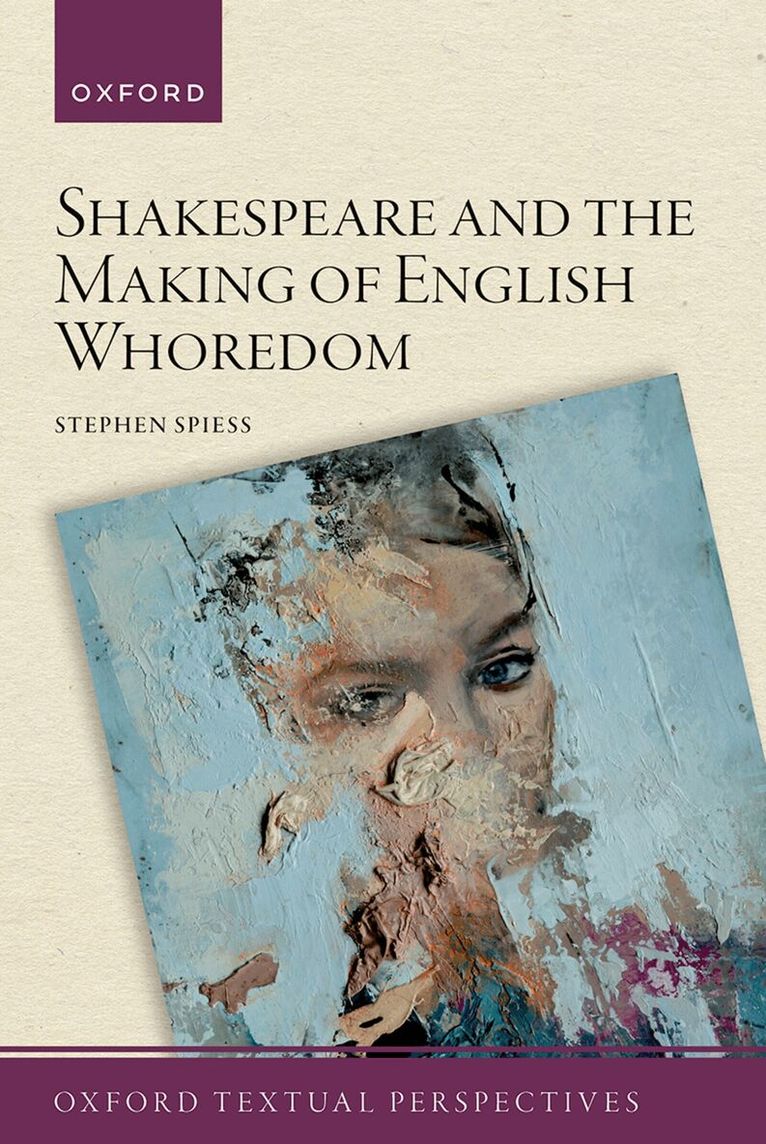
How does one know a whore is a whore? Upon what terms, standards, interpretive logics, and material practices does such knowledge depend? In Shakespeare and the Making of English Whoredom, Stephen Spiess pursues these questions and, in so doing, discovers the extraordinary cultural labor necessary to produce and sustain the fiction of the “whore” as a fixed, coherent, and readily apprehensible category of sexual knowledge. This work, he shows, unfolds across a variety of historically situated social, textual, and linguistic processes, from the writing of dictionary entries, character sketches, and lyric poems to public proclamations, conversion rituals, and dramatic representations. It also extends into the present era, where scholars continue to shore up whoredom's incoherences and to reproduce moralized distinctions between “real” prostitutes and “discursive” whores. Charting a different approach in this book, Spiess argues that the ambiguities, incoherences, and impasses that attend the meanings and makings of English whoredom are essential to understanding how that category operates, both in that historical culture and our own. Establishing whoredom as a knowledge relation and a material process, he reveals the analytical benefits of lingering in sites where sexual knowledge breaks down, and of tarrying with the complexities and consequences of the material practices, cultural logics, and social affects that emerge to mediate these impasses. Applying the methods and insights of queer epistemology to a topic of vital feminist concern, Spiess locates new sites for discursive contestation while resisting the identitarian or ontological logics that disciplinary categories seek to install in the first place. Shakespeare and the Making of English Whoredom thus delivers a new analytical framework for understanding the social, textual, and representational histories of illicit sexual figures in early modern England.
294 kr
Kommande
How does one know a whore is a whore? Upon what terms, standards, interpretive logics, and material practices does such knowledge depend? In Shakespeare and the Making of English Whoredom, Stephen Spiess pursues these questions and, in so doing, discovers the extraordinary cultural labor necessary to produce and sustain the fiction of the “whore” as a fixed, coherent, and readily apprehensible category of sexual knowledge. This work, he shows, unfolds across a variety of historically situated social, textual, and linguistic processes, from the writing of dictionary entries, character sketches, and lyric poems to public proclamations, conversion rituals, and dramatic representations. It also extends into the present era, where scholars continue to shore up whoredom's incoherences and to reproduce moralized distinctions between “real” prostitutes and “discursive” whores. Charting a different approach in this book, Spiess argues that the ambiguities, incoherences, and impasses that attend the meanings and makings of English whoredom are essential to understanding how that category operates, both in that historical culture and our own. Establishing whoredom as a knowledge relation and a material process, he reveals the analytical benefits of lingering in sites where sexual knowledge breaks down, and of tarrying with the complexities and consequences of the material practices, cultural logics, and social affects that emerge to mediate these impasses. Applying the methods and insights of queer epistemology to a topic of vital feminist concern, Spiess locates new sites for discursive contestation while resisting the identitarian or ontological logics that disciplinary categories seek to install in the first place. Shakespeare and the Making of English Whoredom thus delivers a new analytical framework for understanding the social, textual, and representational histories of illicit sexual figures in early modern England.
2 089 kr
Skickas inom 3-6 vardagar
Logomotives are words that change worlds past, present, and future. Bearing a wide range of linguistic, regional and disciplinary expertise, the volume's twenty-five contributors traverse multiple geographies (Asia, Africa, Iberian Peninsula, Europe, and the Americas), work across fifteen languages and span from antiquity to our current moment to reveal how words are catalysts of cultural, political and epistemological change. Harnessing new developments in philologies of race, in queer-, feminist-, trans-, transnational- and postcolonial philologies, as well as translation studies, Logomotives illuminates the world-making capacity of words. Each chapter opens with a methodological statement, pursues a central reading and concludes with a lesson plan for undergraduate or graduate classrooms. The volume orients critical attention to the relations between what a word means, the ways in which it moves, and the changes that such motion engenders, both within and across the historical cultures under analysis and in present-day scholarship.
409 kr
Kommande
Logomotives are words that change worlds – past, present, and future. Bearing a wide range of linguistic, regional and disciplinary expertise, the volume’s twenty-five contributors traverse multiple geographies (Asia, Africa, Iberian Peninsula, Europe, and the Americas), work across fifteen languages and span from antiquity to our current moment to reveal how words are catalysts of cultural, political and epistemological change. Harnessing new developments in philologies of race, in queer-, feminist-, trans-, transnational- and postcolonial philologies, as well as translation studies, Logomotives illuminates the world-making capacity of words. Each chapter opens with a methodological statement, pursues a central reading and concludes with a lesson plan for undergraduate or graduate classrooms. The volume orients critical attention to the relations between what a word means, the ways in which it moves, and the changes that such motion engenders, both within and across the historical cultures under analysis and in present-day scholarship.