Stephen Wall – författare
Visar alla böcker från författaren Stephen Wall. Handla med fri frakt och snabb leverans.
19 produkter
Can You Forgive Her?
Av Anthony Trollope, Stephen Wall
Häftad, 1974
179 kr
Lägg i varukorg
The first novel in Anthony Trollope's 'Palliser' series, Can You Forgive Her? traces the fortunes of three very different women in an exploration of whether social obligations and personal happiness can ever coincide. This Penguin Classics edition is edited with an introduction by Stephen …
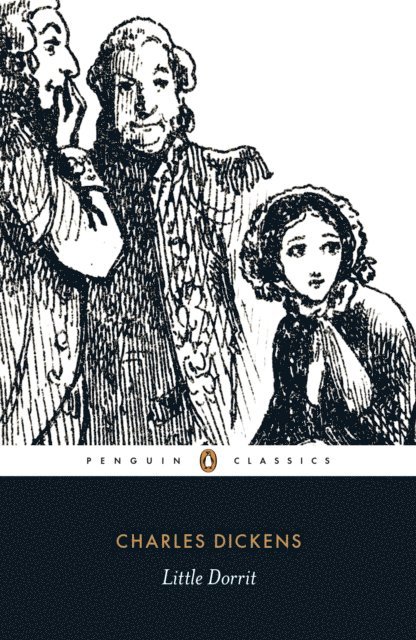
Little Dorrit
Av Charles Dickens, Helen Small m. fl.
Häftad, 2003
146 kr
Lägg i varukorg
'In Little Dorrit, Dickens attacked English institutions with a ferocity that has never since been approached' George OrwellA masterly evocation of the state and psychology of imprisonment, Little Dorrit is one of the supreme works of Dickens's maturity. It follows Arthur Clennam who, returning to …
Little Dorrit
Av Charles Dickens, Helen Small m. fl.
E-bok, 2008
74 kr
Lägg i varukorg
'In Little Dorrit, Dickens attacked English institutions with a ferocity that has never since been approached' George OrwellA masterly evocation of the state and psychology of imprisonment, Little Dorrit is one of the supreme works of Dickens's maturity. It follows Arthur Clennam who, returning to …
Can You Forgive Her?
Av Anthony Trollope, Stephen Wall
E-bok, 1974
96 kr
Lägg i varukorg
Alice Vavasor cannot decide whether to marry her ambitious but violent cousin George or the upright and gentlemanly John Grey - and finds herself accepting and rejecting each of them in turn. Increasingly confused about her own feelings and unable to forgive herself for such vacillation, her …
Stranger in Europe
Britain and the EU from Thatcher to Blair
Av Stephen Wall
E-bok, 2008
752 kr
Lägg i varukorg
For over twenty years, at the heart of Whitehall, Sir Stephen Wall worked for British leaders as they shaped Britain''s European policy: Margaret Thatcher fighting to get ''her money back''; John Major at Maastricht where the single European currency was born; Tony Blair negotiating the Amsterdam, …
Reluctant European
Britain and the European Union from 1945 to Brexit
Av Stephen Wall
E-bok, 2020
370 kr
Lägg i varukorg
In 2016, the voters of the United Kingdom decided to leave the European Union. The majority for ''Leave'' was small. Yet, in more than 40 years of EU membership, the British had never been wholeheartedly content. In the 1950s, governments preferred the Commonwealth to the Common Market. In the …
Reluctant European
Britain and the European Union from 1945 to Brexit
Av Stephen Wall
E-bok, 2020
370 kr
Lägg i varukorg
In 2016, the voters of the United Kingdom decided to leave the European Union. The majority for ''Leave'' was small. Yet, in more than 40 years of EU membership, the British had never been wholeheartedly content. In the 1950s, governments preferred the Commonwealth to the Common Market. In the …
Reluctant European
Britain and the European Union from 1945 to Brexit
Av Stephen Wall
Inbunden, 2020
503 kr
Lägg i varukorg
In 2016, the voters of the United Kingdom decided to leave the European Union. The majority for 'Leave' was small. Yet, in more than 40 years of EU membership, the British had never been wholeheartedly content. In the 1950s, governments preferred the Commonwealth to the Common Market. In the 1960s, …
A Stranger in Europe
Britain and the EU from Thatcher to Blair
Av Stephen Wall
Inbunden, 2008
1353 kr
Lägg i varukorg
For over twenty years, at the heart of Whitehall, Sir Stephen Wall worked for British leaders as they shaped Britain's European policy: Margaret Thatcher fighting to get 'her money back'; John Major at Maastricht where the single European currency was born; Tony Blair negotiating the Amsterdam, …
Official History of Britain and the European Community, Volume III
The Tiger Unleashed, 1975-1985
Av Stephen Wall
Häftad, 2020
689 kr
Lägg i varukorg
Volume III of The Official History of Britain and the European Community covers the divisions over Europe of the Labour Government (1975–79) and the controversies surrounding Britain’s relations with her EEC partners under Margaret Thatcher.As the UK prepares to leave the European Union, this book …
Official History of Britain and the European Community, Vol. II
From Rejection to Referendum, 1963-1975
Av Stephen Wall
Inbunden, 2012
2504 kr
Lägg i varukorg
This is the second volume in The Official History of Britain and the European Community, and describes the events from 1963 up until the British referendum on the Common Market in 1975.In 1963, General de Gaulle dashed Prime Minister Macmillan’s hopes of taking Britain into the European Community …
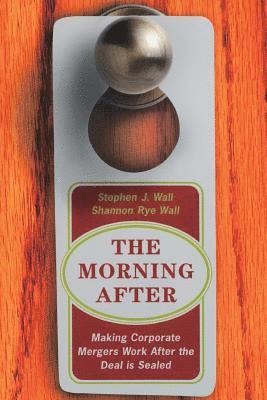
Morning After
Making Corporate Mergers Work After The Deal Is Sealed
Häftad, 2002
191 kr
Lägg i varukorg
Despite the economic downturn, the corporate marriage frenzy continues to proceed at fever pitch, as companies reach beyond their traditional boundaries to gain access to resources, expertise, and markets. But after the ink is dry, most experiments in corporate acquisition fail to live up to …
Official History of Britain and the European Community, Volume III
The Tiger Unleashed, 1975-1985
Av Stephen Wall
Inbunden, 2018
2519 kr
Lägg i varukorg
Volume III of The Official History of Britain and the European Community covers the divisions over Europe of the Labour Government (1975–79) and the controversies surrounding Britain’s relations with her EEC partners under Margaret Thatcher.As the UK prepares to leave the European Union, this book …
American Indian Tribal Governance
A Critical Perspective
Av Stephen Wall
Häftad, 2023
250 kr
Lägg i varukorg
Official History of Britain and the European Community, Vol. II
From Rejection to Referendum, 1963-1975
Av Stephen Wall
E-bok, 2012
1034 kr
Lägg i varukorg
This is the second volume in The Official History of Britain and the European Community , and describes the events from 1963 up until the British referendum on the Common Market in 1975. In 1963, General de Gaulle dashed Prime Minister Macmillan’s hopes of taking Britain into the European …
Official History of Britain and the European Community, Vol. II
From Rejection to Referendum, 1963-1975
Av Stephen Wall
E-bok, 2012
1034 kr
Lägg i varukorg
This is the second volume in The Official History of Britain and the European Community , and describes the events from 1963 up until the British referendum on the Common Market in 1975. In 1963, General de Gaulle dashed Prime Minister Macmillan’s hopes of taking Britain into the European …
Official History of Britain and the European Community, Vol. II
From Rejection to Referendum, 1963-1975
Av Stephen Wall
Häftad, 2014
879 kr
Lägg i varukorg
This is the second volume in The Official History of Britain and the European Community, and describes the events from 1963 up until the British referendum on the Common Market in 1975.In 1963, General de Gaulle dashed Prime Minister Macmillan’s hopes of taking Britain into the European Community …
Official History of Britain and the European Community, Volume III
The Tiger Unleashed, 1975-1985
Av Stephen Wall
E-bok, 2018
838 kr
Lägg i varukorg
Volume III of The Official History of Britain and the European Community covers the divisions over Europe of the Labour Government (1975–79) and the controversies surrounding Britain’s relations with her EEC partners under Margaret Thatcher. As the UK prepares to leave the European Union, this …
Official History of Britain and the European Community, Volume III
The Tiger Unleashed, 1975-1985
Av Stephen Wall
E-bok, 2018
820 kr
Lägg i varukorg
Volume III of The Official History of Britain and the European Community covers the divisions over Europe of the Labour Government (1975–79) and the controversies surrounding Britain’s relations with her EEC partners under Margaret Thatcher. As the UK prepares to leave the European Union, this …