Steven M. Beaudoin - Böcker
Visar alla böcker från författaren Steven M. Beaudoin. Handla med fri frakt och snabb leverans.
3 produkter
3 produkter
2 159 kr
Skickas inom 10-15 vardagar
A genuinely global survey of world poverty from 1500 to the present day, Poverty in World History focuses upon the period from around 1500 onwards when poverty became a global issue, and uses the process of globalization as the chief lens through which to study and understand poverty in world history.The result is both a tying together of significant strands of world history, and an examination of changing attitudes towards poverty and poor relief throughout the world. This wide ranging study underscores a major consequence of increased cultural and economic interaction among the world's societies, highlighting the similarities and differences in impacts and responses to the resulting 'smaller' globe. Topics include: innovations in early modern poor relief the causes of trends towards a globalization of poverty after 1500 poor relief since 1945 to the present poverty, morality and the state.

576 kr
Skickas inom 10-15 vardagar
A genuinely global survey of world poverty from 1500 to the present day, Poverty in World History focuses upon the period from around 1500 onwards when poverty became a global issue, and uses the process of globalization as the chief lens through which to study and understand poverty in world history.The result is both a tying together of significant strands of world history, and an examination of changing attitudes towards poverty and poor relief throughout the world. This wide ranging study underscores a major consequence of increased cultural and economic interaction among the world's societies, highlighting the similarities and differences in impacts and responses to the resulting 'smaller' globe. Topics include: innovations in early modern poor relief the causes of trends towards a globalization of poverty after 1500 poor relief since 1945 to the present poverty, morality and the state.
6 281 kr
Skickas inom 7-10 vardagar
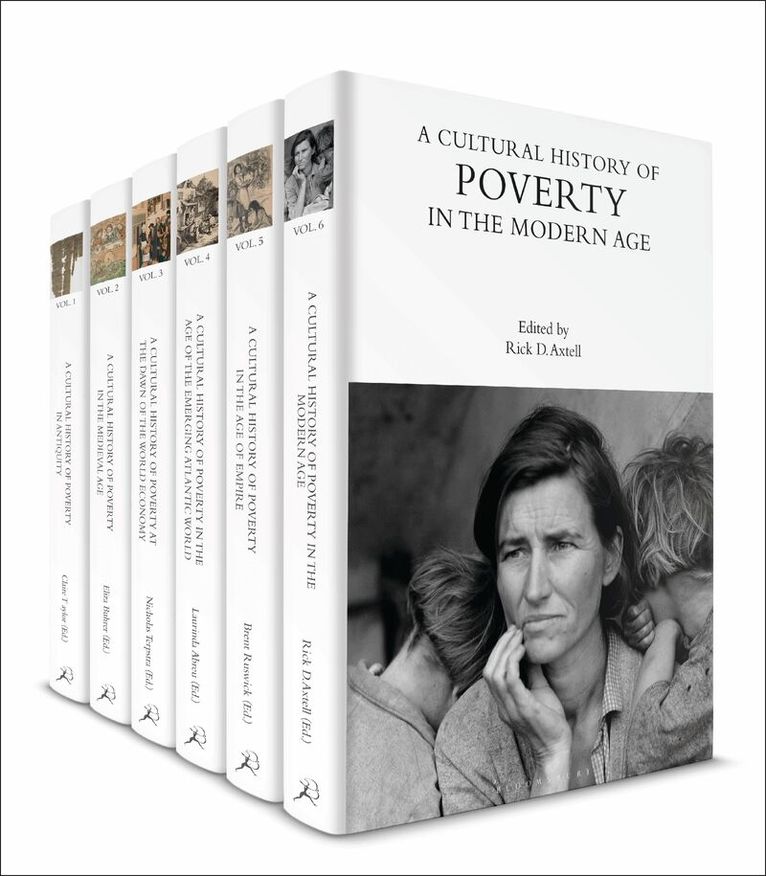
What have been the causes and consequences of poverty in society through the ages? How has poverty been portrayed and understood? And how has this understanding differed according to time and place? In a work that spans 2,500 years these ambitious questions are addressed by 55 experts, each contributing their overview of a theme applied to a period in history. With the help of a broad range of case material they illustrate broad trends and nuances of the culture of poverty in world history from antiquity to the present. Individual volume editors ensure the cohesion of the whole, and to make it as easy as possible to use, chapter titles are identical across each of the volumes. This gives the choice of reading about a specific period in one of the volumes, or following a theme across history by reading the relevant chapter in each of the six.The six volumes cover: 1. Antiquity (500 BCE to 800 CE); 2. Medieval Age (800 to 1450); 3. Dawn of the World Economy (1450 to 1650); 4. Age of the Emerging Atlantic World (1650 to 1800); 5. Age of Empire (1800 to 1920); 6. Modern Age (1920 to the present).Themes (and chapter titles) are: defining poverty; poverty, charity, and spirituality; representations of need and want; poverty, race, and ethnicity; poverty and gender; community and exclusion; poverty and economic thought; and poverty and the body politic.The page extent for the pack is approximately 1728pp. Each volume opens with notes on contributors and an introduction, and concludes with notes, bibliography, and an index.Special introductory offer (valid up to 3 months after publication): £395 / $550 (full price: £440 / $610)The Cultural Histories SeriesA Cultural History of Poverty is part of The Cultural Histories Series. Titles are available both as printed hardcover sets for libraries needing just one subject or preferring a one-off purchase and tangible reference for their shelves, or as part of a fully-searchable digital library available to institutions by annual subscription or on perpetual access (see www.bloomsburyculturalhistory.com).