Stig Ole Johnsen - Böcker
Visar alla böcker från författaren Stig Ole Johnsen. Handla med fri frakt och snabb leverans.
3 produkter
3 produkter
713 kr
Skickas inom 10-15 vardagar
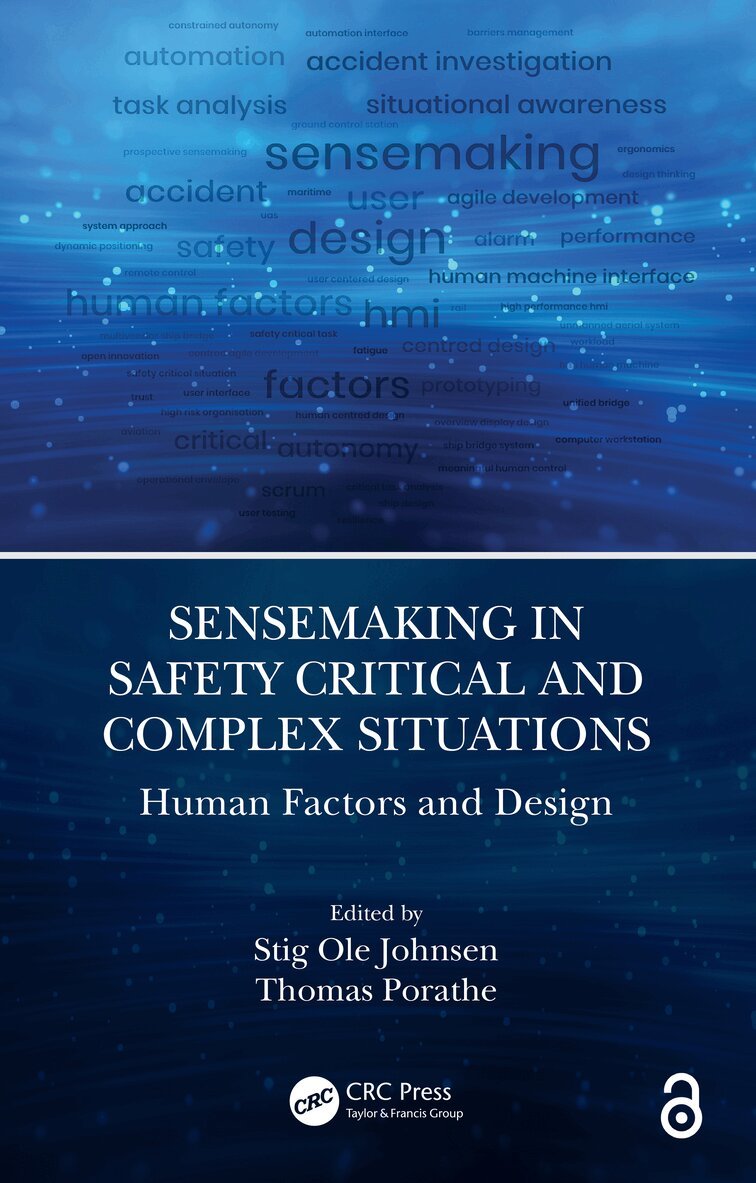
Sensemaking in Safety Critical and Complex Situations: Human Factors and DesignHuman factors-based design that supports the strengths and weaknesses of humans are often missed during the concept and design of complex technical systems. With the focus on digitalization and automation, the human actor is often left out of the loop but needs to step in during safety-critical situations. This book describes how human factors and sensemaking can be used as part of the concept and design of safety critical systems in order to improve safety and resilience.This book discusses the challenges of automation and automated systems when humans are left out of the loop and then need to intervene when the situation calls for it. It covers human control and accepts that humans must handle the unexpected and describes methods to support this. It is based on recent accident analysis involving autonomous systems that move our understanding forward and supports a more modern view on human errors to improve safety in industries such as shipping and marine.The book is for human factors and ergonomists, safety engineers, designers involved in safety critical work and students.Stig Ole Johnsen is a Senior Researcher at SINTEF in Norway. He has a PhD from NTNU in Norway with a focus on resilience in complex socio-technical systems and has a Master’s in Technology Management from MIT/NTNU. He chairs the Human Factors in Control network (HFC) in Norway to strengthen the human factors focus during development and implementation of safety critical technology. His research interests include meaningful human control to support safety and resilience during automation and digitalization. Thomas Porathe has a degree in Information Design from Malardalen University in Sweden. He is currently Professor of Interaction Design at the Norwegian University of Science and Technology in Trondheim, Norway. He specializes in maritime human factors and design of maritime information systems, specifically directed towards control room design, e-navigation and autonomous ships. He has been working with e-Navigation since 2006 in EU projects such as BLAST, EfficienSea, MONALISA, ACCSEAS, SESAME and the unmanned ship project MUNIN. He is active in the International Association of Aids to Navigation and Lighthouse Authorities (IALA).
Sensemaking in Safety Critical and Complex Situations
Human Factors and Design
Inbunden, Engelska, 2021
2 113 kr
Skickas inom 10-15 vardagar
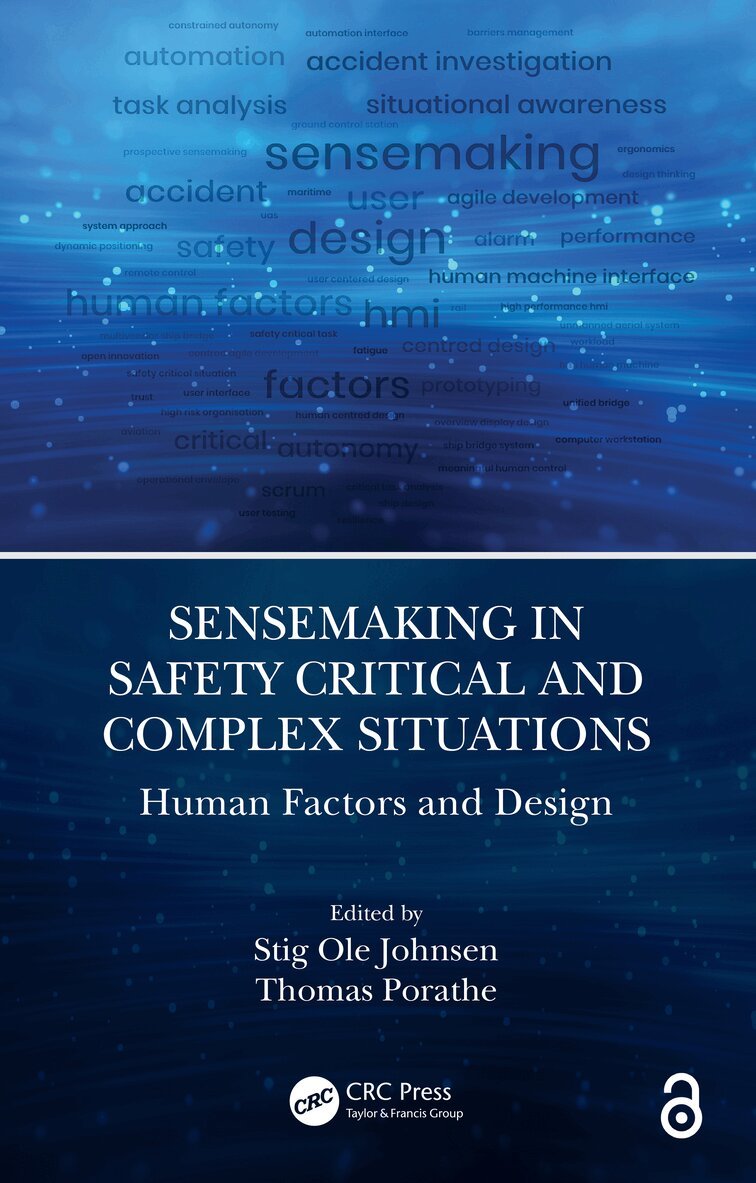
Sensemaking in Safety Critical and Complex Situations: Human Factors and DesignHuman factors-based design that supports the strengths and weaknesses of humans are often missed during the concept and design of complex technical systems. With the focus on digitalization and automation, the human actor is often left out of the loop but needs to step in during safety-critical situations. This book describes how human factors and sensemaking can be used as part of the concept and design of safety critical systems in order to improve safety and resilience.This book discusses the challenges of automation and automated systems when humans are left out of the loop and then need to intervene when the situation calls for it. It covers human control and accepts that humans must handle the unexpected and describes methods to support this. It is based on recent accident analysis involving autonomous systems that move our understanding forward and supports a more modern view on human errors to improve safety in industries such as shipping and marine.The book is for human factors and ergonomists, safety engineers, designers involved in safety critical work and students.Stig Ole Johnsen is a Senior Researcher at SINTEF in Norway. He has a PhD from NTNU in Norway with a focus on resilience in complex socio-technical systems and has a Master’s in Technology Management from MIT/NTNU. He chairs the Human Factors in Control network (HFC) in Norway to strengthen the human factors focus during development and implementation of safety critical technology. His research interests include meaningful human control to support safety and resilience during automation and digitalization. Thomas Porathe has a degree in Information Design from Malardalen University in Sweden. He is currently Professor of Interaction Design at the Norwegian University of Science and Technology in Trondheim, Norway. He specializes in maritime human factors and design of maritime information systems, specifically directed towards control room design, e-navigation and autonomous ships. He has been working with e-Navigation since 2006 in EU projects such as BLAST, EfficienSea, MONALISA, ACCSEAS, SESAME and the unmanned ship project MUNIN. He is active in the International Association of Aids to Navigation and Lighthouse Authorities (IALA).
Safety by Design
Human-Centered Approaches to AI, Automation, and Remote Operations
Inbunden, Engelska, 2026
1 895 kr
Kommande
Safety-critical systems with more digitalization, automation, and AI require integration of human factors to ensure safety, efficiency, and meaningful human control. Across sectors such as aviation, maritime, energy, transportation, and remote operations, accident investigations repeatedly show that failures often stem not from technology alone but from inadequate scoping, poor human-centered design, alarm overload, fragmented automation, and organizational conditions that leave operators unprepared during critical situations. Disasters such as the Boeing 737 MAX accidents demonstrate how safety can be compromised when humans and systems are misaligned, while successful recoveries (such as the US Airways Flight 1549 landing on the Hudson River) show the vital role of design-supported human performance in demanding conditions.Safety by Design: Human-Centered Approaches to AI, Automation, and Remote Operations explores the relationship between human capabilities, organizational readiness, and complex technical systems. It offers best practices for designing safety-critical systems that integrate human factors from concept to operation. The book introduces Meaningful Human Control, a framework ensuring humans retain authority, awareness, and intervention ability, aligning with emerging EU AI regulations. Readers will learn practical methods to design systems with usability, transparency, and oversight, alongside insights into automation, accident analysis, and supporting operators under stress. These principles help create safer, more resilient, and trustworthy systems.This book has been written for human factors students and specialists, system designers, engineers, safety professionals, regulators, and project managers working on safety-critical applications involving automation, AI, or remote operations.The Open Access version of this book, available at http://www.taylorfrancis.com, has been made available under a creative commons (CC BY) 4.0 license.