Stina Jerdborg - Böcker
Visar alla böcker från författaren Stina Jerdborg. Handla med fri frakt och snabb leverans.
3 produkter
3 produkter
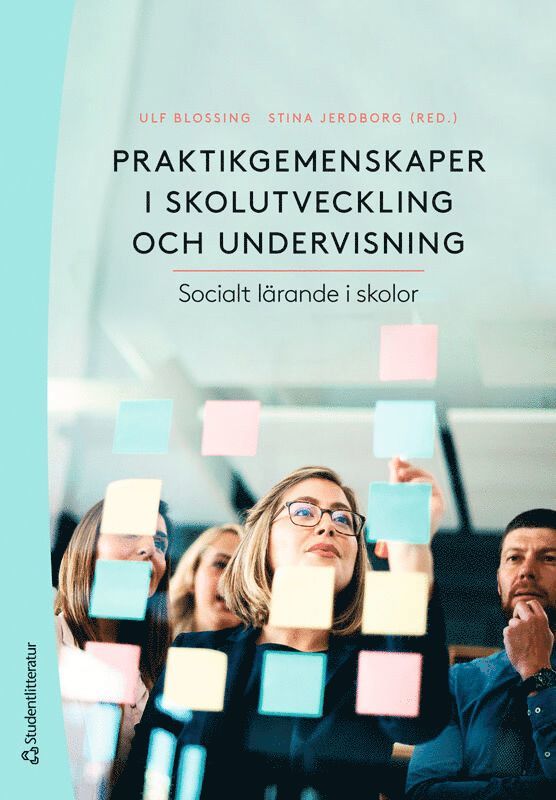
Praktikgemenskaper i skolutveckling och undervisning : socialt lärande i skolor
Häftad, Svenska, 2025
371 kr
Skickas
Boken beskriver hur praktikgemenskaper uppstår och hur de kan ha avgörande betydelse för undervisningsutvecklande arbete i skolor. Det handlar om hur kommunikation, relationer och innehåll samspelar när lärare, elever och rektorer samarbetar. I en praktikgemenskap utgör individer resurser för varandra när de försöker förstå och förbättra en situation. Hörnstenen i det sociala lärande som då uppstår är deras ömsesidiga engagemang i varandras erfarenheter och framtidsbilder av den situation de önskar förbättra.Boken bygger på Etienne Wengers teori om praktikgemenskaper. Kapitelförfattarna utgår från egna forskningsstudier och praktiska exempel med relevans för skol- och undervisningspraktik. Utöver att boken avser att fungera som stöd i skolutvecklingsprocesser bidrar den också till läsarens vetenskapliga litteracitet. Målgruppen är lärare, skolledare och andra verksamma i utbildningssystemet, men vänder sig också till lärar-, och masterstudenter samt doktorander, då den grundligt beskriver och undersöker teorin om praktikgemenskaper.
Att lära och utvecklas som rektor : förstå, lära och leda i ett föränderligt uppdrag
Häftad, Svenska, 2024
363 kr
Skickas
Utbildningen och styrdokumenten är desamma, men ändå kan det professionella lärandet se helt olika ut för olika rektorer. Vad beror det på? Den här boken beskriver kraftfulla men också mindre produktiva sätt för rektorer att ta sig an sitt arbete och lärande. Det handlar om hur man orienterar sig – mot organisation, uppgifter eller idéer – och där begrepp som engagemang, fantasi och anpassning förklarar kvaliteten på det lärande som uppstår – eller möjligen uteblir.Att lära och utvecklas som rektor bygger på en omfattande empirisk studie av nya rektorer och deras lärande, som en del av den statliga rektorsutbildningen. Den riktar sig till rektorer, skolchefer och skolhuvudmän och är ett ovärderligt stöd för den som vill höja kvaliteten på rektorers professionella utveckling och lärande.
Del 467 - Gothenburg Studies in Educational Sciences
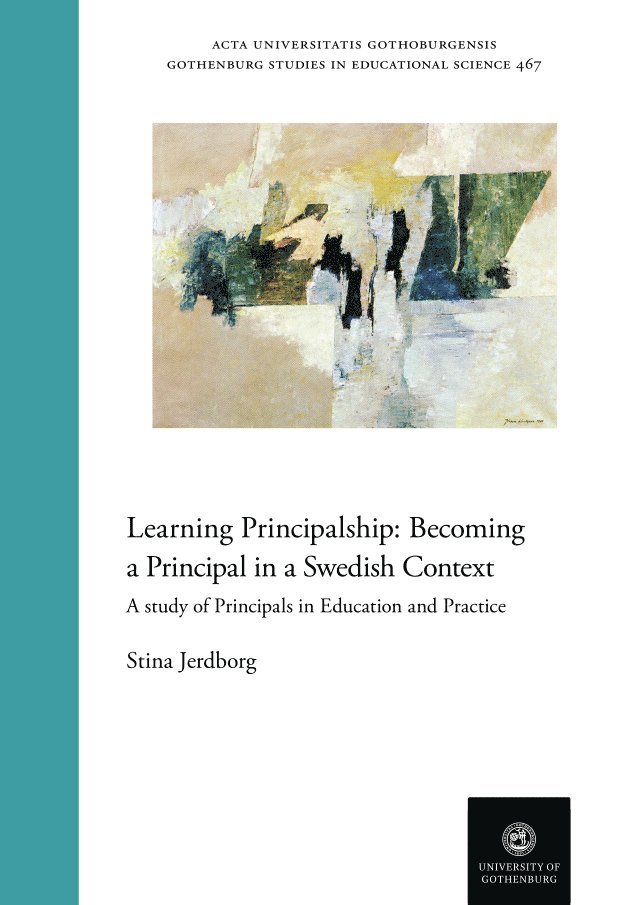
Learning principalship : becoming a principal in a swedish context
Häftad, Engelska, 2022
336 kr
Tillfälligt slut
Novice principals are expected to acquire professional skills by participating in education. Consequently, expectations are set for principal education to support novice principals in how to take on principalship. The aim of this study is to explore novice principals’ learning and their understanding of principalship in a Swedish context as the principals are socialised into their role through education and practice. The research questions are: How do principals engage in principal training in the interaction with their professional work practice? How can principals’ process of learning and understanding be explained? What is the importance of principal training in relation to the creation of a coherent school leader role for a contemporary school context? The study focuses on principals in Swedish compulsory schools who participate in their third and final year in the mandatory Swedish National Principal Training Programme. A qualitative research design elaborated from a practice perspective is adopted to explore principals’ processes of learning in complex contexts. A situated perspective is applied, interviewing and observing principals in both their educational and their workplace practice. In addition, teachers are interviewed in schools. Wenger’s social theory of learning constitutes the theoretical framework for the study. Three papers address principals’ processes of learning. In paper I, Educating school leaders: Engaging in diverse orientations to leadership practice, novice principals engagement in principal training is investigated together with how their identity forms in the interaction between their school leadership education and professional working practice. In paper II, Participation in the Swedish National Principal Training Programme: How does it intertwine with principals’ practice?, the focus is set on how participation in the Swedish principals’ programme actually intertwines with principals’ work. In paper III, Novice school principals in education and the enactment of pedagogical leadership in practice, novice principals’ enactment of pedagogical leadership in relation to their preparation and overall professional path toward principalship is examined. The findings show different understandings of leadership at play that effect socialisation into the role differently. Principals’ orientation toward work influences their participation in the educational programme and their experience of working practice. Three approaches are depicted, each of which describes professional identity development. Processes of learning and understanding are intertwined through principals’ engagement in programmes and practices, which affects school. This leads to development but also to conflicts and ruptures. Based on their programme participation, principals mirror their schools becoming external reviewers. The results show the importance of the principal moving into the schools’ core business and leading ‘from within’. Principals thus can take support from principal education, acting as brokers and gaining legitimacy as professional leaders. The findings show that leadership knowledge is developed in relation to principals’ previous areas of experience and expertise. However, the study makes clear that novice principals in taking the step into principalship, are often deprived of their expertise. If they cannot share their repertoire (with which to understand and develop practice), the principal cannot engage in pedagogical leadership. Likewise, not sharing a school leadership repertoire stemming from experiences of leadership practices means that principals are obstructed from learning in the programme and making connections with practice. Thus, novice principals in Sweden are at risk of becoming all new; that is, new in all senses of their professional lives and deprived of their ability to engage in pedagogical leadership practices. These findings suggest that the principal programme in its current format is focused on expert principals aiming to develop professionally but excludes novice participants who are still on the journey to becoming a principal. In sum, findings show that novice principals’ understandings of leadership can be closely attached to identity and neither easily nor naturally develop. Moreover, professional socialisation through education does not overcome former organisational socialisation. However, participation in the programme enables further development for participants with former experiences of their school practices and school leadership who take an organisational orientation to their role and work. Parts of work 1. Stina Jerdborg (2022) Educating school leaders: engaging in diverse orientations to leadership practice, International Journal of Leadership in Education, 25:2, 287-309. https://doi.org/10.1080/13603124.2020.1770867 2. Jerdborg, S. (2021). Participation in the Swedish national principal training programme: How does it intertwine with principals’ practice? Educational Management Administration & Leadership. https://doi.org/10.1177/1741143221998711 3. Jerdborg, S. (submitted). Novice school principals in education and the enactment of pedagogical leadership in practice.