Suraiya N. Faroqhi – författare
Visar alla böcker från författaren Suraiya N. Faroqhi. Handla med fri frakt och snabb leverans.
4 produkter
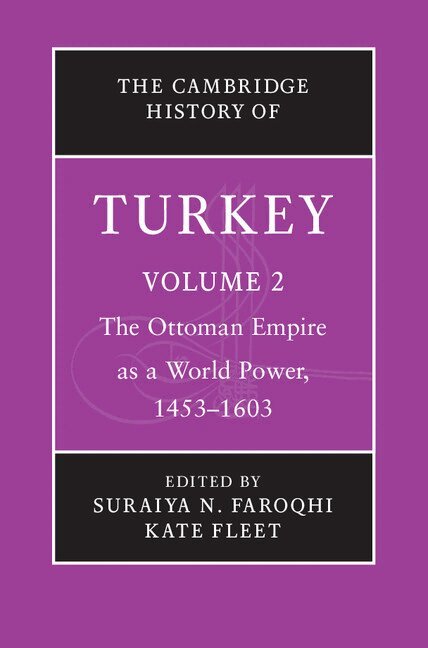
The Cambridge History of Turkey
Av Suraiya N. Faroqhi, Kate Fleet
Inbunden, 2012
3086 kr
Lägg i varukorg
Volume 2 of The Cambridge History of Turkey examines the period from the conquest of Constantinople in 1453 to the accession of Ahmed I in 1603. During this period, the Ottoman Empire moved into a new phase of expansion, emerging in the sixteenth century as a dominant political player on the world …
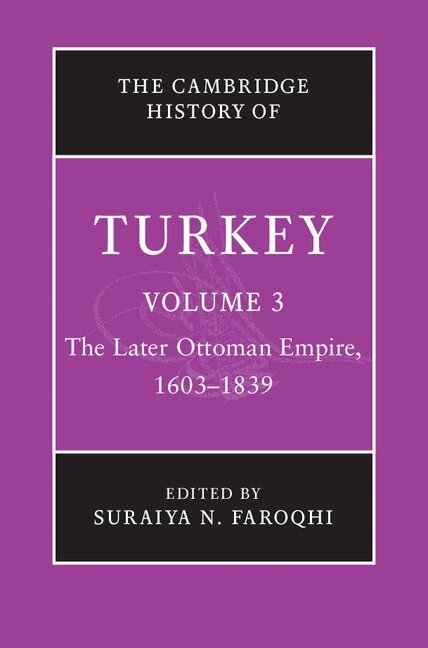
The Cambridge History of Turkey
Inbunden, 2006
3539 kr
Lägg i varukorg
Volume 3 of The Cambridge History of Turkey traces the history of the later Ottoman Empire from the death of Mehmed III in 1603 to the proclamation of the tanzimat, the administrative reconstruction of the Ottoman state, in 1839. This was a period of relative stability when trade between the empire …
Cambridge History of Turkey: Volume 2, The Ottoman Empire as a World Power, 1453-1603
Av Kate Fleet, Suraiya N. Faroqhi
E-bok, 2012
537 kr
Lägg i varukorg
Volume 2 of The Cambridge History of Turkey examines the period from the conquest of Constantinople in 1453 to the accession of Ahmed I in 1603. During this period, the Ottoman Empire moved into a new phase of expansion, emerging in the sixteenth century as a dominant political player on the world …
Cambridge History of Turkey: Volume 2, The Ottoman Empire as a World Power, 1453-1603
Av Kate Fleet, Suraiya N. Faroqhi
E-bok, 2012
537 kr
Lägg i varukorg
Volume 2 of The Cambridge History of Turkey examines the period from the conquest of Constantinople in 1453 to the accession of Ahmed I in 1603. During this period, the Ottoman Empire moved into a new phase of expansion, emerging in the sixteenth century as a dominant political player on the world …