Susan A. Stephens - Böcker
Visar alla böcker från författaren Susan A. Stephens. Handla med fri frakt och snabb leverans.
13 produkter
13 produkter
1 661 kr
Skickas inom 7-10 vardagar
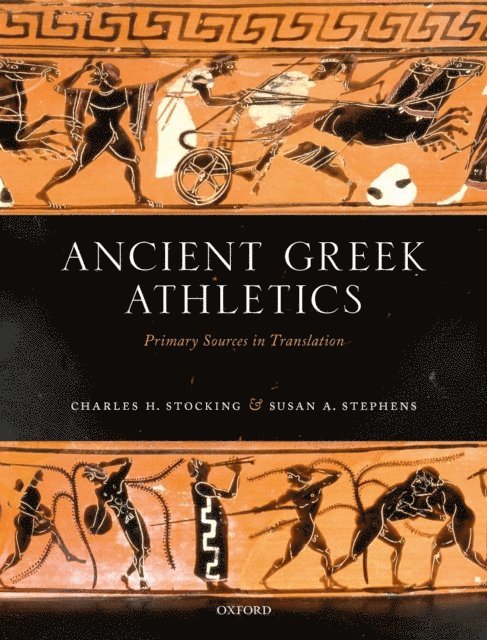
The Ancient Greek Athletics offers the most comprehensive collection to date of primary sources in translation for the study of ancient Greek athletics. Because Greek athletics was such an essential feature of both Greek and Roman culture, there is an especially strong need for proper treatment and understanding of the texts and other media used to reconstruct practices and ideologies of ancient athletics. The sources in this collection are arranged chronologically from the Archaic Period to the Roman Imperial Era, with an extensive appendix discussing key themes and topics. The organization and in-depth presentation of textual sources is designed to help students, scholars, and general readers fully appreciate the broader social and cultural significance of ancient Greek athletics as it developed in different historical time periods throughout antiquity.
496 kr
Skickas inom 5-8 vardagar
The Sourcebook of Ancient Greek Athletics offers the most comprehensive collection to date of primary sources in translation for the study of ancient Greek athletics. Because Greek athletics was such an essential feature of both Greek and Roman culture, there is an especially strong need for proper treatment and understanding of the texts and other media used to reconstruct practices and ideologies of ancient athletics. The sources in this collection are arranged chronologically from the Archaic Period to the Roman Imperial Era, with an extensive appendix discussing key themes and topics. The organization and in-depth presentation of textual sources is designed to help students, scholars, and general readers fully appreciate the broader social and cultural significance of ancient Greek athletics as it developed in different historical time periods throughout antiquity.
2 422 kr
Skickas inom 5-8 vardagar
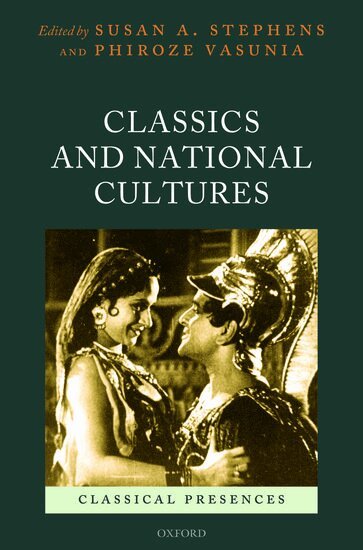
Numerous nations have in one way or another engaged with the cultures of classical Greece and Rome. What impact does the classical past have on ideas of the nation, nationhood, nationality, and what effect does the national space have on classical culture? How has classical culture been imagined in various national traditions, what importance has it had within them, and for whom? This collection of essays by an international team of experts tackles the vexed relationship between Classics and national cultures, presenting essays on many regions, including China, India, Mexico, Japan, and South Africa, as well as Germany, Greece, and Italy. It poses new questions for the study of antiquity and for the history of nations and nationalisms.
471 kr
Skickas inom 5-8 vardagar
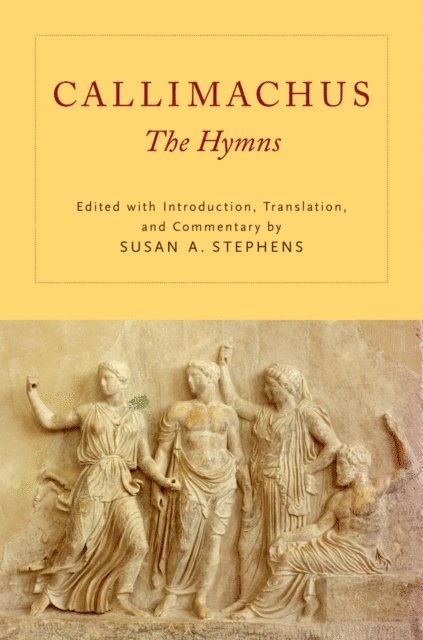
Callimachus was arguably the most important poet of the Hellenistic age, for two reasons: his engagement with previous theorists of poetry and his wide-ranging poetic experimentation. Of his poetic oeuvre, which exceeded what we now have of Theocritus, Aratus, Posidippus, and Apollonius combined, only his six hymns and around fifty of his epigrams have survived intact. His enormously influential Aetia, the collection of Iambi, the Hecale, and all of his prose output have been reduced to a handful of citations in later Greek lexica and handbooks or papyrus fragments. In recent years excellent commentaries and synthetic studies of the Aetia, the Iambi, and the Hecale have appeared or are about to appear. But there is no modern study in English of the collection of hymns. And while there are excellent commentaries in English on three of the hymns (Apollo, Athena, Demeter), the commentaries on Zeus and on Delos are limited in scope, and there is no commentary at all on the Artemis hymn. Synthetic studies in English for the most part treat only one hymn, not the collection, and tend to focus on Callimachus' intertextual relationships with his predecessors and/or his influence on Roman poetry. Yet recent work is requiring scholars to broaden their perspective and to consider Callimachus' religious, civic, and geo-political contexts much more systematically in attempting to understand the hymns. A further incentive is that apart from the Homeric and Orphic hymns, Callimachus' are the only other hymns that have survived intact; those written in earlier periods are now reduced to fragments. For these reasons a study of the six hymns together is a desideratum. An additional reason is that Callimachus' collection of six hymns is very likely to have been an authorially arranged poetry book, quite possibly the earliest such book that we have intact; therefore, it allows a unique perspective on the evolution of the form. This volume offers a text and commentary of all six hymns for advanced students of classics and classical scholars, as well as interpretive essays on each hymn that integrate what has been the dominant paradigm-intertextuality-into a broader focus on Callimachus' context. Her introduction treats the transmission of the hymns, the potential for and likelihood of the Homeric hymns as models, the hymns as a poetry book, their language and meter (especially in light of recent work done on this topic), performance practices, and their relationship to cult, court, local geographies, and panhellenic sanctuaries. For each hymn Stephens presents the Greek text, a translation, and a brief commentary containing important information or parallels for interpretation.
1 976 kr
Skickas inom 5-8 vardagar
Callimachus was arguably the most important poet of the Hellenistic age, for two reasons: his engagement with previous theorists of poetry and his wide-ranging poetic experimentation. Of his poetic oeuvre, which exceeded what we now have of Theocritus, Aratus, Posidippus, and Apollonius combined, only his six hymns and around fifty of his epigrams have survived intact. His enormously influential Aetia, the collection of Iambi, the Hecale, and all of his prose output have been reduced to a handful of citations in later Greek lexica and handbooks or papyrus fragments. In recent years excellent commentaries and synthetic studies of the Aetia, the Iambi, and the Hecale have appeared or are about to appear. But there is no modern study in English of the collection of hymns. And while there are excellent commentaries in English on three of the hymns (Apollo, Athena, Demeter), the commentaries on Zeus and on Delos are limited in scope, and there is no commentary at all on the Artemis hymn. Synthetic studies in English for the most part treat only one hymn, not the collection, and tend to focus on Callimachus' intertextual relationships with his predecessors and/or his influence on Roman poetry. Yet recent work is requiring scholars to broaden their perspective and to consider Callimachus' religious, civic, and geo-political contexts much more systematically in attempting to understand the hymns. A further incentive is that apart from the Homeric and Orphic hymns, Callimachus' are the only other hymns that have survived intact; those written in earlier periods are now reduced to fragments. For these reasons a study of the six hymns together is a desideratum. An additional reason is that Callimachus' collection of six hymns is very likely to have been an authorially arranged poetry book, quite possibly the earliest such book that we have intact; therefore, it allows a unique perspective on the evolution of the form. This volume offers a text and commentary of all six hymns for advanced students of classics and classical scholars, as well as interpretive essays on each hymn that integrate what has been the dominant paradigm-intertextuality-into a broader focus on Callimachus' context. Her introduction treats the transmission of the hymns, the potential for and likelihood of the Homeric hymns as models, the hymns as a poetry book, their language and meter (especially in light of recent work done on this topic), performance practices, and their relationship to cult, court, local geographies, and panhellenic sanctuaries. For each hymn Stephens presents the Greek text, a translation, and a brief commentary containing important information or parallels for interpretation.
Del 37 - Hellenistic Culture and Society
Seeing Double
Intercultural Poetics in Ptolemaic Alexandria
Inbunden, Engelska, 2003
1 522 kr
Skickas inom 3-6 vardagar
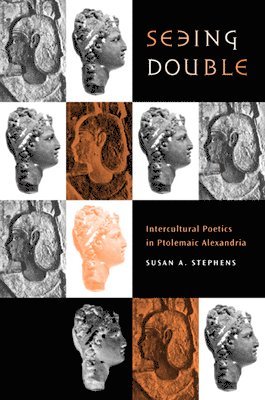
When, in the third century B.C.E., the Ptolemies became rulers in Egypt, they found themselves not only kings of a Greek population but also pharaohs for the Egyptian people. Offering a new and expanded understanding of Alexandrian poetry, Susan Stephens argues that poets such as Callimachus, Theocritus, and Apollonius proved instrumental in bridging the distance between the two distinct and at times diametrically opposed cultures under Ptolemaic rule. Her work successfully positions Alexandrian poetry as part of the dynamic in which Greek and Egyptian worlds were bound to interact socially, politically, and imaginatively. The Alexandrian poets were image-makers for the Ptolemaic court, "Seeing Double" suggests; their poems were political in the broadest sense, serving neither to support nor to subvert the status quo, but to open up a space in which social and political values could be imaginatively re-created, examined, and critiqued."Seeing Double" depicts Alexandrian poetry in its proper context - within the writing of foundation stories and within the imaginative redefinition of Egypt as 'Two Lands' - no longer the lands of Upper and Lower Egypt, but of a shared Greek and Egyptian culture.
Ancient Greek Novels
The Fragments: Introduction, Text, Translation, and Commentary
Häftad, Engelska, 2014
822 kr
Skickas inom 7-10 vardagar
The recent discovery of fragments from such novels as Iolaos, Phoinikika, Sesonchosis, and Metiochos and Parthenope has dramatically increased the library catalogue of ancient novels, calling for a fresh survey of the field. In this volume Susan Stephens and John Winkler have reedited all of the identifiable novel fragments, including the epitomes of Iamblichos' Babyloniaka and Antonius Diogenes' Incredible Things Beyond Thule. Intended for scholars as well as nonspecialists, this work provides new editions of the texts, full translations whenever possible, and introductions that situate each text within the field of ancient fiction and that present relevant background material, literary parallels, and possible lines of interpretation. Collective reading of the fragments exposes the inadequacy of many currently held assumptions about the ancient novel, among these, for example, the paradigm for a linear, increasingly complex narrative development, the notion of the "ideal romantic" novel as the generic norm, and the nature of the novel's readership and cultural milieu.Once perceived as a late and insignificant development, the novel emerges as a central and revealing cultural phenomenon of the Greco-Roman world after Alexander. Originally published in 1995. The Princeton Legacy Library uses the latest print-on-demand technology to again make available previously out-of-print books from the distinguished backlist of Princeton University Press. These editions preserve the original texts of these important books while presenting them in durable paperback and hardcover editions. The goal of the Princeton Legacy Library is to vastly increase access to the rich scholarly heritage found in the thousands of books published by Princeton University Press since its founding in 1905.
Ancient Greek Novels
The Fragments: Introduction, Text, Translation, and Commentary
Inbunden, Engelska, 2016
4 118 kr
Skickas inom 3-6 vardagar
The recent discovery of fragments from such novels as Iolaos, Phoinikika, Sesonchosis, and Metiochos and Parthenope has dramatically increased the library catalogue of ancient novels, calling for a fresh survey of the field. In this volume Susan Stephens and John Winkler have reedited all of the identifiable novel fragments, including the epitomes of Iamblichos' Babyloniaka and Antonius Diogenes' Incredible Things Beyond Thule. Intended for scholars as well as nonspecialists, this work provides new editions of the texts, full translations whenever possible, and introductions that situate each text within the field of ancient fiction and that present relevant background material, literary parallels, and possible lines of interpretation. Collective reading of the fragments exposes the inadequacy of many currently held assumptions about the ancient novel, among these, for example, the paradigm for a linear, increasingly complex narrative development, the notion of the "ideal romantic" novel as the generic norm, and the nature of the novel's readership and cultural milieu.Once perceived as a late and insignificant development, the novel emerges as a central and revealing cultural phenomenon of the Greco-Roman world after Alexander. Originally published in 1995. The Princeton Legacy Library uses the latest print-on-demand technology to again make available previously out-of-print books from the distinguished backlist of Princeton University Press. These editions preserve the original texts of these important books while presenting them in durable paperback and hardcover editions. The goal of the Princeton Legacy Library is to vastly increase access to the rich scholarly heritage found in the thousands of books published by Princeton University Press since its founding in 1905.
1 371 kr
Skickas inom 7-10 vardagar
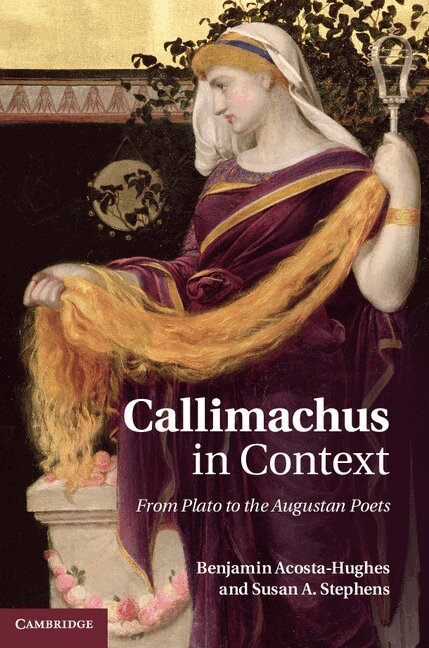
Scholarly reception has bequeathed two Callimachuses: the Roman version is a poet of elegant non-heroic poetry (usually erotic elegy), represented by a handful of intertexts with a recurring set of images - slender Muse, instructing divinity, small voice, pure waters; the Greek version emphasizes a learned scholar who includes literary criticism within his poetry, an encomiast of the Ptolemies, a poet of the book whose narratives are often understood as metapoetic. This study aims to situate these Callimachuses within a series of interlocking historical and intellectual contexts in order better to understand how they arose. In this narrative of his poetics and poetic reception four main sources of creative opportunism are identified: Callimachus' reactions to philosophers and literary critics as arbiters of poetic authority, the potential of the text as a venue for performance, awareness of Alexandria as a new place, and finally, his attraction for Roman poets.
493 kr
Skickas inom 7-10 vardagar
Scholarly reception has bequeathed two Callimachuses: the Roman version is a poet of elegant non-heroic poetry (usually erotic elegy), represented by a handful of intertexts with a recurring set of images - slender Muse, instructing divinity, small voice, pure waters; the Greek version emphasizes a learned scholar who includes literary criticism within his poetry, an encomiast of the Ptolemies, a poet of the book whose narratives are often understood as metapoetic. This study aims to situate these Callimachuses within a series of interlocking historical and intellectual contexts in order better to understand how they arose. In this narrative of his poetics and poetic reception four main sources of creative opportunism are identified: Callimachus' reactions to philosophers and literary critics as arbiters of poetic authority, the potential of the text as a venue for performance, awareness of Alexandria as a new place, and finally, his attraction for Roman poets.
300 kr
Skickas inom 10-15 vardagar
Alexandria was the greatest of the new cities founded by Alexander the Great as his armies swept eastward. It was ruled by his successors, the Ptolemies, who presided over one of the richest and most productive periods in the whole of Greek literature. Susan A Stephens here reveals a cultural world in transition: reverential of the compositions of the past (especially after construction of the great library, repository for all previous Greek oeuvres), but at the same time forward-looking and experimental, willing to make use of previous forms of writing in exciting new ways. The author examines Alexandria's poets in turn. She discusses the strikingly avant-garde Aetia of Callimachus; the idealized pastoral forms of Theocritus (which anticipated the invention of fiction); and the neo-Homerian epic of Apollonius, the Argonautica, with its impressive combination of narrative grandeur and psychological acuity. She shows that all three poets were innovators, even while they looked to the past for inspiration: drawing upon Homer, Hesiod, Pindar and the lyric poets, they emphasized stories and material that were entirely relevant to their own progressive cosmopolitan environment.
396 kr
Skickas inom 11-20 vardagar
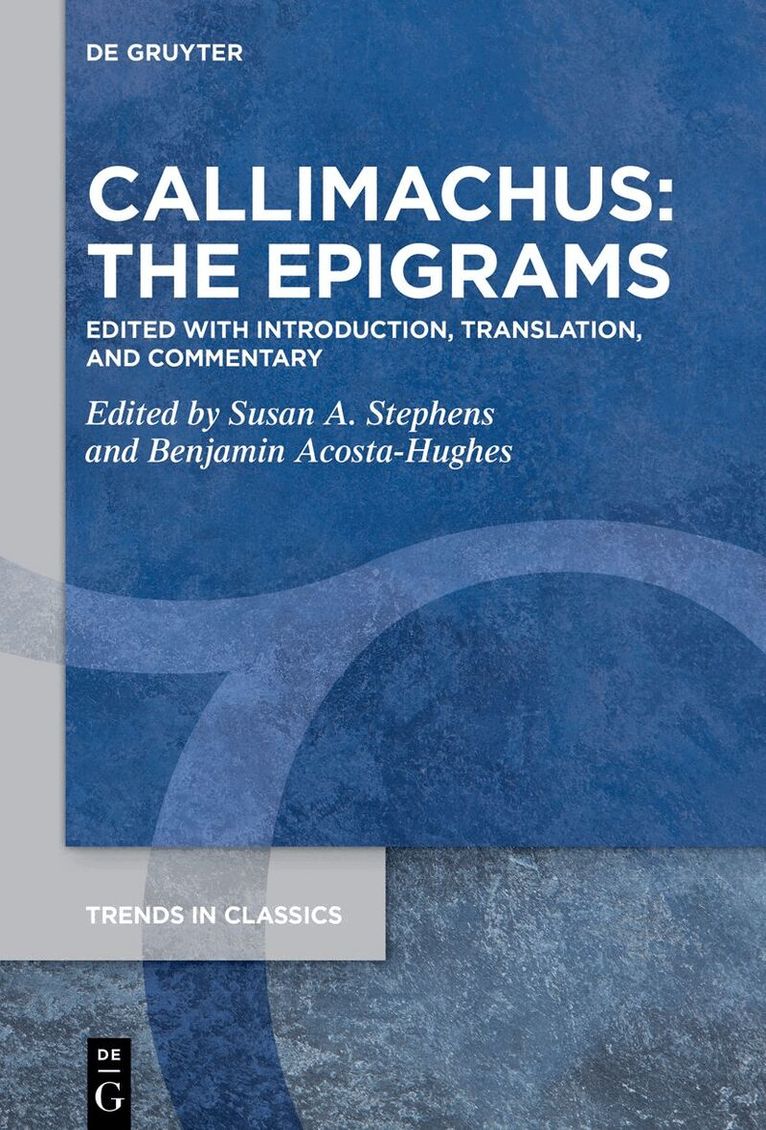
Callimachus: The Epigrams
Edited with Introduction, Translation, and Commentary
Inbunden, Engelska, 2025
2 106 kr
Skickas inom 7-10 vardagar
Recent decades have seen a flourishing of interest in Hellenistic epigram (short poems usually in elegiac couplets), an interest fostered in part by the appearance of several ground-breaking new studies of these poems and the history of their collection, as well as by the publication in 2001 of a newly found papyrus, P. Mil. Vogl. VIII 309, that preserves over 100 epigrams of Posidippus of Pela. Missing hitherto in this proliferation of new scholarship on epigram is an edition and commentary in English on the epigrams of Callimachus, one of the leading and most widely imitated creative figures of this period, an artist who composed in a wide variety of poetic genres, one of which was epigram. Callimachus' epigrams adumbrate a broad selection of types, among them sepulchral, dedicatory, epideictic and erotic poems; the poems are brilliant artworks themselves and are among the most illuminating examples of this poetic genre. Scholarship on Callimachus tends to favor the fragmentary poems (the Aetia, the Hecale, the Iambi etc.) over the extant; our study seeks to redress this imbalance, and to cast a new interpretive light upon these glittering gems, which came to be widely admired and imitated in both later Greek and Latin poetry.