Susan McCaffray – författare
Visar alla böcker från författaren Susan McCaffray. Handla med fri frakt och snabb leverans.
3 produkter
3 produkter
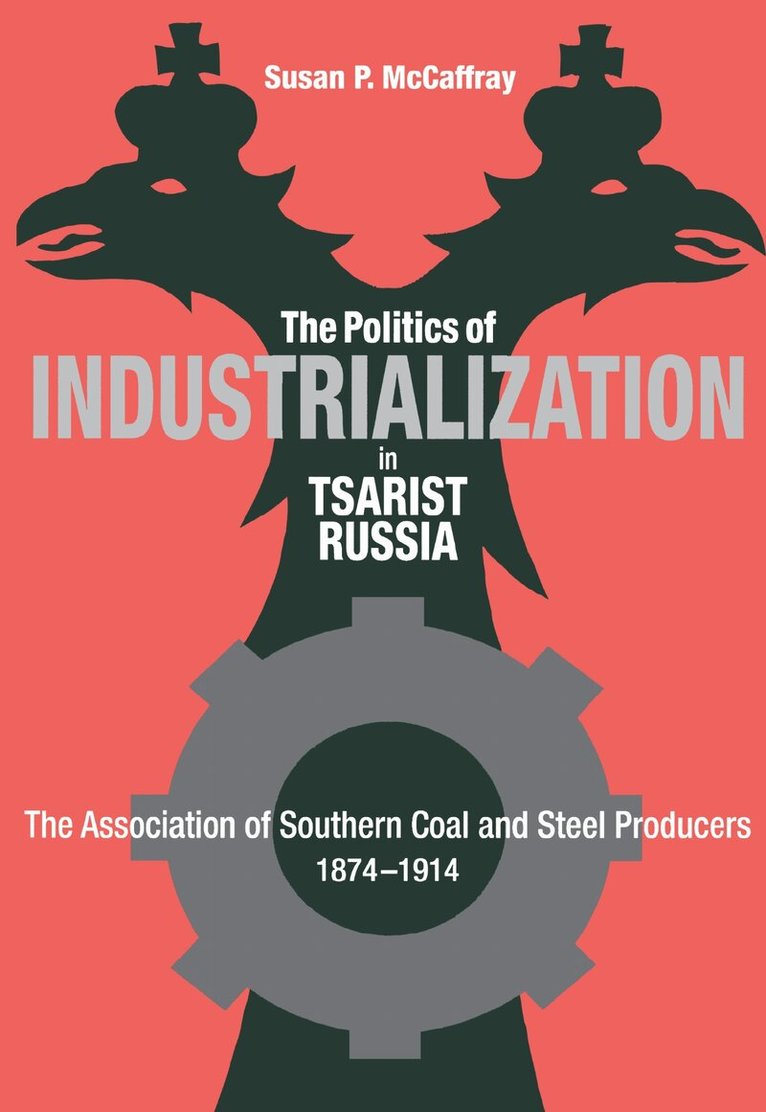
Politics of Industrialization in Tsarist Russia
The Association of Southern Coal and Steel Producers, 1874–1914
Inbunden, Engelska, 1996
544 kr
Skickas inom 10-15 vardagar
Four decades prior to World War I, coal and steel managers working in the Donbass region formed Russia's first major industrial advocacy group, the Association of Southern Coal and Steel Producers. Founded by southern industrializers who ran the country's most important coal and steel industry, the organization quickly grew to become one of the most powerful in the empire, influencing government policy from its inception in the 1870s until the Revolution of 1917. The members who made up this important group as well as their collective effort to modernize Russia are the focus of The Politics of Industrialization in Tsarist Russia.McCaffray draws from a wide array of sources to reveal the intellectual, cultural, and social underpinnings of Russia's early industrialization. Representing nearly sixty firms responsible for most of the south's coal and steel production, the middle-class men who ran tsarist Russia's coal and steel industry composed a substantial portion of Russia's technical intelligentsia. What emerges is a portrait of self-conscious modernizers, motivated in part by professional and class considerations, in part by their shared faith that modern, large-scale industry would elevate not only themselves but also their country and compatriots.McCaffray shows how the engineer-managers of the Donbass became enmeshed in the grand project of creating industrial capitalism with a Russian face, in particular, how they were involved in all aspects of the workers' welfare question in the early twentieth century. In illuminating their ultimately frustrated efforts, she sheds light on the difficulties in establishing West European-style capitalism in tsarist Russia and offers insights into the crisis and collapse of the Russian old regime. She further suggests that the economic ideas of Russia's middle class as well as other segments of Russian society made it unlikely that Russia would build a system of capitalism resembling that of the West.The Politics of Industrialization in Tsarist Russia presents for scholars of Russian and modern European history a new perspective on late imperial Russia by bringing to light a group of individuals previously unstudied. While it supports the emerging notion in recent Western scholarship that Russian elites were fragmented at the end of the Old Regime, McCaffray's analysis of the Association of Southern Coal and Steel Producers will initiate fresh discussion of the values and the cultural-economic assumptions of Russian modernizers.
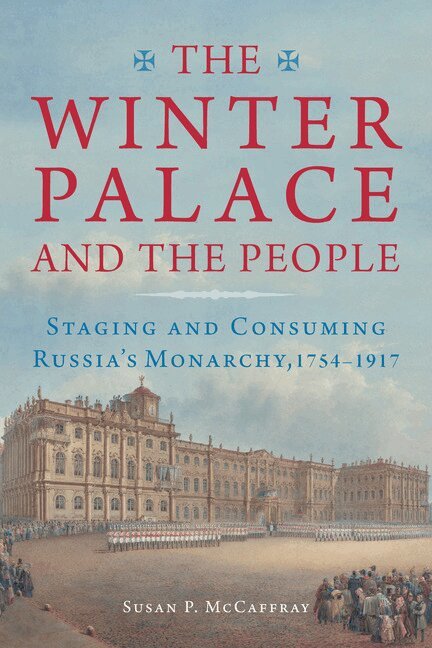
Winter Palace and the People
Staging and Consuming Russia's Monarchy, 1754–1917
Häftad, Engelska, 2018
420 kr
Skickas inom 10-15 vardagar
St. Petersburg's Winter Palace was once the supreme architectural symbol of Russia's autocratic government. Over the course of the nineteenth and early twentieth centuries, it became the architectural symbol of St. Petersburg itself. The story of the palace illuminates the changing relationship between monarchs and their capital city during the last century and a half of Russian monarchy. In The Winter Palace and the People, Susan McCaffray examines interactions among those who helped to stage the ceremonial drama of monarchy, those who consumed the spectacle, and the monarchs themselves. In the face of a changing social landscape in their rapidly growing nineteenth-century capital, Russian monarchs reoriented their display of imperial and national representation away from courtiers and toward the urban public. When attacked at mid-century, monarchs retreated from the palace. As they receded, the public claimed the square and the artistic treasures in the Imperial Hermitage before claiming the palace itself. By 1917, the Winter Palace had come to be the essential stage for representing not just monarchy, but the civic life of the empire-nation. What was cataclysmic for the monarchy presented to those who staffed the palace and Hermitage not a disaster, but a new mission, as a public space created jointly by monarch and city passed from the one to the other. This insightful study will appeal to scholars of Russia and general readers interested in Russian history.
550 kr
Skickas inom 10-15 vardagar
This volume surveys Nineteenth-century Russian society and economy and finds that Russian institutions, practices and ideas fit the general European pattern for that period of rapid change. Even apparently distinctive Russian features deepen our understanding of 'Europeaness'. In the Nineteenth-century there were still many different ways to be European, and excessive generalization based on the experiences of one or two countries obscures the great diversity that still characterized European civilization. Moreover, these essays bring to light several points at which Russian legislation and thinking provided models and examples for others to follow. The authors focus on key elements of how Russians envisaged and constructed their economy and society. This is an important contribution that increases understanding of Russian history at a time when Russia's relationship with the 'West' is again debated.