Suzanne Karr Schmidt – författare
Visar alla böcker från författaren Suzanne Karr Schmidt. Handla med fri frakt och snabb leverans.
6 produkter
Impressive Textiles
Premodern Printing on Fabric
Inbunden, 2026
711 kr
Kommande
From reproductions of Dürer copperplates to twenty-first-century apparel, this exhibition explores the history of images printed on fabric. Printing images and texts on luxurious fabrics instead of paper once took portraits, devotional images, and other artworks to the next level, brokering …
Impressive Textiles
Premodern Printing on Fabric
Häftad, 2026
447 kr
Kommande
From reproductions of Dürer copperplates to twenty-first-century apparel, this exhibition explores the history of images printed on fabric. Printing images and texts on luxurious fabrics instead of paper once took portraits, devotional images, and other artworks to the next level, brokering …
Prints in Translation, 1450-1750
Image, Materiality, Space
Av Suzanne Karr Schmidt, Edward H. Wouk
Häftad, 2018
787 kr
Lägg i varukorg
Printed artworks were often ephemeral, but in the early modern period, exchanges between print and other media were common, setting off chain reactions of images and objects that endured. Paintings, sculpture, decorative arts, musical or scientific instruments, and armor exerted their own influence …
Prints in Translation, 1450-1750
Image, Materiality, Space
Av Suzanne Karr Schmidt, Edward H. Wouk
Inbunden, 2016
2818 kr
Lägg i varukorg
Printed artworks were often ephemeral, but in the early modern period, exchanges between print and other media were common, setting off chain reactions of images and objects that endured. Paintings, sculpture, decorative arts, musical or scientific instruments, and armor exerted their own influence …
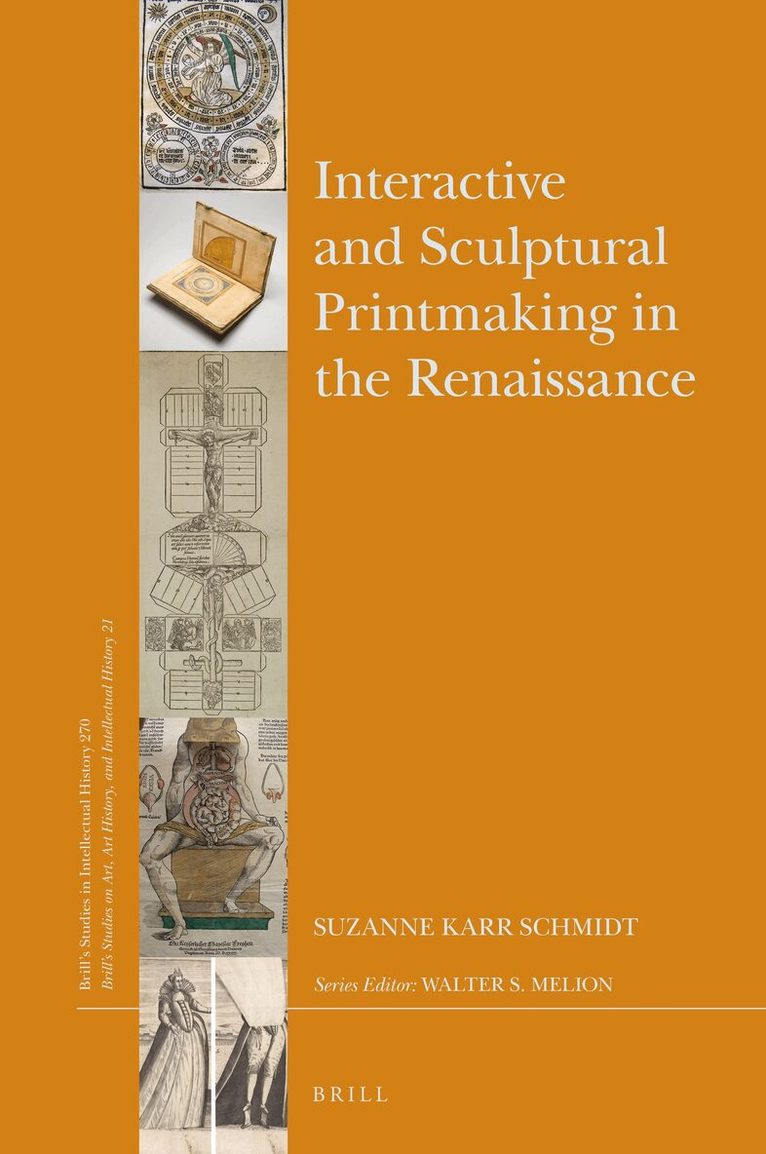
Interactive and Sculptural Printmaking in the Renaissance
Inbunden, 2017
3070 kr
Lägg i varukorg
Suzanne Karr Schmidt's Interactive and Sculptural Printmaking in the Renaissance tells the story of a hands-on genre of prints: how innovative paper engineering redefined the relationship of early modern viewers to art, humanism, and science.Interactive and sculptural prints pervaded the European …
Altered and Adorned: Using Renaissance Prints in Daily Life
Av Suzanne Karr Schmidt, Kimberly Nichols
Inbunden
342 kr
Tillfälligt slut