Svetlozar T. Rachev – författare
880 kr
Läs direkt efter köp
880 kr
Skickas inom 10-15 vardagar
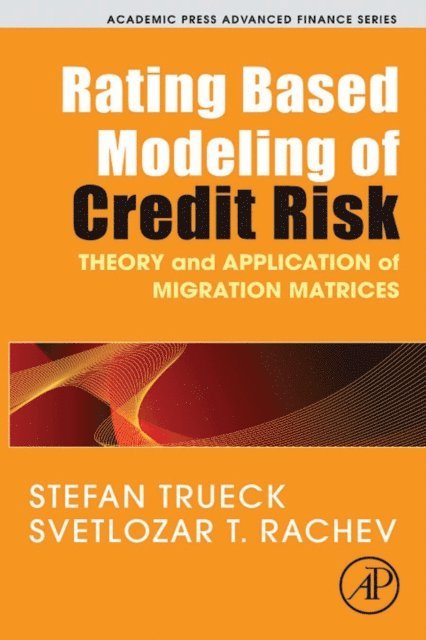
In the last decade rating-based models have become very popular in credit risk management. These systems use the rating of a company as the decisive variable to evaluate the default risk of a bond or loan. The popularity is due to the straightforwardness of the approach, and to the upcoming new capital accord (Basel II), which allows banks to base their capital requirements on internal as well as external rating systems. Because of this, sophisticated credit risk models are being developed or demanded by banks to assess the risk of their credit portfolio better by recognizing the different underlying sources of risk. As a consequence, not only default probabilities for certain rating categories but also the probabilities of moving from one rating state to another are important issues in such models for risk management and pricing.
It is widely accepted that rating migrations and default probabilities show significant variations through time due to macroeconomics conditions or the business cycle. These changes in migration behavior may have a substantial impact on the value-at-risk (VAR) of a credit portfolio or the prices of credit derivatives such as collateralized debt obligations (D+CDOs). In Rating Based Modeling of Credit Risk the authors develop a much more sophisticated analysis of migration behavior. Their contribution of more sophisticated techniques to measure and forecast changes in migration behavior as well as determining adequate estimators for transition matrices is a major contribution to rating based credit modeling.
Internal ratings-based systems are widely used in banks to calculate their value-at-risk (VAR) in order to determine their capital requirements for loan and bond portfolios under Basel II One aspect of these ratings systems is credit migrations, addressed in a systematic and comprehensive way for the first time in this book The book is based on in-depth work by Trueck and Rachev1 084 kr
Skickas inom 10-15 vardagar
2 524 kr
Läs direkt efter köp
2 524 kr
Läs direkt efter köp
1 946 kr
Skickas inom 10-15 vardagar
1 946 kr
Skickas inom 10-15 vardagar
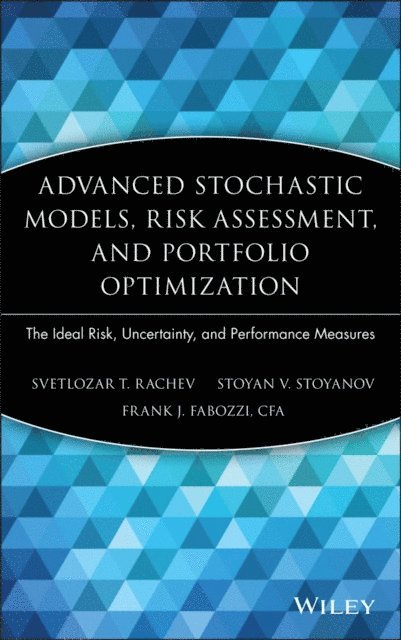
Advanced Stochastic Models, Risk Assessment, and Portfolio Optimization
The Ideal Risk, Uncertainty, and Performance Measures
739 kr
Skickas inom 5-8 vardagar
1 161 kr
Läs direkt efter köp
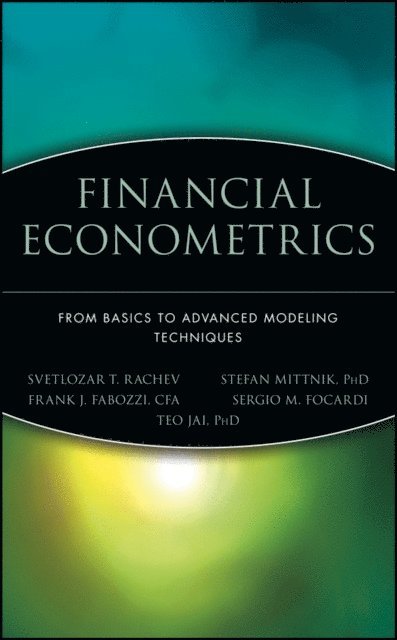
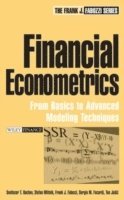
Financial econometrics is a quest for models that describe financial time series such as prices, returns, interest rates, and exchange rates. In Financial Econometrics, readers will be introduced to this growing discipline and the concepts and theories associated with it, including background material on probability theory and statistics. The experienced author team uses real-world data where possible and brings in the results of published research provided by investment banking firms and journals. Financial Econometrics clearly explains the techniques presented and provides illustrative examples for the topics discussed.
Svetlozar T. Rachev, PhD (Karlsruhe, Germany) is currently Chair-Professor at the University of Karlsruhe. Stefan Mittnik, PhD (Munich, Germany) is Professor of Financial Econometrics at the University of Munich. Frank J. Fabozzi, PhD, CFA, CFP (New Hope, PA) is an adjunct professor of Finance at Yale University’s School of Management. Sergio M. Focardi (Paris, France) is a founding partner of the Paris-based consulting firm The Intertek Group. Teo Jasic, PhD, (Frankfurt, Germany) is a senior manager with a leading international management consultancy firm in Frankfurt.
917 kr
Läs direkt efter köp
966 kr
Läs direkt efter köp
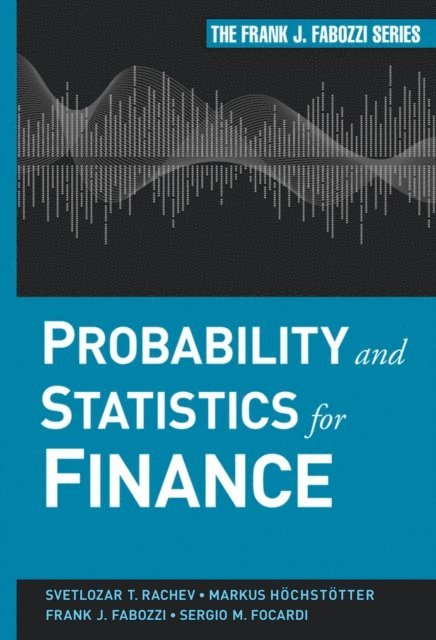
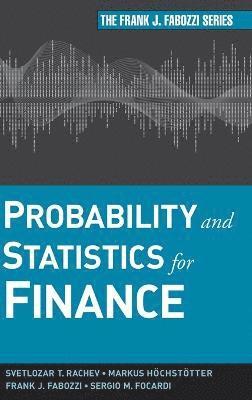
Probability and Statistics for Finance
718 kr
Skickas inom 5-8 vardagar
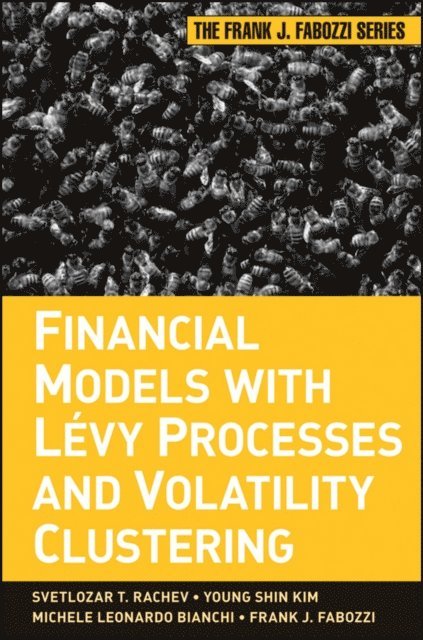
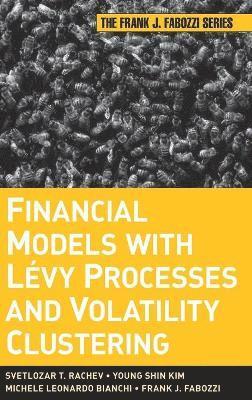
Financial Models with Levy Processes and Volatility Clustering
789 kr
Skickas inom 5-8 vardagar
938 kr
Läs direkt efter köp
Finance has become increasingly more quantitative, drawing on techniques in probability and statistics that many finance practitioners have not had exposure to before. In order to keep up, you need a firm understanding of this discipline. Probability and Statistics for Finance addresses this issue by showing you how to apply quantitative methods to portfolios, and in all matter of your practices, in a clear, concise manner. Informative and accessible, this guide starts off with the basics and builds to an intermediate level of mastery. • Outlines an array of topics in probability and statistics and how to apply them in the world of finance • Includes detailed discussions of descriptive statistics, basic probability theory, inductive statistics, and multivariate analysis • Offers real-world illustrations of the issues addressed throughout the text The authors cover a wide range of topics in this book, which can be used by all finance professionals as well as students aspiring to enter the field of finance.
938 kr
Läs direkt efter köp
Finance has become increasingly more quantitative, drawing on techniques in probability and statistics that many finance practitioners have not had exposure to before. In order to keep up, you need a firm understanding of this discipline. Probability and Statistics for Finance addresses this issue by showing you how to apply quantitative methods to portfolios, and in all matter of your practices, in a clear, concise manner. Informative and accessible, this guide starts off with the basics and builds to an intermediate level of mastery. • Outlines an array of topics in probability and statistics and how to apply them in the world of finance • Includes detailed discussions of descriptive statistics, basic probability theory, inductive statistics, and multivariate analysis • Offers real-world illustrations of the issues addressed throughout the text The authors cover a wide range of topics in this book, which can be used by all finance professionals as well as students aspiring to enter the field of finance.
974 kr
Läs direkt efter köp
In Financial Models with Lévy Processes and Volatility Clustering, the expert author team provides a framework to model the behavior of stock returns in both a univariate and a multivariate setting, providing you with practical applications to option pricing and portfolio management. They also explain the reasons for working with non-normal distribution in financial modeling and the best methodologies for employing it.
The book''s framework includes the basics of probability distributions and explains the alpha-stable distribution and the tempered stable distribution. The authors also explore discrete time option pricing models, beginning with the classical normal model with volatility clustering to more recent models that consider both volatility clustering and heavy tails.
Reviews the basics of probability distributions Analyzes a continuous time option pricing model (the so-called exponential Lévy model) Defines a discrete time model with volatility clustering and how to price options using Monte Carlo methods Studies two multivariate settings that are suitable to explain joint extreme eventsFinancial Models with Lévy Processes and Volatility Clustering is a thorough guide to classical probability distribution methods and brand new methodologies for financial modeling.
1 009 kr
Läs direkt efter köp
In Financial Models with Lévy Processes and Volatility Clustering, the expert author team provides a framework to model the behavior of stock returns in both a univariate and a multivariate setting, providing you with practical applications to option pricing and portfolio management. They also explain the reasons for working with non-normal distribution in financial modeling and the best methodologies for employing it.
The book''s framework includes the basics of probability distributions and explains the alpha-stable distribution and the tempered stable distribution. The authors also explore discrete time option pricing models, beginning with the classical normal model with volatility clustering to more recent models that consider both volatility clustering and heavy tails.
Reviews the basics of probability distributions Analyzes a continuous time option pricing model (the so-called exponential Lévy model) Defines a discrete time model with volatility clustering and how to price options using Monte Carlo methods Studies two multivariate settings that are suitable to explain joint extreme eventsFinancial Models with Lévy Processes and Volatility Clustering is a thorough guide to classical probability distribution methods and brand new methodologies for financial modeling.
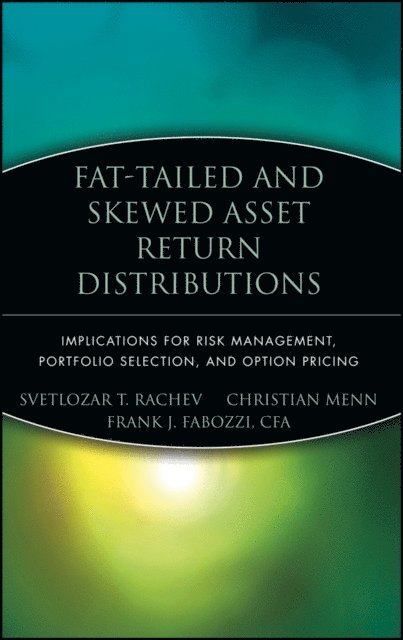
Fat-Tailed and Skewed Asset Return Distributions
Implications for Risk Management, Portfolio Selection, and Option Pricing
776 kr
Skickas inom 5-8 vardagar
978 kr
Läs direkt efter köp
Financial Econometrics
From Basics to Advanced Modeling Techniques
922 kr
Skickas inom 5-8 vardagar
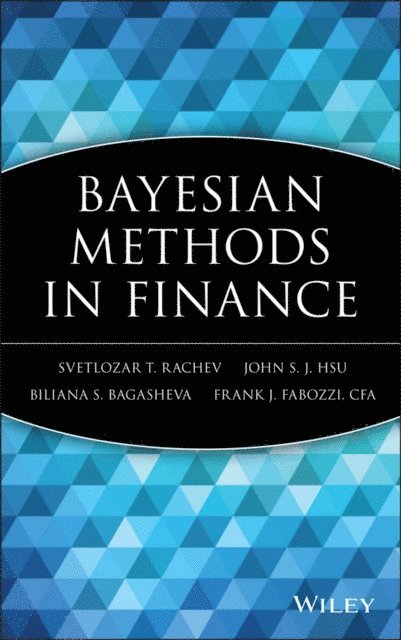
Bayesian Methods in Finance
703 kr
Skickas inom 5-8 vardagar
Stable Paretian Models in Finance
1 561 kr
Skickas inom 5-8 vardagar
562 kr
Skickas inom 10-15 vardagar
712 kr
Läs direkt efter köp
Basics of Financial Econometrics
Tools, Concepts, and Asset Management Applications
996 kr
Skickas inom 5-8 vardagar
1 284 kr
Läs direkt efter köp
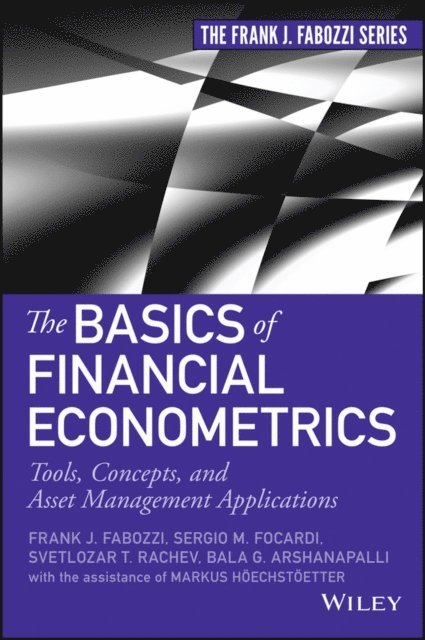
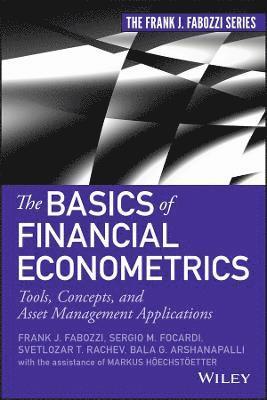
As finance and financial products have become more complex, financial econometrics has emerged as a fast-growing field and necessary foundation for anyone involved in quantitative finance. The techniques of financial econometrics facilitate the development and management of new financial instruments by providing models for pricing and risk assessment. In short, financial econometrics is an indispensable component to modern finance.
The Basics of Financial Econometrics covers the commonly used techniques in the field without using unnecessary mathematical/statistical analysis. It focuses on foundational ideas and how they are applied. Topics covered include: regression models, factor analysis, volatility estimations, and time series techniques.
Covers the basics of financial econometrics—an important topic in quantitative finance Contains several chapters on topics typically not covered even in basic books on econometrics such as model selection, model risk, and mitigating model riskGeared towards both practitioners and finance students who need to understand this dynamic discipline, but may not have advanced mathematical training, this book is a valuable resource on a topic of growing importance.
1 250 kr
Läs direkt efter köp
As finance and financial products have become more complex, financial econometrics has emerged as a fast-growing field and necessary foundation for anyone involved in quantitative finance. The techniques of financial econometrics facilitate the development and management of new financial instruments by providing models for pricing and risk assessment. In short, financial econometrics is an indispensable component to modern finance.
The Basics of Financial Econometrics covers the commonly used techniques in the field without using unnecessary mathematical/statistical analysis. It focuses on foundational ideas and how they are applied. Topics covered include: regression models, factor analysis, volatility estimations, and time series techniques.
Covers the basics of financial econometrics—an important topic in quantitative finance Contains several chapters on topics typically not covered even in basic books on econometrics such as model selection, model risk, and mitigating model riskGeared towards both practitioners and finance students who need to understand this dynamic discipline, but may not have advanced mathematical training, this book is a valuable resource on a topic of growing importance.
2 296 kr
Skickas inom 5-8 vardagar
2 688 kr
Läs direkt efter köp
2 688 kr
Läs direkt efter köp