T. G. Otte - Böcker
Visar alla böcker från författaren T. G. Otte. Handla med fri frakt och snabb leverans.
14 produkter
14 produkter
208 kr
Skickas
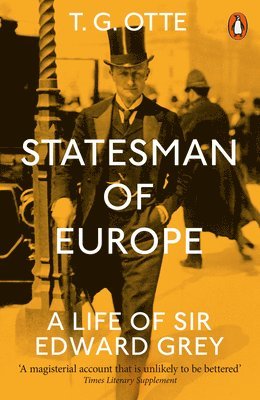
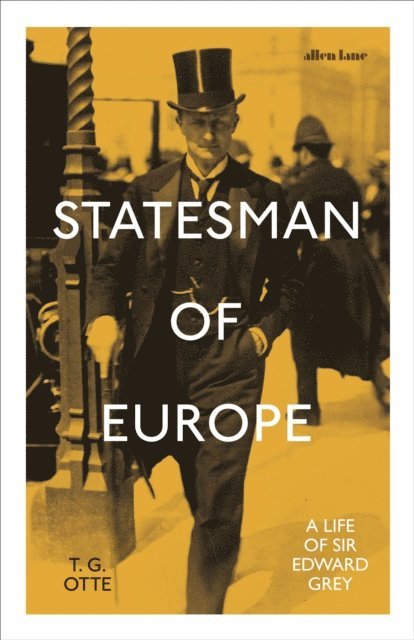
'The lamps are going out all over Europe. We shall not see them lit again in our life-time.' The words of Sir Edward Grey, looking out from the windows of the Foreign Office at the end of August 1914, are amongst the most famous in European history, and encapsulate the impending end of the nineteenth-century world.The man who spoke them was Britain's longest-ever serving Foreign Secretary (in a single span of office) and one of the great figures of late Victorian and Edwardian Britain. Statesman of Europe describes the three decades before the First World War through the prism of his biography, which is based almost entirely on archival sources and presents a detailed account of the main domestic and international events, and of the main personalities of the era. In particular, it presents a fresh understanding of the approach to war in the years and months before its outbreak, and Grey's role in the unfolding of events.Yet Grey's life was not all public affairs, momentous as those were. He disliked being in London, much preferring country life at Fallodon, his family estate in Northumberland, and displayed none of the ambition of his contemporaries (or successors). He attended assiduously to his duties as director of the Great North Eastern Railway, one of the transformative enterprises in industry and communications of the period, and wanted to spend as much time as he could fishing. Apart from his memoirs, the only book he wrote was called The Charm of Birds. This hinterland gave quality to his judgements, and made his character attractive to his contemporaries.This important book is the definitive biography of one of the pivotal figures in European diplomacy, and a magnificent portrait of an age.
231 kr
Skickas inom 5-8 vardagar
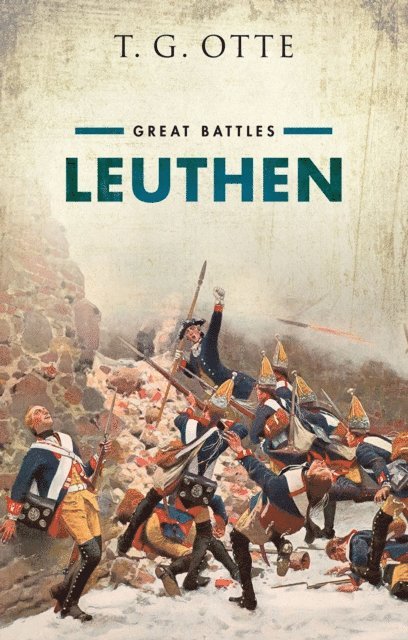
Leuthen (1757) is one of the best-known battles of the Seven Years' War, the most consequential conflict in continental Europe between the Thirty Years' War and the wars of Revolutionary and then Napoleonic France. It was a victory against the odds, over a vastly superior Austrian enemy who held the initiative in the war. Leuthen confirmed the reputation of Frederick II ('the Great') of Prussia as one of history's greatest military commanders. His victory rested on superior drill and firepower, intelligent use of the terrain, and his perfecting of the 'oblique battle order'. But faulty intelligence and flawed decision-making on the Austrian side were no less important, as T.G. Otte shows in this reappraisal of events.Leuthen was of profound significance for the war and for the future course of European history. Frederick's victory reversed the military dynamic of the current conflict. It kept Prussia in the war, preserved the existence of the Prussian state, and laid the foundations of its further rise with consequences beyond Frederick's own times. It also ensured Britain's final commitment to what was becoming a global conflict.The significance of Prussia's victory extended beyond the military sphere. The 'Leuthen myth', encapsulated in the evocative image of Frederick's exhausted grenadiers intoning the church hymn 'Now thank ye all our Lord', shaped political and historical disputes in nineteenth- and twentieth-century Germany. It also influenced the intellectual assumptions that underpinned Prusso-German war planning before the First World War. The 'Chorale of Leuthen' provided the accompanying chords of German cultural developments up to the collapse of the Third Reich in the burning ruins of Berlin. But even to the present day its echo can still be heard. As with other great battles, Leuthen is constantly reassessed and rewritten as an element of national culture and identity.
2 438 kr
Skickas inom 5-8 vardagar
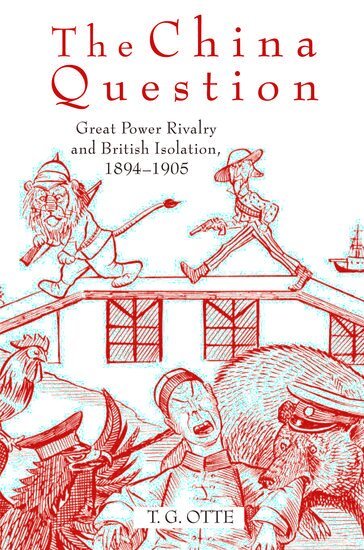
Between 1894 and 1905 the question of the Chinese Empire's future development, its survival even, was the most pressing overseas problem facing the Great Powers. The frantic 'scramble for Africa' and the often more intense drama of the 'Eastern Question' notwithstanding, it was the 'China Question' that had the most profound implications for the Powers. Since China's defeat in the 1894-5 war with Japan, the country's final disintegration was widely anticipated; and so was a wider Great Power conflict in the event of China's implosion. At times, that prospect seemed very real. The prospect of China's break-up and of large-scale international conflict in its wake altered the configuration among the Great Powers. Instability in the Far East had ramifications beyond the confines of the region; and, as this study shows, the events of 1894-5 initiated a wider transformation of international politics. No Power was more affected by these changes than Britain. The 'China Question', therefore, provides an ideal prism through which to view the problems of late nineteenth-century British world policy, and the policy of 'isolationism' in particular.This study breaks new ground by adopting a deliberately global approach in looking at British policy, emphasizing the connections between European and overseas developments, and by encompassing diplomatic, commercial, financial, and strategic factors as well as the politics of foreign policy.
817 kr
Skickas inom 10-15 vardagar
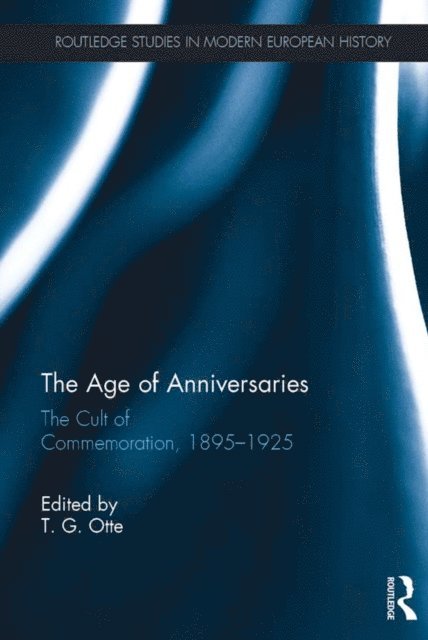
For historians centennial commemorations furnish an excellent heuristic tool for gauging late nineteenth- and early twentieth-century attitudes towards the past and the present. Centenary celebrations helped to revive, perpetuate and reinforce public perceptions of historical events and people in collective memory. They were fairly infrequent before 1850 but increased in size and numbers by the end of the long nineteenth century, so much so that a ‘cult of the centenary’ had become established throughout the wider Western world around 1900. At one level, such events were ephemeral affairs. And yet many left a lasting legacy. Above all, as part of the contemporary processes of the ‘invention of traditions’ and the conscious national ‘self-historicization’ of the established nation-states, they offer crucial insights into the social, cultural and political dynamics of the period.
2 151 kr
Skickas inom 10-15 vardagar
The chapters in this edited volume, individually and collectively, pay homage to Erik Goldstein’s contribution to contemporary scholarship in the fields of international history, diplomatic studies and international security. The book offers insights into the rich tapestry of past and present international relations with differing emphases on political, military and cultural aspects. While some of the chapters explore the twentieth-century British foreign policy apparatus and the different networks of people at work within it, others examine the deeper intellectual and other currents that shaped trans-Atlantic ties in the nineteenth and twentieth centuries. Geopolitics – in a historiographical perspective and with a focus on Europe, the Eastern Mediterranean and East Asia – forms another important strand of this collection. All chapters explore periods of wider systemic change in international politics and thus offer reflections on the essential continuities and discontinuities in great power relations.The chapters in this book were originally published as a special issue of the journal Diplomacy & Statecraft.
635 kr
Skickas inom 10-15 vardagar
The chapters in this edited volume, individually and collectively, pay homage to Erik Goldstein’s contribution to contemporary scholarship in the fields of international history, diplomatic studies and international security. The book offers insights into the rich tapestry of past and present international relations with differing emphases on political, military and cultural aspects. While some of the chapters explore the twentieth-century British foreign policy apparatus and the different networks of people at work within it, others examine the deeper intellectual and other currents that shaped trans-Atlantic ties in the nineteenth and twentieth centuries. Geopolitics – in a historiographical perspective and with a focus on Europe, the Eastern Mediterranean and East Asia – forms another important strand of this collection. All chapters explore periods of wider systemic change in international politics and thus offer reflections on the essential continuities and discontinuities in great power relations.The chapters in this book were originally published as a special issue of the journal Diplomacy & Statecraft.
1 485 kr
Tillfälligt slut
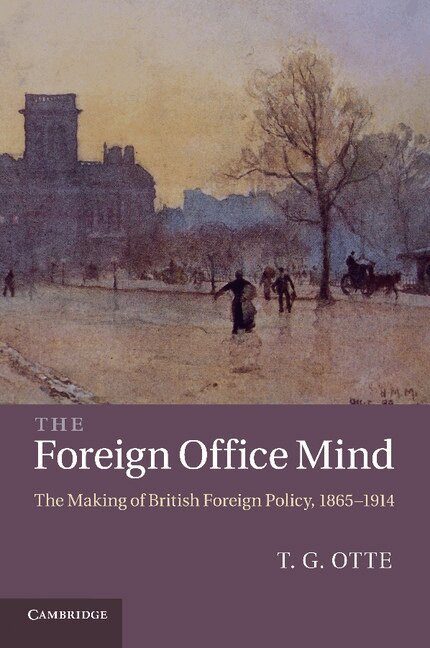
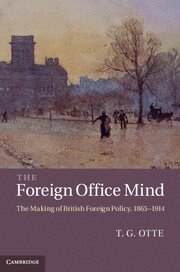
With this pioneering approach to the study of international history, T. G. Otte reconstructs the underlying principles, élite perceptions and 'unspoken assumptions' that shaped British foreign policy between the death of Palmerston and the outbreak of the First World War. Grounded in a wide range of public and private archival sources, and drawing on sociological insights, The Foreign Office Mind presents a comprehensive analysis of the foreign service as a 'knowledge-based organization', rooted in the social and educational background of the diplomatic élite and the broader political, social and cultural fabric of Victorian and Edwardian Britain. The book charts how the collective mindset of successive generations of professional diplomats evolved, and reacted to and shaped changes in international relations during the second half of the nineteenth century, including the balance of power and arms races, the origins of appeasement and the causes of the First World War.
1 515 kr
Skickas inom 5-8 vardagar
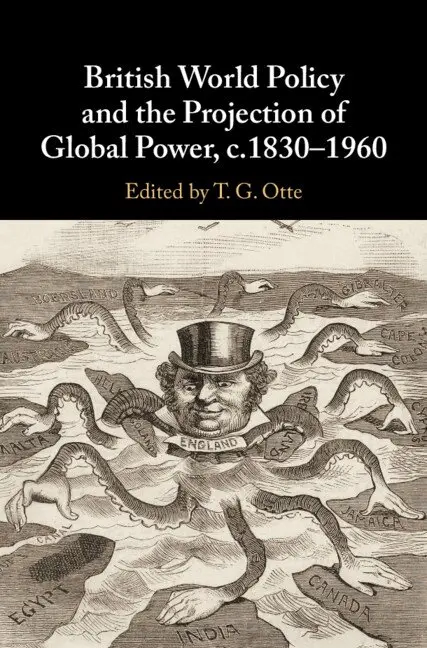
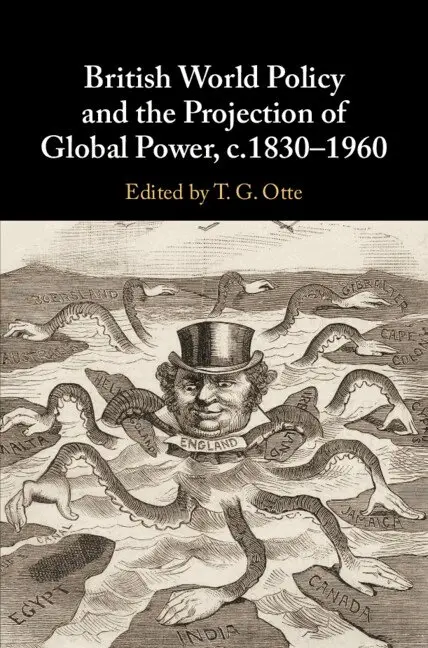
A fundamental truth about British power in the nineteenth century and beyond was that Britain was a global power. Her international position rested on her global economic, naval and political presence; and her foreign policy operated on a global scale. This volume throws into sharp relief the material elements of British power, but also its less tangible components, from Britain's global network of naval bases to the vast range of intersecting commercial, financial and intelligence relationships, which reinforced the country's political power. Leading historians reshape the scholarly debate surrounding the nature of British global power at a crucial period of transformation in international politics, and in so doing they deepen our understanding of the global nature of British power, the shifts in the international landscape from the high Victorian period to the 1960s, and the changing nature of the British state in this period.
645 kr
Skickas inom 7-10 vardagar
With this pioneering approach to the study of international history, T. G. Otte reconstructs the underlying principles, élite perceptions and 'unspoken assumptions' that shaped British foreign policy between the death of Palmerston and the outbreak of the First World War. Grounded in a wide range of public and private archival sources, and drawing on sociological insights, The Foreign Office Mind presents a comprehensive analysis of the foreign service as a 'knowledge-based organization', rooted in the social and educational background of the diplomatic élite and the broader political, social and cultural fabric of Victorian and Edwardian Britain. The book charts how the collective mindset of successive generations of professional diplomats evolved, and reacted to and shaped changes in international relations during the second half of the nineteenth century, including the balance of power and arms races, the origins of appeasement and the causes of the First World War.
396 kr
Skickas inom 7-10 vardagar
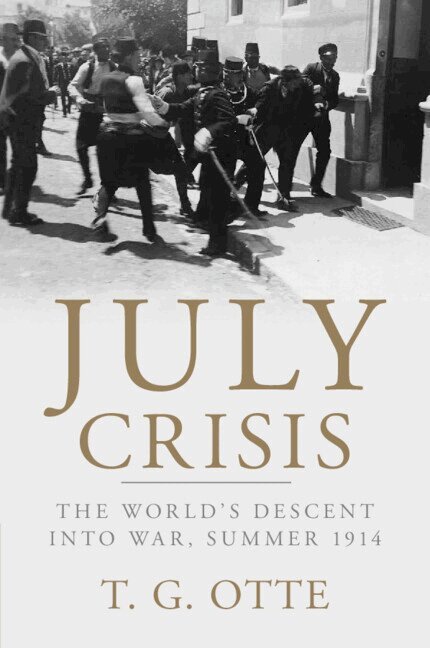
This is a magisterial new account of Europe's tragic descent into a largely inadvertent war in the summer of 1914. Thomas Otte reveals why a century-old system of Great Power politics collapsed so disastrously in the weeks from the 'shot heard around the world' on June 28th to Germany's declaration of war on Russia on August 1st. He shows definitively that the key to understanding how and why Europe descended into world war is to be found in the near-collective failure of statecraft by the rulers of Europe and not in abstract concepts such as the 'balance of power' or the 'alliance system'. In this unprecedented panorama of Europe on the brink, from the ministerial palaces of Berlin and Vienna to Belgrade, London, Paris and St Petersburg, Thomas Otte reveals the hawks and doves whose decision-making led to a war that would define a century and which still reverberates today.
333 kr
Skickas inom 7-10 vardagar
A fundamental truth about British power in the nineteenth century and beyond was that Britain was a global power. Her international position rested on her global economic, naval and political presence; and her foreign policy operated on a global scale. This volume throws into sharp relief the material elements of British power, but also its less tangible components, from Britain's global network of naval bases to the vast range of intersecting commercial, financial and intelligence relationships, which reinforced the country's political power. Leading historians reshape the scholarly debate surrounding the nature of British global power at a crucial period of transformation in international politics, and in so doing they deepen our understanding of the global nature of British power, the shifts in the international landscape from the high Victorian period to the 1960s, and the changing nature of the British state in this period.
2 082 kr
Skickas inom 10-15 vardagar
For historians centennial commemorations furnish an excellent heuristic tool for gauging late nineteenth- and early twentieth-century attitudes towards the past and the present. Centenary celebrations helped to revive, perpetuate and reinforce public perceptions of historical events and people in collective memory. They were fairly infrequent before 1850 but increased in size and numbers by the end of the long nineteenth century, so much so that a ‘cult of the centenary’ had become established throughout the wider Western world around 1900. At one level, such events were ephemeral affairs. And yet many left a lasting legacy. Above all, as part of the contemporary processes of the ‘invention of traditions’ and the conscious national ‘self-historicization’ of the established nation-states, they offer crucial insights into the social, cultural and political dynamics of the period.
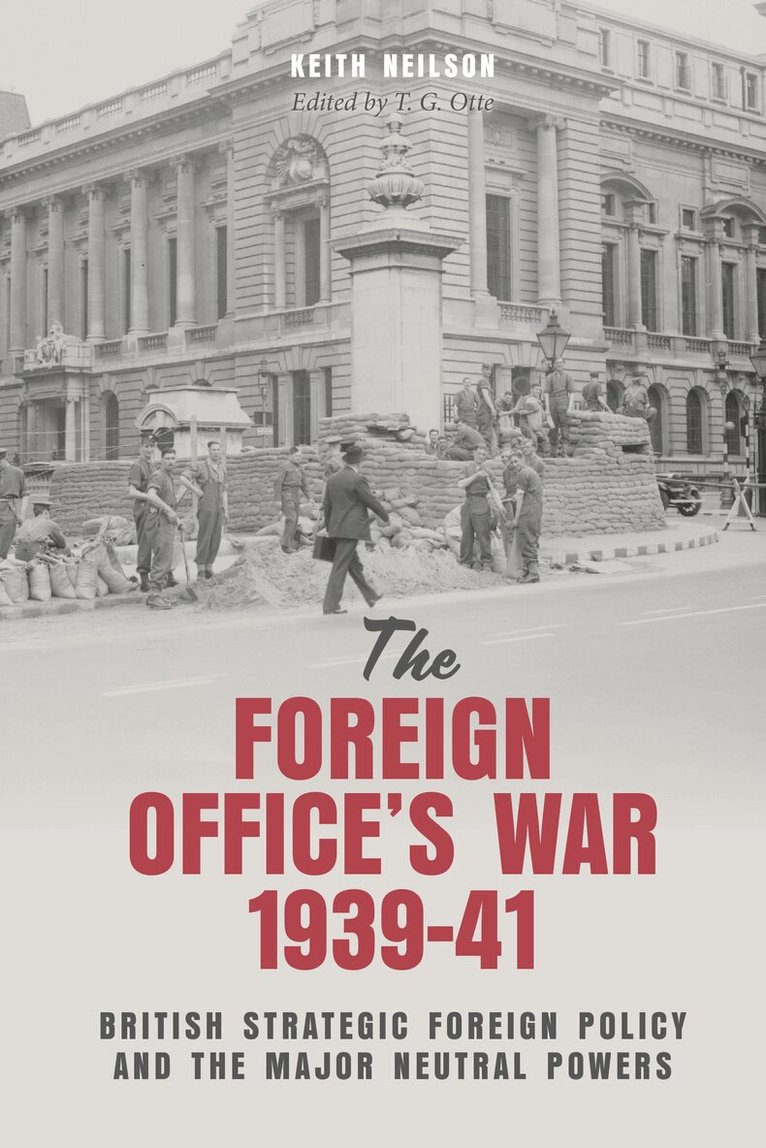
Foreign Office's War, 1939-41
British Strategic Foreign Policy and the Major Neutral Powers
Inbunden, Engelska, 2022
1 445 kr
Skickas inom 7-10 vardagar
Provides a forceful corrective to the idea that Britain 'stood alone' until the invasion of the Soviet Union and the attack on Pearl Harbor brought about 'the Grand Alliance'.Based on extensive archival research, the book demonstrates that 1939 to 1941 was a period of intensive diplomatic activity by the British Foreign Office designed to ensure that Britain's potential enemies, especially Soviet Russia, Italy and Japan, remained neutral and that its most desirable potential ally, the United States, remained as friendly as possible until it could be persuaded to join in the conflict. The book highlights the importance of diplomacy towards neutrals for British policy, considers the complexities of the situation, tying together issues such as blockade and the disposition of British forces in various theatres, explores decision making within the British government, examining how the diplomatic considerations of the Foreign Office played into wider debates amongst ministers and senior civil servants, and discusses the various courses towards neutrals, including alternatives, advocated within the Foreign Office. Overall, the book provides a rich, highly nuanced view of British policy in this crucial period.
1 195 kr
Skickas inom 7-10 vardagar
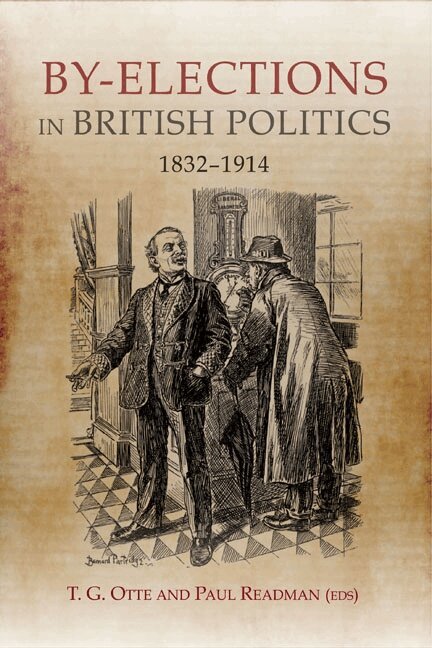
Explores the many issues surrounding by-elections in the period which saw the extension of the franchise, the introduction of the ballot, and the demise of most dual member constituencies.Between the 1832 Great Reform Act and the outbreak of World War One in 1914, over 2,600 by-elections took place in Britain. They were triggered by the death, retirement or resignation of sitting MPs or by the appointment of cabinet ministers and were a regular feature of Victorian and Edwardian politics. They furnished political parties and their leaders with a crucial tool for gauging and mobilising public opinion. Yet despite the prominence of by-election contests in the historical records of this period, scholars have paid relatively little attention to them. As this book shows, these elections deserve to be taken as seriously today as people took them at the time. They providedimportant linkages between local and national politics, between the four parts of the United Kingdom and Westminster, and between foreign and domestic affairs. They are vital to understanding the evolving electioneering machineries, the varying language of electoral contests, the traction that particular issues had with a growing and frequently volatile electorate, and the fluctuating fortunes of the political parties.This book, consisting of original work by leading political historians, provides the first synoptic study of this important subject. It will be required reading for historians and students of modern British political history, as well as specialists in electoralhistory and politics.T. G. Otte is Professor of Diplomatic History at the University of East Anglia. He is the author and/or editor of some thirteen books. Among the most recent is The Foreign Office Mind: The Making of British Foreign Policy, 1865-1914; Paul Readman is Senior Lecturer in Modern British History at King's College London. He is the author of Land and Nation in England: Patriotism, National Identity and the Politics of Land 1880-1914.Contributors: Luke Blaxill, Angus Hawkins, Geoffrey Hicks, Phillips Payson O'Brien, T.G. Otte, Ian Packer, Gordon Pentland, Paul Readman, Kathryn Rix, Matthew Roberts, Philip Salmon, Anthony Taylor