Tafadzwa Mushonga – författare
Visar alla böcker från författaren Tafadzwa Mushonga. Handla med fri frakt och snabb leverans.
10 produkter
Environmental Humanities of Extraction in Africa
Poetics and Politics of Exploitation
Av Tafadzwa Mushonga, James Ogude
E-bok, 2022
746 kr
Lägg i varukorg
This book brings together perspectives on resource exploitation to expose the continued environmental and socio-political concerns in post-colonial Africa. The continent is host to a myriad of environmental issues, largely resulting from its rich diversity of natural resources that have been …
Environmental Humanities of Extraction in Africa
Poetics and Politics of Exploitation
Av Tafadzwa Mushonga, James Ogude
E-bok, 2022
762 kr
Lägg i varukorg
This book brings together perspectives on resource exploitation to expose the continued environmental and socio-political concerns in post-colonial Africa. The continent is host to a myriad of environmental issues, largely resulting from its rich diversity of natural resources that have been …
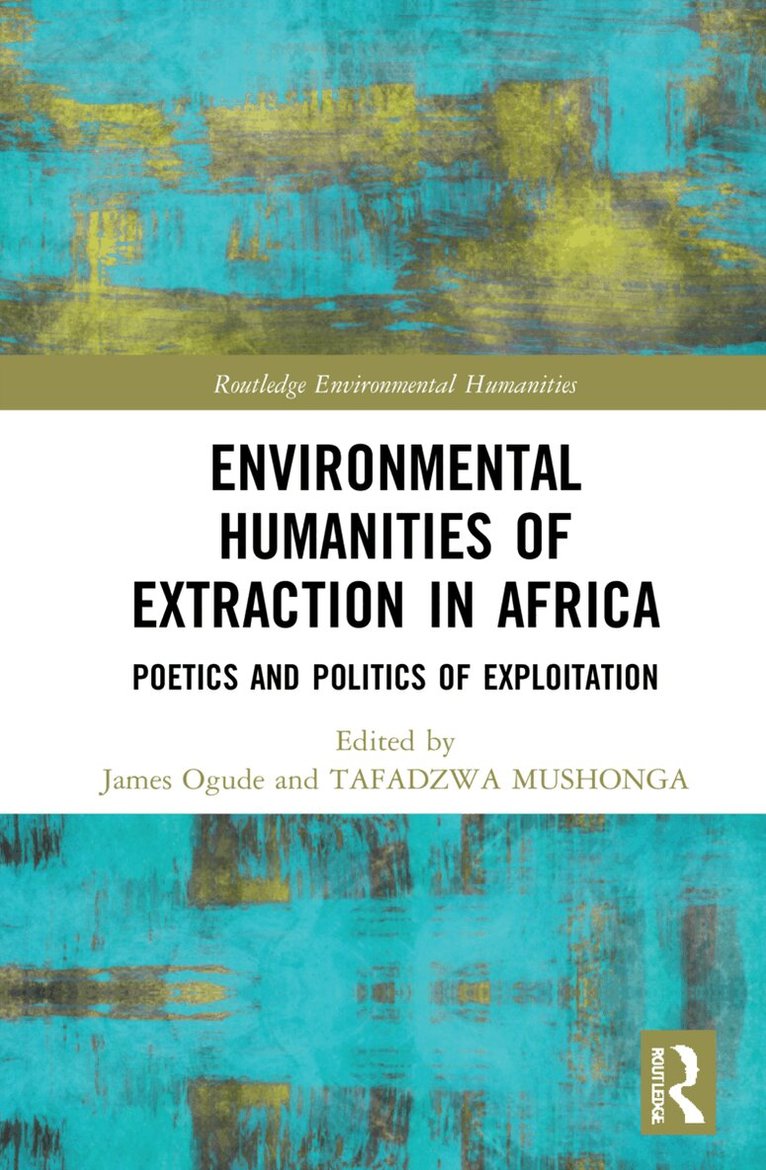
Environmental Humanities of Extraction in Africa
Poetics and Politics of Exploitation
Av James Ogude, Tafadzwa Mushonga
Inbunden, 2022
2510 kr
Lägg i varukorg
This book brings together perspectives on resource exploitation to expose the continued environmental and socio-political concerns in post-colonial Africa. The continent is host to a myriad of environmental issues, largely resulting from its rich diversity of natural resources that have been …
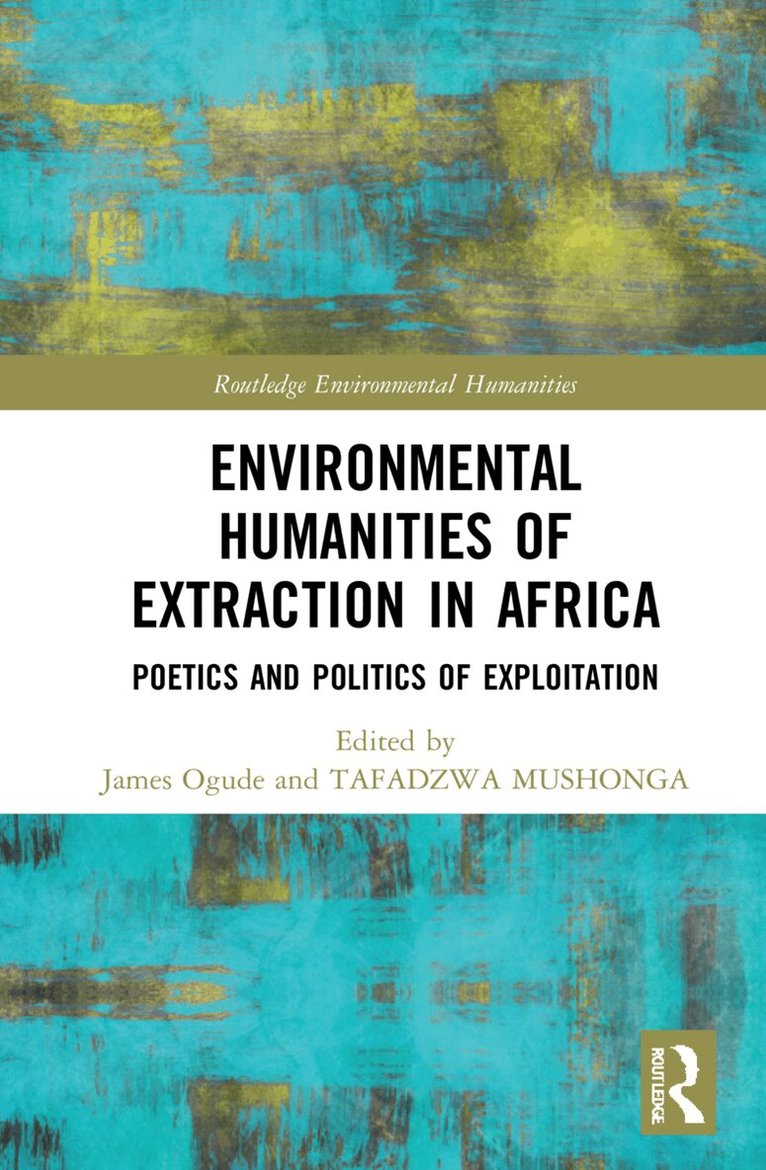
Environmental Humanities of Extraction in Africa
Poetics and Politics of Exploitation
Av James Ogude, Tafadzwa Mushonga
Häftad, 2024
647 kr
Lägg i varukorg
This book brings together perspectives on resource exploitation to expose the continued environmental and socio-political concerns in post-colonial Africa. The continent is host to a myriad of environmental issues, largely resulting from its rich diversity of natural resources that have been …
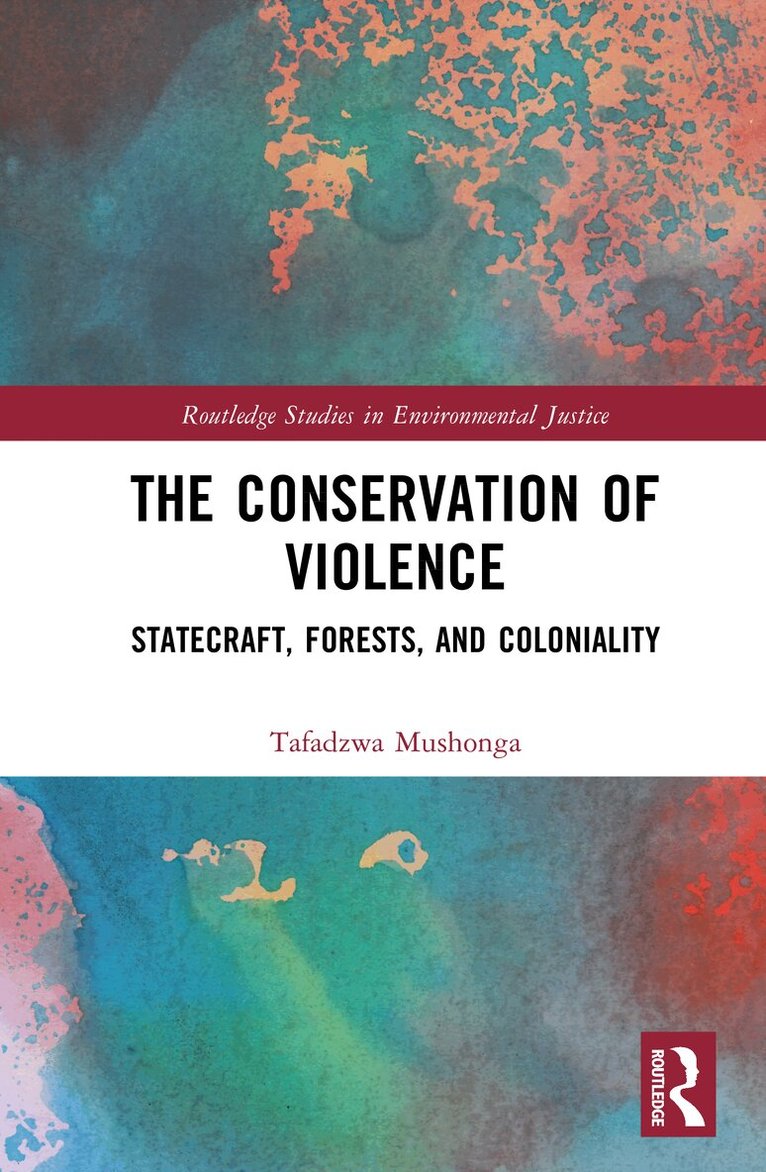
Conservation of Violence
Statecraft, Forests, and Coloniality
Inbunden, 2025
2510 kr
Lägg i varukorg
The Conservation of Violence explores the governance of protected forests in Zimbabwe, highlighting the structural and operational mechanism through which violent tactics are produced, employed, and sustained to promote nature conservation. Drawing on political ecology, geography, and environmental …
Conservation of Violence
Statecraft, Forests, and Coloniality
Häftad, 2026
649 kr
Lägg i varukorg
The Conservation of Violence explores the governance of protected forests in Zimbabwe, highlighting the structural and operational mechanism through which violent tactics are produced, employed, and sustained to promote nature conservation. Drawing on political ecology, geography, and environmental …
Conservation of Violence
Statecraft, Forests, and Coloniality
E-bok, 2025
748 kr
Lägg i varukorg
The Conservation of Violence explores the governance of protected forests in Zimbabwe, highlighting the structural and operational mechanism through which violent tactics are produced, employed, and sustained to promote nature conservation. Drawing on political ecology, geography, and environmental …
Conservation of Violence
Statecraft, Forests, and Coloniality
E-bok, 2025
838 kr
Lägg i varukorg
The Conservation of Violence explores the governance of protected forests in Zimbabwe, highlighting the structural and operational mechanism through which violent tactics are produced, employed, and sustained to promote nature conservation. Drawing on political ecology, geography, and environmental …
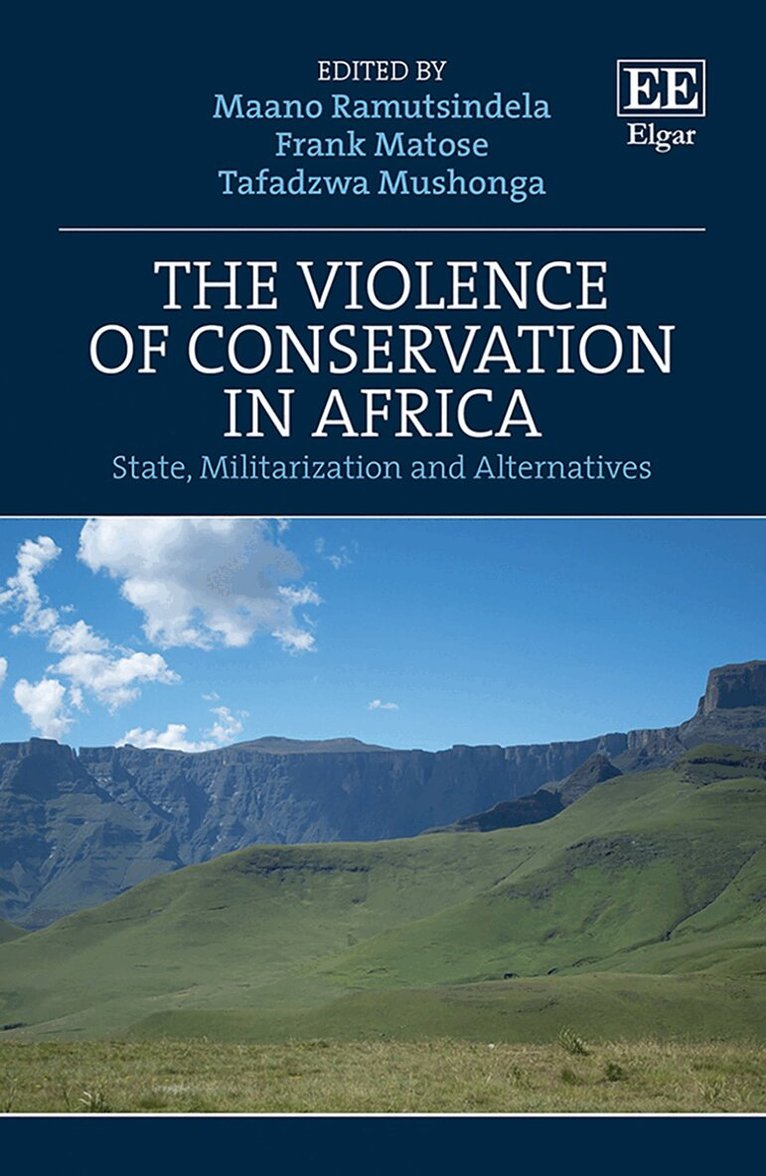
Violence of Conservation in Africa
State, Militarization and Alternatives
Av Maano Ramutsindela, Frank Matose m. fl.
Inbunden, 2022
1918 kr
Lägg i varukorg
Offering insights on violence in conservation in Africa, this timely book demonstrates how and why the state pursues conservation objectives to the detriment of its citizens. It focuses on how the dehumanization of black people and indigenous groups, the insertion of global green agendas onto the …
Violence of Conservation in Africa
State, Militarization and Alternatives
Av Tafadzwa Mushonga, Frank Matose m. fl.
E-bok, 2022
459 kr
Lägg i varukorg
Offering insights on violence in conservation in Africa, this timely book demonstrates how and why the state pursues conservation objectives to the detriment of its citizens. It focuses on how the dehumanization of black people and indigenous groups, the insertion of global green agendas onto the …