Tain-Jy Chen – författare
Visar alla böcker från författaren Tain-Jy Chen. Handla med fri frakt och snabb leverans.
8 produkter
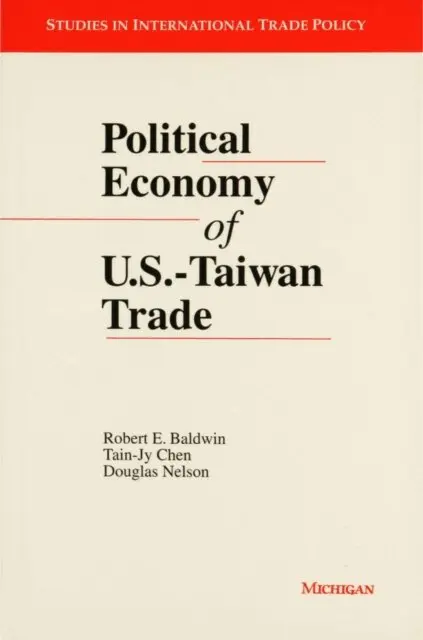
Political Economy of U.S. - Taiwan Trade
Av Douglas Nelson, Tain-Jy Chen m. fl.
E-bok, 2025
1312 kr
Lägg i varukorg
Two key features of the remarkable economic growth in the newly industrializing countries of East Asia over the last quarter of a century are the role of exports of manufactured goods as the engine of this growth and the importance of the United States as a market for these exports. Political …
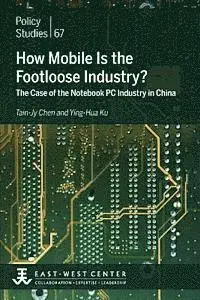
How Mobile Is the Footloose Industry? The Case of the Notebook PC Industry in China
Häftad, 2013
167 kr
Lägg i varukorg
Taiwan's Semiconductor Miracle
From Periphery to Core
Av Chin-Tay Shih, Tain-Jy Chen
E-bok, 2025
831 kr
Lägg i varukorg
This book examines how a series of inconceivable developments in the semiconductor industry over the last 40 years shaped modern Taiwan.Covering one of the most dramatic episodes in modern technology history, this book outlines the ascent of a resource-impoverished and technology-disadvantaged …
Taiwan's Semiconductor Miracle
From Periphery to Core
Av Chin-Tay Shih, Tain-Jy Chen
E-bok, 2025
807 kr
Lägg i varukorg
This book examines how a series of inconceivable developments in the semiconductor industry over the last 40 years shaped modern Taiwan.Covering one of the most dramatic episodes in modern technology history, this book outlines the ascent of a resource-impoverished and technology-disadvantaged …
Taiwan's Semiconductor Miracle
From Periphery to Core
Av Tain-Jy Chen, Chin-Tay Shih
Inbunden, 2025
2578 kr
Lägg i varukorg
This book examines how a series of inconceivable developments in the semiconductor industry over the last 40 years shaped modern Taiwan.Covering one of the most dramatic episodes in modern technology history, this book outlines the ascent of a resource-impoverished and technology-disadvantaged …
New Knowledge Economy of Taiwan
Av Tain-Jy Chen, Joseph S. Lee
Inbunden, 2004
2182 kr
Lägg i varukorg
Taiwan, once one of the world's leading manufacturing economies, is now transforming into a service economy, with an emphasis on knowledge-based services. This metamorphosis has not been easy. As well as major changes in the industrial sector, human resource and policy development have been …
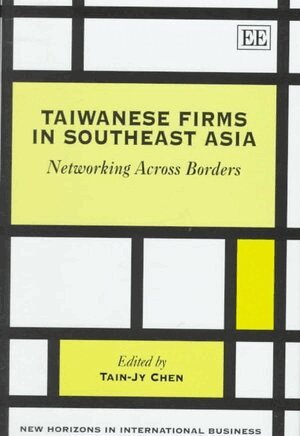
Taiwanese Firms in Southeast Asia
Networking Across Borders
Av Tain-Jy Chen
Inbunden, 1998
2182 kr
Lägg i varukorg
Taiwanese foreign direct investment rapidly expanded in the mid-1980s when the domestic wage rate and the value of the Taiwanese currency skyrocketed simultaneously. Losing their competitive edge at home, many Taiwanese firms relocated to lower wage countries; mainly Southeast Asia and …
Political Economy of U.S. - Taiwan Trade
Av Robert E. Baldwin, Tain-Jy Chen m. fl.
Inbunden, 1995
1439 kr
Tillfälligt slut
Two key features of the remarkable economic growth in the newly industrializing countries of East Asia over the last quarter of a century are the role of exports of manufactured goods as the engine of this growth and the importance of the United States as a market for these exports. Political …