Tamara L. Bray - Böcker
Visar alla böcker från författaren Tamara L. Bray. Handla med fri frakt och snabb leverans.
7 produkter
7 produkter
1 095 kr
Skickas inom 10-15 vardagar
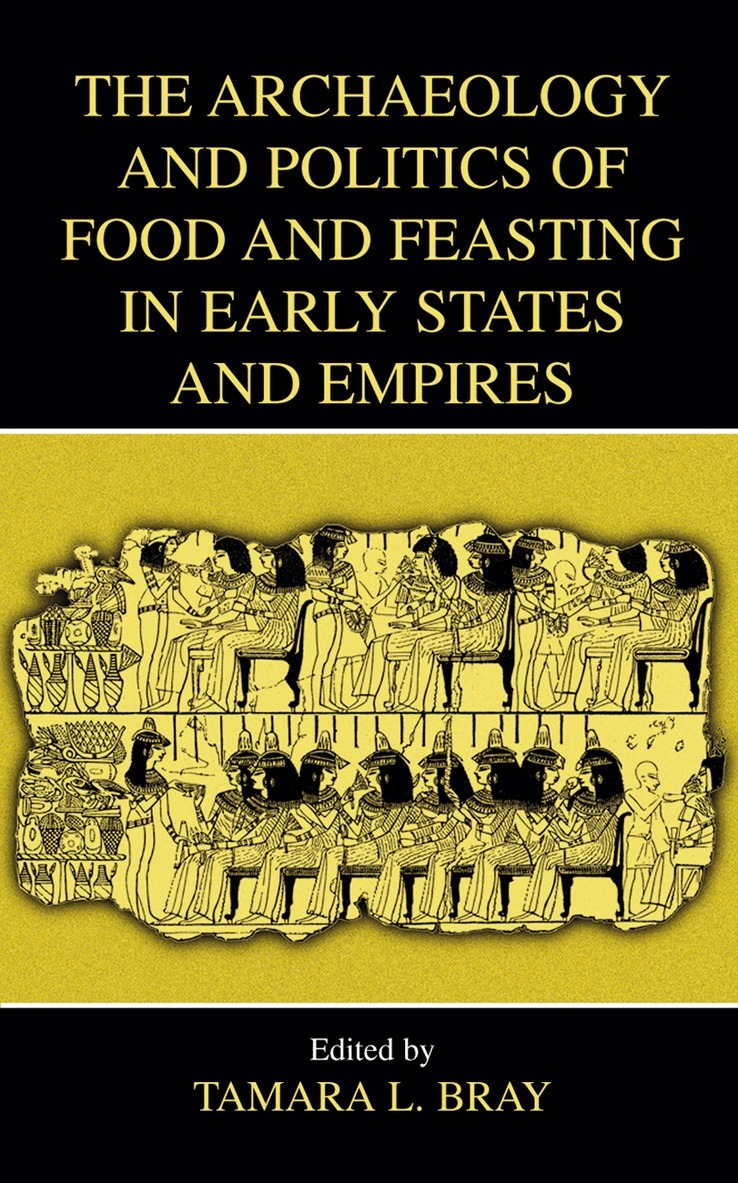
Food and feasting are increasingly recognized as having played a prominent role in the emergence of social hierarchies and the negotiation of power relations. Given the culinary nature of feasts, the archaeological visibility of such events is increased by the use of containers for both food preparation and consumption. This volume presents the utilization of culinary equipment as a window into the commensal politics of early states and empires and offers a comparative perspective on how food and feasting may have figured in the political calculus of archaic states in both the Old and New Worlds. The contributors provide important new insights into the strategies of early statecraft and the role of pots as political tools and include insight into queries such as: how did food and feasting figure in the politics of early states and empires around the world?; was feasting a universally important element in the construction of state power?; how do archaeologically discernible patterns of state feasting compare cross-culturally and through time? did state elite typically seek to create recognizable social boundaries through the use of expensive foods, special culinary equipment or distinctive cuisines, or was food and feasting equipment used rather to obfuscate privilege and bind state subjects in (asymmetrical) relations of reciprocity?The book provides an in-depth analysis for scholars and graduate students concerned with the archaeology of complex societies, the anthropology of food and feasting, ancient statecraft, archaeological approaches to micro-political processes, and the social interpretation of prehistoric pottery in these areas.
1 095 kr
Skickas inom 10-15 vardagar
Food and feasting are increasingly recognized as having played a prominent role in the emergence of social hierarchies and the negotiation of power relations. Given the culinary nature of feasts, the archaeological visibility of such events is increased by the use of containers for both food preparation and consumption. This volume presents the utilization of culinary equipment as a window into the commensal politics of early states and empires and offers a comparative perspective on how food and feasting may have figured in the political calculus of archaic states in both the Old and New Worlds. The contributors provide important new insights into the strategies of early statecraft and the role of pots as political tools and include insight into queries such as: how did food and feasting figure in the politics of early states and empires around the world?; was feasting a universally important element in the construction of state power?; how do archaeologically discernible patterns of state feasting compare cross-culturally and through time? did state elite typically seek to create recognizable social boundaries through the use of expensive foods, special culinary equipment or distinctive cuisines, or was food and feasting equipment used rather to obfuscate privilege and bind state subjects in (asymmetrical) relations of reciprocity?The book provides an in-depth analysis for scholars and graduate students concerned with the archaeology of complex societies, the anthropology of food and feasting, ancient statecraft, archaeological approaches to micro-political processes, and the social interpretation of prehistoric pottery in these areas.
397 kr
Kommande
797 kr
Skickas inom 5-8 vardagar
715 kr
Skickas inom 7-10 vardagar
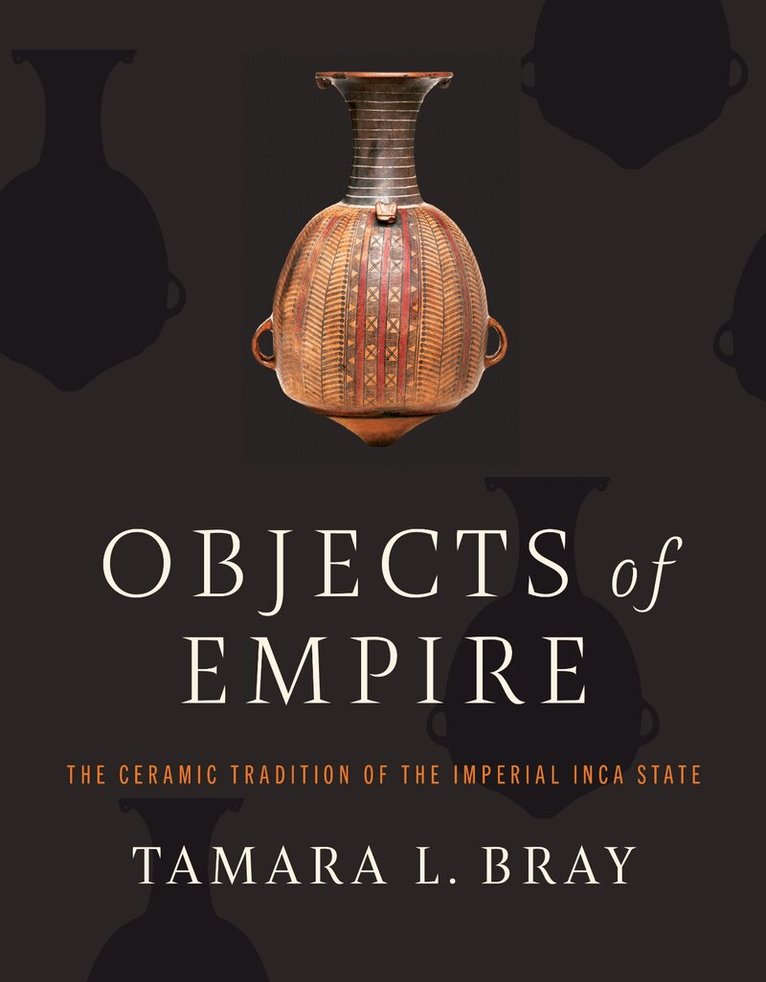
A comparative, empire-wide study of the ceramics associated with the imperial Inca state, theorizing the role of these highly recognizable vessel forms in legitimizing Inca rule and establishing imperial identities.The beautiful polychrome ceramics of the imperial Inca state have long been noted for their seemingly repetitive nature but little considered beyond this basic observation. The widespread distribution and general uniformity of the Inca pottery, however, hints at its larger importance to the imperial project. Moving beyond the pervasive "seen one, seen 'em all" mentality, Objects of Empire brings to light the variability and rich semiotic content of imperial Inca vessels. Taking a comparative, empire-wide approach, Tamara Bray identifies the parameters and significance of this variability, and defines the core elements of the imperial state style. She then investigates where, when, and why differences and deviations from the perceived norm occur. This study illuminates the strategies of territorial expansion and political control that lay at the heart of the Inca juggernaut, as well as the role of objects in the calculus of would-be rulers and subjects. Based on a unique and extensive database of imperial Inca pottery developed through detailed study of archaeologically recovered and museum-based collections, Objects of Empire reveals how power and legitimacy were produced and reproduced under the Inca through the material culture of everyday life.
622 kr
Skickas
Reframing the study of Indigenous visual cultures, this volume explores how images and objects generate affect and relation in non-Western contexts, foregrounding alternative modes of material engagement and meaning-making.While traditional approaches to Indigenous visual cultures have often centered on iconography and representation, this volume turns toward other ways that images and objects act in the world. Indigenous Visual Cultures in Latin America explores how material productions function not merely as signs that point elsewhere but as agents that help shape relationships, environments, and affective experience. Spanning Mesoamerica, the Andes, and Amazonia from 1500 BCE to the present, the chapters examine how meaning may reside in materials themselves; how making is a form of exchange between maker and matter; and how visual forms participate in configuring relations among humans, ancestors, deities, and place. These works are not passive containers of meaning, but charged presences—generative forces within ongoing worlds. Attuned to Indigenous ways of knowing and being, the volume invites readers to think beyond the frame, beyond the image, and beyond representation itself.
500 kr
Skickas
In this edited volume, Andean wak'as—idols, statues, sacred places, images, and oratories—play a central role in understanding Andean social philosophies, cosmologies, materialities, temporalities, and constructions of personhood. Top Andean scholars from a variety of disciplines cross regional, theoretical, and material boundaries in their chapters, offering innovative methods and theoretical frameworks for interpreting the cultural particulars of Andean ontologies and notions of the sacred.Wak'as were understood as agentive, nonhuman persons within many Andean communities and were fundamental to conceptions of place, alimentation, fertility, identity, and memory and the political construction of ecology and life cycles. The ethnohistoric record indicates that wak'as were thought to speak, hear, and communicate, both among themselves and with humans. In their capacity as nonhuman persons, they shared familial relations with members of the community, for instance, young women were wed to local wak'as made of stone and wak'as had sons and daughters who were identified as the mummified remains of the community's revered ancestors.Integrating linguistic, ethnohistoric, ethnographic, and archaeological data, The Archaeology of Wak'as advances our understanding of the nature and culture of wak'as and contributes to the larger theoretical discussions on the meaning and role of–"the sacred” in ancient contexts.