Tami Williams - Böcker
Visar alla böcker från författaren Tami Williams. Handla med fri frakt och snabb leverans.
7 produkter
7 produkter
328 kr
Skickas inom 7-10 vardagar
Best known for directing the Impressionist classic The Smiling Madame Beudet and the first Surrealist film The Seashell and the Clergyman, Germaine Dulac, feminist and pioneer of 1920s French avant-garde cinema, made close to thirty fiction films as well as numerous documentaries and newsreels. Through her filmmaking, writing, and cine-club activism, Dulac’s passionate defense of the cinema as a lyrical art and social practice had a major influence on twentieth century film history and theory.In Germaine Dulac: A Cinema of Sensations, Tami Williams makes unprecedented use of the filmmaker's personal papers, production files, and archival film prints to produce the first full-length historical study and critical biography of Dulac. Williams's analysis explores the artistic and sociopolitical currents that shaped Dulac's approach to cinema while interrogating the ground breaking techniques and strategies she used to critique conservative notions of gender and sexuality. Moving beyond the director’s work of the 1920s, Williams examines Dulac's largely ignored 1930s documentaries and newsreels establishing clear links with the more experimental impressionist and abstract works of her early period. This vivid portrait will be of interest to general readers, as well as to scholars of cinema and visual culture, performance, French history, women’s studies, queer cinema, in addition to studies of narrative avant-garde, experimental, and documentary film history and theory.
424 kr
Skickas
Remnants of early films often have a story to tell. As material artifacts, these film fragments are central to cinema history, perhaps more than ever in our digital age of easy copying and sharing. If a digital copy is previewed before preservation or is shared with a researcher outside the purview of a film archive, knowledge about how the artifact was collected, circulated, and repurposed threatens to become obscured. When the question of origin is overlooked, the story can be lost. Concerned contributors in Provenance and Early Cinema challenge scholars digging through film archives to ask, "How did these moving images get here for me to see them?" This volume, which features the conference proceedings from Domitor, the International Society for the Study of Early Cinema, 2018, questions preservation, attribution, and patterns of reuse in order to explore singular artifacts with long and circuitous lives.
428 kr
Skickas inom 7-10 vardagar
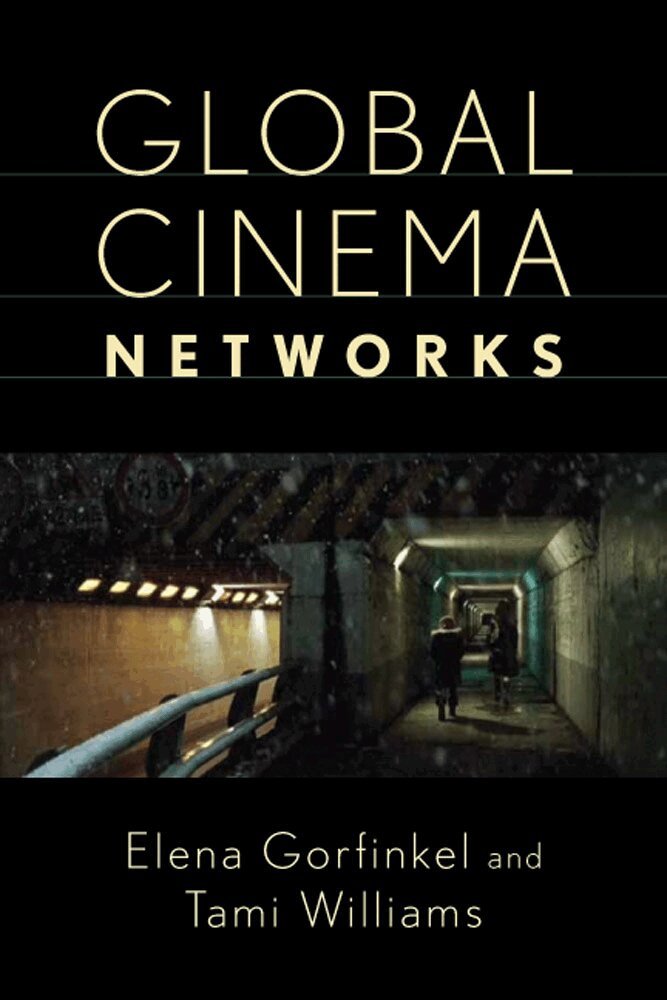
Global Cinema Networks investigates the evolving aesthetic forms, technological and industrial conditions, and social impacts of cinema in the twenty-first century. The collection’s esteemed contributors excavate sites of global filmmaking in an era of digital reproduction and amidst new modes of circulation and aesthetic convergence, focusing primarily on recent films made across Europe, Africa, Latin America, Asia, and the Middle East. Moving beyond the digital as a harbinger of transformation, the volume offers new ways of thinking about cinema networks in a historical continuum, from “international” to “world” to “transnational” to “global” frames.
1 570 kr
Skickas inom 7-10 vardagar
Global Cinema Networks investigates the evolving aesthetic forms, technological and industrial conditions, and social impacts of cinema in the twenty-first century. The collection’s esteemed contributors excavate sites of global filmmaking in an era of digital reproduction and amidst new modes of circulation and aesthetic convergence, focusing primarily on recent films made across Europe, Africa, Latin America, Asia, and the Middle East. Moving beyond the digital as a harbinger of transformation, the volume offers new ways of thinking about cinema networks in a historical continuum, from “international” to “world” to “transnational” to “global” frames.
414 kr
Skickas inom 7-10 vardagar
In the years before the First World War, showmen, entrepreneurs, educators, and scientists used magic lanterns and cinematographs in many contexts and many venues. To employ these silent screen technologies to deliver diverse and complex programs usually demanded audio accompaniment, creating a performance of both sound and image. These shows might include live music, song, lectures, narration, and synchronized sound effects provided by any available party—projectionist, local talent, accompanist or backstage crew—and would often borrow techniques from shadow plays and tableaux vivants. The performances were not immune to the influence of social and cultural forces, such as censorship or reform movements. This collection of essays considers the ways in which different visual practices carried out at the turn of the 20th century shaped performances on and beside the screen.
431 kr
Skickas inom 7-10 vardagar
These proceedings of the 16th conference of the international society for the study of early cinema Domitor includes 26 studies and numerous rarely seen figures dealing with the often overlooked history of the crafts, trades and techniques of early cinema. By examining material culture and the institutionalization of practices into trades during the late 19th and early 20th centuries, this new investigation into the skills and the techniques that defined the cinema in its early decades aims to foster a better understanding of the medium in its varied industrial and professional aspects. The art and gestures of craftspersons—including performers, camera operators, editors, directors, designers, engineers, projectionists, programmers, and critics—, like those of the factory or laboratory workers, are considered for their emerging specificity, as well as in relation to existing cultural, material and technological forms. This book shows how the industrialization of cinema, the professionalization of workers, and the standardization of techniques led to the creation (or at times, subversion) of norms, and consequently legitimized certain skills, crafts and techniques at the expense of others.The intermedial approaches deployed in this collection bring into focus the influence of multiple professional worlds and cultural practices on the nascent film medium, as well as the necessary adaptations and transformations required by the latter. This circulatory dynamic concerns people and practices, studied in a non-diffusionist approach taking into account transcultural interactions. Chapters examine the mechanisms of professionalization and identity-building as they relate to professions such as filmmaker or colorist, as well as to more unexpected occupations such as accountant, censor, or chemical engineer.The notion of technique is broadly defined. Several of the volume’s chapters deal with cameras or special effects, as well as with new historical investigation into mysterious technical devices such as shutters, cue systems or working samples. Going beyond this preoccupation with materiality, the collected studies also approach technique as a human and cultural activity, and thus as a set of gestures, crafts, and expertise. The book more specifically opens up a reflection on the skills of screen performers and on the training that brought the institutionalization of body techniques and film acting. The book further illustrates to an unprecedented extent that the first film workers were frequently women.Several chapters are dedicated to the unconventional careers of specific film workers, with particular attention being given to the diversity and complexity of professional trajectories. Indeed, this book demonstrates that the invention of cinema was deeply enmeshed with the rise of international networks, which resulted in the standardization of technical practices within corporate and national contexts being ultimately shaped by globalization.
Copy/Rights and Early Cinema
Proceedings of the 17th International Domitor Conference
Häftad, Engelska, 2026
464 kr
Kommande
Histories of early cinema often focus on technological, social, and aesthetic developments in the medium. But cinema also posed legal challenges throughout the world and continues to do so in the era of digital media and AI. The methods used to establish and defend copyright varied across national contexts and changed over time, shaping how films were circulated and preserved. This edited volume includes essays based on conference papers given at the 17th Domitor conference and includes case studies from a range of national, historical, and cultural contexts. The essays in this volume address an array of themes, including copyright and early intermediality, piracy and censorship, international distribution, infamy and defamation, and publicity, privacy, and rights to the image. Although these essays center the first decades of cinema, the rights they address continue to resonate today. Since intellectual property law is constantly struggling to stay abreast of technological innovation, this collection has special relevance in a new era of global production and digital technologies that is as momentous as the invention of cinema. Claiming, defining, and defending rights are returned to the spotlight as AI draws upon the past of cinema to shape its future.