Tani Barlow - Böcker
Visar alla böcker från författaren Tani Barlow. Handla med fri frakt och snabb leverans.
9 produkter
9 produkter
1 433 kr
Skickas inom 7-10 vardagar
Through the lens of modern Chinese literature, Gender Politics in Modern China explores the relationship between gender and modernity, notions of the feminine and masculine, and shifting arguments for gender equality in China.Ranging from interviews with contemporary writers, to historical accounts of gendered writing in Taiwan and semi-colonial China, to close feminist readings of individual authors, these essays confront the degree to which textual stategies construct notions of gender. Among the specific themes discussed are: how femininity is produced in texts by allocating women to domestic space; the extent to which textual production lies at the base of a changing, historically specific code of the feminine; the extent to which women in modern Chinese societies are products of literary canons; the ways in which the historical processes of gendering have operated in Chinese modernity vis À vis modernity in the West; the representation of feminists as avengers and as westernized women; and the meager recognition of feminism as a serious intellectual current and a large body of theory.Originally published as a special issue of Modern Chinese Literature (Spring & Fall 1988), this expanded book represents some of the most compelling new work in post-Mao feminist scholarship and will appeal to all those concerned with understanding a revitalized feminism in the Chinese context.Contributors. Carolyn Brown, Ching-kiu Stephen Chan, Sung-sheng Yvonne Chang, Yu-shih Chen, Rey Chow, Randy Kaplan, Richard King, Wolfgang Kubin, Wendy Larson, Lydia Liu, Seung-Yeun Daisy Ng, Jon Solomon, Meng Yue, Wang Zheng
417 kr
Skickas inom 7-10 vardagar
Through the lens of modern Chinese literature, Gender Politics in Modern China explores the relationship between gender and modernity, notions of the feminine and masculine, and shifting arguments for gender equality in China.Ranging from interviews with contemporary writers, to historical accounts of gendered writing in Taiwan and semi-colonial China, to close feminist readings of individual authors, these essays confront the degree to which textual stategies construct notions of gender. Among the specific themes discussed are: how femininity is produced in texts by allocating women to domestic space; the extent to which textual production lies at the base of a changing, historically specific code of the feminine; the extent to which women in modern Chinese societies are products of literary canons; the ways in which the historical processes of gendering have operated in Chinese modernity vis À vis modernity in the West; the representation of feminists as avengers and as westernized women; and the meager recognition of feminism as a serious intellectual current and a large body of theory.Originally published as a special issue of Modern Chinese Literature (Spring & Fall 1988), this expanded book represents some of the most compelling new work in post-Mao feminist scholarship and will appeal to all those concerned with understanding a revitalized feminism in the Chinese context.Contributors. Carolyn Brown, Ching-kiu Stephen Chan, Sung-sheng Yvonne Chang, Yu-shih Chen, Rey Chow, Randy Kaplan, Richard King, Wolfgang Kubin, Wendy Larson, Lydia Liu, Seung-Yeun Daisy Ng, Jon Solomon, Meng Yue, Wang Zheng
1 378 kr
Skickas inom 7-10 vardagar
The essays in Formations of Colonial Modernity in East Asia challenge the idea that notions of modernity and colonialism are mere imports from the West, and show how colonial modernity has evolved from and into unique forms throughout Asia. Although the modernity of non-European colonies is as indisputable as the colonial core of European modernity, until recently East Asian scholarship has tried to view Asian colonialism through the paradigm of colonial India (for instance), failing to recognize anti-imperialist nationalist impulses within differing Asian countries and regions. Demonstrating an impatience with social science models of knowledge, the contributors show that binary categories focused on during the Cold War are no longer central to the project of history writing. By bringing together articles previously published in the journal positions: east asia cultures critique, editor Tani Barlow has demonstrated how scholars construct identity and history, providing cultural critics with new ways to think about these concepts-in the context of Asia and beyond. Chapters address topics such as the making of imperial subjects in Okinawa, politics and the body social in colonial Hong Kong, and the discourse of decolonization and popular memory in South Korea. This is an invaluable collection for students and scholars of Asian studies, postcolonial studies, and anthropology. Contributors. Charles K. Armstrong, Tani E. Barlow, Fred Y. L. Chiu, Chungmoo Choi, Alan S. Christy, Craig Clunas, James A. Fujii, James L. Hevia, Charles Shiro Inouye, Lydia H. Liu, Miriam Silverberg, Tomiyama Ichiro, Wang Hui
416 kr
Skickas inom 7-10 vardagar
The essays in Formations of Colonial Modernity in East Asia challenge the idea that notions of modernity and colonialism are mere imports from the West, and show how colonial modernity has evolved from and into unique forms throughout Asia. Although the modernity of non-European colonies is as indisputable as the colonial core of European modernity, until recently East Asian scholarship has tried to view Asian colonialism through the paradigm of colonial India (for instance), failing to recognize anti-imperialist nationalist impulses within differing Asian countries and regions. Demonstrating an impatience with social science models of knowledge, the contributors show that binary categories focused on during the Cold War are no longer central to the project of history writing. By bringing together articles previously published in the journal positions: east asia cultures critique, editor Tani Barlow has demonstrated how scholars construct identity and history, providing cultural critics with new ways to think about these concepts-in the context of Asia and beyond. Chapters address topics such as the making of imperial subjects in Okinawa, politics and the body social in colonial Hong Kong, and the discourse of decolonization and popular memory in South Korea. This is an invaluable collection for students and scholars of Asian studies, postcolonial studies, and anthropology. Contributors. Charles K. Armstrong, Tani E. Barlow, Fred Y. L. Chiu, Chungmoo Choi, Alan S. Christy, Craig Clunas, James A. Fujii, James L. Hevia, Charles Shiro Inouye, Lydia H. Liu, Miriam Silverberg, Tomiyama Ichiro, Wang Hui
416 kr
Skickas inom 7-10 vardagar
Displaying the particular vitality of the global traditions of Marxism and neomarxism at the beginning of the twenty-first century, New AsianMarxisms collects essays by a diverse group of scholars-historians, political scientists, literary scholars, and sociologists-who offer a range of studies of the Marxist heritage focusing on Korea, Japan, India, and China.While some of these essays take up key thinkers in Marxist history or draw attention to outstanding problematics, others focus on national literature and discourse in North and South Korea, the "Mao Zedong Fever" of the 1990s, the implications of Li Dazhao's poetry, and the Indian Naxalite movement. Illustrating the importance of central analytical categories like exploitation, alienation, and violence to studies on the politics of knowledge, contributors confront prevailing global consumerist fantasieswith accounts of political struggle, cultural displacement, and theoretical strategies.Contributors. Tani E. Barlow, Dai Jinhua, Michael Dutton, D. R. Howland, Marshall Johnson, Liu Kang, You-me Park, William Pietz, Claudia Pozzana, Alessandro Russo, Sanjay Seth, Gi-Wook Shin, Sugiyama Mitsunobu, Jing Wang
468 kr
Skickas inom 7-10 vardagar
The Question of Women in Chinese Feminism is a history of thinking about the subject of women in twentieth-century China. Tani E. Barlow illustrates the theories and conceptual categories that Enlightenment Chinese intellectuals have developed to describe the collectivity of women. Demonstrating how generations of these theorists have engaged with international debates over eugenics, gender, sexuality, and the psyche, Barlow argues that as an Enlightenment project, feminist debate in China is at once Chinese and international. She reads social theory, psychoanalytic thought, literary criticism, ethics, and revolutionary political ideologies to illustrate the range and scope of Chinese feminist theory’s preoccupation with the problem of gender inequality. She reveals how, throughout the cataclysms of colonial modernity, revolutionary modernization, and market socialism, prominent Chinese feminists have gathered up the remainders of the past and formed them into social and ethical arguments, categories, and political positions, ceaselessly reshaping progressive Enlightenment sexual liberation theory.
516 kr
Skickas inom 3-6 vardagar
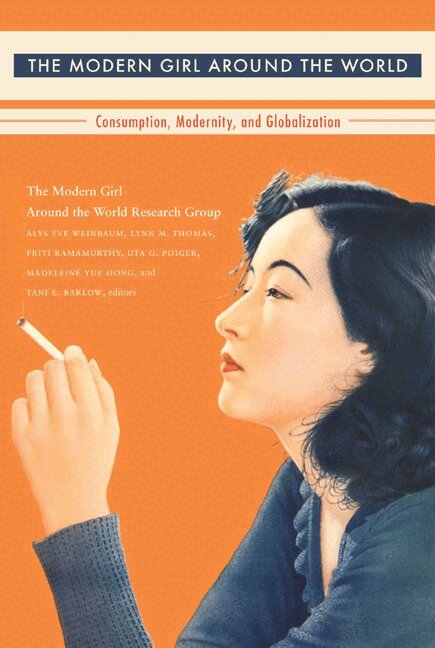
During the 1920s and 1930s, in cities from Beijing to Bombay, Tokyo to Berlin, Johannesburg to New York, the Modern Girl made her sometimes flashy, always fashionable appearance in city streets and cafes, in films, advertisements, and illustrated magazines. Modern Girls wore sexy clothes and high heels; they applied lipstick and other cosmetics. Dressed in provocative attire and in hot pursuit of romantic love, Modern Girls appeared on the surface to disregard the prescribed roles of dutiful daughter, wife, and mother. Contemporaries debated whether the Modern Girl was looking for sexual, economic, or political emancipation, or whether she was little more than an image, a hollow product of the emerging global commodity culture. The contributors to this collection track the Modern Girl as she emerged as a global phenomenon in the interwar period. Scholars of history, women’s studies, literature, and cultural studies follow the Modern Girl around the world, analyzing her manifestations in Germany, Australia, China, Japan, France, India, the United States, Russia, South Africa, and Zimbabwe. Along the way, they demonstrate how the economic structures and cultural flows that shaped a particular form of modern femininity crossed national and imperial boundaries. In so doing, they highlight the gendered dynamics of interwar processes of racial formation, showing how images and ideas of the Modern Girl were used to shore up or critique nationalist and imperial agendas. A mix of collaborative and individually authored chapters, the volume concludes with commentaries by Kathy Peiss, Miriam Silverberg, and Timothy Burke.Contributors: Davarian L. Baldwin, Tani E. Barlow, Timothy Burke, Liz Conor, Madeleine Yue Dong, Anne E. Gorsuch, Ruri Ito, Kathy Peiss, Uta G. Poiger, Priti Ramamurthy, Mary Louise Roberts, Barbara Sato, Miriam Silverberg, Lynn M. Thomas, Alys Eve Weinbaum
1 175 kr
Skickas inom 7-10 vardagar
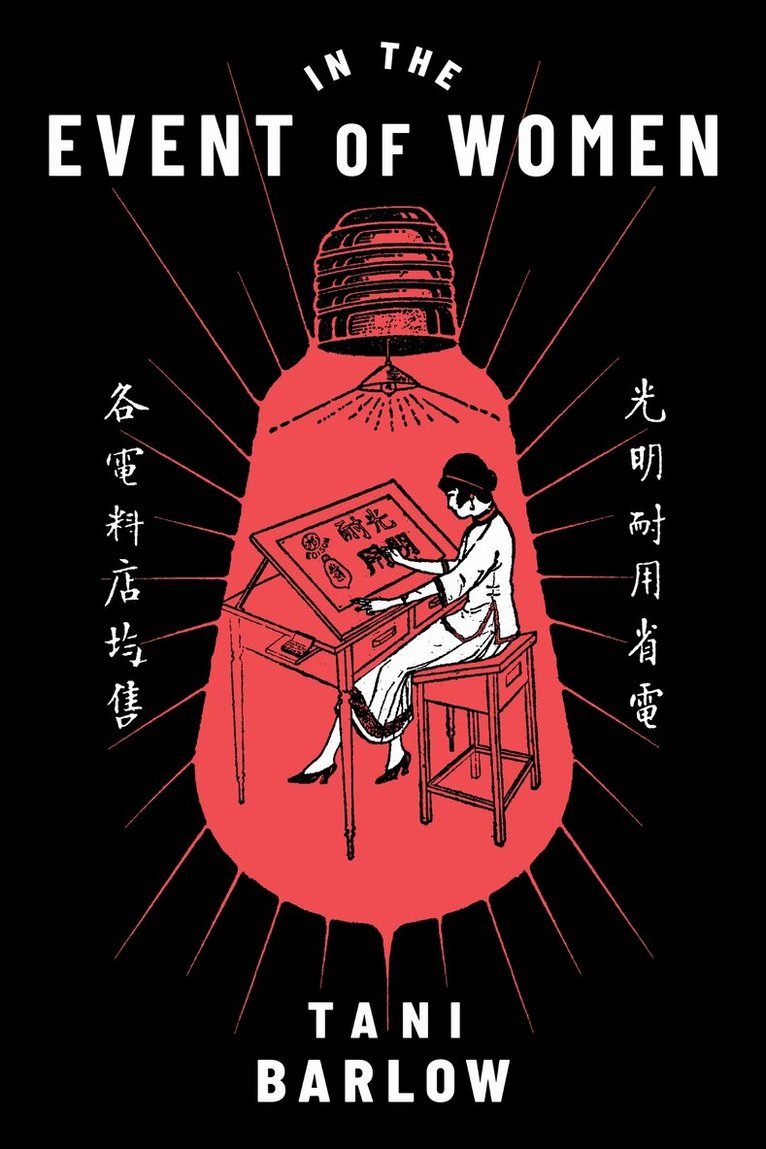
In the Event of Women outlines the stakes of what Tani Barlow calls “the event of women.” Focusing on the era of the late nineteenth century through the mid-twentieth century's Cultural Revolution, Barlow shows that an event is a politically inspired action to install a newly discovered truth, in this case the mammal origins of human social evolution. Highbrow and lowbrow social theory circulating in Chinese urban print media placed humanity's origin story in relation to commercial capital's modern advertising industry and the conclusion that women's liberation involved selling, buying, and advertising industrial commodities. The political struggle over how the truth of women in China would be performed and understood, Barlow shows, means in part that an event of women was likely global because its truth is vested in biology and physiology. In so doing, she reveals the ways in which historical universals are effected in places where truth claims are not usually sought. This book reconsiders Alain Badiou's concept of the event; particularly the question of whose political moment marks newly discovered truths.
306 kr
Skickas inom 7-10 vardagar
In the Event of Women outlines the stakes of what Tani Barlow calls “the event of women.” Focusing on the era of the late nineteenth century through the mid-twentieth century's Cultural Revolution, Barlow shows that an event is a politically inspired action to install a newly discovered truth, in this case the mammal origins of human social evolution. Highbrow and lowbrow social theory circulating in Chinese urban print media placed humanity's origin story in relation to commercial capital's modern advertising industry and the conclusion that women's liberation involved selling, buying, and advertising industrial commodities. The political struggle over how the truth of women in China would be performed and understood, Barlow shows, means in part that an event of women was likely global because its truth is vested in biology and physiology. In so doing, she reveals the ways in which historical universals are effected in places where truth claims are not usually sought. This book reconsiders Alain Badiou's concept of the event; particularly the question of whose political moment marks newly discovered truths.