Tania Kuteva - Böcker
Visar alla böcker från författaren Tania Kuteva. Handla med fri frakt och snabb leverans.
8 produkter
8 produkter
Del 9 - Studies in the Evolution of Language
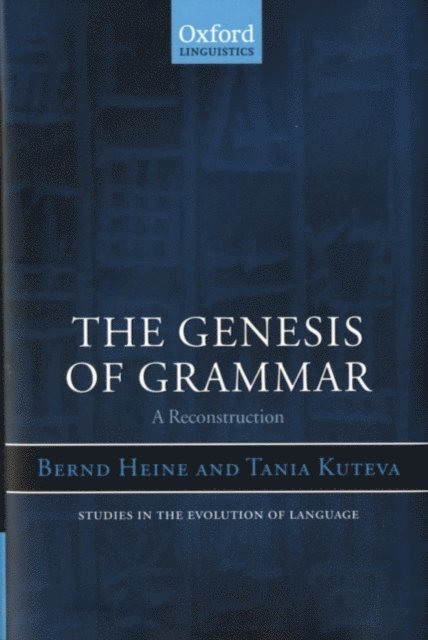
The Genesis of Grammar
A Reconstruction
Inbunden, Engelska, 2007
2 367 kr
Skickas inom 5-8 vardagar
This book reconstructs what the earliest grammars might have been and shows how they could have led to the languages of modern humankind.Like other biological phenomena, language cannot be fully understood without reference to its evolution, whether proven or hypothesized," wrote Talmy Givón in 2002. As the languages spoken 8,000 years ago were typologically much the same as they are today and as no direct evidence exists for languages before then, evolutionary linguists are at a disadvantage compared to their counterparts in biology. Bernd Heine and Tania Kuteva seek to overcome this obstacle by combining grammaticalization theory, one of the main methods of historical linguistics, with work in animal communication and human evolution. The questions they address include: do the modern languages derive from one ancestral language or from more than one? What was the structure of language like when it first evolved? And how did the properties associated with modern human languages arise, in particular syntax and the recursive use of language structures? The authors proceed on the assumption that if language evolution is the result of language change then the reconstruction of the former can be explored by deploying the processes involved in the latter. Their measured arguments and crystal-clear exposition will appeal to all those interested in the evolution of language, from advanced undergraduates to linguists, cognitive scientists, human biologists, and archaeologists.
Del 9 - Studies in the Evolution of Language
The Genesis of Grammar
A Reconstruction
Häftad, Engelska, 2007
807 kr
Skickas inom 7-10 vardagar
This book reconstructs what the earliest grammars might have been and shows how they could have led to the languages of modern humankind.Like other biological phenomena, language cannot be fully understood without reference to its evolution, whether proven or hypothesized," wrote Talmy Givón in 2002. As the languages spoken 8,000 years ago were typologically much the same as they are today and as no direct evidence exists for languages before then, evolutionary linguists are at a disadvantage compared to their counterparts in biology. Bernd Heine and Tania Kuteva seek to overcome this obstacle by combining grammaticalization theory, one of the main methods of historical linguistics, with work in animal communication and human evolution. The questions they address include: do the modern languages derive from one ancestral language or from more than one? What was the structure of language like when it first evolved? And how did the properties associated with modern human languages arise, in particular syntax and the recursive use of language structures? The authors proceed on the assumption that if language evolution is the result of language change then the reconstruction of the former can be explored by deploying the processes involved in the latter. Their measured arguments and crystal-clear exposition will appeal to all those interested in the evolution of language, from advanced undergraduates to linguists, cognitive scientists, human biologists, and archaeologists.
1 313 kr
Skickas inom 3-6 vardagar
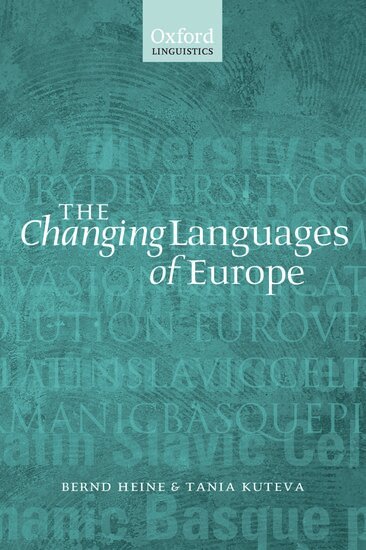
This book shows that the languages and dialects of Europe are becoming increasingly alike and furthermore that this unifying process goes back to Roman times, is accelerating, and affects every European language including those of different families such as Basque and Finnish. The unifying process involves every grammatical aspect of the languages and operates through changes so minute that native speakers fail to notice them. The authors reveal when, how, and why common grammatical structures have evolved and continue to evolve in processes of change that will transform the linguistic landscape of Europe.
842 kr
Skickas inom 7-10 vardagar
The languages and dialects of Europe, this book shows, are becoming increasingly alike. Furthermore this unifying process goes at least as far back as the Roman empire, is accelerating, and affects every one of Europe's 150 or so languages including those of different families such as Basque and Finnish. The changes are by no means restricted to lexical borrowing but involve every grammatical aspect of the language. They are usually so minute that neither native speakers nor trained linguists notice them. But they accumulate and give rise to new grammatical structures that lead in turn to new patterns of areal relationship. Professor Heine and Professor Kuteva look for the causes of linguistic change in cultural and economic exchanges across national and regional boundaries and in the processes that occur when speakers learn or are in close contact with another language. Testing their data and conclusions against findings from elsewhere in the world, the authors reconstruct and reveal when, how, and why common grammatical structures have evolved and continue to evolve in processes of change that will, they argue, transform the linguistic landscape of Europe. The book is written in clear, non-technical language. It will appeal to scholars and students of language change and variation in Europe and elsewhere. It will also interest everyone concerned to understand the nature of language and language change.
591 kr
Skickas inom 7-10 vardagar
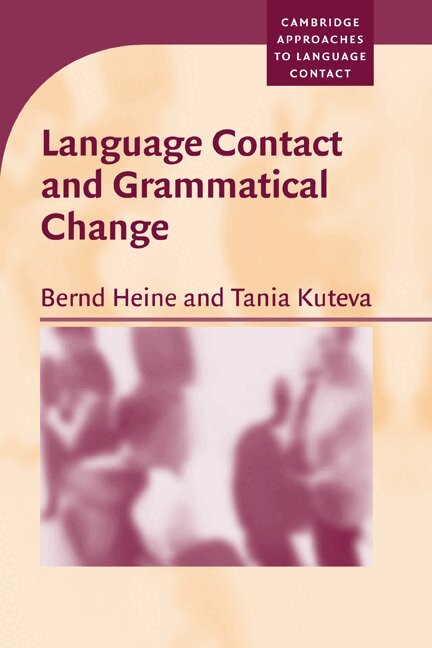
The phenomenon of language contact, and how it affects the structure of languages, has been of great interest to linguists. This study looks at how grammatical forms and structures evolve when speakers of two languages come into contact, and offers an interesting insight into the mechanism that induces people to transfer grammatical structures from one language to another. Drawing on findings from languages all over the world, Language Contact and Grammatical Change shows that the transfer of linguistic material across languages is quite regular and follows universal patterns of grammaticalization - contrary to previous claims that it is a fairly irregular process - and argues that internal and external explanations of language structure and change are in no way mutually exclusive. Engaging and informative, this book will be of great interest to sociolinguists, linguistic anthropologists, and all those working on grammaticalization, language contact, and language change.
1 024 kr
Skickas inom 7-10 vardagar
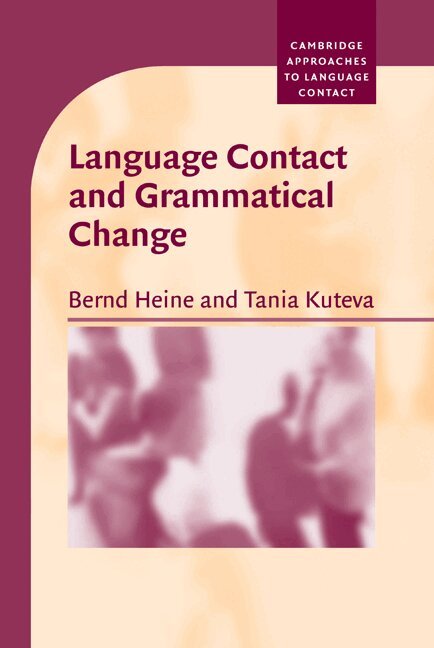
The phenomenon of language contact, and how it affects the structure of languages, has been of great interest to linguists. This study looks at how grammatical forms and structures evolve when speakers of two languages come into contact, and offers an interesting insight into the mechanism that induces people to transfer grammatical structures from one language to another. Drawing on findings from languages all over the world, Language Contact and Grammatical Change shows that the transfer of linguistic material across languages is quite regular and follows universal patterns of grammaticalization - contrary to previous claims that it is a fairly irregular process - and argues that internal and external explanations of language structure and change are in no way mutually exclusive. Engaging and informative, this book will be of great interest to sociolinguists, linguistic anthropologists, and all those working on grammaticalization, language contact, and language change.
1 417 kr
Skickas inom 7-10 vardagar
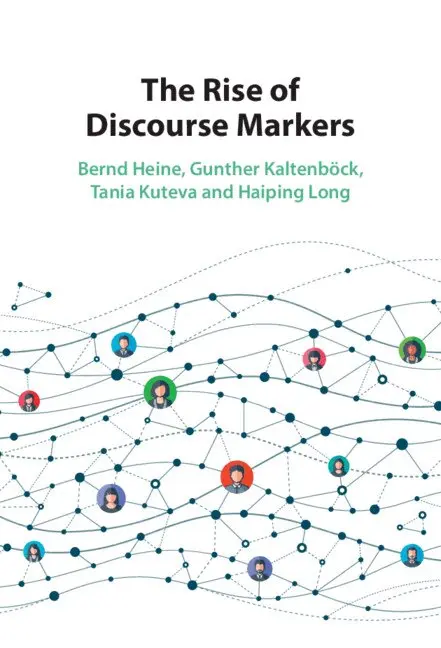
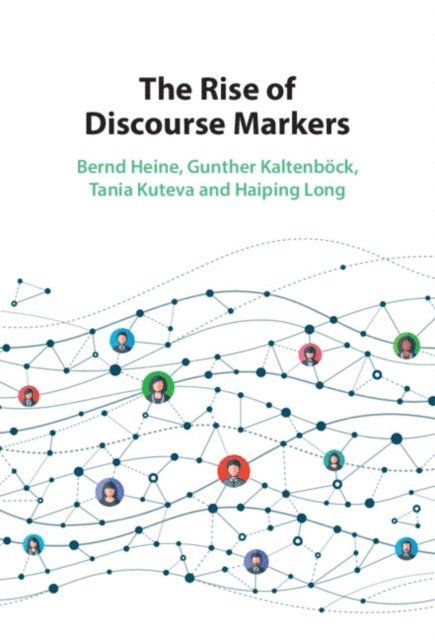
Discourse markers constitute an important part of linguistic communication, and research on this phenomenon has been a thriving field of study over the past three decades. However, a problem that has plagued this research is that these markers exhibit a number of structural characteristics that are hard to interpret based on existing methodologies, such as grammaticalization. This study argues that it is possible to explain such characteristics in a meaningful way. It presents a cross-linguistic survey of the development of discourse markers, their important role in communication, and their relation to the wider context of sociocultural behaviour, with the goal of explaining their similarities and differences across a typologically wide range of languages. By giving a clear definition of discourse markers, it aims to provide a guide for future research, making it essential reading for students and researchers in linguistics, and anyone interested in exploring this fascinating linguistic phenomenon.
319 kr
Skickas inom 7-10 vardagar
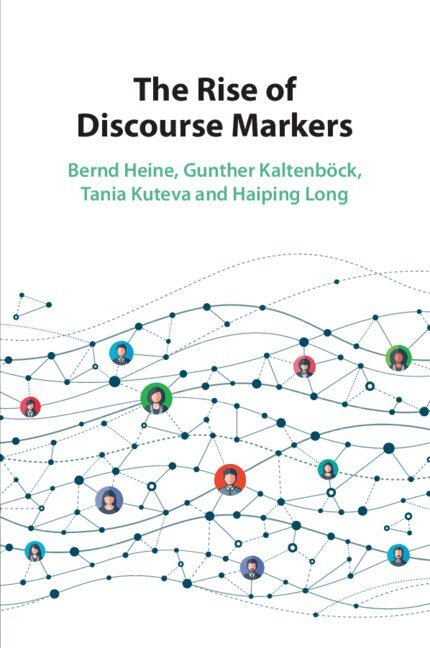
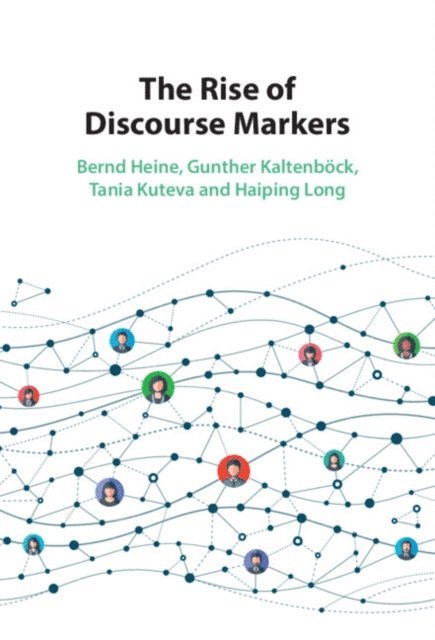
Discourse markers constitute an important part of linguistic communication, and research on this phenomenon has been a thriving field of study over the past three decades. However, a problem that has plagued this research is that these markers exhibit a number of structural characteristics that are hard to interpret based on existing methodologies, such as grammaticalization. This study argues that it is possible to explain such characteristics in a meaningful way. It presents a cross-linguistic survey of the development of discourse markers, their important role in communication, and their relation to the wider context of sociocultural behaviour, with the goal of explaining their similarities and differences across a typologically wide range of languages. By giving a clear definition of discourse markers, it aims to provide a guide for future research, making it essential reading for students and researchers in linguistics, and anyone interested in exploring this fascinating linguistic phenomenon.