Tarcisius Kabutaulaka - Böcker
Visar alla böcker från författaren Tarcisius Kabutaulaka. Handla med fri frakt och snabb leverans.
4 produkter
4 produkter
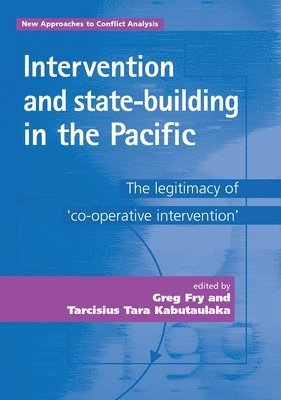
Intervention and State-Building in the Pacific
The Legitimacy of 'Cooperative Intervention'
Inbunden, Engelska, 2008
1 235 kr
Skickas inom 5-8 vardagar
State-building intervention in weak, war-torn or failing states has become a priority for the international community. However, the question of how to legitimately engage in the shaping of national governance remains, at the very least, a vexed one. This book explores this key issue through a critical examination of a new model of state-building intervention which has recently emerged in relation to the Pacific ‘arc of crisis’. Initiated by the Australian Government in 2003, this ‘cooperative intervention’ doctrine, built on declared principles of partnership and respect for sovereignty, seems to offer a legitimate way to engage in state-building intervention. Drawing on a group of distinguished Pacific specialists, this book mounts a critique of these claims, showing how international legitimacy does not automatically translate into political legitimacy among those in the affected societies; and how the attempt to legitimise the intervention internationally may actually work against such legitimacy in the recipient state. These insights will be of value to those interested in public policy studies, international law, development studies and international relations.
287 kr
Skickas inom 10-15 vardagar
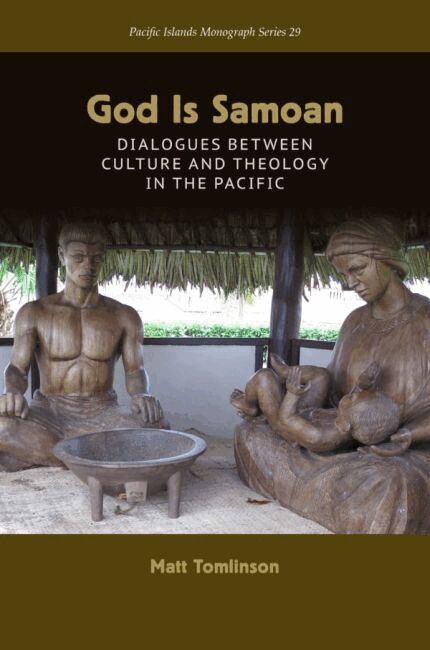
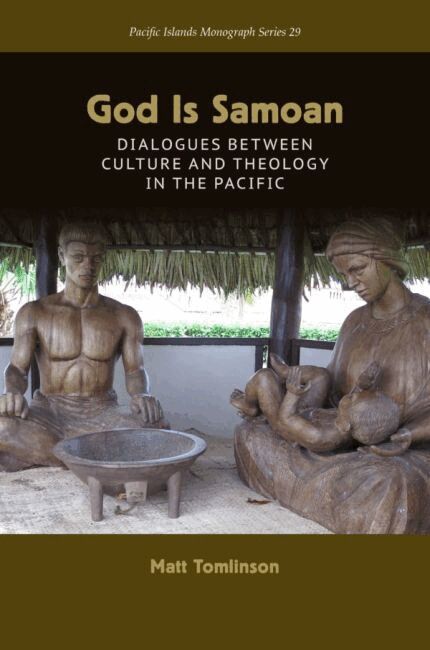
Christian theologians in the Pacific Islands see culture as the grounds on which one understands God. In this pathbreaking book, Matt Tomlinson engages in an anthropological conversation with the work of "contextual theologians", exploring how the combination of Pacific Islands culture and Christianity shapes theological dialogues. Employing both scholarly research and ethnographic fieldwork, the author addresses a range of topics: from radical criticisms of biblical stories as inappropriate for Pacific audiences to celebrations of traditional gods such as Tagaloa as inherently Christian figures. This book presents a symphony of voices-engaged, critical, prophetic-from the contemporary Pacific's leading religious thinkers and suggests how their work articulates with broad social transformations in the region.Each chapter in this book focuses on a distinct type of culturally driven theological dialogue. One type is between readers and texts, in which biblical scholars suggest new ways of reading, and even rewriting, the Bible so it becomes more meaningful in local terms. A second kind concerns the state of the church and society. For example, feminist theologians and those calling for "prophetic" action on social problems propose new conversations about how people in Oceania should navigate difficult times. A third kind of discussion revolves around identity, emphasizing what makes Oceania unique and culturally coherent. A fourth addresses the problems of climate change and environmental degradation to sacred lands by encouraging "eco-theological" awareness and interconnection. Finally, many contextual theologians engage with the work of other disciplines' prominently, anthropology-as they develop new discourse on God, people, and the future of Oceania.Contextual theology allows people in Oceania to speak with God and fellow humans through the idiom of culture in a distinctly Pacific way. Tomlinson concludes, however, that the most fruitful topic of dialogue might not be culture, but rather the nature of dialogue itself. Written in an accessible, engaging style and presenting innovative findings, this book will interest students and scholars of anthropology, world religion, theology, globalization, and Pacific studies.
752 kr
Skickas inom 7-10 vardagar
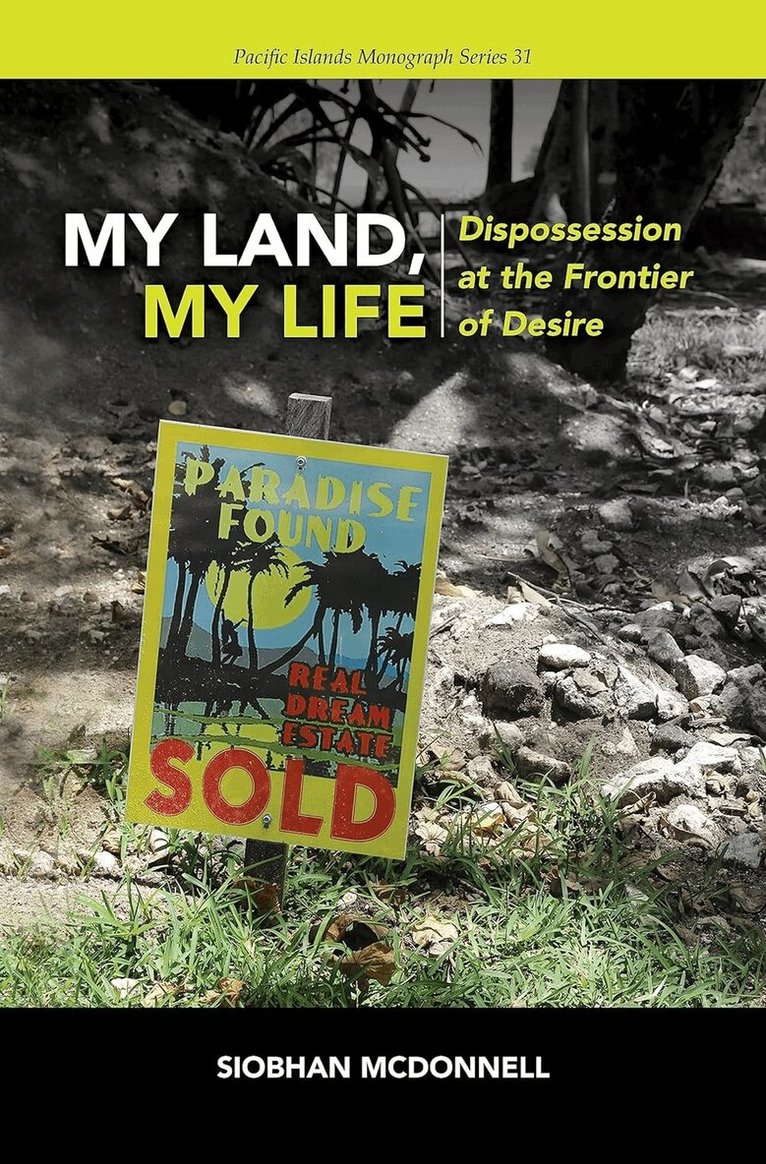
Throughout Oceania, land is central to identity because it is understood to be spiritually nourishing and sustaining. Land is the mother. Land, and the kinship it nurtures, is the basis for sustaining livelihoods and ways of life. Therefore, Indigenous dispossession from the land has deep and far-reaching consequences. My Land My Life: Dispossession at the Frontier of Desire explores the land rush that took place in Vanuatu from 2001 to 2014 which resulted in over ten percent of all customary land being leased. In this book, Siobhan McDonnell offers new insights into the drivers of capitalist land transformations. Using multi-scalar and multi-sited ethnography she describes not simply a linear march toward commodification of the landscape by foreign interests, but a complex web replete with the local powerful Indigenous men involved in manipulating power and property. McDonnell meticulously describes land-leasing processes and maps the relationships between investors, middlemen, and local men. She shows how property is a tool with which foreigners reassert capitalism and neocolonial control over Indigenous landscapes. The legal identity of "landowner" contains foundational contradictions between the rights established in Vanuatu’s kastom system and those afforded by property, as individualized rights over land. Property has also created sites for the production of masculine authority and enabled men to manipulate claims to land and entrench their personal power. This book explores how transactions of customary land have created new domains of agency and frontiers of desire: foreign desire to possess land and local desire to lease land for cash. It concludes with a discussion of Vanuatu’s constitutional and land reform package, drafted by the author, which took effect in 2014 and delivered a more empathetic approach to Indigenous land rights and ended the land rush.Informed by decades of study, legal work, and community engagement, My Land My Life demonstrates an engaged anthropological practice based on reciprocity that responds directly to what Indigenous people have asked for. This book is certain to appeal to a wide range of scholars as well as policy makers.
319 kr
Skickas inom 7-10 vardagar
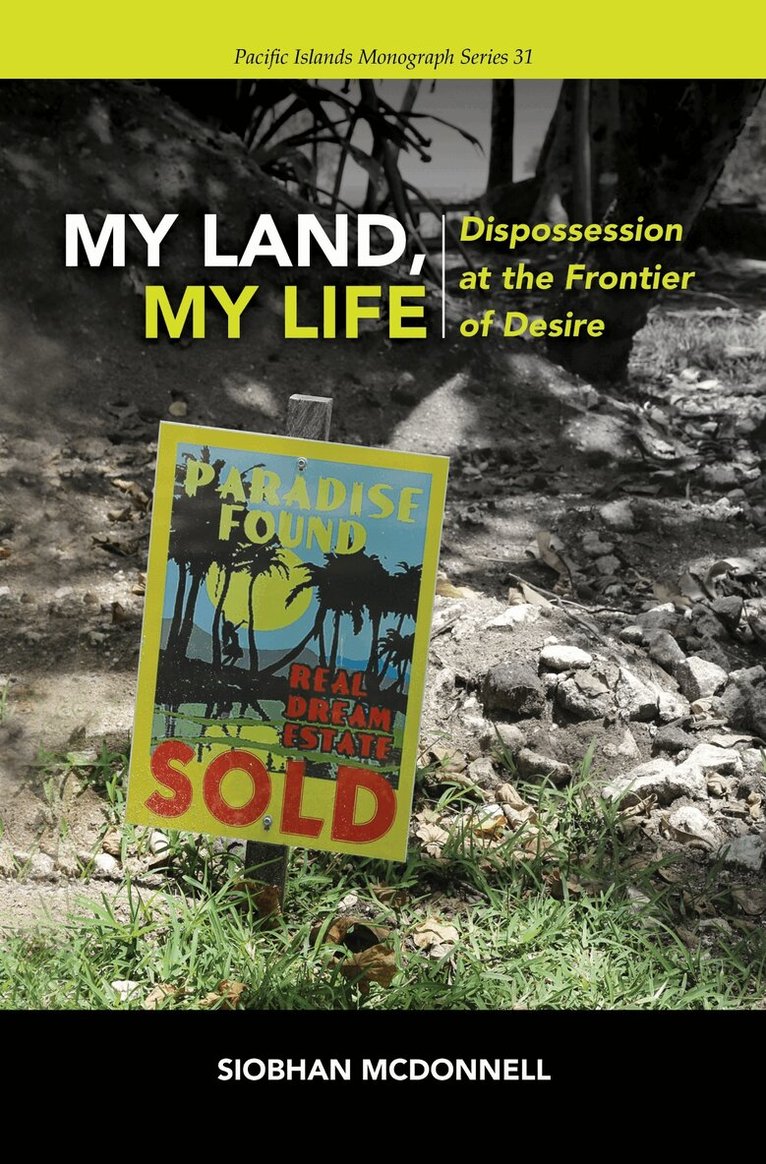
Throughout Oceania, land is central to identity because it is understood to be spiritually nourishing and sustaining. Land is the mother. Land, and the kinship it nurtures, is the basis for sustaining livelihoods and ways of life. Therefore, Indigenous dispossession from the land has deep and far-reaching consequences. My Land, My Life: Dispossession at the Frontier of Desire explores the land rush that took place in Vanuatu from 2001 to 2014 which resulted in over ten percent of all customary land being leased. In this book, Siobhan McDonnell offers new insights into the drivers of capitalist land transformations. Using multi-scalar and multi-sited ethnography, she describes not simply a linear march toward commodification of the landscape by foreign interests, but a complex web replete with the local powerful Indigenous men involved in manipulating power and property. McDonnell meticulously describes land-leasing processes and maps the relationships between investors, middlemen, and local men. She shows how property is a tool with which foreigners reassert capitalism and neocolonial control over Indigenous landscapes. The legal identity of "landowner" contains foundational contradictions between the rights established in Vanuatu’s kastom system and those afforded by property, as individualized rights over land. Property has also created sites for the production of masculine authority and enabled men to manipulate claims to land and entrench their personal power. This book explores how transactions of customary land have created new domains of agency and frontiers of desire: foreign desire to possess land and local desire to lease land for cash. It concludes with a discussion of Vanuatu’s constitutional and land reform package, drafted by the author, which took effect in 2014 and delivered a more empathetic approach to Indigenous land rights and ended the land rush.Informed by decades of study, legal work, and community engagement, My Land, My Life demonstrates an engaged anthropological practice based on reciprocity that responds directly to what Indigenous people have asked for. This book is certain to appeal to a wide range of scholars as well as policy makers.