Teresa Zackodnik – författare
Visar alla böcker från författaren Teresa Zackodnik. Handla med fri frakt och snabb leverans.
4 produkter
4 produkter
23 108 kr
Skickas inom 10-15 vardagar
The black women's club movement is frequently seen as definitive of "first-wave" African American feminism. However, this six-volume collection from the History of Feminism series draws together key documents that show the varied political work African American feminists were undertaking well before the turn into the 20th century. African American Feminismsbrings together writings that document distinctly African American feminist organizing from as early as the late 1820s through female benevolent and literary societies, as well as writings that document African American feminist participation in black political concerns such as emigration and colonization, discrimination in public transportation, and anti-lynching. African American women also negotiated competing demands within interracial reform movements like abolition, woman's rights, temperance and suffrage, as well as within organizations like the black church, making documents that offer insight into those unique demands key to understanding black feminist arguments and rhetoric. Pursuing a varied feminist rhetoric that ranged from advocating domestic and maternal feminism to defending black womanhood, African American feminists focused on larger social reforms as well as agitating for material changes in the lives of African American women and girls. African American feminists were also keenly attuned to opening useful venues to black feminist voices, from the pulpit to the press, and urged the women that followed them to continue this work.This collection, which includes a variety of genres from the spiritual autobiography to the platform speech and the pamphlet, goes beyond the more common focus on the "greats" of black feminism to include lesser known black feminists and some unidentified women who contributed to black feminist debate on a variety of topics. African American Feminisms, edited and with an introduction by Teresa Zackodnik, is destined to be welcomed by those interested in women's studies, feminism, and African American history as an invaluable reference resource.
1 536 kr
Skickas inom 7-10 vardagar
The period of 1850-1865 consisted of violent struggle and crisis as the United States underwent the prodigious transition from slaveholding to ostensibly 'free' nation. This volume reframes mid-century African American literature and challenges our current understandings of both African American and American literature. It presents a fluid tradition that includes history, science, politics, economics, space and movement, the visual, and the sonic. Black writing was highly conscious of transnational and international politics, textual circulation, and revolutionary imaginaries. Chapters explore how Black literature was being produced and circulated; how and why it marked its relation to other literary and expressive traditions; what geopolitical imaginaries it facilitated through representation; and what technologies, including print, enabled African Americans to pursue such a complex and ongoing aesthetic and political project.
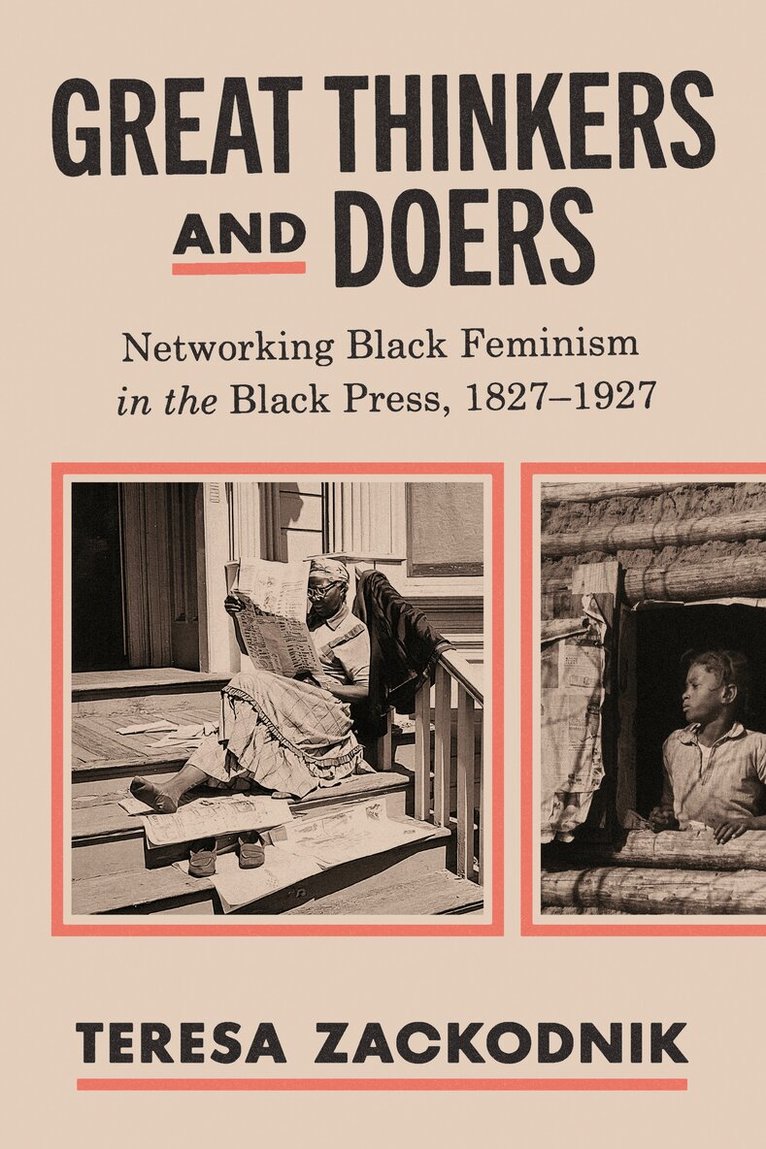
Great Thinkers and Doers
Networking Black Feminism in the Black Press, 1827–1927
Inbunden, Engelska, 2025
767 kr
Skickas inom 7-10 vardagar
A corrective history of the essential role that Black women played in the early Black press.In Great Thinkers and Doers, Teresa Zackodnik looks at the vital—and largely overlooked—role of Black women readers, writers, and editors in the development of the Black press in the nineteenth and early twentieth centuries. Understanding the relationship between the Black press and Black women's political and community organizing helps illuminate how important Black women were to this media phenomenon in its first one hundred years. In the nineteenth century, Zackodnik reveals, the Black press was second only to the Black church in its centrality to Black politics and communities, but histories of its development have long credited its founding and development to the Black men who were its editors. Despite their underrepresentation in the leadership of Black public politics and the Black press, women were overrepresented in the mutual benevolent, moral improvement, and literary societies that functioned as community centers of political, oratorical, and print culture work. These societies supplied the Black press with content, a readership, and distribution nodes in Black communities throughout the nation. Zackodnik examines the vital opportunity that this networking of the Black press with literary societies offered Black women readers to enter Black print space and advance communal goals. She also explores how Black women gained a foothold within publications—often, initially, with "gateway genres" such as letters to the editor and women's columns—and shaped the Black press. This book will change how we understand the early Black press and overlooked Black feminist print practices.
496 kr
Skickas inom 7-10 vardagar
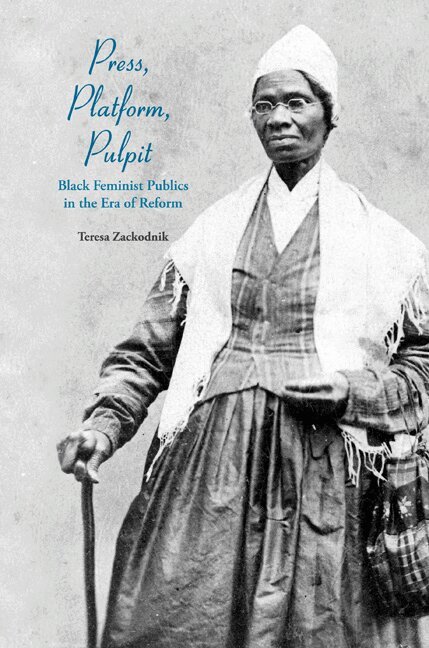
Press, Platform, Pulpit examines how early black feminism goes public by sheding new light on some of the major figures of early black feminism as well as bringing forward some lesser-known individuals who helped shape various reform movements. With a perspective unlike many other studies of black feminism, Teresa Zackodnik considers these activists as central, rather than marginal, to the politics of their day, and argues that black feminism reached critical mass well before the club movement’s national federation at the turn into the twentieth century . Throughout, she shifts the way in which major figures of early black feminism have been understood.The first three chapters trace the varied speaking styles and appeals of black women in the church, abolition, and women’s rights, highlighting audience and location as mediating factors in the public address and politics of figures such as Jarena Lee, Zilpha Elaw, Amanda Berry Smith, Ellen Craft, Sarah Parker Remond and Sojourner Truth. The next chapter focuses on Ida B. Wells’s anti-lynching tours as working within “New Abolition” and influenced by black feminists before her. The final chapter examines feminist black nationalism as it developed in the periodical press by considering Maria Stewart’s social and feminist gospel; Mary Shadd Cary’s linking of abolition, emigration, and woman suffrage; and late-nineteenth-century black feminist journalism addressing black women’s migration and labor. Early black feminists working in reforms such as abolition and women’s rights opened new public arenas, such as the press, to the voices of black women. The book concludes by focusing on the 1891 National Council of Women, Frances Harper, and Anna Julia Cooper, which together mark a generational shift in black feminism, and by exploring the possibilities of taking black feminism public through forging coalitions among women of color.Press, Platform, Pulpit goes far in deepening our understanding of early black feminism, its position in reform, and the varied publics it created for its politics. It not only moves historically from black feminist work in the church early in the nineteenth century to black feminism in the press at its close, but also explores the connections between black feminist politics across the century and specific reforms.