Terry L. Leap – författare
Visar alla böcker från författaren Terry L. Leap. Handla med fri frakt och snabb leverans.
3 produkter
3 produkter
475 kr
Skickas inom 10-15 vardagar
In an environment where corporate scandals fill the headlines and ethics courses have suddenly become standard fare in business schools, Terry Leap offers welcome insights into and useful ways of thinking about a critical problem that permeates our society. His main contribution is an integrative model of white-collar crime, which smoothly incorporates influences from sociology, psychology, public policy, and business. As he explains the process that occurs across the many different categories of crimes within organizations, he finds that there are more similarities than differences between "criminals in the suites" and "criminals in the streets."Leap's definition of crimes within organizations and the people who commit them are laid out in his first chapter. He then goes on to discuss the causes of and events surrounding white-collar crime, types of crimes and criminals, the decision-making processes of white-collar criminals, and the impact of these crimes. His concluding chapter predicts future trends in corporate crime, including an explanation of why we are likely to see more crime in health care. Throughout, Leap presents numerous specific examples and cases—from famous meltdowns such as Enron and WorldCom to less-publicized incidents including a weight-loss franchisee mislabeling doughnuts as low fat and a CEO of a South Carolina regional transportation authority misusing taxpayer money for lavish meals, personal expenses, and world travel.
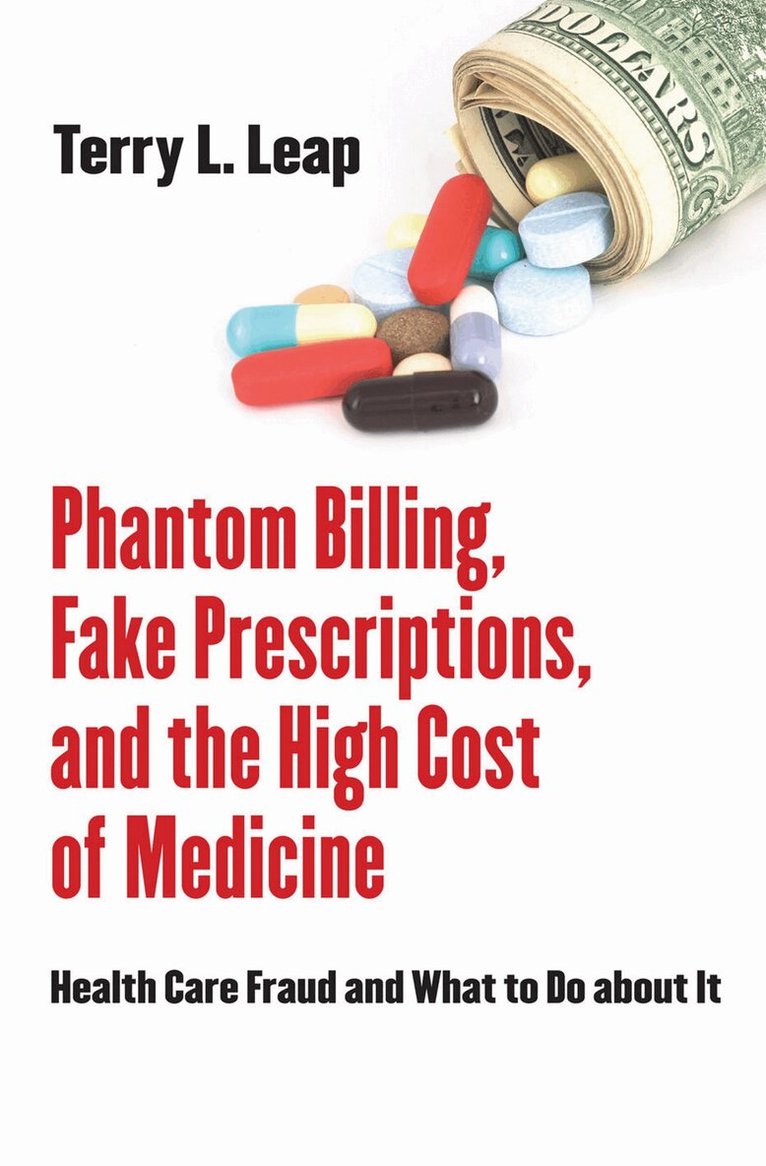
Phantom Billing, Fake Prescriptions, and the High Cost of Medicine
Health Care Fraud and What to Do About It
Inbunden, Engelska, 2011
400 kr
Skickas inom 10-15 vardagar
U.S. health care is a $2.5 trillion system that accounts for more than 17 percent of the nation's GDP. It is also highly susceptible to fraud. Estimates vary, but some observers believe that as much as 10 percent of all medical billing involves some type of fraud. In 2009, New York's Medicaid fraud office recovered $283 million and obtained 148 criminal convictions. In July 2010, the U.S. Justice Department charged nearly 100 patients, doctors, and health care executives in five states of bilking the Medicare system out of more than $251 million through false claims for services that were medically unnecessary or never provided. These cases only hint at the scope of the problem.In Phantom Billing, Fake Prescriptions, and the High Cost of Medicine, Terry L. Leap takes on medical fraud and its economic, psychological, and social costs. Illustrated throughout with dozens of specific and often fascinating cases, this book covers a wide variety of crimes: kickbacks, illicit referrals, overcharging and double billing, upcoding, unbundling, rent-a-patient and pill-mill schemes, insurance scams, short-pilling, off-label marketing of pharmaceuticals, and rebate fraud, as well as criminal acts that enable this fraud (mail and wire fraud, conspiracy, and money laundering). After assessing the effectiveness of the federal laws designed to fight health care fraud and abuse—the antikickback statute, the Stark Law, the False Claims Act, HIPAA, and the food and drug laws—Leap suggests a number of ways that health care providers, consumers, insurers, and federal and state officials can bring health care fraud and abuse under control, thereby reducing the overall cost of medical care in America.
410 kr
Skickas inom 10-15 vardagar
Understanding the risks involved in hiring new faculty is becoming increasingly important. In Managing Risk in High-Stakes Faculty Employment Decisions Julee T. Flood and Terry Leap critically examine the landscape of US institutions of higher learning and the legal and human resource management practices pertinent to college and university faculty members. To help minimize the potential pitfalls in the hiring and promotion processes, Flood and Leap suggest ways that risk management principles can be applied within the unique culture of academia.Claims of workplace harassment and discrimination, violation of free speech and other First Amendment rights, social movements decrying unequal hiring practices, and the growing number of non-tenure track and adjunct faculty, require those involved in hiring and promotion decisions to be more knowledgeable about contract law, best practices in hiring, and risk management, yet many newly appointed administrators are often not sufficiently trained in these matters or in understanding how they might be applied in an academic setting. Human resource departments, hiring committees, department chairs, and academics seeking faculty jobs need resources such as Managing Risk in High-Stakes Faculty Employment Decisions now more than ever.Outlines critical issues affecting U.S. higher educationAnalyzes the social and psychological biases that can arise during hiring, promotion, and tenure decisionsDiscusses contract and constitutional law from the perspective of institutions of higher learningIllustrates complex interactions that shape contractual, constitutional, and collegial issues in institutions of higher learningExamines contract rights and controversies for tenured and tenure-track facultyDescribes how risk management processes can help to deal with these complicated, but critical, issuesAddresses constitutional issues associated with academic freedom and free speech on campusInvestigates the nebulous, but important, issue of collegialityDiscusses the future for institutions of higher learning in hiring faculty