Thierry De Duve - Böcker
Visar alla böcker från författaren Thierry De Duve. Handla med fri frakt och snabb leverans.
10 produkter
10 produkter
283 kr
Skickas inom 7-10 vardagar
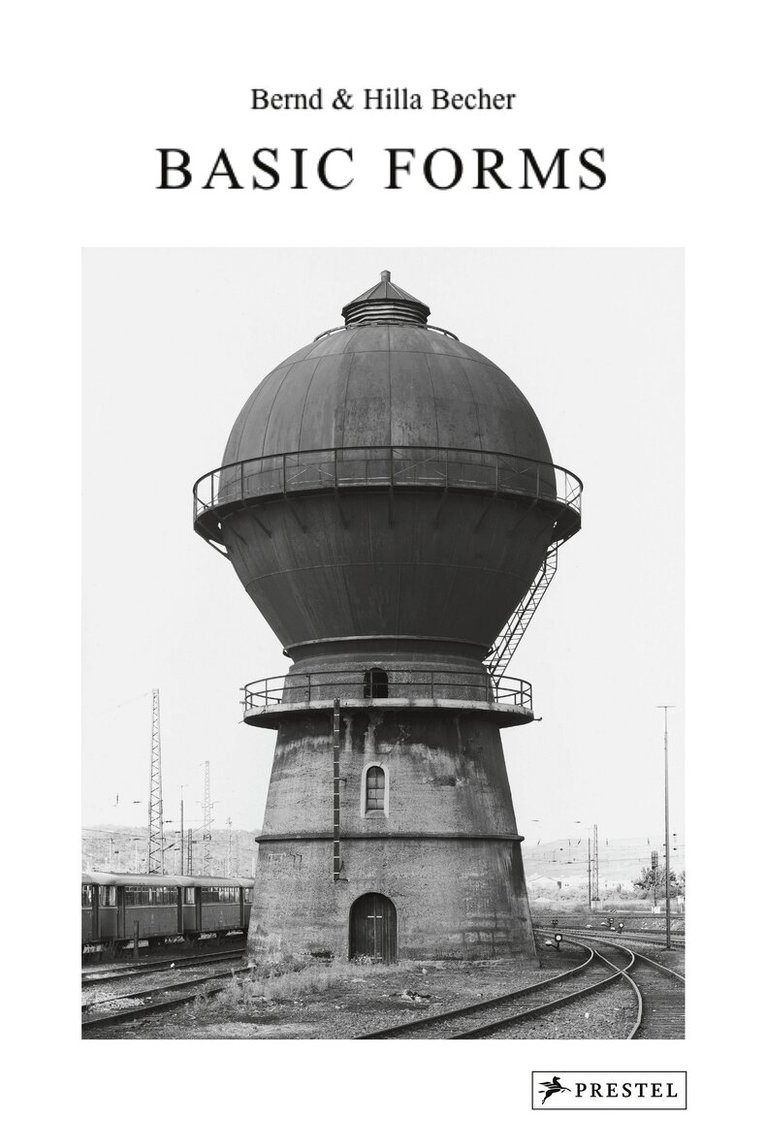
During their 40-year career, Bernd and Hilla Becher created their own architectural typology as they photographed buildings in a unique style. 'Basic Forms' represents the culmination of their career. Although the subject matter is unglamorous—mine shafts, blast furnaces, cooling towers, water towers, silos, and gas tanks—the Bechers’ passion for their work imbues these photographs with beauty and solemnity. The Bechers restricted the conditions of each photograph—taking them early in the morning, on overcast days, so as to eliminate shadow and distribute light evenly. Each image is centered and frontally framed, its parallel lines set on an even plane. There are no human figures, nor are there birds in the sky. The result is a treasury of precisely functional architectural forms, a sublime example of conceptual artistic practices, and a series of “perfect sculptures of a bygone industrial age.”
238 kr
Skickas inom 7-10 vardagar
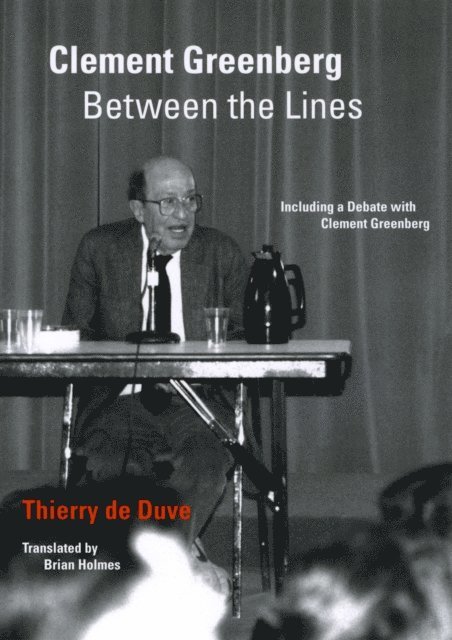
Clement Greenberg (1909-94), champion of abstract expressionism and modernism - of Pollock, Miro, and Matisse - has been esteemed by many as the greatest art critic of the second half of the twentieth century, and possibly the greatest art critic of all time. This volume, a lively reassessment of Greenberg's writings, features three approaches to the man and his work: Greenberg as critic, doctrinaire, and theorist. The book also features a transcription of a debate between de Duve and Greenberg that took place at the University of Ottawa in 1987. "Clement Greenberg: Between the Lines" will be an indispensable resource for students, scholars, and enthusiasts of modern art.
910 kr
Tillfälligt slut
Immanuel Kant’s Critique of Judgment, Thierry de Duve argues in the first volume of Aesthetics at Large, is as relevant to the appreciation of art today as it was to the enjoyment of beautiful nature in 1790. Going against the grain of all aesthetic theories situated in the Hegelian tradition, this provocative thesis, which already guided de Duve’s groundbreaking book Kant After Duchamp (1996), is here pursued in order to demonstrate that far from confining aesthetics to a stifling formalism isolated from all worldly concerns, Kant’s guidance urgently opens the understanding of art onto ethics and politics.Central to de Duve’s re-reading of the Critique of Judgment is Kant’s idea of sensus communis, ultimately interpreted as the mere yet necessary idea that human beings are capable of living in peace with one another. De Duve pushes Kant’s skepticism to its limits by submitting the idea of sensus communis to various tests leading to questions such as: Do artists speak on behalf of all of us? Is art the transcendental ground of democracy? Or, Was Adorno right when he claimed that no poetry could be written after Auschwitz?Loaded with de Duve’s trademark blend of wit and erudition and written without jargon, these essays radically renew current approaches to some of the most burning issues raised by modern and contemporary art. They are indispensable reading for anyone with a deep interest in art, art history, or philosophical aesthetics.
311 kr
Skickas inom 7-10 vardagar
Immanuel Kant’s Critique of Judgment, Thierry de Duve argues in the first volume of Aesthetics at Large, is as relevant to the appreciation of art today as it was to the enjoyment of beautiful nature in 1790. Going against the grain of all aesthetic theories situated in the Hegelian tradition, this provocative thesis, which already guided de Duve’s groundbreaking book Kant After Duchamp (1996), is here pursued in order to demonstrate that far from confining aesthetics to a stifling formalism isolated from all worldly concerns, Kant’s guidance urgently opens the understanding of art onto ethics and politics.Central to de Duve’s re-reading of the Critique of Judgment is Kant’s idea of sensus communis, ultimately interpreted as the mere yet necessary idea that human beings are capable of living in peace with one another. De Duve pushes Kant’s skepticism to its limits by submitting the idea of sensus communis to various tests leading to questions such as: Do artists speak on behalf of all of us? Is art the transcendental ground of democracy? Or, Was Adorno right when he claimed that no poetry could be written after Auschwitz?Loaded with de Duve’s trademark blend of wit and erudition and written without jargon, these essays radically renew current approaches to some of the most burning issues raised by modern and contemporary art. They are indispensable reading for anyone with a deep interest in art, art history, or philosophical aesthetics.
231 kr
Skickas inom 7-10 vardagar
"Joseph Beuys", "Andy Warhol", "Yves Klein", and "Marcel Duchamp" form an unlikely quartet, but they each played a singular role in shaping a new avant-garde for the 1960s and beyond. Each of them staged brash, even shocking, events and produced works that challenged the way the mainstream art world operated and thought about itself. Distinguished philosopher Thierry de Duve binds these artists through another connection: the mapping of the aesthetic field onto political economy. Karl Marx provides the red thread tying together these four beautifully written essays in which de Duve treats each artist as a distinct, characteristic figure in that mapping. He sees in Beuys, who imagined a new economic system where creativity, not money, was the true capital, the incarnation of the last of the proletarians; he carries forward Warhol's desire to be a machine of mass production and draws the consequences for aesthetic theory; he calls Klein, who staked a claim on pictorial space as if it were a commodity, "the dead dealer"; and he reads "Duchamp" as the witty financier who holds the secret of artistic exchange value.Throughout, de Duve expresses his view that the mapping of the aesthetic field onto political economy is a phenomenon that should be seen as central to modernity in art. Even more, de Duve shows that Marx - though perhaps no longer the "Marxist" Marx of yore - can still help us resist the current disenchantment with modernity's many unmet promises. An intriguing look at these four influential artists, "Sewn in the Sweatshops of Marx" is an absorbing investigation into the many intertwined relationships between the economic and artistic realms.
655 kr
Skickas inom 7-10 vardagar
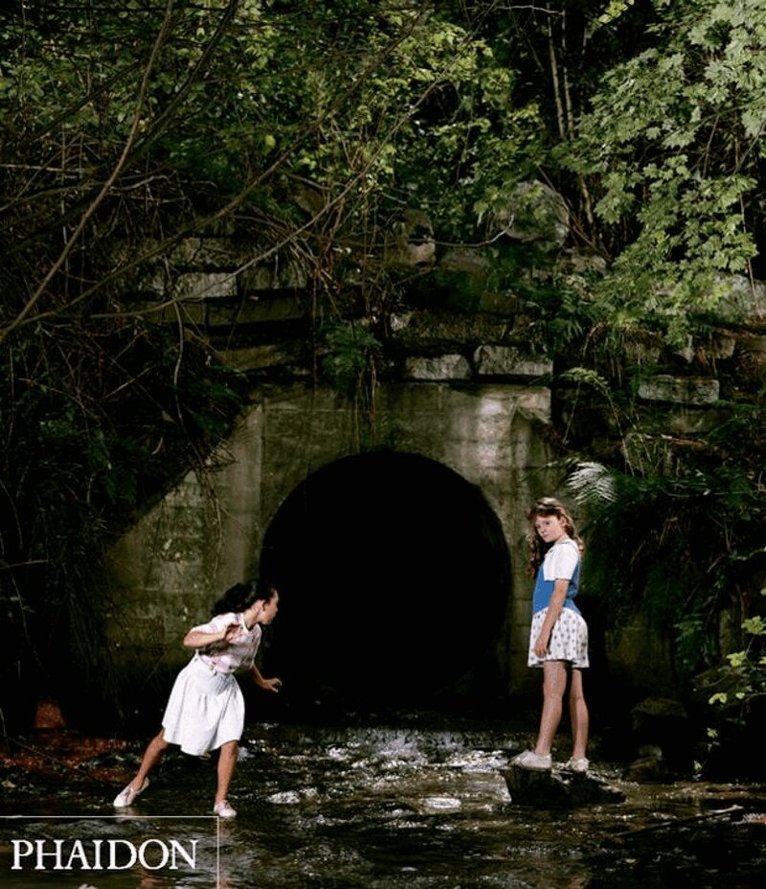
Jeff Wall (b.1946) adopts the nineteenth-century poet Baudelaire's famous description of one of his contemporaries as 'a painter of modern life' to describe his own very different work: huge transparencies mounted on to light boxes that diffuse a brilliant glow of white light evenly through his photographs of contemporary urban scenes and 'constructed' social situations.Wall is foremost among the pioneering artists who since the late 1960s have brought photography to the forefront of contemporary art. His constructed images employ the latest sophisticated technology in the creation of compelling tableaux, which are evocative of subjects ranging from Hollywood cinema to nineteenth-century history painting. When exhibited in their glowing light boxes they evoke both the seduction of the cinema screen and the physical presence of minimalist sculptures such as Dan Flavin's fluorescent light installations or Donald Judd's metal and Perspex wall reliefs. All of these elements - traditional figurative painting, cinema, Minimalism, Conceptual art, documentary photography - are consciously evoked and explored in Wall's work. Associated closely since the late 1960s with Conceptual artists such as Dan Graham, with whom he collaborated on The Children's Pavilion (1988-93), Wall has engaged at a sophisticated level with theories of representation and its social dimensions both as an artist and as a theoretical writer on contemporary art and culture.
Pictorial Nominalism
On Marcel Duchamp's Passage from Painting to the Readymade
Häftad, Engelska, 2005
266 kr
Skickas inom 7-10 vardagar
Beginning with the instance in 1912 when Marcel Duchamp wrote in a note to himself, "No more painting, get a job," Thierry de Duve reviews in Pictorial Nominalism the implications of the readymade for art and representation. Arguing that the readymade belongs to that moment in the history of painting when both figuration and the practice of painting become "impossible," de Duve presents a psychoanalytically informed account of the birth of abstraction.Differing considerably from such thinkers as Clement Greenberg and Peter Burger, de Duve demonstrates that the readymade is the link between painting in particular and art at large.
425 kr
Skickas inom 10-15 vardagar
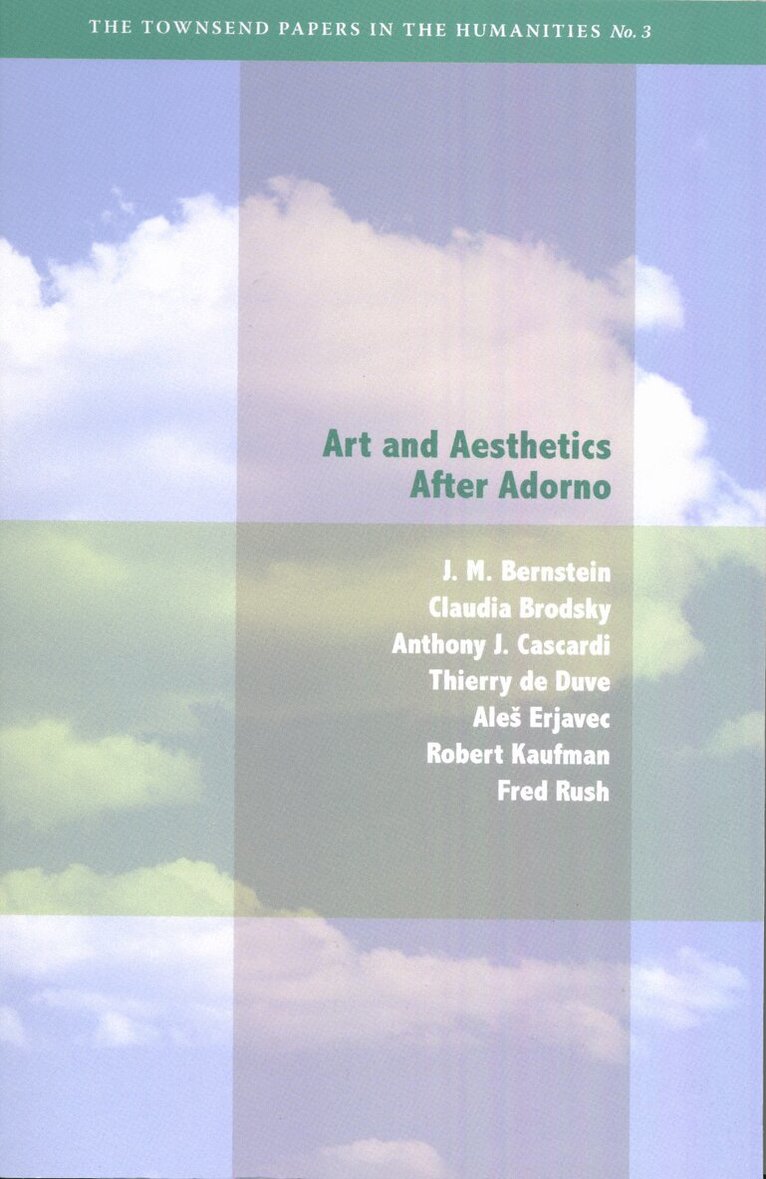
Theodor Adorno's Aesthetic Theory (1970) offers one of the most powerful and comprehensive critiques of art and of the discipline of aesthetics ever written. The work offers a deeply critical engagement with the history and philosophy of aesthetics and with the traditions of European art through the middle of the 20th century. It is coupled with ambitious claims about what aesthetic theory ought to be. But the cultural horizon of Adorno's Aesthetic Theory was the world of high modernism, and much has happened since then both in theory and in practice. Adorno's powerful vision of aesthetics calls for reconsideration in this light. Must his work be defended, updated, resisted, or simply left behind? This volume gathers new essays by leading philosophers, critics, and theorists writing in the wake of Adorno in order to address these questions. They hold in common a deep respect for the power of Adorno's aesthetic critique and a concern for the future of aesthetic theory in response to recent developments in aesthetics and its contexts.
356 kr
Skickas inom 7-10 vardagar
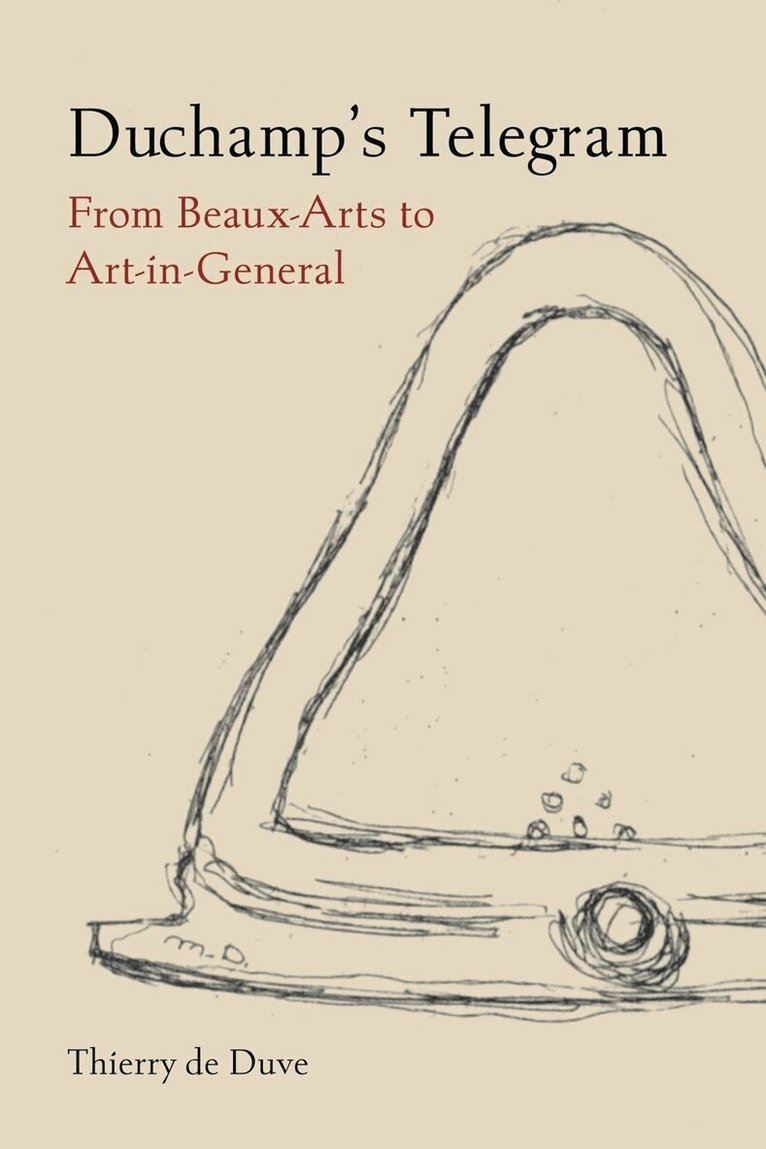
In 1917, Marcel Duchamp sent out a 'telegram' in the guise of a urinal signed R. Mutt. When it arrived at its destination a good forty years later it was both celebrated and vilified as proclaiming that anything could be art; from that point on, the whole Western art world reconfigured itself as 'post-Duchamp'.This book offers a reading of Duchamp's telegram that sheds new light on its first reception, corrects some historical mistakes and reveals that Duchamp's urinal in fact heralded the demise of the fine arts system and the advent of what Thierry de Duve calls the 'Art-in-General' system. Further, the author shows that this new system does not date from the 1960s but rather from the 1880s. Duchamp was neither its author nor its agent, but rather its brilliant messenger.
298 kr
Kommande
A theoretical exploration of possible ways out of concepts adopted by the Enlightenment.Thierry de Duve outlines the main features of a critical theory of male, all-too-male sexuation and cross-gender emancipation, drawing on Marcel Gauchet’s theses on Christianity as an exit from religion, Jacques Lacan’s algebra of desire, and Geneviève Morel’s analysis of the “law of the mother.”Wouldn’t it have required more than the translation of the three Christian maxims “faith, hope, love” into the revolutionary maxims “liberté, egalité, fraternité?” Is there more to the knot of incarnation, fatherhood, and the cult of Mary than just Christian mysticism? Can the uncertainty of fatherhood become an act of faith that acknowledges a fundamental uncertainty?Come On, Men, One More Effort… explores ways out of the dead end of political concepts adopted by the Enlightenment and their continued impact today, since the only possibility seems to be to embrace the religious and reject it at the same time.