J. M. Bernstein - Böcker
Visar alla böcker från författaren J. M. Bernstein. Handla med fri frakt och snabb leverans.
14 produkter
14 produkter
439 kr
Skickas inom 7-10 vardagar
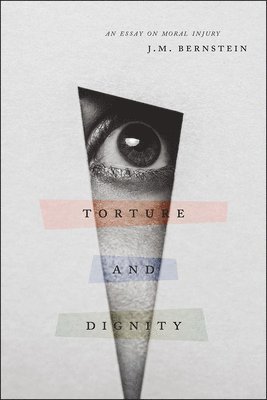
In this unflinching look at the experience of suffering and one of its greatest manifestations-torture-J.M. Bernstein critiques the repressions of traditional moral theory, showing that our morals are not immutable ideals but fragile constructions that depend on our experience of suffering itself. Morals, Bernstein argues, not only guide our conduct but also express the depth of mutual dependence that we share as vulnerable and injurable individuals. Beginning with the attempts to abolish torture in the eighteenth century, and then sensitively examining what is suffered in torture and related transgressions, such as rape, Bernstein elaborates a powerful new conception of moral injury. Crucially, he shows, moral injury always involves an injury to the status of an individual as a person-it is a violent assault against his or her dignity. Elaborating on this critical element of moral injury, he demonstrates that the mutual recognitions of trust form the invisible substance of our moral lives, that dignity is a fragile social possession, and that the perspective of ourselves as potential victims is an ineliminable feature of everyday moral experience.
327 kr
Skickas inom 7-10 vardagar
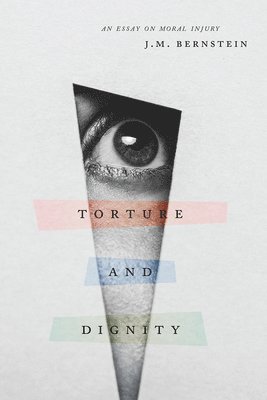
In this unflinching look at the experience of suffering and one of its greatest manifestations—torture—J. M. Bernstein critiques the repressions of traditional moral theory, showing that our morals are not immutable ideals but fragile constructions that depend on our experience of suffering itself. Morals, Bernstein argues, not only guide our conduct but also express the depth of mutual dependence that we share as vulnerable and injurable individuals. Beginning with the attempts to abolish torture in the eighteenth century, and then sensitively examining what is suffered in torture and related transgressions, such as rape, Bernstein elaborates a powerful new conception of moral injury. Crucially, he shows, moral injury always involves an injury to the status of an individual as a person—it is a violent assault against his or her dignity. Elaborating on this critical element of moral injury, he demonstrates that the mutual recognitions of trust form the invisible substance of our moral lives, that dignity is a fragile social possession, and that the perspective of ourselves as potential victims is an ineliminable feature of everyday moral experience.
306 kr
Skickas inom 10-15 vardagar
The creation of the Frankfurt School of critical theory in the 1920s saw the birth of some of the most exciting and challenging writings of the twentieth century. It is out of this background that the great critic Theodor Adorno emerged. His finest essays are collected here, offering the reader unparalleled insights into Adorno's thoughts on culture. He argued that the culture industry commodified and standardized all art. In turn this suffocated individuality and destroyed critical thinking. At the time, Adorno was accused of everything from overreaction to deranged hysteria by his many detractors. In today's world, where even the least cynical of consumers is aware of the influence of the media, Adorno's work takes on a more immediate significance. The Culture Industry is an unrivalled indictment of the banality of mass culture.
487 kr
Skickas inom 7-10 vardagar
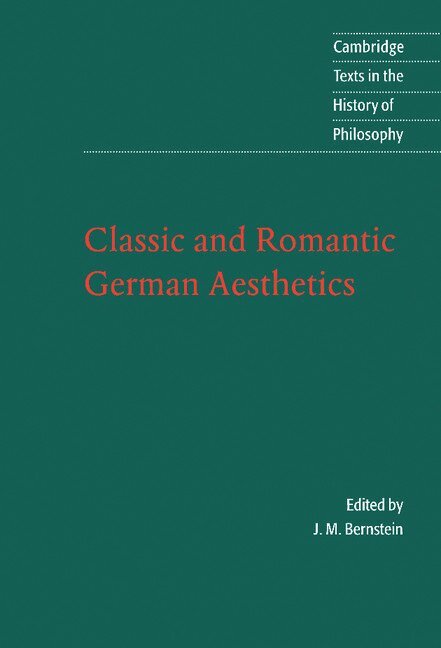
This 2002 volume brings together major works by German thinkers, writing just prior to and after Kant, who were enormously influential in this crucial period of aesthetics. These texts include the first translation into English of Schiller's Kallias Letters and Moritz's On the Artistic Imitation of the Beautiful, together with translations of some of Hölderlin's most important theoretical writings and works by Hamann, Lessing, Novalis and Schlegel. In a philosophical introduction J. M. Bernstein traces the development of aesthetics from its still rationalist and mimetic construction in Lessing, through the optimistic construal of art and/or beauty as the appearance of human freedom in the work of Schiller, to Hölderlin's darker vision of art as the memory of a lost unity, and the variations of that theme - of an impossible striving after the lost ideal - which are found in the work of Schlegel and Novalis.
573 kr
Skickas inom 7-10 vardagar
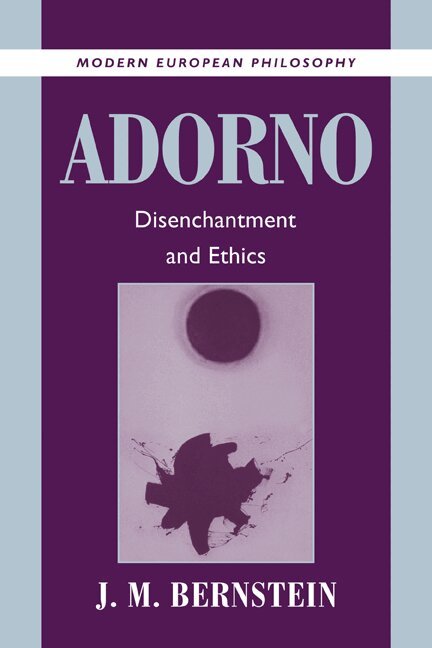
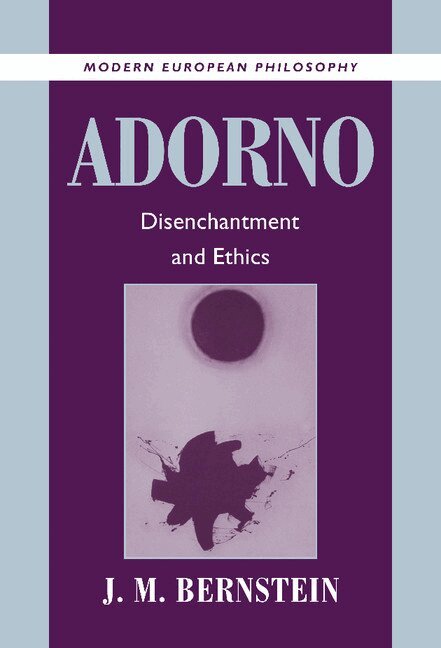
Theodor W. Adorno is best known for his contributions to aesthetics and social theory. Critics have always complained about the lack of a practical, political or ethical dimension to Adorno's philosophy. In this highly original contribution to the literature on Adorno, J. M. Bernstein offers the first attempt in any language to provide an account of the ethical theory latent in Adorno's writings. Bernstein relates Adorno's ethics to major trends in contemporary moral philosophy. He analyses the full range of Adorno's major works, with a special focus on Dialectic of Enlightenment, Minima Moralia and Negative Dialectics. In developing his account Bernstein lays particular stress on Adorno's contention that the event of Auschwitz demands a new categorical imperative. This book will be widely acknowledged as the standard work on Adorno's ethics and as such will interest professionals and students of philosophy, political theory, sociology, history of ideas, art history and music.
1 008 kr
Skickas inom 7-10 vardagar
Theodor W. Adorno is best known for his contributions to aesthetics and social theory. Critics have always complained about the lack of a practical, political or ethical dimension to Adorno's philosophy. In this highly original contribution to the literature on Adorno, J. M. Bernstein offers the first attempt in any language to provide an account of the ethical theory latent in Adorno's writings. Bernstein relates Adorno's ethics to major trends in contemporary moral philosophy. He analyses the full range of Adorno's major works, with a special focus on Dialectic of Enlightenment, Minima Moralia and Negative Dialectics. In developing his account Bernstein lays particular stress on Adorno's contention that the event of Auschwitz demands a new categorical imperative. This book will be widely acknowledged as the standard work on Adorno's ethics and as such will interest professionals and students of philosophy, political theory, sociology, history of ideas, art history and music.
1 084 kr
Skickas inom 7-10 vardagar
This 2002 volume brings together major works by German thinkers, writing just prior to and after Kant, who were enormously influential in this crucial period of aesthetics. These texts include the first translation into English of Schiller's Kallias Letters and Moritz's On the Artistic Imitation of the Beautiful, together with translations of some of Hölderlin's most important theoretical writings and works by Hamann, Lessing, Novalis and Schlegel. In a philosophical introduction J. M. Bernstein traces the development of aesthetics from its still rationalist and mimetic construction in Lessing, through the optimistic construal of art and/or beauty as the appearance of human freedom in the work of Schiller, to Hölderlin's darker vision of art as the memory of a lost unity, and the variations of that theme - of an impossible striving after the lost ideal - which are found in the work of Schlegel and Novalis.
272 kr
Skickas inom 7-10 vardagar
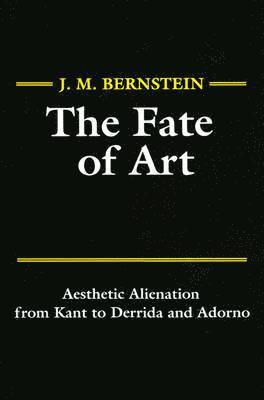
This original and wide-ranging book, now available in paperback, is a major contribution to contemporary philosophy. Bernstein focuses on the work of four key thinkers - Kant, Heidegger, Derrida and Adorno - and provides a powerful new interpretation of their writings on art, aesthetics and politics. Bernstein argues that our experience of art today is conditioned by the loss of the truth-function of art: with the growth of modern science and technological reason, art is relegated to a separate and autonomous domain of the aesthetic. This condition of 'aesthetic alienation' - the raging discord between art and truth - is one of the most perspicuous signs of the fragmentation of modernity.Aesthetic alienation is challenged in differing ways by modern Continental philosophers like Heidegger, Derrida and Adorno. Bernstein shows how each of these philosophers uses the experience of art and the discourse of aesthetics to criticize the fragmentation of modernity. He examines in detail their responses to aesthetic alienation and raises a range of fundamental questions concerning the relations between art, philosophy and politics in modern societies.
1 476 kr
Skickas inom 7-10 vardagar
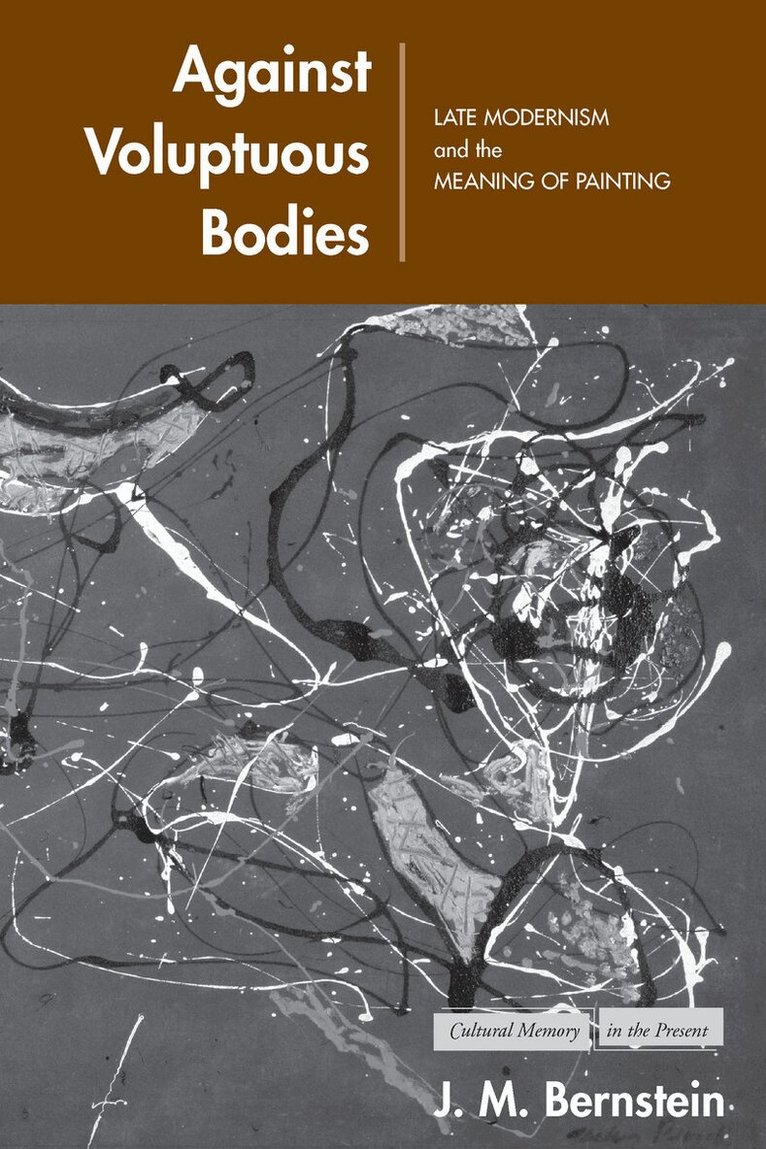
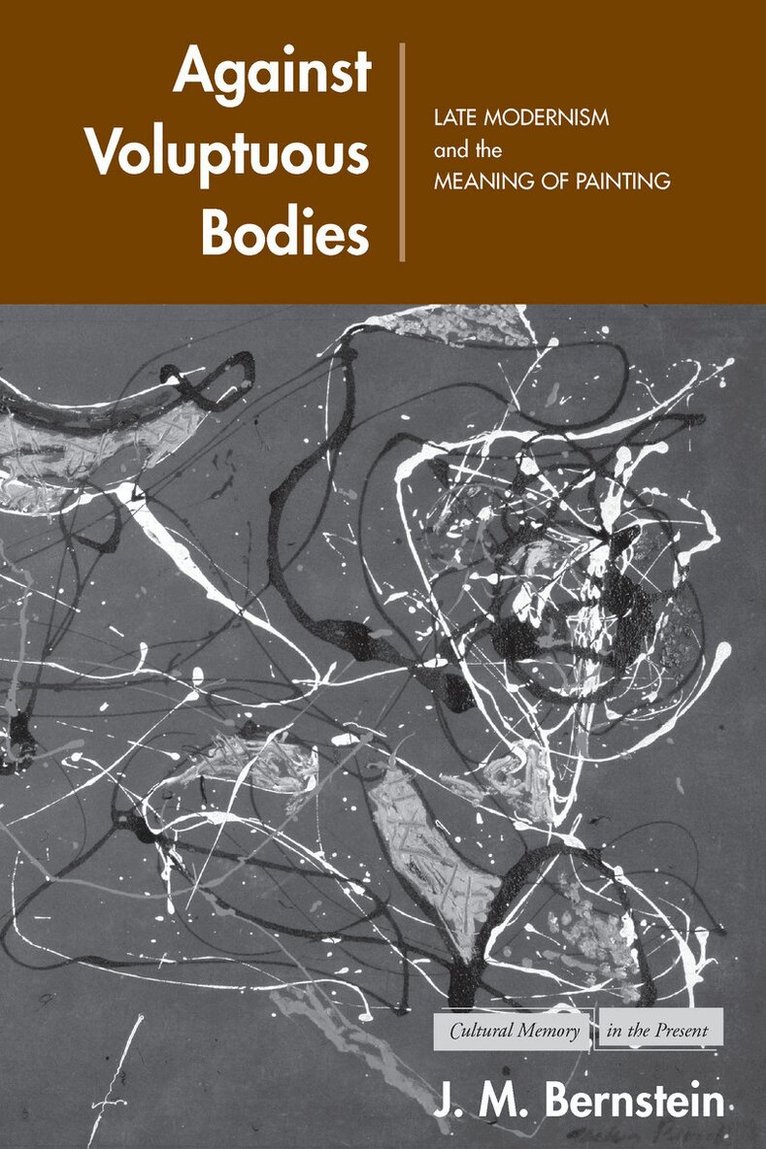
The aim of this book is to provide an account of modernist painting that follows on from the aesthetic theory of Theodor W. Adorno. It offers a materialist account of modernism with detailed discussions of modern aesthetics from Kant to Arthur Danto, Stanley Cavell, and Adorno. It discusses in detail competing accounts of modernism: Clement Greenberg, Michael Fried, Yve-Alain Bois, and Thierry de Duve; and it discusses several painters and artists in detail: Pieter de Hooch, Jackson Pollock, Robert Ryman, Cindy Sherman, and Chaim Soutine. Its central thesis is that modernist painting exemplifies a form of rationality that is an alternative to the instrumental rationality of enlightened modernity. Modernist paintings exemplify how nature and the sociality of meaning can be reconciled.
370 kr
Skickas inom 10-15 vardagar
The aim of this book is to provide an account of modernist painting that follows on from the aesthetic theory of Theodor W. Adorno. It offers a materialist account of modernism with detailed discussions of modern aesthetics from Kant to Arthur Danto, Stanley Cavell, and Adorno. It discusses in detail competing accounts of modernism: Clement Greenberg, Michael Fried, Yve-Alain Bois, and Thierry de Duve; and it discusses several painters and artists in detail: Pieter de Hooch, Jackson Pollock, Robert Ryman, Cindy Sherman, and Chaim Soutine. Its central thesis is that modernist painting exemplifies a form of rationality that is an alternative to the instrumental rationality of enlightened modernity. Modernist paintings exemplify how nature and the sociality of meaning can be reconciled.
425 kr
Skickas inom 10-15 vardagar
Theodor Adorno's Aesthetic Theory (1970) offers one of the most powerful and comprehensive critiques of art and of the discipline of aesthetics ever written. The work offers a deeply critical engagement with the history and philosophy of aesthetics and with the traditions of European art through the middle of the 20th century. It is coupled with ambitious claims about what aesthetic theory ought to be. But the cultural horizon of Adorno's Aesthetic Theory was the world of high modernism, and much has happened since then both in theory and in practice. Adorno's powerful vision of aesthetics calls for reconsideration in this light. Must his work be defended, updated, resisted, or simply left behind? This volume gathers new essays by leading philosophers, critics, and theorists writing in the wake of Adorno in order to address these questions. They hold in common a deep respect for the power of Adorno's aesthetic critique and a concern for the future of aesthetic theory in response to recent developments in aesthetics and its contexts.
1 450 kr
Skickas inom 7-10 vardagar
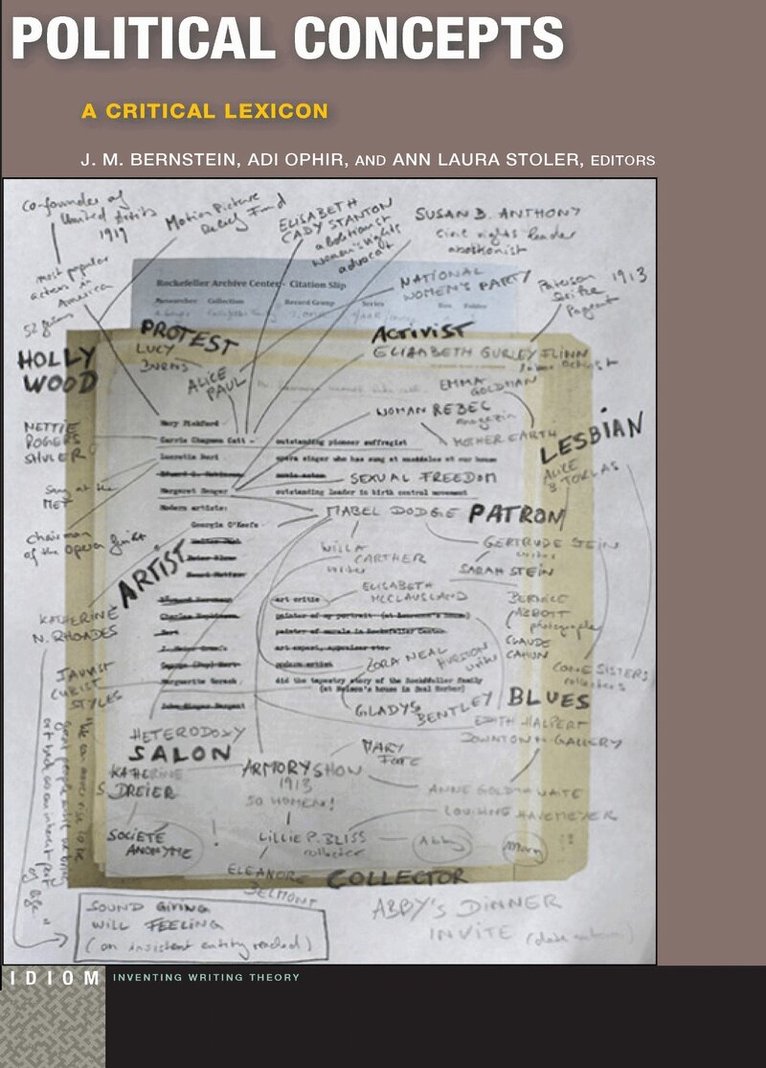
Deciding what is and what is not political is a fraught, perhaps intractably opaque matter. Just who decides the question; on what grounds; to what ends—these seem like properly political questions themselves. Deciding what is political and what is not can serve to contain and restrain struggles, make existing power relations at once self-evident and opaque, and blur the possibility of reimagining them differently. Political Concepts seeks to revive our common political vocabulary—both everyday and academic—and to do so critically. Its entries take the form of essays in which each contributor presents her or his own original reflection on a concept posed in the traditional Socratic question format "What is X?" and asks what sort of work a rethinking of that concept can do for us now.The explicitness of a radical questioning of this kind gives authors both the freedom and the authority to engage, intervene in, critique, and transform the conceptual terrain they have inherited. Each entry, either implicitly or explicitly, attempts to re-open the question "What is political thinking?" Each is an effort to reinvent political writing. In this setting the political as such may be understood as a property, a field of interest, a dimension of human existence, a set of practices, or a kind of event. Political Concepts does not stand upon a decided concept of the political but returns in practice and in concern to the question "What is the political?" by submitting the question to a field of plural contention.The concepts collected in Political Concepts are "Arche" (Stathis Gourgouris), "Blood" (Gil Anidjar), "Colony" (Ann Laura Stoler), "Concept" (Adi Ophir), "Constituent Power" (Andreas Kalyvas), "Development" (Gayatri Spivak), "Exploitation" (Étienne Balibar), "Federation" (Jean Cohen), "Identity" (Akeel Bilgrami), "Rule of Law" (J. M. Bernstein), "Sexual Difference" (Joan Copjec), and "Translation" (Jacques Lezra)
404 kr
Skickas inom 7-10 vardagar
Deciding what is and what is not political is a fraught, perhaps intractably opaque matter. Just who decides the question; on what grounds; to what ends—these seem like properly political questions themselves. Deciding what is political and what is not can serve to contain and restrain struggles, make existing power relations at once self-evident and opaque, and blur the possibility of reimagining them differently. Political Concepts seeks to revive our common political vocabulary—both everyday and academic—and to do so critically. Its entries take the form of essays in which each contributor presents her or his own original reflection on a concept posed in the traditional Socratic question format "What is X?" and asks what sort of work a rethinking of that concept can do for us now.The explicitness of a radical questioning of this kind gives authors both the freedom and the authority to engage, intervene in, critique, and transform the conceptual terrain they have inherited. Each entry, either implicitly or explicitly, attempts to re-open the question "What is political thinking?" Each is an effort to reinvent political writing. In this setting the political as such may be understood as a property, a field of interest, a dimension of human existence, a set of practices, or a kind of event. Political Concepts does not stand upon a decided concept of the political but returns in practice and in concern to the question "What is the political?" by submitting the question to a field of plural contention.The concepts collected in Political Concepts are "Arche" (Stathis Gourgouris), "Blood" (Gil Anidjar), "Colony" (Ann Laura Stoler), "Concept" (Adi Ophir), "Constituent Power" (Andreas Kalyvas), "Development" (Gayatri Spivak), "Exploitation" (Étienne Balibar), "Federation" (Jean Cohen), "Identity" (Akeel Bilgrami), "Rule of Law" (J. M. Bernstein), "Sexual Difference" (Joan Copjec), and "Translation" (Jacques Lezra)
1 796 kr
Skickas inom 10-15 vardagar
The creation of the Frankfurt School of critical theory in the 1920s saw the birth of some of the most exciting and challenging writings of the twentieth century. It is out of this background that the great critic Theodor Adorno emerged. His finest essays are collected here, offering the reader unparalleled insights into Adorno's thoughts on culture. He argued that the culture industry commodified and standardized all art. In turn this suffocated individuality and destroyed critical thinking. At the time, Adorno was accused of everything from overreaction to deranged hysteria by his many detractors. In today's world, where even the least cynical of consumers is aware of the influence of the media, Adorno's work takes on a more immediate significance. The Culture Industry is an unrivalled indictment of the banality of mass culture.