Thomas Biolsi - Böcker
Visar alla böcker från författaren Thomas Biolsi. Handla med fri frakt och snabb leverans.
8 produkter
8 produkter
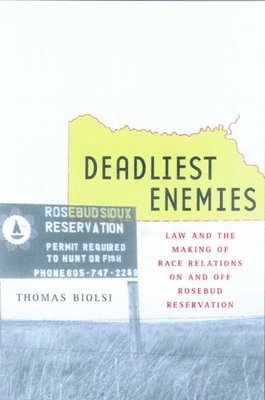
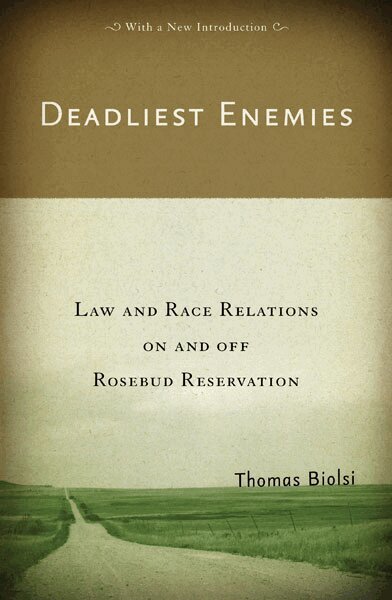
Deadliest Enemies
Law and the Making of Race Relations on and off Rosebud Reservation
Inbunden, Engelska, 2001
855 kr
Skickas inom 3-6 vardagar
Racial tension between Native American and white people on and near Indian reservations is an ongoing problem in the United States. As far back as 1886, the Supreme Court said that 'because of local ill feeling, the people of the United States where [Indian tribes] are found are often their deadliest enemies'. This book examines the history of troubled relations on and around Rosebud Reservation in South Dakota over the last three decades and asks why Lakota Indians and whites living there became hostile to one another. Thomas Biolsi's important study traces the origins of racial tension between Native Americans and whites to federal laws themselves, showing how the courts have created opposing political interests along race lines. Drawing on local archival research and ethnographic fieldwork on Rosebud Reservation, Biolsi argues that the court's definitions of legal rights - both constitutional and treaty rights - make solutions to Indian-white problems difficult. Although much of his argument rests on his analysis of legal cases, the central theoretical concern of the book is the discourse rooted in legal texts and how it applies to everyday social practices.This nuanced and powerful study sheds much-needed light on why there are such difficulties between Native Americans and whites in South Dakota and in the rest of the United States.
Del 10 - Wiley Blackwell Companions to Anthropology
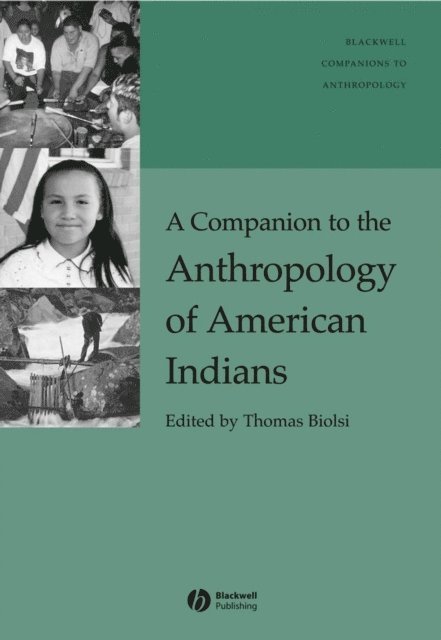
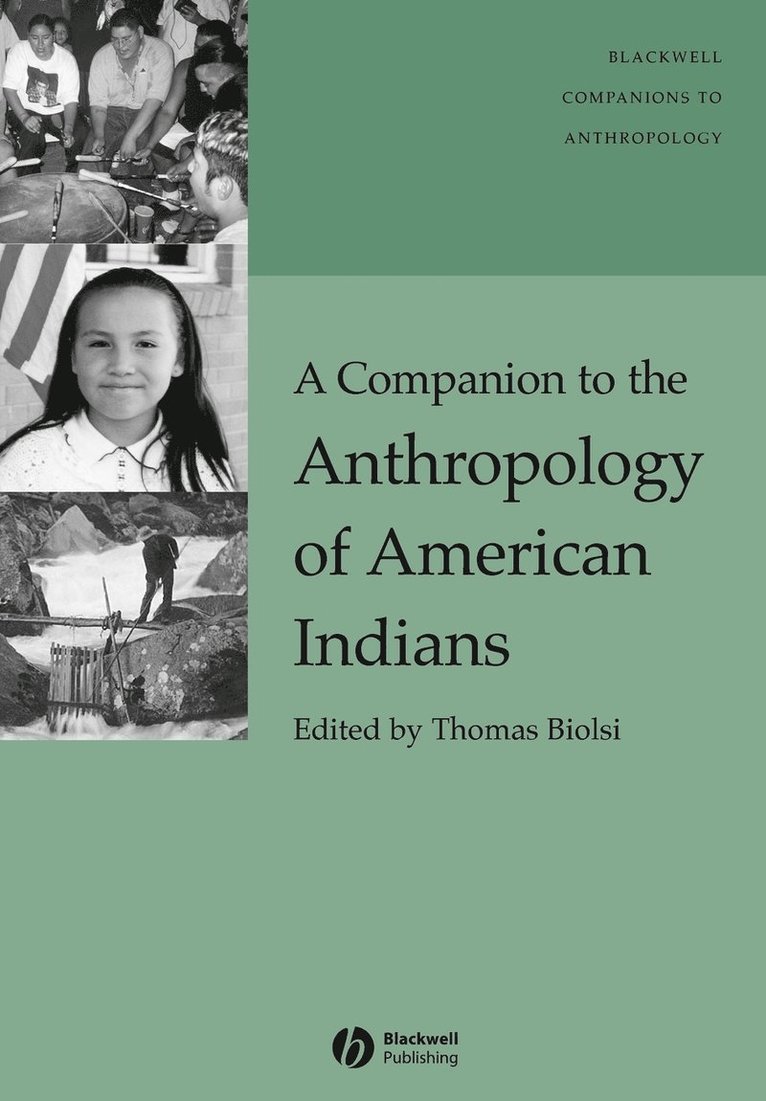
Companion to the Anthropology of American Indians
Inbunden, Engelska, 2004
2 194 kr
Skickas inom 7-10 vardagar
This Companion is comprised of 27 original contributions by leading scholars in the field and summarizes the state of anthropological knowledge of Indian peoples, as well as the history that got us to this point. Surveys the full range of American Indian anthropology: from ecological and political-economic questions to topics concerning religion, language, and expressive culture Each chapter provides definitive coverage of its topic, as well as situating ethnographic and ethnohistorical data into larger frameworks Explores anthropology’s contribution to knowledge, its historic and ongoing complicities with colonialism, and its political and ethical obligations toward the people 'studied'
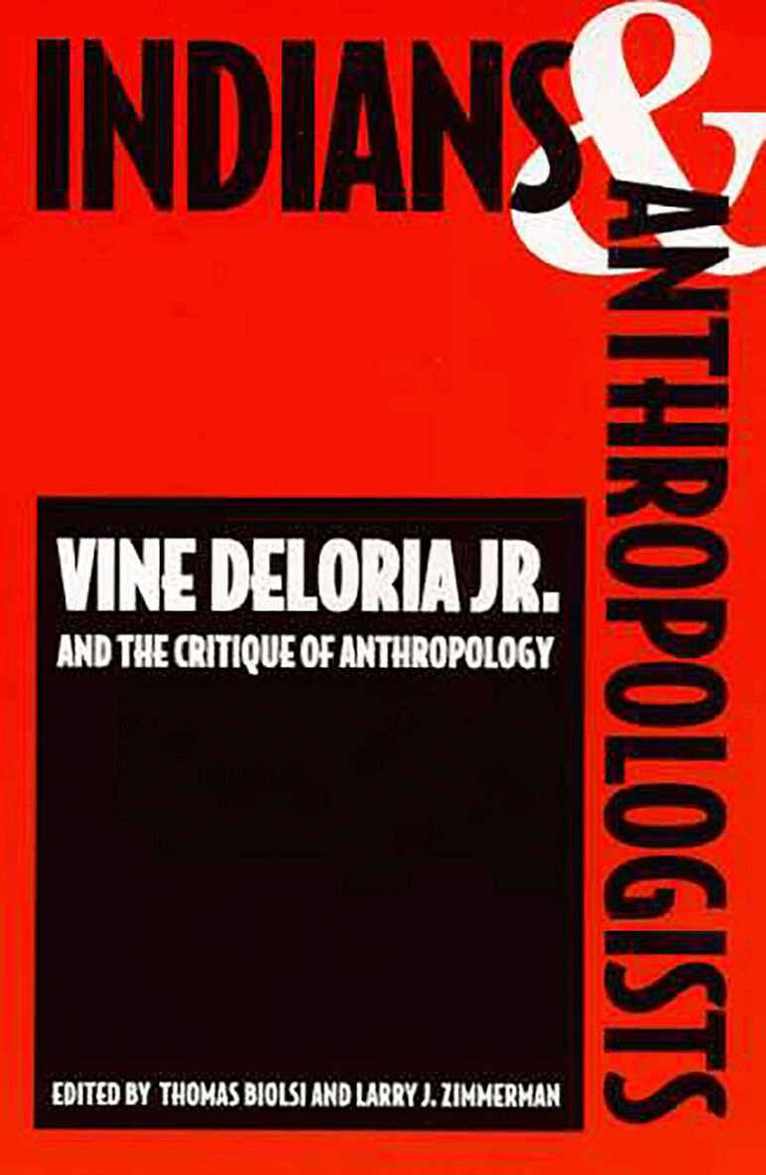
Indians and Anthropologists
Vine Deloria, Jr., and the Critique of Anthropology
Häftad, Engelska, 1997
270 kr
Skickas inom 7-10 vardagar
In 1969 Vine Deloria, Jr., in his controversial book Custer Died for Your Sins, criticized the anthropological community for its impersonal dissection of living Native American cultures. Twenty-five years later, anthropologists have become more sensitive to Native American concerns, and Indian people have become more active in fighting for accurate representations of their cultures. In this collection of essays, Indian and non-Indian scholars examine how the relationship between anthropology and Indians has changed over that quarter-century and show how controversial this issue remains. Practitioners of cultural anthropology, archaeology, education, and history provide multiple lenses through which to view how Deloria's message has been interpreted or misinterpreted. Among the contributions are comments on Deloria's criticisms, thoughts on the reburial issue, and views on the ethnographic study of specific peoples. A final contribution by Deloria himself puts the issue of anthropologist/Indian interaction in the context of the century's end. CONTENTS-Introduction: What's Changed, What Hasn't, Thomas Biolsi & Larry J. Zimmerman-Part One--Deloria Writes Back-Vine Deloria, Jr., in American Historiography, Herbert T.Hoover-Growing Up on Deloria: The Impact of His Work on a New Generation of Anthropologists, Elizabeth S. Grobsmith-Educating an Anthro: The Influence of Vine Deloria, Jr., Murray L. Wax-Part Two--Archaeology and American Indians-Why Have Archaeologists Thought That the Real Indians Were Dead and What Can We Do about It?, Randall H. McGuire-Anthropology and Responses to the Reburial Issue, Larry J. Zimmerman-Part Three-Ethnography and Colonialism-Here Come the Anthros, Cecil King-Beyond Ethics: Science, Friendship and Privacy, Marilyn Bentz: The Anthropological Construction of Indians: Haviland Scudder Mekeel and the Search for the Primitive in Lakota Country, Thomas Biolsi-Informant as Critic: Conducting Research on a Dispute between Iroquoianist Scholars and Traditional Iroquois, Gail Landsman: The End of Anthropology (at Hopi)?, Peter Whiteley-Conclusion: Anthros, Indians and Planetary Reality, Vine Deloria, Jr.-
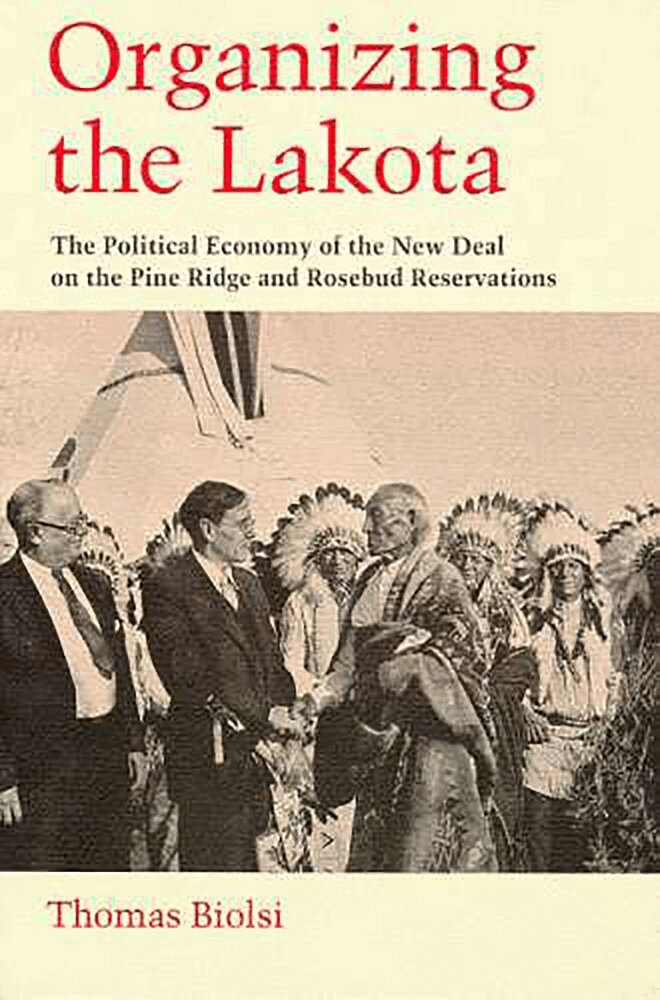
Organizing the Lakota
The Political Economy of the New Deal on the Pine Ridge and Rosebud Reservations
Häftad, Engelska, 1998
475 kr
Skickas inom 3-6 vardagar
In 1933 the United States Office of Indian Affairs began a major reform of Indian policy, organizing tribal governments under the provisions of the Indian Reorganization Act and turning over the administration of reservations to these new bodies. Organizing the Lakota considers the implementation of this act among the Lakota (Western Sioux or Teton Dakota) from 1933 through 1945. Biolsi pays particular attention to the administrative means by which the OIA retained the power to design and implement tribal "self-government" as well as the power to control the flow of critical resources rations, relief employment, credit to the reservations. He also shows how this imbalance of power between the tribes and the federal bureaucracy influenced politics on the reservations, and argues that the crisis of authority faced by the Lakota tribal governments among their own would-be constituents most dramatically demonstrated by the 1973 Wounded Knee occupation is a direct result of their disempowerment by the United States.
236 kr
Skickas inom 7-10 vardagar
Many people living far away from Indian reservations express sympathy for the poverty and misery experienced by Native Americans, yet, Thomas Biolsi argues, the problems faced by Native Americans are the results of white privilege. In Deadliest Enemies, Biolsi connects the origins of racial tension between Indians and non-Indians on the Rosebud Reservation in South Dakota to federal laws, showing how the courts have created opposing political interests along race lines. Biolsi demonstrates that the court’s definitions of legal rights-both constitutional and treaty rights-make solutions to racial tensions intractable. This powerful work sheds much-needed light on racial conflicts in South Dakota and in the rest of the United States, and holds white people accountable for the benefits of their racial privilege that come at the expense of Native Americans. Thomas Biolsi is professor of Native American studies at the University of California at Berkeley.
637 kr
Skickas inom 7-10 vardagar
This Companion is comprised of 27 original contributions by leading scholars in the field and summarizes the state of anthropological knowledge of Indian peoples, as well as the history that got us to this point. Surveys the full range of American Indian anthropology: from ecological and political-economic questions to topics concerning religion, language, and expressive culture Each chapter provides definitive coverage of its topic, as well as situating ethnographic and ethnohistorical data into larger frameworks Explores anthropology’s contribution to knowledge, its historic and ongoing complicities with colonialism, and its political and ethical obligations toward the people 'studied'
1 307 kr
Skickas inom 7-10 vardagar
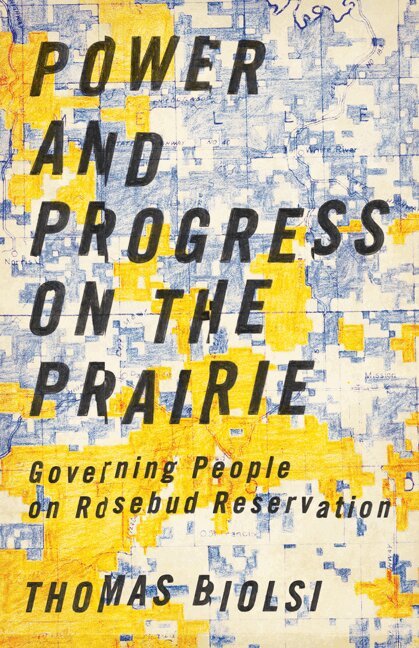
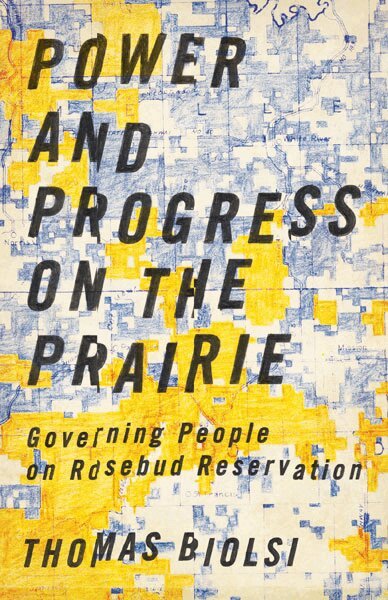
A critical exploration of how modernity and progress were imposed on the people and land of rural South DakotaThe Rosebud Country, comprising four counties in rural South Dakota, was first established as the Rosebud Indian Reservation in 1889 to settle the Sicangu Lakota. During the first two decades of the twentieth century, white homesteaders arrived in the area and became the majority population. Today, the population of Rosebud Country is nearly evenly divided between Indians and whites. In Power and Progress on the Prairie, Thomas Biolsi traces how a variety of governmental actors, including public officials, bureaucrats, and experts in civil society, invented and applied ideas about modernity and progress to the people and the land. Through a series of case studies-programs to settle “surplus” Indian lands, to “civilize” the Indians, to “modernize” white farmers, to find strategic sites for nuclear missile silos, and to extend voting rights to Lakota people-Biolsi examines how these various “problems” came into focus for government experts and how remedies were devised and implemented.Drawing on theories of governmentality derived from Michel Foucault, Biolsi challenges the idea that the problems identified by state agents and the solutions they implemented were inevitable or rational. Rather, through fine-grained analysis of the impact of these programs on both the Lakota and white residents, he reveals that their underlying logic was too often arbitrary and devastating.
319 kr
Skickas inom 7-10 vardagar
A critical exploration of how modernity and progress were imposed on the people and land of rural South DakotaThe Rosebud Country, comprising four counties in rural South Dakota, was first established as the Rosebud Indian Reservation in 1889 to settle the Sicangu Lakota. During the first two decades of the twentieth century, white homesteaders arrived in the area and became the majority population. Today, the population of Rosebud Country is nearly evenly divided between Indians and whites. In Power and Progress on the Prairie, Thomas Biolsi traces how a variety of governmental actors, including public officials, bureaucrats, and experts in civil society, invented and applied ideas about modernity and progress to the people and the land. Through a series of case studies-programs to settle “surplus” Indian lands, to “civilize” the Indians, to “modernize” white farmers, to find strategic sites for nuclear missile silos, and to extend voting rights to Lakota people-Biolsi examines how these various “problems” came into focus for government experts and how remedies were devised and implemented.Drawing on theories of governmentality derived from Michel Foucault, Biolsi challenges the idea that the problems identified by state agents and the solutions they implemented were inevitable or rational. Rather, through fine-grained analysis of the impact of these programs on both the Lakota and white residents, he reveals that their underlying logic was too often arbitrary and devastating.