• Fri frakt över 249 kr
  • •
  • Snabba leveranser
  • •
  • Billiga böcker
Kundservice

Du är på sajten för privatpersoner.

Företag, bibliotek eller offentlig verksamhet?

Du handlar på classic.bokus.com, där alla dina funktioner finns intakta.
Till classic.bokus.com
Bokus logotyp. Gå till startsidan.
  • Erbjudanden
  • Nyheter
  • Student
  • Topplistor
  • Barn & ungdom
  • Bokus Play
  • E-böcker
  • Pocketböcker
  • Spel & pussel

10% rabatt på allt med kod: NYSTART10 →

Sidfot

Mina sidor

    Hjälp

    • Kundservice
    • Vanliga frågor och svar
    • Frakt och leverans
    • Retur vid ångerrätt
    • Reklamera vara
    • Betalning
    • Köpvillkor
    • Allmänna villkor
    • Information om webbplatsens tillgänglighet

    Om Bokus

    • Om oss
    • Pressrum
    • För studenter
    • För företag
    • För bibliotek och offentlig verksamhet
    • För leverantörer
    • Hållbarhet

    Populärt

    • Aktuella erbjudanden
    • Presentkort
    • Studentlitteratur
    • Nya böcker
    • Topplistor
    • Signerade böcker
    • Engelska böcker

    Inspiration

    • Boktips
    • BookTok
    • Populära bokserier
    • Barnbokskaraktärer
    • Populära författare
    Logotyp för Bokus
    Följ oss på Facebook (extern länk)Följ oss på Instagram (extern länk)Följ oss på YouTube (extern länk)Följ oss på TikTok (extern länk)
    bokus @ CookiesAnpassa cookiesIntegritetspolicyKöpvillkor
    Till Citymail hemsida (extern länk)Till Budbee hemsida (extern länk)Till Postnord hemsida (extern länk)Till Schenker hemsida (extern länk)Till Early Bird hemsida (extern länk)Till Walleys hemsida (extern länk)
    1. Samhälle och politik
    2. Politik och statsskick
    3. Centralt styre och förvaltning

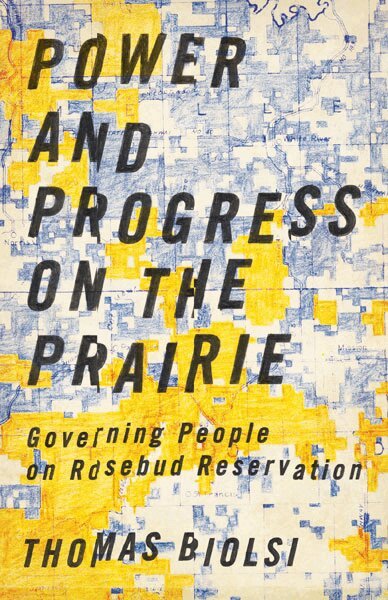
    Power and Progress on the Prairie

    Governing People on Rosebud Reservation

    AvThomas Biolsi

    Häftad, Engelska, 2018

    331 kr

    Beställningsvara. Skickas inom 5-8 vardagar. Fri frakt över 249 kr.

    Fler format och utgåvor

    Inbunden

    1 360 kr

    Beskrivning

    A critical exploration of how modernity and progress were imposed on the people and land of rural South DakotaThe Rosebud Country, comprising four counties in rural South Dakota, was first established as the Rosebud Indian Reservation in 1889 to settle the Sicangu Lakota. During the first two decades of the twentieth century, white homesteaders arrived in the area and became the majority population. Today, the population of Rosebud Country is nearly evenly divided between Indians and whites. In Power and Progress on the Prairie, Thomas Biolsi traces how a variety of governmental actors, including public officials, bureaucrats, and experts in civil society, invented and applied ideas about modernity and progress to the people and the land. Through a series of case studies-programs to settle “surplus” Indian lands, to “civilize” the Indians, to “modernize” white farmers, to find strategic sites for nuclear missile silos, and to extend voting rights to Lakota people-Biolsi examines how these various “problems” came into focus for government experts and how remedies were devised and implemented.Drawing on theories of governmentality derived from Michel Foucault, Biolsi challenges the idea that the problems identified by state agents and the solutions they implemented were inevitable or rational. Rather, through fine-grained analysis of the impact of these programs on both the Lakota and white residents, he reveals that their underlying logic was too often arbitrary and devastating.

    Produktinformation

    • Utgivningsdatum:2018-05-22
    • Mått:140 x 216 x 51 mm
    • Vikt:430 g
    • Format:Häftad
    • Språk:Engelska
    • Antal sidor:360
    • Förlag:University of Minnesota Press
    • ISBN:9781517900830

    Utforska kategorier

    • Centralt styre och förvaltning inom Samhälle och politik
    • Amerikas historia inom Historia och arkeologi
    • Sociala grupper och identitet inom Samhälle och politik

    Mer om författaren

    Thomas Biolsi teaches Native American studies and comparative ethnic studies at the University of California at Berkeley. He has been conducting research on Rosebud Reservation for thirty years. His previous books include Deadliest Enemies: Law and Race Relations on and off Rosebud Reservation (Minnesota, 2007) and Organizing the Lakota: The Political Economy of the New Deal on the Pine Ridge and Rosebud Reservations.

    Recensioner i media

    "Power and Progress on the Prairie provides a unprecedented application of Foucaultian governmentality and biopower, Marxist primitive accumulation, and Tania Li's concept of ‘the will to improve’ in the context of the development and disciplining of the rural North American heartland. An insightful, empowering read for those working to understand U.S. policy over time in rural contexts and Indian-White relations in the context of State interventions, this book will help students think creatively and confidently about operationalizing political economic theory over space and time to unpack the messy and incomplete process of governing rural America."-Beth Rose Middleton, University of California, Davis"The book’s theoretical framework and its lessons make it important reading for Iowans and all citizens of the nation’s heartland who will be able to discern the workings of governmentality in their own states and lives."-The Annals of Iowa"Power and Progress on the Prairie: Governing People on Rosebud Reservation by Thomas Biolsi is an important book that takes a theoretical approach to explaining both the obvious and the hidden power struc- tures within the United States that contrib- uted to the dispossession of indigenous peoples."-Western Historical Quarterly

    Innehållsförteckning

    • ContentsAbbreviationsIntroduction1. The Birth of Liberalism on the Prairie, or How Not to Govern Too Much2. Discipline and Governmentality: Civilizing Indians and Making Farmers Progressive3. New Deal Practices: How Not to Govern Too Little4. Making New Deal Subjects5. Planning Who Shall Die So Others May Live: Biopower and Cold War National Security6. Voting Rights, or How a Regulatory Assemblage GovernsConclusion: When Stories about the Countryside Have PowerAcknowledgmentsNotesIndex