Thomas C. Hubka - Böcker
Visar alla böcker från författaren Thomas C. Hubka. Handla med fri frakt och snabb leverans.
5 produkter
5 produkter
1 310 kr
Skickas inom 7-10 vardagar
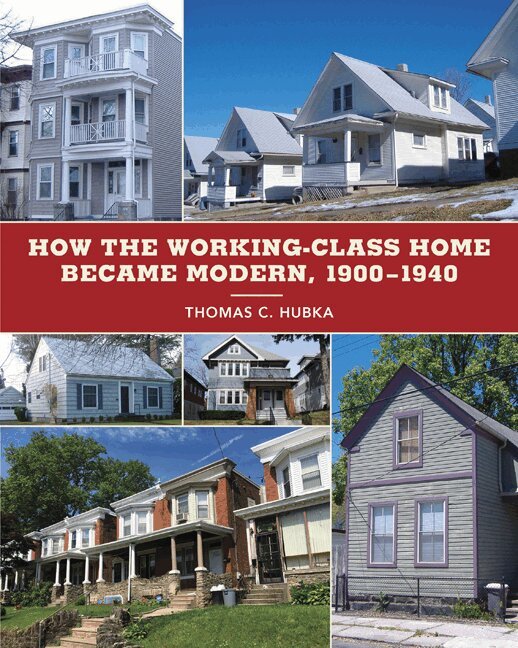
The transformation of average Americans’ domestic lives, revealed through the mechanical innovations and physical improvements of their homesAt the turn of the nineteenth century, the average American family still lived by kerosene light, ate in the kitchen, and used an outhouse. By 1940, electric lights, dining rooms, and bathrooms were the norm as the traditional working-class home was fast becoming modern-a fact largely missing from the story of domestic innovation and improvement in twentieth-century America, where such benefits seem to count primarily among the upper classes and the post–World War II denizens of suburbia. Examining the physical evidence of America’s working-class houses, Thomas C. Hubka revises our understanding of how widespread domestic improvement transformed the lives of Americans in the modern era. His work, focused on the broad central portion of the housing population, recalibrates longstanding ideas about the nature and development of the “middle class” and its new measure of improvement, “standards of living.”In How the Working-Class Home Became Modern, 1900–1940, Hubka analyzes a period when millions of average Americans saw accelerated improvement in their housing and domestic conditions. These improvements were intertwined with the acquisition of entirely new mechanical conveniences, new types of rooms and patterns of domestic life, and such innovations-from public utilities and kitchen appliances to remodeled and multi-unit housing-are at the center of the story Hubka tells. It is a narrative, amply illustrated and finely detailed, that traces changes in household hygiene, sociability, and privacy practices that launched large portions of the working classes into the middle class-and that, in Hubka’s telling, reconfigures and enriches the standard account of the domestic transformation of the American home.
428 kr
Skickas inom 7-10 vardagar
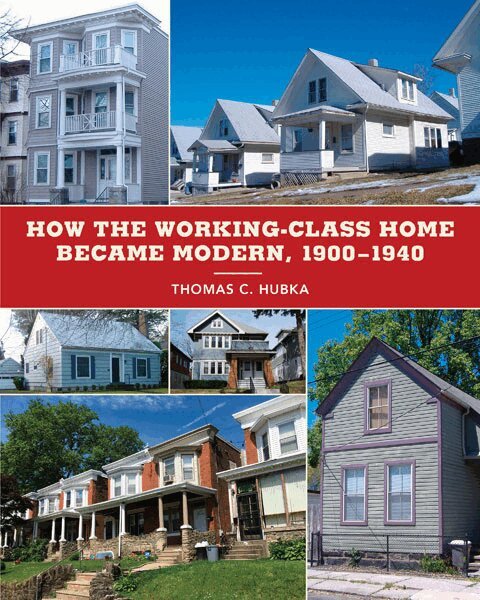
The transformation of average Americans’ domestic lives, revealed through the mechanical innovations and physical improvements of their homesAt the turn of the nineteenth century, the average American family still lived by kerosene light, ate in the kitchen, and used an outhouse. By 1940, electric lights, dining rooms, and bathrooms were the norm as the traditional working-class home was fast becoming modern-a fact largely missing from the story of domestic innovation and improvement in twentieth-century America, where such benefits seem to count primarily among the upper classes and the post–World War II denizens of suburbia. Examining the physical evidence of America’s working-class houses, Thomas C. Hubka revises our understanding of how widespread domestic improvement transformed the lives of Americans in the modern era. His work, focused on the broad central portion of the housing population, recalibrates longstanding ideas about the nature and development of the “middle class” and its new measure of improvement, “standards of living.”In How the Working-Class Home Became Modern, 1900–1940, Hubka analyzes a period when millions of average Americans saw accelerated improvement in their housing and domestic conditions. These improvements were intertwined with the acquisition of entirely new mechanical conveniences, new types of rooms and patterns of domestic life, and such innovations-from public utilities and kitchen appliances to remodeled and multi-unit housing-are at the center of the story Hubka tells. It is a narrative, amply illustrated and finely detailed, that traces changes in household hygiene, sociability, and privacy practices that launched large portions of the working classes into the middle class-and that, in Hubka’s telling, reconfigures and enriches the standard account of the domestic transformation of the American home.
Houses Without Names
Architectural Nomenclature and the Classification of Americas Common Houses
Häftad, Engelska, 2013
324 kr
Skickas inom 10-15 vardagar
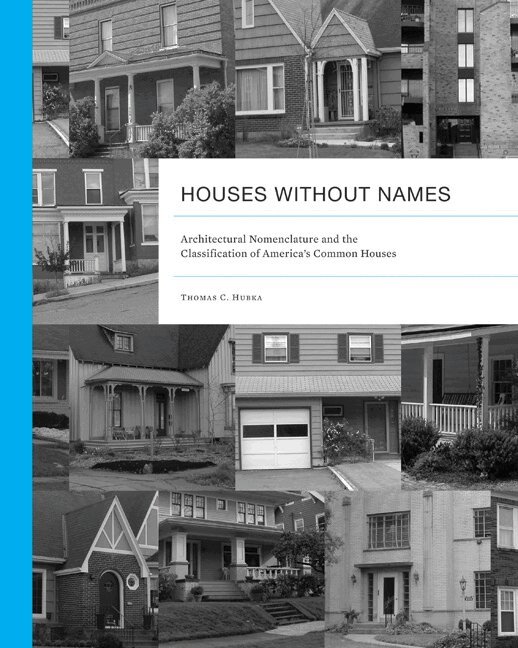
In countless neighborhoods across America, the streets are lined with houses representingno established architectural style. Many of the 80 million homes in the United Statestoday have only loose-fitting, general names like ranch, duplex, bungalow, and flat.Most, however, cannot even be identified by these common names, much less by anarchitectural type such as Colonial, Italianate, or Queen Anne. The few regionallyrecognized vernacular terms— shotgun, Cape (Cod), three-decker, and the like—remainexceptions rather than the rule. In this innovative, copiously illustrated guide, Thomas C.Hubka considers why most ordinary, working-class houses lack an adequate identifyingnomenclature and proposes new ways to name and classify these anonymous structures,shedding a fresh light on their role in the development of American domestic culture andits housing landscape.Popular, developer-built, tract, speculative, everyday—whatever they are called,these common homes constitute the largest portion of American housing in all regionsand historic periods. Without classification, these dwellings tend to be left out of historiesof American building, neglected in preservation surveys and plans, and ignored when itcomes to considering their impact on American culture. Current methods of interpretingcommon houses need not be replaced, Hubka shows, but only modified to include abroader, more complete spectrum of common dwellings. As Hubka explains, by applyingan order of census and a floor-plan analysis, scholars can adequately characterizethe actual homes in which most Americans live, particularly in recent times after thewidespread growth of suburban homes.Based on years of field observations, measured drawings, and surveys of regionalhouse types, this handbook provides a working vocabulary for the study and appreciationof America¹s common houses and will prove useful to preservationists, academics, andarchitects, as well as owners and residents of America¹s most ubiquitous residences.
Resplendent Synagogue – Architecture and Worship in an Eighteenth–Century Polish Community
Häftad, Engelska, 2022
414 kr
Skickas inom 7-10 vardagar
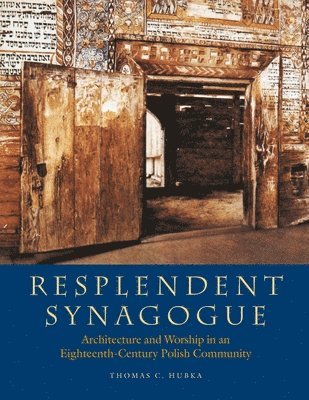
This unique exploration of a lost religious and cultural artifact breathes new life into a forgotten but fascinating aspect of eighteenth-century Polish Jewry. Thomas C. Hubka, an architectural historian, immersed himself in medieval and early modern Jewish history, religion, and culture to prepare for this remarkable study of the eighteenth-century Polish synagogue in the town of Gwozdziec, now in present-day Ukraine. Because the Gwozdziec Synagogue, like so many others, was destroyed by the Nazis, this book revives a spiritual community lost to history. Hubka selected the Gwozdziec Synagogue because of the completeness of its photographic and historical records. Graced with nearly two hundred historical photographs, architectural drawings, maps, diagrams, and color illustrations, Resplendent Synagogue vividly recreates the spiritual heart of a once-vibrant Jewish population. Hubka demonstrates that while the architectural exterior of the synagogue was largely the product of non-Jewish, regional influences, the interior design and elaborate wall-paintings signified a distinctly Jewish art form. The collaboration of Jewish and Gentile builders, craftsmen, and artists in the creation of this magnificent wooden structure attests to an eighteenth-century period of relative prosperity and communal well-being for the Jews of Gwozdziec. Part of a tradition that was later abandoned by Eastern European Jewish communities in the nineteenth and twentieth centuries, this truly resplendent synagogue exemplified a high point in Jewish architectural art and religious painting.
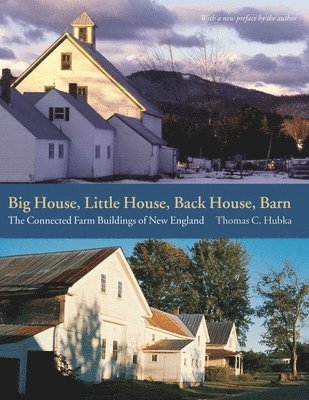
Big House, Little House, Back House, Barn – The Connected Farm Buildings of New England
Häftad, Engelska, 2022
284 kr
Skickas inom 7-10 vardagar
A classic work on farm buildings made by nineteenth-century New Englanders refreshed with a new introduction. Big House, Little House, Back House, Barn portrays the four essential components of the stately and beautiful connected farm buildings made by nineteenth-century New Englanders that stand today as a living expression of a rural culture, offering insights into the people who made them and their agricultural way of life. A visual delight as well as an engaging tribute to our nineteenth-century forebears, this book, first published nearly forty years ago, has become one of the standard works on regional farmsteads in America. This new edition features a new preface by the author.