Thomas Crow - Böcker
Visar alla böcker från författaren Thomas Crow. Handla med fri frakt och snabb leverans.
11 produkter
11 produkter
376 kr
Tillfälligt slut
1 590 kr
Skickas inom 10-15 vardagar
Forested landscapes have provided many important testing grounds for the devel- ment and application of landscape ecological principles and methods in North America. This central role of forests in landscape ecology emerged for several reasons. Forest cover is prominent in many regions of North America, from the temperate deciduous forests of the east to the coniferous forests of the north and west. Changes in forest spatial patterns are readily apparent to the human eye—natural disturbances and timber harvests alter the arrangement of forest age classes across the landscape and this, in turn, influences many species and ecosystem processes; land-use changes have produced profound fluctuations in forest cover over several centuries; increasing re- dential development in rural areas is often concentrated within forests; and public lands include many forested landscapes. Management actions, such as varying the amount, size, and location of harvests, also represent landscape-scale “experiments” that provide valuable opportunities for study. Finally, forest patterns are readily detectable from remote imagery, and are thus amenable to study at broad scales. For these reasons, forests have provided motivation and many opportunities for studying the complex relationships between patterns and processes in many areas. The importance of landscape-level considerations in the management and c- servation of forested landscapes has become increasingly important, and a variety of stakeholders are involved.
1 409 kr
Skickas inom 5-8 vardagar
Forested landscapes have provided many important testing grounds for the devel- ment and application of landscape ecological principles and methods in North America. This central role of forests in landscape ecology emerged for several reasons. Forest cover is prominent in many regions of North America, from the temperate deciduous forests of the east to the coniferous forests of the north and west. Changes in forest spatial patterns are readily apparent to the human eye—natural disturbances and timber harvests alter the arrangement of forest age classes across the landscape and this, in turn, influences many species and ecosystem processes; land-use changes have produced profound fluctuations in forest cover over several centuries; increasing re- dential development in rural areas is often concentrated within forests; and public lands include many forested landscapes. Management actions, such as varying the amount, size, and location of harvests, also represent landscape-scale “experiments” that provide valuable opportunities for study. Finally, forest patterns are readily detectable from remote imagery, and are thus amenable to study at broad scales. For these reasons, forests have provided motivation and many opportunities for studying the complex relationships between patterns and processes in many areas. The importance of landscape-level considerations in the management and c- servation of forested landscapes has become increasingly important, and a variety of stakeholders are involved.
394 kr
Skickas inom 7-10 vardagar
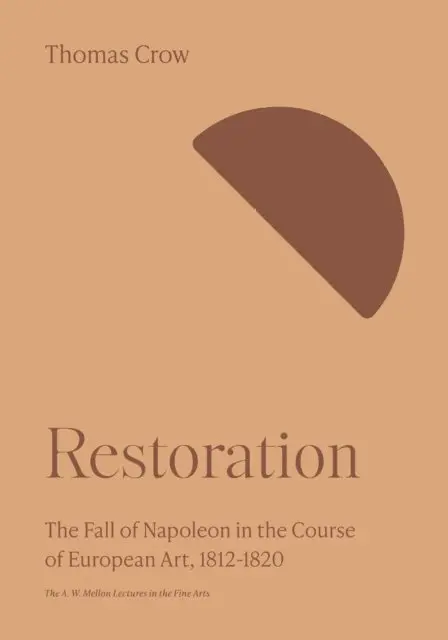
How social upheavals after the collapse of the French Empire shaped the lives and work of artists in early nineteenth-century EuropeAs the French Empire collapsed between 1812 and 1815, artists throughout Europe were left uncertain and adrift. The final abdication of Emperor Napoleon, clearing the way for a restored monarchy, profoundly unsettled prevailing national, religious, and social boundaries. In Restoration, Thomas Crow combines a sweeping view of European art centers—Rome, Paris, London, Madrid, Brussels, and Vienna—with a close-up look at pivotal artists, including Antonio Canova, Jacques-Louis David, Théodore Géricault, Francisco Goya, Jean-Auguste-Dominique Ingres, Thomas Lawrence, and forgotten but meteoric painters François-Joseph Navez and Antoine Jean-Baptiste Thomas. Whether directly or indirectly, all were joined in a newly international network, from which changing artistic priorities and possibilities emerged out of the ruins of the old.Crow examines how artists of this period faced dramatic circumstances, from political condemnation and difficult diplomatic missions to a catastrophic episode of climate change. Navigating ever-changing pressures, they invented creative ways of incorporating critical events and significant historical actors into fresh artistic works. Crow discusses, among many topics, David’s art and influence during exile, Géricault’s odyssey through outcast Rome, Ingres’s drive to reconcile religious art with contemporary mentalities, the titled victors over Napoleon all sitting for portraits by Lawrence, and the campaign to restore art objects expropriated by the French from Italy, prefiguring the restitution controversies of our own time.Beautifully illustrated, Restoration explores how cataclysmic social and political transformations in nineteenth-century Europe reshaped artists’ lives and careers with far-reaching consequences.Published in association with the Center for Advanced Study in the Visual Arts, National Gallery of Art, Washington, DC
625 kr
Skickas inom 7-10 vardagar
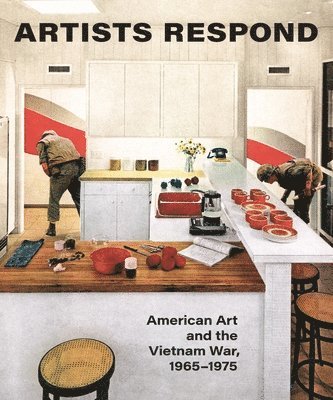
How the Vietnam War changed American artBy the late 1960s, the United States was in a pitched conflict in Vietnam, against a foreign enemy, and at home—between Americans for and against the war and the status quo. This powerful book showcases how American artists responded to the war, spanning the period from Lyndon B. Johnson’s fateful decision to deploy U.S. Marines to South Vietnam in 1965 to the fall of Saigon ten years later.Artists Respond brings together works by many of the most visionary and provocative artists of the period, including Asco, Chris Burden, Judy Chicago, Corita Kent, Leon Golub, David Hammons, Yoko Ono, and Nancy Spero. It explores how the moral urgency of the Vietnam War galvanized American artists in unprecedented ways, challenging them to reimagine the purpose and uses of art and compelling them to become politically engaged on other fronts, such as feminism and civil rights. The book presents an era in which artists struggled to synthesize the turbulent times and participated in a process of free and open questioning inherent to American civic life.Beautifully illustrated, Artists Respond features a broad range of art, including painting, sculpture, printmaking, performance and body art, installation, documentary cinema and photography, and conceptualism.Published in association with the Smithsonian American Art MuseumExhibition ScheduleSmithsonian American Art Museum, Washington, DCMarch 15–August 18, 2019Minneapolis Institute of ArtSeptember 28, 2019–January 5, 2020
Artist in the Counterculture
Bruce Conner to Mike Kelley and Other Tales from the Edge
Inbunden, Engelska, 2023
474 kr
Skickas inom 7-10 vardagar
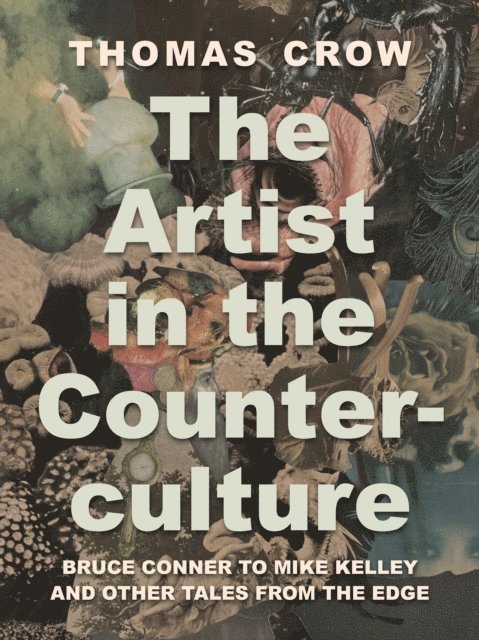
How California’s counterculture of the 1960s to 1980s profoundly shaped—and was shaped by—West Coast artistsThe 1960s exert a special fascination in modern art. But most accounts miss the defining impact of the period’s youth culture, largely incubated in California, on artists who came of age in that decade. As their prime exemplar, Bruce Conner, reminisced, “I did everything that everybody did in 1967 in the Haight-Ashbury. . . . I would take peyote and walk out in the streets.” And he vividly channeled those experiences into his art, while making his mark on every facet of the psychedelic movement—from the mountains of Mexico with Timothy Leary to the rock ballrooms of San Francisco to the gilded excesses of the New Hollywood. In The Artist in the Counterculture, Thomas Crow tells the story of California art from the 1960s to the 1980s—some of the strongest being made anywhere at the time—and why it cannot be understood apart from the new possibilities of thinking and feeling unleashed by the rebels of the counterculture.Crow reevaluates Conner and other key figures—from Catholic activist Corita Kent to Black Panther Emory Douglas to ecological witness Bonnie Ora Sherk—as part of a generational cohort galvanized by resistance to war, racial oppression, and environmental degradation. Younger practitioners of performance and installation carried the mindset of rebellion into the 1970s and 1980s, as previously excluded artists of color moved to the forefront in Los Angeles. Mike Kelley, their contemporary, remained unwaveringly true to the late countercultural flowering he had witnessed at the dawn of his career.The result is a major new account of the counterculture’s enduring influence on modern art.
254 kr
Skickas inom 7-10 vardagar
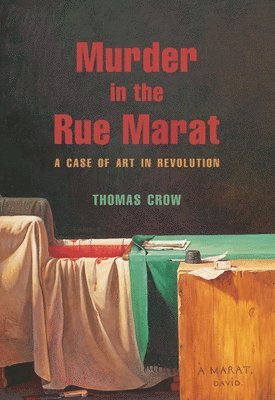
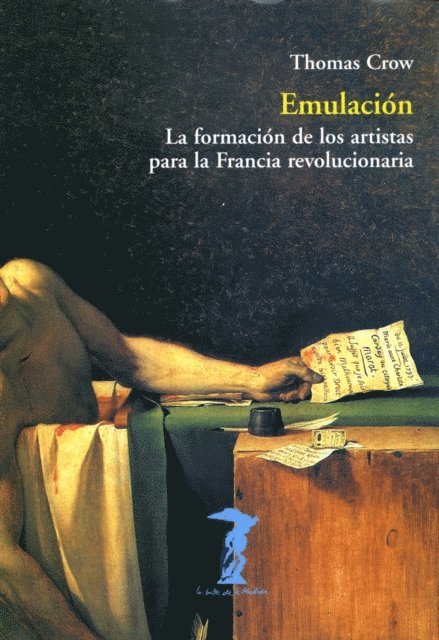
How an enigmatic masterpiece of the French Revolution became a talisman of the revolutionary spirit in our own timeJacques-Louis David’s The Death of Marat depicts the painter’s friend and fellow revolutionary Jean-Paul Marat collapsed in his bath after being fatally stabbed by a female assassin who stands just outside the frame. In this fascinating book, Thomas Crow traces the radical legacy of a painting that has been called the Pietà of the French Revolution, showing how David’s masterpiece captures the saga of that violent era in the single figure of Marat, and how it reveals itself anew today.Crow begins by describing how the painting’s enduring power came to the fore during the countercultural tumult of the 1960s, discussing how his vocation as a scholar arose out of his own encounter with the work. He then takes readers back to 1793, telling the story of the painting’s creation through the eyes of David, his subject, and Marat’s charismatic assassin, Charlotte Corday. Charting the history of its impact across more than two centuries, Crow shows how this multilayered portrait surfaced in succeeding waves of political dissent as an enduring talisman of popular insurgency.Beautifully illustrated, Murder in the Rue Marat is an art historian’s disarmingly personal account of a painting whose hidden complexities bear witness to the promise and peril of revolution in Marat’s time and our own.
437 kr
Skickas inom 7-10 vardagar
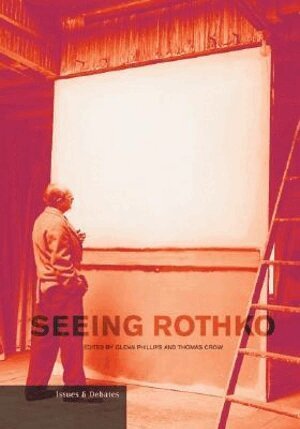
"I am interested only in expressing basic human emotions - tragedy, ecstasy, doom," - Mark Rothko (1903 - 1970) said of his paintings. "If you are moved only by their colour relationships, then you miss the point." Throughout his career, Rothko was concerned with what other people experienced when they looked at his canvases. As his work shifted from figurative imagery to luminous fields of colour, his concern expanded to the setting in which his paintings were exhibited. In a series of analytic, personal, and even poetic essays by contemporary scholars, this volume explains how Rothko's most compelling creations elicit such profound and varied responses. This volume also reproduces, for the first time, Rothko's "Scribble Book," in which he jotted down his ideas on teaching art to children, and a sketchbook, both dating to the early years of the artist's career. "Seeing Rothko" includes essays by David Antin, Dore Ashton, Thomas Crow, John Elderfield, Briony Fer, Charles Harrison, Miguel Lopez-Remiro, Sarah Rich, and Jeffrey Weiss, an introduction by Glenn Phillips, and a bibliography of Rothko's own writings.
351 kr
Skickas inom 7-10 vardagar
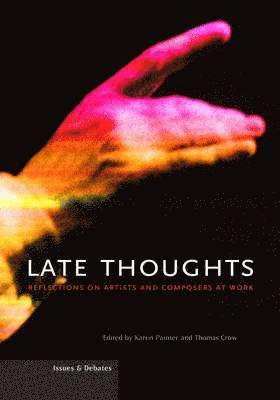
"Today the West" chronically associates artistic maturity either with transcendence, degeneration, or irrelevance. This volume looks to the non-representational arts of music, abstract painting and sculpture, and architecture for fresh insight into the juncture of aesthetics and mortality. In part one, Nancy Troy considers the fate of Piet Mondrian's final canvases, Thomas Crow finds undiminished joy in abstraction in the last works of Mark Rothko and Eva Hesse, and Richard Schiff explores the eternal "change to stay the same" of Willem de Kooning's final productive decade. In part two, Karen Painter analyzes Wolfgang Amadeus Mozart's posthumous reputation, Bryan Gilliam examines Richard Strauss' unexpectedly enduring faith in German musical tradition, Stanley Cavell discusses the eternal irresolution of Gustav Mahler's last period, John Deathridge explicates Richard Wagner's ultimately debilitating relationship to symphonic form, and John Rockwell sees the Weimar Republic's demise prefigured in the struggle over state-sponsored opera in Berlin.Complementing these eight retrospective essays is Ernest Fleischmann's conversation with Frank Gehry, an architect whose most visible projects provide extraordinary spaces for art and music. This is a part of the "Getty Research Institute Issues and Debates" series.
453 kr
Skickas inom 5-8 vardagar
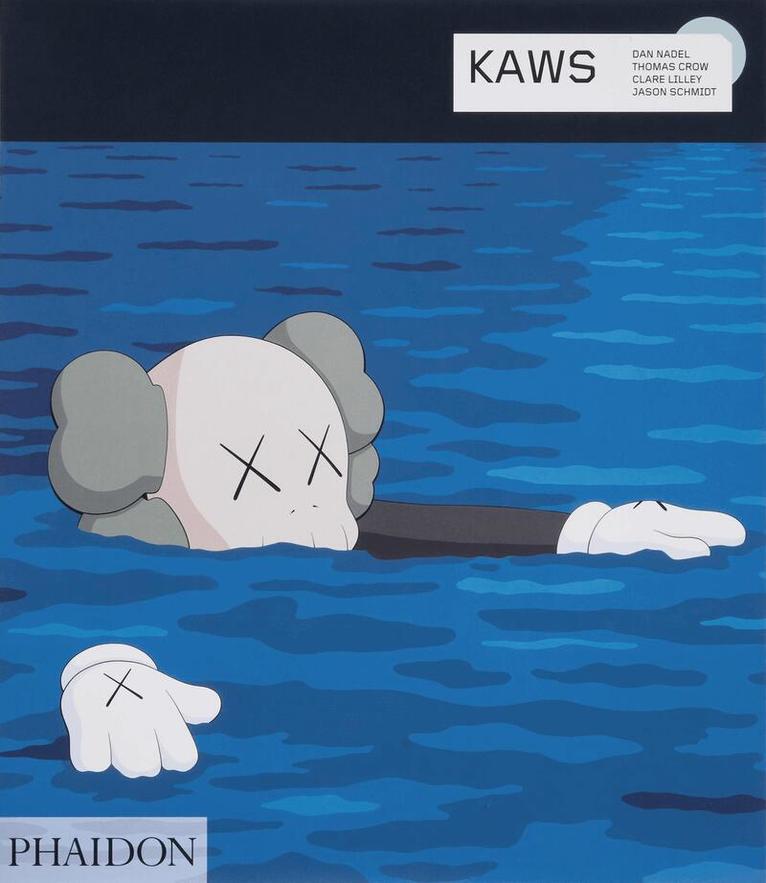
The definitive study of the work of KAWS, one of the most influential and much-loved forces in contemporary art and culture KAWS is one of the most popular and recognizable contemporary artists, whose reach extends far beyond the art world into the realms of fashion, music, and popular culture at large. Beginning his career as a graffiti artist in the 1990s, KAWS has expanded his repertoire into painting, sculpture, drawing, product design, and augmented reality, together forming an artistic vision that unites all of these practices. KAWS has collaborated with some of the most prominent international brands, including Uniqlo, Comme des Garçons, Supreme, Nike, Dior, sacai, General Mills, and many more, and the book includes images of the artist’s studio by Jason Schmidt and a selection of KAWS’s previously unpublished preparatory drawings as well as work spanning his entire career, from his early graffiti days to his highly collectible vinyl toys, complex abstract paintings, and monumental public sculptures. Richly illustrated and featuring the most significant scholarship on his work to date, this book is a definitive study on the life and career of this extraordinary artist.
294 kr
Skickas inom 7-10 vardagar
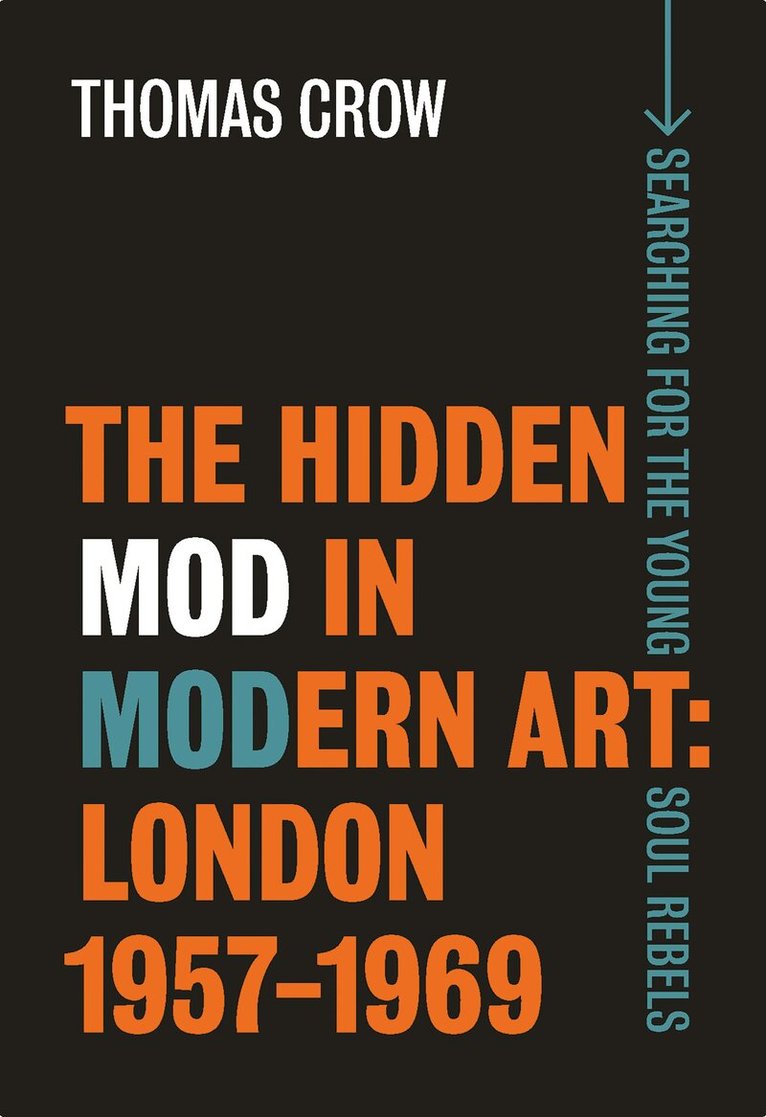
An investigation of the outsized influence of the Mod subculture on key figures of the 1960s London art sceneBonding over matters of taste and style, the ‘Mods’ of late 1950s London recognised in one another shared affinities for Italian-style suits, tidy haircuts, espresso bars, Vespa scooters and the latest American jazz. In this groundbreaking book, leading art historian Thomas Crow argues that the figure of the Mod exerted an influence beyond its assumed social boundaries by exemplifying the postwar metropolis in all of its excitement and complexity. Crow examines the works of key figures in the London art scene of the 1960s, including Robyn Denny, David Hockney, Pauline Boty, Bridget Riley and Bruce McLean, who shared and heightened aspects of this new and youthful urbanity. The triumphant arrival of the international counterculture forced both young Mods and established artists to reassess and regroup in novel, revealing formations. Understanding the London Mod brings with it a needed, up-to-date reckoning with the legacies of Situationism, Social Art History and Cultural Studies.Distributed for the Paul Mellon Centre for Studies in British Art