Thomas E Burman – författare
Visar alla böcker från författaren Thomas E Burman. Handla med fri frakt och snabb leverans.
6 produkter
Sea in the Middle
The Mediterranean World, 650–1650
Av Thomas E Burman, Brian A. Catlos m. fl.
Häftad, 2022
447 kr
Lägg i varukorg
The Sea in the Middle presents an original and revisionist narrative of the development of the medieval west from late antiquity to the dawn of modernity. This textbook is uniquely centered on the Mediterranean and emphasizes the role played by peoples and cultures of Africa, Asia, and Europe in an …
Texts from the Middle
Documents from the Mediterranean World, 650–1650
Av Thomas E Burman, Brian A. Catlos m. fl.
Häftad, 2022
315 kr
Lägg i varukorg
Texts from the Middle is a companion primary source reader to the textbook The Sea in the Middle. It can be used alone or in conjunction with the textbook, providing an original history of the Middle Ages that places the Mediterranean at the geographical center of the study of the period from 650 …
Sea in the Middle
The Mediterranean World, 650–1650
Av Mark D. Meyerson, Brian A. Catlos m. fl.
E-bok, 2022
446 kr
Lägg i varukorg
The Sea in the Middle presents an original and revisionist narrative of the development of the medieval west from late antiquity to the dawn of modernity. This textbook is uniquely centered on the Mediterranean and emphasizes the role played by peoples and cultures of Africa, Asia, and Europe in an …
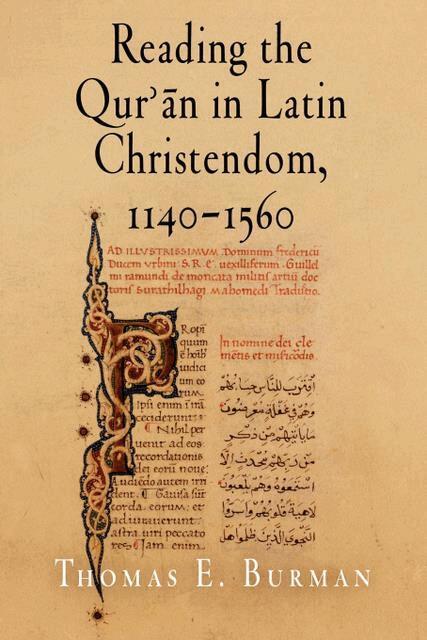
Reading the Qur'ān in Latin Christendom, 1140-1560
E-bok, 2011
489 kr
Lägg i varukorg
Selected by Choice magazine as an Outstanding Academic TitleMost of what we know about attitudes toward Islam in the medieval and early modern West has been based on polemical treatises against Islam written by Christian scholars preoccupied with defending their own faith and attacking the …
Reading the Qur'ān in Latin Christendom, 1140-1560
Häftad, 2009
387 kr
Lägg i varukorg
Selected by Choice magazine as an Outstanding Academic TitleMost of what we know about attitudes toward Islam in the medieval and early modern West has been based on polemical treatises against Islam written by Christian scholars preoccupied with defending their own faith and attacking the …
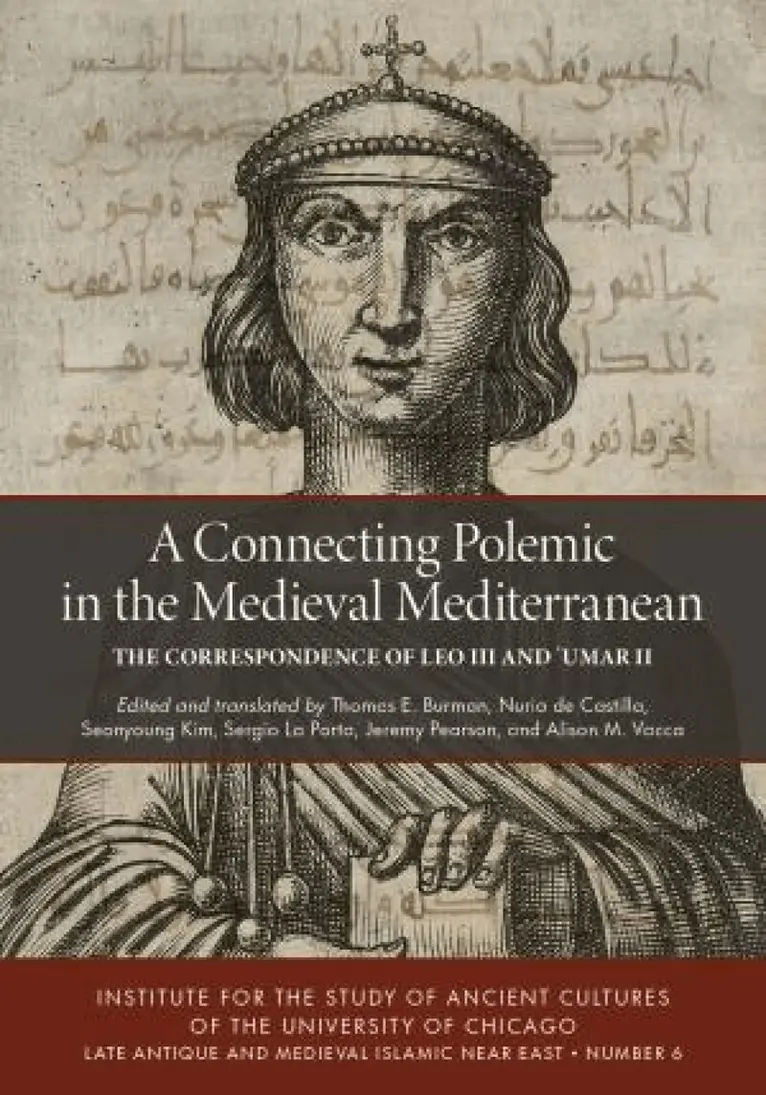
Connecting Polemic in the Medieval Mediterranean
The Correspondence of Leo III and 'Umar II
Av Thomas E Burman, Nuria de Castilla m. fl.
Häftad, 2026
680 kr
Lägg i varukorg
This book offers the first comprehensive edition and translation of all surviving versions—Latin, Armenian, Arabic, and Aljamiado—of the polemical correspondence attributed to the Byzantine emperor Leo III and the Umayyad caliph 'Umar II.Far from simple diplomatic communication, these letters form …