Thomas E. Hill, Jr. - Böcker
Visar alla böcker från författaren Thomas E. Hill, Jr.. Handla med fri frakt och snabb leverans.
11 produkter
11 produkter
1 240 kr
Skickas inom 5-8 vardagar
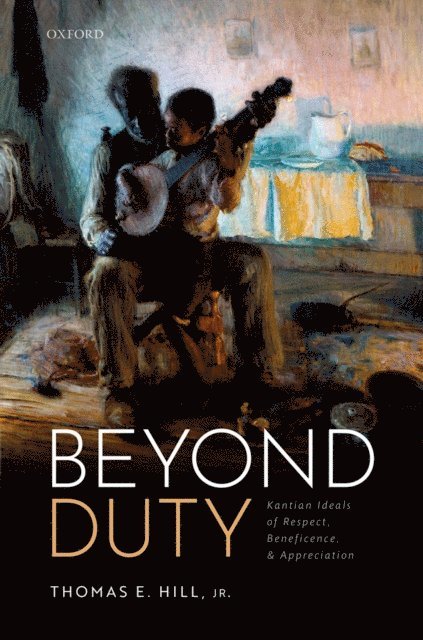
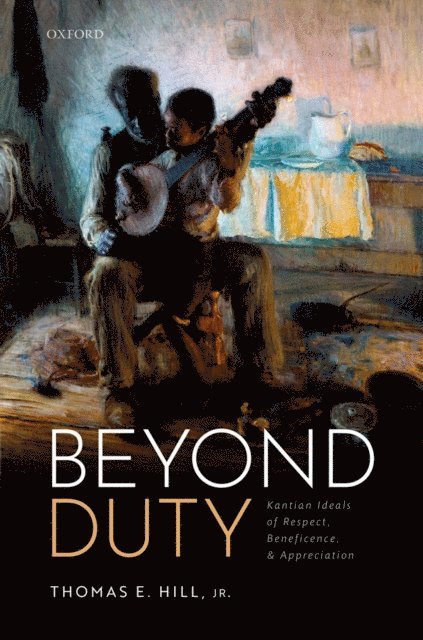
Beyond Duty presents a new collection of essays on Kantian moral theory and practical ethics from a distinguished philosopher known for making Kantian ethics accessible and relevant to contemporary problems. With a new emphasis on ideals beyond the strictest requirements of moral duty, Thomas E. Hill, Jr. expands the core aspects of Kantian ethics and offers a broader perspective on familiar moral problems. Some essays explain Kantian concepts, while others review work of leading contemporary philosophers or raise challenging ethical questions for more general audiences. Crucially, Hill develops an ethical ideal of appreciation of people and their lives. Distinguished from both respect and beneficence, this has important implications about how we should think about close personal relationships, such as friendships, families, and relationships with people with disabilities. Part I focuses on Kantian moral theory. Topics include the structure of Kant's argument in the Groundwork; his idea of imperfect duties to oneself; autonomy; and human dignity. Rawls' constructivism is defended against O'Neill's objections, and Kantian ethics defended against the charge of utopian thinking. Part II focuses on practical ethics, including the ethics of suicide; philanthropy; conscientious objection; and tragic choices when it seems that every alternative offends against human dignity. An essay on moral education contrasts Kantian and Rawlsian perspectives; another traces the role of self-respect in Rawls' theory of justice and contrasts a Kantian conception. The volume concludes with two essays that develop and illustrate the ideal of appreciation.
468 kr
Skickas inom 5-8 vardagar
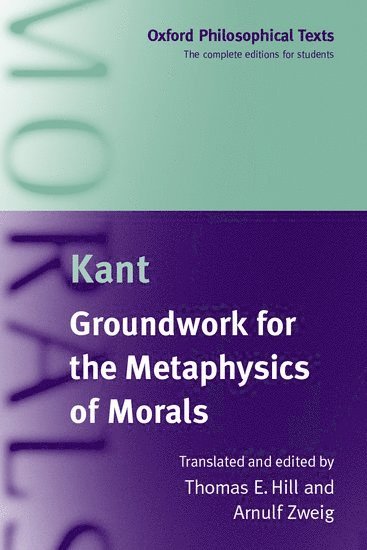
In this classic text, Kant sets out to articulate and defend the Categorical Imperative - the fundamental principle that underlies moral reasoning - and to lay the foundation for a comprehensive account of justice and human virtues. This new edition and translation of Kant's work is designed especially for students. An extensive and comprehensive introduction explains the central concepts of Groundwork and looks at Kant's main lines of argument. Detailed notes aim to clarify Kant's thoughts and to correct some common misunderstandings of his doctrines.
973 kr
Skickas inom 5-8 vardagar
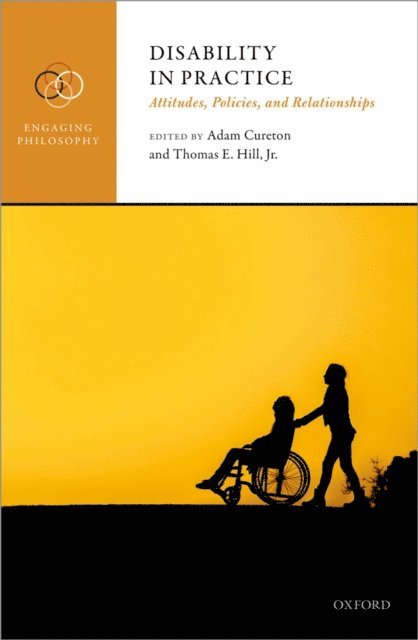
Everyone is disabled in some respect, at least in the sense that others can do things that we cannot. But significant limitations on pursuing major life activities due to severely limited eyesight, hearing, mobility, cognitive functioning and so on pose special problems that fortunately have been recognized (to some extent) in our public policies. Public policy is important, as are the deliberative frameworks that we use to justify them, and the essays in the second and third sections of this volume have significant implications for public policy and offer new proposals for justifying frameworks. Underlying public policies and their assessment, however, are the attitudes, good and bad, that we bring to them, and our attitudes as well deeply affect our interpersonal relationships. The essays here, especially in the first section, reveal how complex and problematic our attitudes towards persons with disabilities are when we are in relationships with them as care-givers, friends, family members, or briefly encountered strangers. Our attitudes towards ourselves as persons with (or without) disabilities are implicated in these discussions as well. Among the special highlights of this volume are its focus on moral attitudes and relationships involving disabilities and its contributors' recognition of the multi-faceted nature of disability problems. The importance of respect for persons as a necessary complement to beneficence is an underlying theme, and a deeper understanding of respect is made possible by considering closely its implications for relationships with persons with disabilities. Awareness of the common and uncommon human vulnerabilities also makes clear the need for modifying traditional deliberative frameworks for assessing policies, and several essays make constructive proposals for the changes that are needed.
2 367 kr
Skickas inom 5-8 vardagar
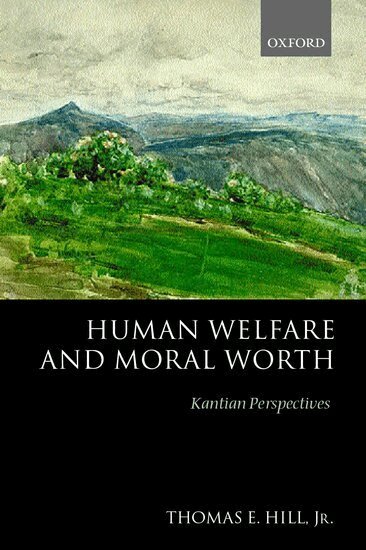
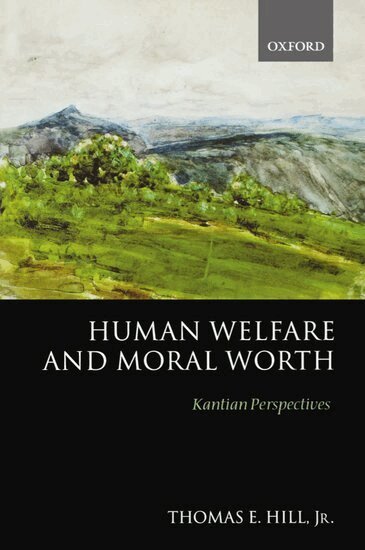
Thomas Hill presents a set of essays exploring the implications of basic Kantian ideas for practical issues. The first part of the book provides background in central themes in Kant's ethics; the second part discusses questions regarding human welfare; the third focuses on moral worth - the nature and grounds of moral assessment of persons as deserving esteem or blame. Hill shows moral, political and social philosophers just how valuable moral theory can be in addressing practical matters.
790 kr
Skickas inom 5-8 vardagar
Thomas Hill, a leading figure in the recent development of Kantian moral philosophy, presents a series of essays that interpret and develop Kant's ideas on ethics. The first part of the book focuses on basic concepts: a priori method, a good will, categorical imperatives, autonomy, and constructivist strategies of argument. Hill goes on to consider aspects of human welfare, and then moral worth--the nature and grounds of moral assessment of persons as deserving esteem or blame. He offers illuminating discussions of happiness, beneficence, personal values, conscience, moral desert, moral dilemmas, and feelings of regret. He is critical of Kant at many points, but he shows how many familiar objections miss the mark. Two previously unpublished essays challenge the views of other influential Kant scholars and defend alternative interpretations of Kant on beneficence, supererogation, and what it means to 'set oneself an end'.These clear and careful writings show moral, poltical, and social philosophers just how valuable Kantian ethical theory can be in addressing practical matters.
1 548 kr
Skickas inom 5-8 vardagar
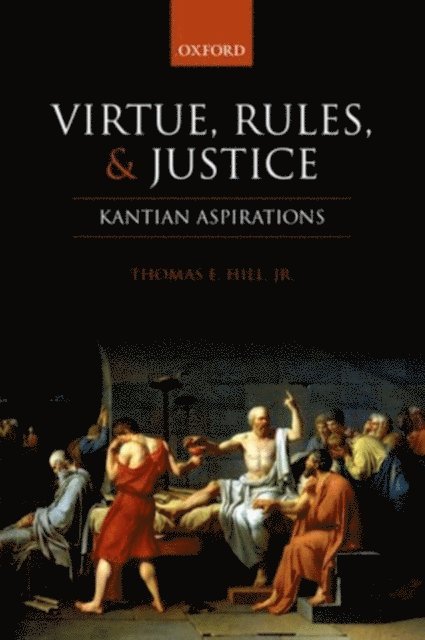
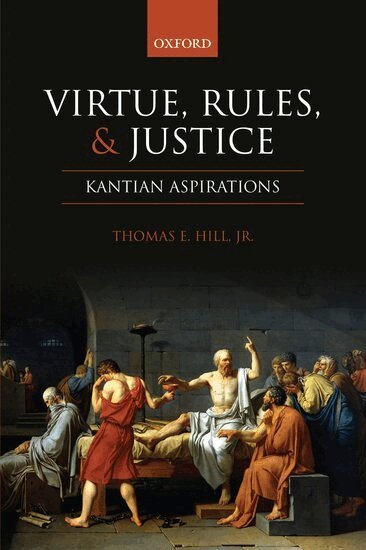
Thomas E. Hill, Jr., interprets, explains, and extends Kant's moral theory in a series of essays that highlight its relevance to contemporary ethics. The book is divided into four sections. The first three essays cover basic themes: they introduce the major aspects of Kant's ethics; explain different interpretations of the Categorical Imperative; and sketch a 'constructivist' reading of Kantian normative ethics distinct from the Kantian constructivisms of Onora O'Neill and John Rawls. The next section is on virtue, and the essays collected here discuss whether it is a virtue to regard the natural environment as intrinsically valuable, address puzzles about moral weakness, contrast ideas of virtue in Kant's ethics and in 'virtue ethics,' and comment on duties to oneself, second-order duties, and moral motivation in Kant's Doctrine of Virtue. Four essays on moral rules propose human dignity as a guiding value for a system of norms rather than a self-standing test for isolated cases, contrast the Kantian perspectives on moral rules with rule-utilitarianism and then with Jonathan Dancy's moral particularism, and distinguish often-conflated questions about moral relativism. Hill goes on to outline a Kantian position on two central issues. In the last section of the book, three essays on practical questions show how a broadly Kantian theory, if critical of Kant's official theory of law, might re-visit questions about revolution, prison reform, and forcible interventions in other countries for humanitarian purposes. In the final essay, Hill develops the implications of Kant's Doctrine of Virtue for the responsibility of by-standers to oppression.
557 kr
Skickas inom 5-8 vardagar
Thomas E. Hill, Jr., interprets, explains, and extends Kant's moral theory in a series of essays that highlight its relevance to contemporary ethics. The book is divided into four sections. The first three essays cover basic themes: they introduce the major aspects of Kant's ethics; explain different interpretations of the Categorical Imperative; and sketch a 'constructivist' reading of Kantian normative ethics distinct from the Kantian constructivisms of Onora O'Neill and John Rawls. The next section is on virtue, and the essays collected here discuss whether it is a virtue to regard the natural environment as intrinsically valuable, address puzzles about moral weakness, contrast ideas of virtue in Kant's ethics and in 'virtue ethics,' and comment on duties to oneself, second-order duties, and moral motivation in Kant's Doctrine of Virtue. Four essays on moral rules propose human dignity as a guiding value for a system of norms rather than a self-standing test for isolated cases, contrast the Kantian perspectives on moral rules with rule-utilitarianism and then with Jonathan Dancy's moral particularism, and distinguish often-conflated questions about moral relativism. Hill goes on to outline a Kantian position on two central issues. In the last section of the book, three essays on practical questions show how a broadly Kantian theory, if critical of Kant's official theory of law, might re-visit questions about revolution, prison reform, and forcible interventions in other countries for humanitarian purposes. In the final essay, Hill develops the implications of Kant's Doctrine of Virtue for the responsibility of by-standers to oppression.
995 kr
Skickas inom 7-10 vardagar
This stimulating collection of essays in ethics eschews the simple exposition and refinement of abstract theories. Rather, the author focuses on everyday moral issues, often neglected by philosophers, and explores the deeper theoretical questions which they raise. Such issues are: is it wrong to tell a lie to protect someone from a painful truth? Should one commit a lesser evil to prevent another from doing something worse? Can one be both autonomous and compassionate? Other topics discussed are servility, weakness of will, suicide, obligations to oneself, snobbery, and environmental concerns. A feature of the collection is the contrast of Kantian and utilitarian answers to these problems. The essays are crisply and lucidly written and will appeal to both teachers and students of philosophy.
599 kr
Skickas inom 7-10 vardagar
This stimulating collection of essays in ethics eschews the simple exposition and refinement of abstract theories. Rather, the author focuses on everyday moral issues, often neglected by philosophers, and explores the deeper theoretical questions which they raise. Such issues are: is it wrong to tell a lie to protect someone from a painful truth? Should one commit a lesser evil to prevent another from doing something worse? Can one be both autonomous and compassionate? Other topics discussed are servility, weakness of will, suicide, obligations to oneself, snobbery, and environmental concerns. A feature of the collection is the contrast of Kantian and utilitarian answers to these problems. The essays are crisply and lucidly written and will appeal to both teachers and students of philosophy.
1 153 kr
Skickas inom 7-10 vardagar
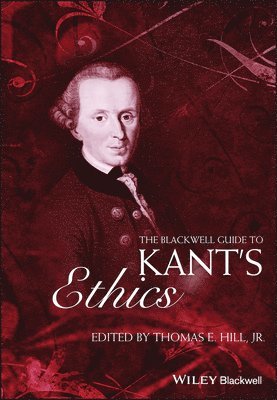
THE BLACKWELL GUIDE TO KANT’S Ethics THE BLACKWELL GUIDES TO great Works “Hill has edited an excellent set of essays by both well-established and younger Kant scholars, each of which insightfully discusses fundamental themes and arguments in Kant’s moral philosophy. This collection not only contributes importantly to ongoing scholarship, but it will serve as a perfect companion to upper-level undergraduate and graduate courses that feature Kant’s ethics.”Mark Timmons, University of Arizona Late in the eighteenth century, Immanuel Kant published several influential works of moral philosophy, writings that even his staunchest critics acknowledge represent the efforts of one of the most profound thinkers of the modern age. Reflecting the philosopher’s increasing stature and a resurgence in innovative scholarship, The Blackwell Guide to Kant’s Ethics presents a collection of original essays that address a wide variety of topics crucial to our understanding of Kant’s moral philosophy and its implications. The essays’ broad range of ideas is ensured through contributions by both well-established Kant scholars and rising stars in the field. Readings serve to illuminate and put into perspective issues that Kant addressed in his later writings, including his idea of a good will and formulations of the Categorical Imperative, along with his concepts of virtue, duties to oneself, justice, punishment, and international relations. Further insights are garnered through extensive introductory commentary by the editor that put the essays in context. And in an original concluding essay, noted Kant scholar Arnulf Zweig shares some personal reflections on the enduring value of Kant’s ethics. Informed by impeccable scholarship, The Blackwell Guide to Kant’s Ethics is a thought-provoking new work that will enhance our understanding of Kant’s ethical theories while offering provocative insights into the mind of one of the most influential thinkers in the history of Western philosophy.
428 kr
Skickas inom 7-10 vardagar
THE BLACKWELL GUIDE TO KANT’S Ethics THE BLACKWELL GUIDES TO great Works “Hill has edited an excellent set of essays by both well-established and younger Kant scholars, each of which insightfully discusses fundamental themes and arguments in Kant’s moral philosophy. This collection not only contributes importantly to ongoing scholarship, but it will serve as a perfect companion to upper-level undergraduate and graduate courses that feature Kant’s ethics.”Mark Timmons, University of Arizona Late in the eighteenth century, Immanuel Kant published several influential works of moral philosophy, writings that even his staunchest critics acknowledge represent the efforts of one of the most profound thinkers of the modern age. Reflecting the philosopher’s increasing stature and a resurgence in innovative scholarship, The Blackwell Guide to Kant’s Ethics presents a collection of original essays that address a wide variety of topics crucial to our understanding of Kant’s moral philosophy and its implications. The essays’ broad range of ideas is ensured through contributions by both well-established Kant scholars and rising stars in the field. Readings serve to illuminate and put into perspective issues that Kant addressed in his later writings, including his idea of a good will and formulations of the Categorical Imperative, along with his concepts of virtue, duties to oneself, justice, punishment, and international relations. Further insights are garnered through extensive introductory commentary by the editor that put the essays in context. And in an original concluding essay, noted Kant scholar Arnulf Zweig shares some personal reflections on the enduring value of Kant’s ethics. Informed by impeccable scholarship, The Blackwell Guide to Kant’s Ethics is a thought-provoking new work that will enhance our understanding of Kant’s ethical theories while offering provocative insights into the mind of one of the most influential thinkers in the history of Western philosophy.