Thomas F. Thornton - Böcker
Visar alla böcker från författaren Thomas F. Thornton. Handla med fri frakt och snabb leverans.
8 produkter
8 produkter
1 811 kr
Skickas inom 7-10 vardagar
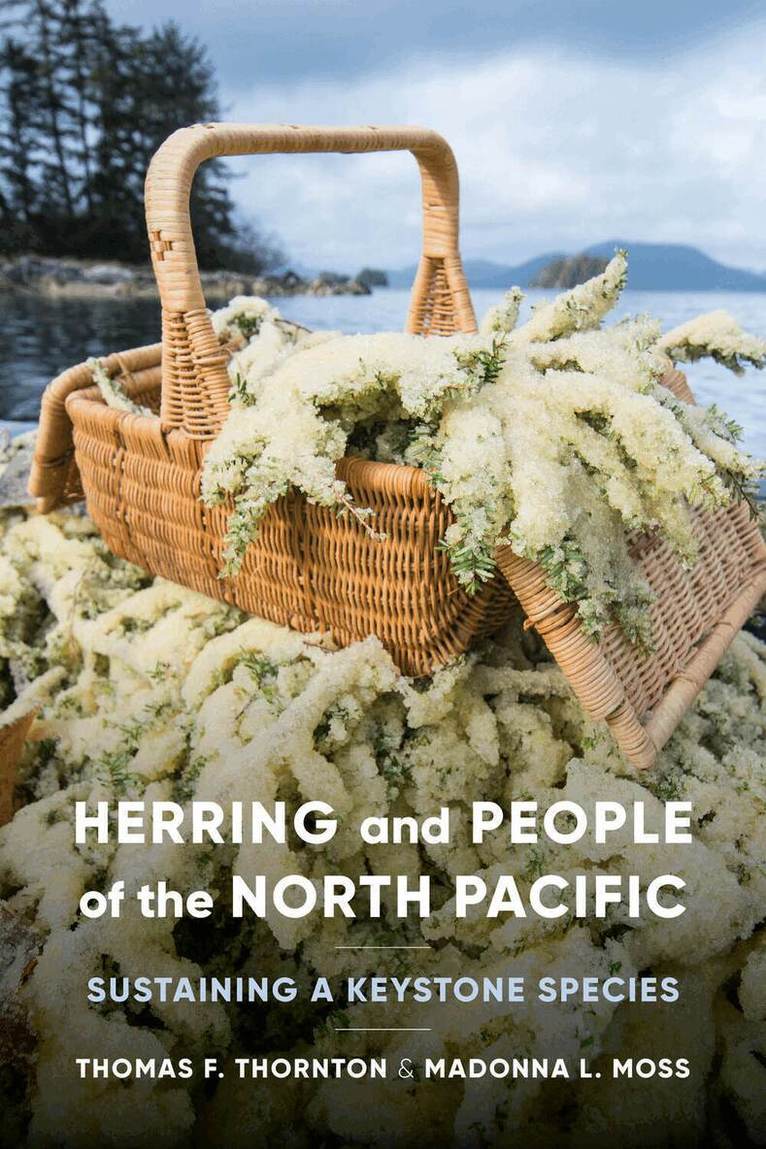
A unique look at Indigenous knowledge, fisheries management, and marine ecologyHerring are vital to the productivity and health of marine systems, and socio-ecologically Pacific herring (Clupea pallasii) is one of the most important fish species in the Northern Hemisphere. Human dependence on herring has evolved for millennia through interactions with key spawning areas—but humans have also significantly impacted the species’ distribution and abundance. Combining ethnological, historical, archaeological, and political perspectives with comparative reference to other North Pacific cultures, Herring and People of the North Pacific traces fishery development in Southeast Alaska from precontact Indigenous relationships with herring to postcontact focus on herring products. Revealing new findings about current herring stocks as well as the fish’s significance to the conservation of intraspecies biodiversity, the book explores the role of traditional local knowledge, in combination with archeological, historical, and biological data, in both understanding marine ecology and restoring herring to their former abundance.
461 kr
Skickas inom 7-10 vardagar
A unique look at Indigenous knowledge, fisheries management, and marine ecologyHerring are vital to the productivity and health of marine systems, and socio-ecologically Pacific herring (Clupea pallasii) is one of the most important fish species in the Northern Hemisphere. Human dependence on herring has evolved for millennia through interactions with key spawning areas—but humans have also significantly impacted the species’ distribution and abundance. Combining ethnological, historical, archaeological, and political perspectives with comparative reference to other North Pacific cultures, Herring and People of the North Pacific traces fishery development in Southeast Alaska from precontact Indigenous relationships with herring to postcontact focus on herring products. Revealing new findings about current herring stocks as well as the fish’s significance to the conservation of intraspecies biodiversity, the book explores the role of traditional local knowledge, in combination with archeological, historical, and biological data, in both understanding marine ecology and restoring herring to their former abundance.
631 kr
Skickas inom 7-10 vardagar
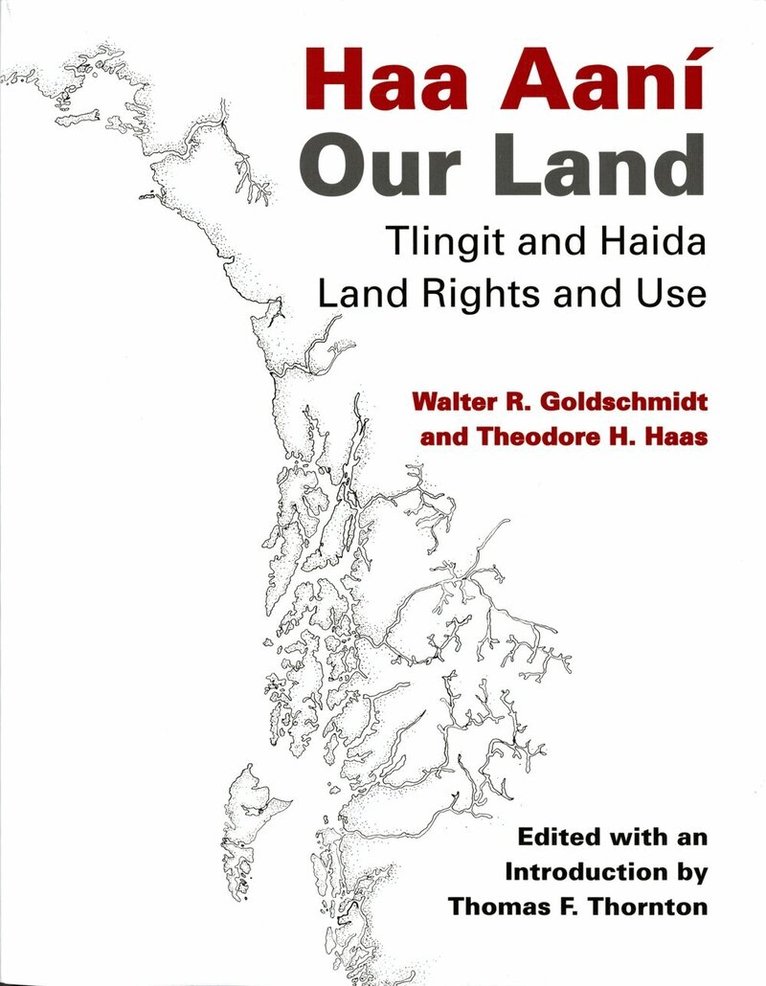
In the early 1940s, a boom in white migration to Southeast Alaska brought questions of land and resource rights to courts of law, where neither precedence nor evidence was sufficient to settle claims. In 1946, the Commissioner of Indian Affairs assigned a team of researchers—anthropologist Walter Goldschmidt, lawyer Theodore Haas, and Tlingit schoolteacher and interpreter Joseph Kahklen—to go from village to village to interview old and young alike to discover who owned and used the lands and waters and under what rules. Their mimeographed report, "The Possessory Rights of the Natives of Southeastern Alaska," established strong historical evidence to support Native land claims.Haa Aaní, Our Land publishes this monumental study in book form for the first time. A reminiscence by Walter Goldschmidt and introduction by Thomas Thornton explain the genesis, context, and significance of the original report. Previously uncirculated testimony from the original 88 witnesses is included, along with a bibliography and an index of names, clans, and resources.
292 kr
Skickas inom 3-6 vardagar
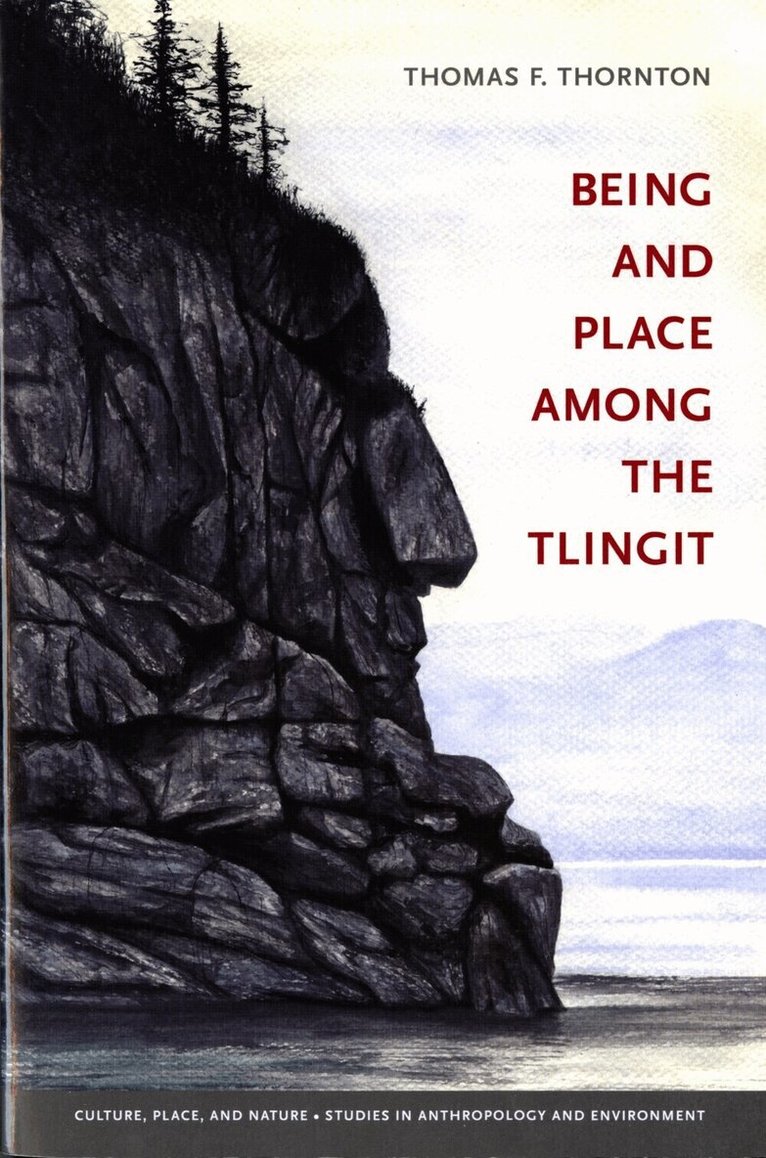
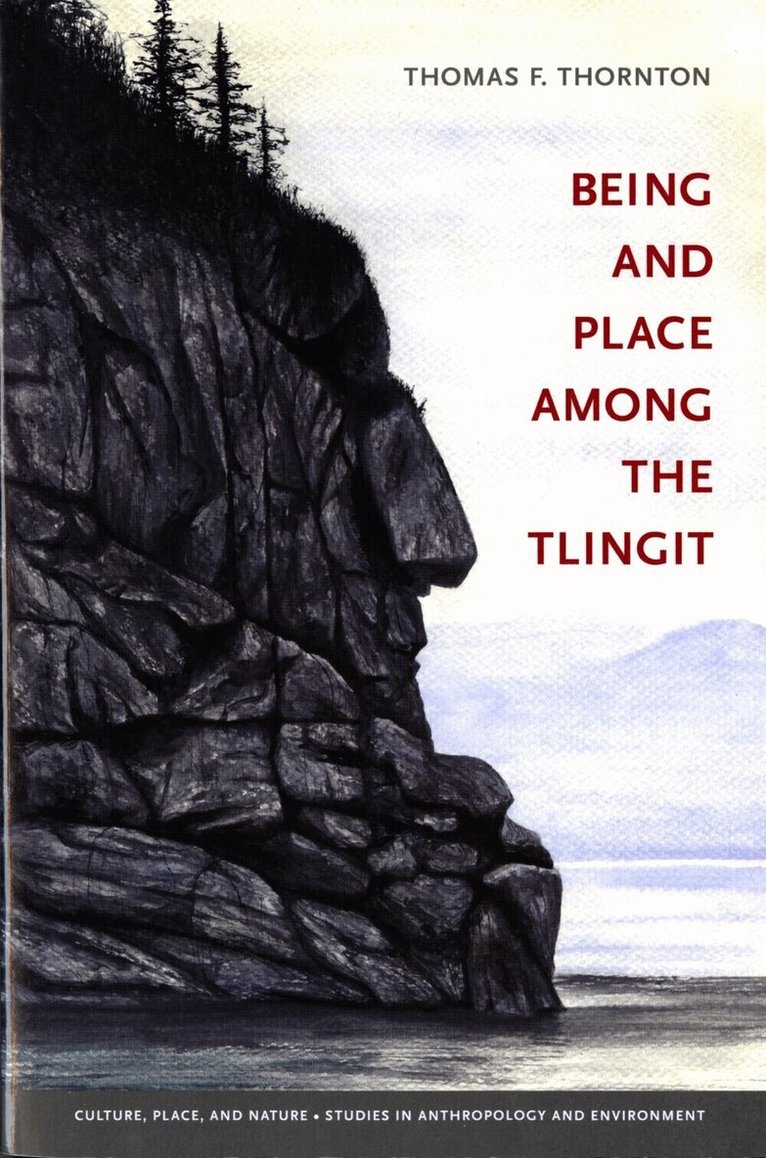
In Being and Place among the Tlingit, anthropologist Thomas F. Thornton examines the concept of place in the language, social structure, economy, and ritual of southeast Alaska's Tlingit Indians. Place signifies not only a specific geographical location but also reveals the ways in which individuals and social groups define themselves.The notion of place consists of three dimensions - space, time, and experience - which are culturally and environmentally structured. Thornton examines each in detail to show how individual and collective Tlingit notions of place, being, and identity are formed. As he observes, despite cultural and environmental changes over time, particularly in the post-contact era since the late eighteenth century, Tlingits continue to bind themselves and their culture to places and landscapes in distinctive ways. He offers insight into how Tlingits in particular, and humans in general, conceptualize their relationship to the lands they inhabit, arguing for a study of place that considers all aspects of human interaction with landscape.In Tlingit, it is difficult even to introduce oneself without referencing places in Lingit Aani (Tlingit Country). Geographic references are embedded in personal names, clan names, house names, and, most obviously, in k-waan names, which define regions of dwelling. To say one is Sheet'ka K-waan defines one as a member of the Tlingit community that inhabits Sheet'ka (Sitka).Being and Place among the Tlingit makes a substantive contribution to the literature on the Tlingit, the Northwest Coast cultural area, Native American and indigenous studies, and to the growing social scientific and humanistic literature on space, place, and landscape.
650 kr
Skickas inom 7-10 vardagar
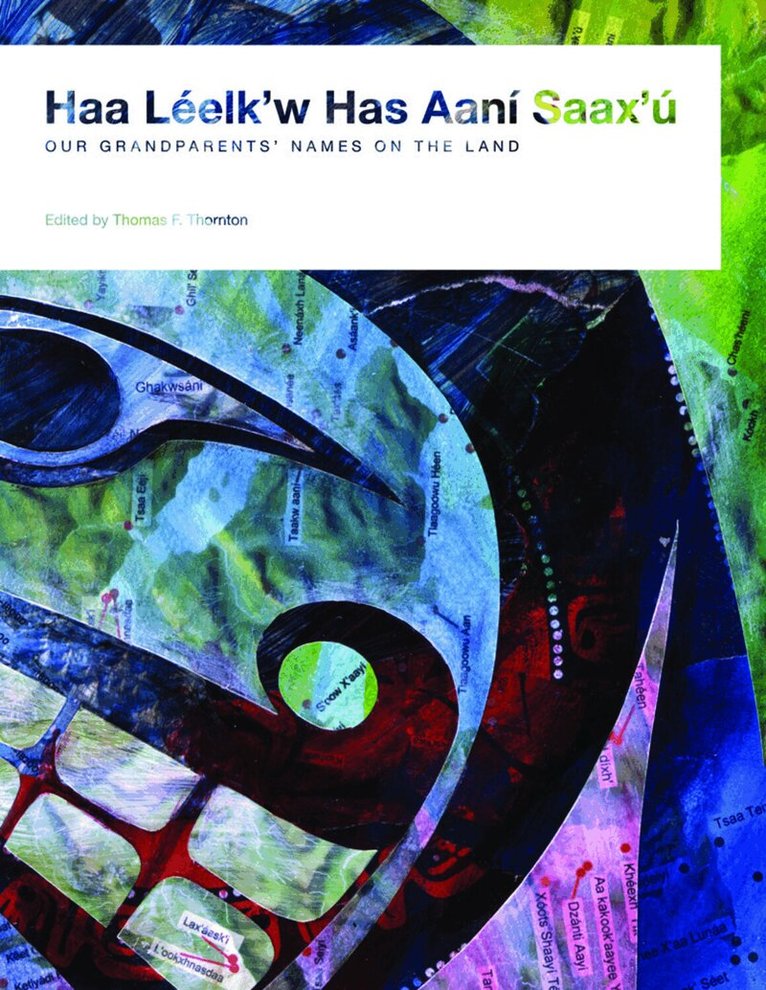
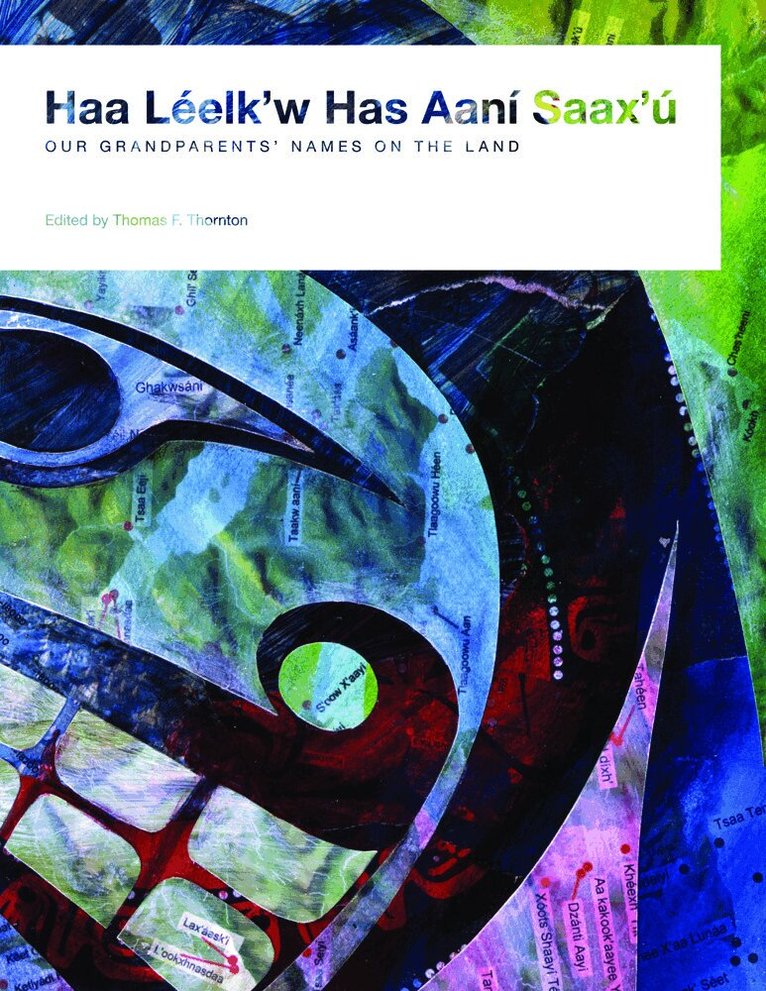
Haa Léelk'w Has Aaní Saax'u / Our Grandparents' Names on the Land presents the results of a collaborative project with Native communities of Southeast Alaska to record indigenous geographic names. Documenting and analyzing more than 3,000 Tlingit, Haida, and other Native names on the land, it highlights their descriptive force and cultural significance. With community maps, tables, and photographs, this book will be invaluable for those seeking to understand Alaska Native geographic perspectives.As Tlingits from the Hoonah Indian Association explain in the book: “Long before Russian, French, Spanish, and British explorers mapped and named the mountains and bays of the Huna Tlingit homeland, we identified special places in our own vibrant, descriptive ways. Tlingit place names reflect important natural resources, ancestral stories, sacred places, and major geological and historic events. Our place names describe more than just inanimate locations for we perceive the mountains, glaciers, and streams to be as alive and aware as ourselves. Rather, they capture the history, emotions, and stories of our enduring relationship with a living, evolving landscape.”
1 689 kr
Skickas inom 3-6 vardagar
In Being and Place among the Tlingit, anthropologist Thomas F. Thornton examines the concept of place in the language, social structure, economy, and ritual of southeast Alaska's Tlingit Indians. Place signifies not only a specific geographical location but also reveals the ways in which individuals and social groups define themselves.The notion of place consists of three dimensions - space, time, and experience - which are culturally and environmentally structured. Thornton examines each in detail to show how individual and collective Tlingit notions of place, being, and identity are formed. As he observes, despite cultural and environmental changes over time, particularly in the post-contact era since the late eighteenth century, Tlingits continue to bind themselves and their culture to places and landscapes in distinctive ways. He offers insight into how Tlingits in particular, and humans in general, conceptualize their relationship to the lands they inhabit, arguing for a study of place that considers all aspects of human interaction with landscape.In Tlingit, it is difficult even to introduce oneself without referencing places in Lingit Aani (Tlingit Country). Geographic references are embedded in personal names, clan names, house names, and, most obviously, in k-waan names, which define regions of dwelling. To say one is Sheet'ka K-waan defines one as a member of the Tlingit community that inhabits Sheet'ka (Sitka).Being and Place among the Tlingit makes a substantive contribution to the literature on the Tlingit, the Northwest Coast cultural area, Native American and indigenous studies, and to the growing social scientific and humanistic literature on space, place, and landscape.
650 kr
Skickas inom 10-15 vardagar
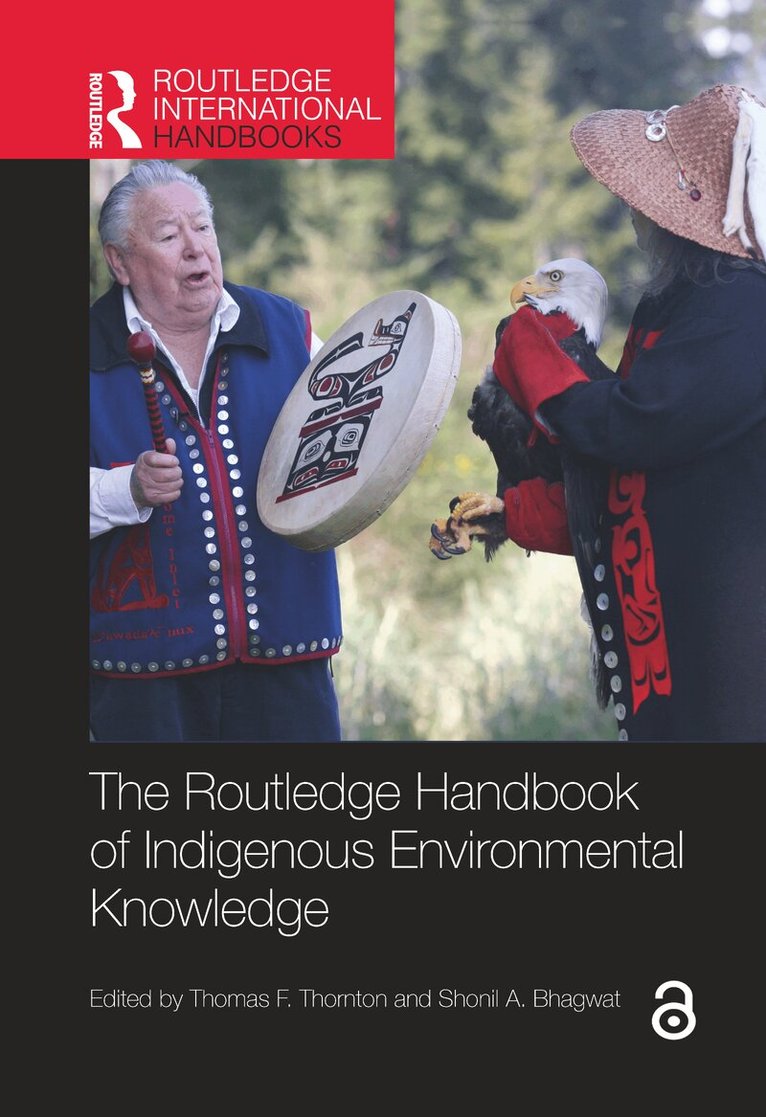
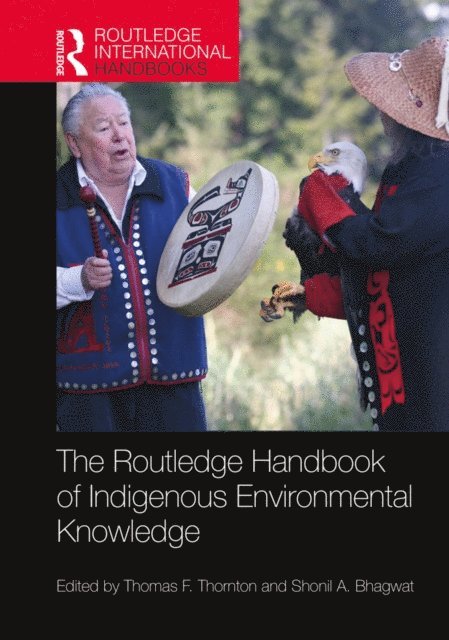
This volume provides an overview of key themes in Indigenous Environmental Knowledge (IEK) and anchors them with brief but well-grounded empirical case studies of relevance for each of these themes, drawn from bioculturally diverse areas around the world. It provides an incisive, cutting-edge overview of the conceptual and philosophical issues, while providing constructive examples of how IEK studies have been implemented to beneficial effect in ecological restoration, stewardship, and governance schemes.Collectively, the chapters in the Routledge Handbook of Indigenous Environmental Knowledge cover Indigenous Knowledge not only in a wide range of cultures and livelihood contexts, but also in a wide range of environments, including drylands, savannah grassland, tropical forests, mountain landscapes, temperate and boreal forests, Pacific and Indian Ocean islands, and coastal environments. The chapters discuss the complexities and nuances of Indigenous cosmologies and ethno-metaphysics and the treatment and incorporation of IEK in local, national, and international environmental policies. Taken together, the chapters in this volume make a strong case for the potential of Indigenous Knowledge in addressing today’s local and global environmental challenges, especially when approached from a perspective of appreciative inquiry, using cross-cultural methods and ethical, collaborative approaches which limit bias and inappropriate extraction of IEK.The book is a guide for graduate and advanced undergraduate teaching, and a key reference for academics in development studies, environmental studies, geography, anthropology, and beyond, as well as anyone with an interest in Indigenous Environmental Knowledge.Chapters 10 and 23 of this book are freely available as a downloadable Open Access PDF at http://www.taylorfrancis.com under a Creative Commons Attribution-Non Commercial-No Derivatives (CC-BY-NC-ND) 4.0 license.
3 336 kr
Skickas inom 10-15 vardagar
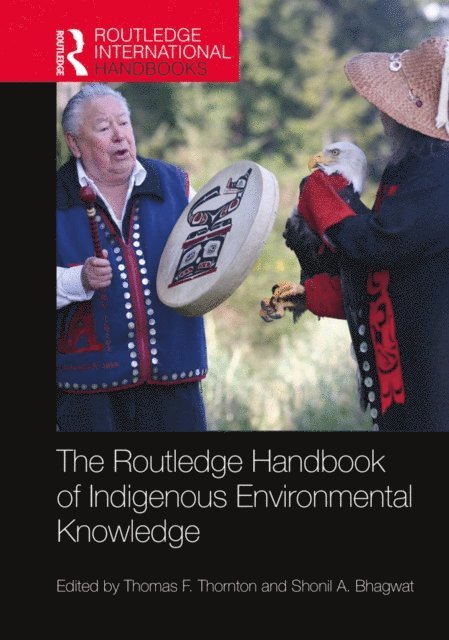
This volume provides an overview of key themes in Indigenous Environmental Knowledge (IEK) and anchors them with brief but well-grounded empirical case studies of relevance for each of these themes, drawn from bioculturally diverse areas around the world. It provides an incisive, cutting-edge overview of the conceptual and philosophical issues, while providing constructive examples of how IEK studies have been implemented to beneficial effect in ecological restoration, stewardship, and governance schemes.Collectively, the chapters in the Routledge Handbook of Indigenous Environmental Knowledge cover Indigenous Knowledge not only in a wide range of cultures and livelihood contexts, but also in a wide range of environments, including drylands, savannah grassland, tropical forests, mountain landscapes, temperate and boreal forests, Pacific and Indian Ocean islands, and coastal environments. The chapters discuss the complexities and nuances of Indigenous cosmologies and ethno-metaphysics and the treatment and incorporation of IEK in local, national, and international environmental policies. Taken together, the chapters in this volume make a strong case for the potential of Indigenous Knowledge in addressing today’s local and global environmental challenges, especially when approached from a perspective of appreciative inquiry, using cross-cultural methods and ethical, collaborative approaches which limit bias and inappropriate extraction of IEK.The book is a guide for graduate and advanced undergraduate teaching, and a key reference for academics in development studies, environmental studies, geography, anthropology, and beyond, as well as anyone with an interest in Indigenous Environmental Knowledge.Chapters 10 and 23 of this book are freely available as a downloadable Open Access PDF at http://www.taylorfrancis.com under a Creative Commons Attribution-Non Commercial-No Derivatives (CC-BY-NC-ND) 4.0 license.