Thomas J. Pluckhahn - Böcker
Visar alla böcker från författaren Thomas J. Pluckhahn. Handla med fri frakt och snabb leverans.
4 produkter
4 produkter
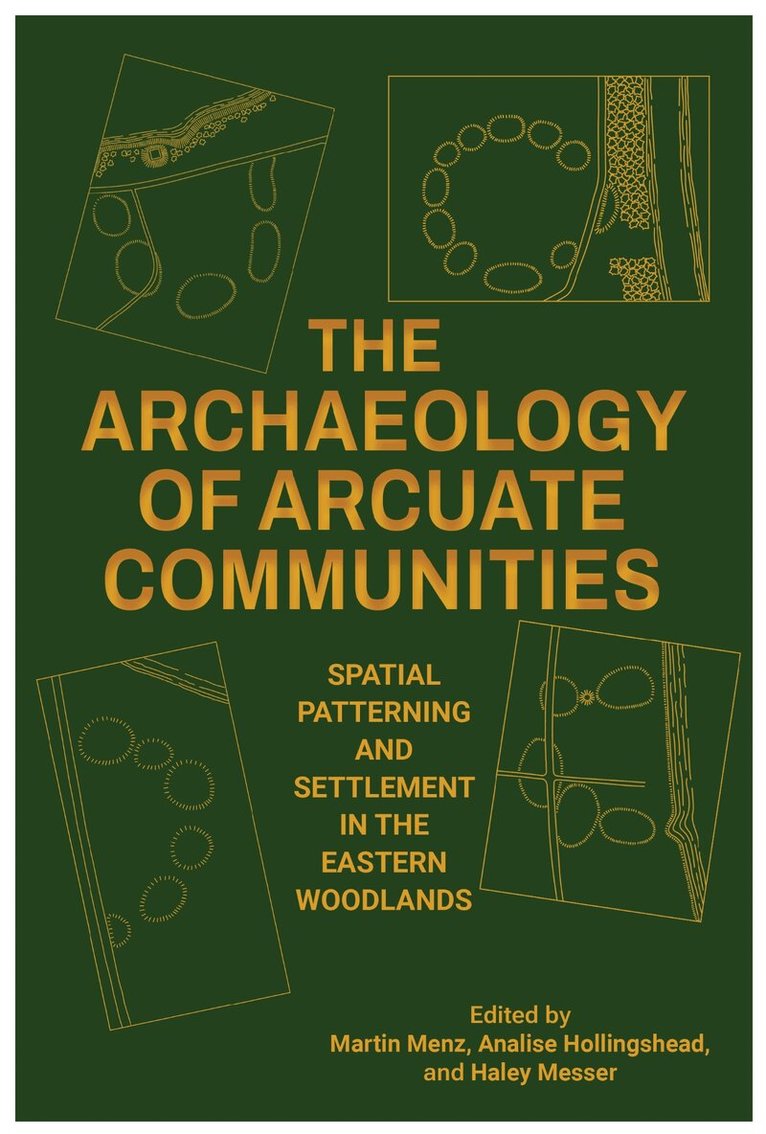
Archaeology of Arcuate Communities
Spatial Patterning and Settlement in the Eastern Woodlands
Inbunden, Engelska, 2024
1 196 kr
Skickas inom 7-10 vardagar
The Archaeology of Arcuate Communities is an edited collection of ten essays that illuminate how Indigenous communities of the Eastern Woodlands, from 10,000 BC to the 1550s, are analyzed and interpreted by archaeologists today. Volume editors Martin Menz, Analise Hollingshead, and Haley Messer define the persistent circular or “arcuate” pattern of Native settlements in this region as a spatial manifestation of community activities that reinforced group identity alongside plazas, mounds, and other architectural features.The varied case studies in this volume focus on specific communities, how they evolved, and the types of archaeological data that have been used to assess them. Part I, “Defining the Domestic Unit in Arcuate Communities,” reveals social distinctions between households and household clusters in arcuate communities, how they differ in terms of stylistic patterns and exchange, and how they combined to form distinct social groups at different scales within a broader community. Part II, “Organizing Principles of Arcuate Communities,” broadens the scope to identify the organizing principles of entire arcuate communities, such as the central role of plazas in structuring their development, how the distribution of households and central features within communities was contested and reorganized, and the importance of mounds in both delineating arcuate communities and marking their position on the landscape. Part III, “Comparison and Change in Arcuate Communities,” comprises case studies that examine changes in the organization of arcuate communities over time. Rounding out the volume is a concluding chapter that assesses how and why communities around the world formed in circular patterns.A valuable resource for archaeologists, this collection will also be of interest to those seeking to learn about Native North American settlement, ceremony, and community organization.
Archaeology of Arcuate Communities
Spatial Patterning and Settlement in the Eastern Woodlands
Häftad, Engelska, 2024
426 kr
Skickas inom 7-10 vardagar
The Archaeology of Arcuate Communities is an edited collection of ten essays that illuminate how Indigenous communities of the Eastern Woodlands, from 10,000 BC to the 1550s, are analyzed and interpreted by archaeologists today. Volume editors Martin Menz, Analise Hollingshead, and Haley Messer define the persistent circular or “arcuate” pattern of Native settlements in this region as a spatial manifestation of community activities that reinforced group identity alongside plazas, mounds, and other architectural features.The varied case studies in this volume focus on specific communities, how they evolved, and the types of archaeological data that have been used to assess them. Part I, “Defining the Domestic Unit in Arcuate Communities,” reveals social distinctions between households and household clusters in arcuate communities, how they differ in terms of stylistic patterns and exchange, and how they combined to form distinct social groups at different scales within a broader community. Part II, “Organizing Principles of Arcuate Communities,” broadens the scope to identify the organizing principles of entire arcuate communities, such as the central role of plazas in structuring their development, how the distribution of households and central features within communities was contested and reorganized, and the importance of mounds in both delineating arcuate communities and marking their position on the landscape. Part III, “Comparison and Change in Arcuate Communities,” comprises case studies that examine changes in the organization of arcuate communities over time. Rounding out the volume is a concluding chapter that assesses how and why communities around the world formed in circular patterns.A valuable resource for archaeologists, this collection will also be of interest to those seeking to learn about Native North American settlement, ceremony, and community organization.
884 kr
Skickas inom 10-15 vardagar
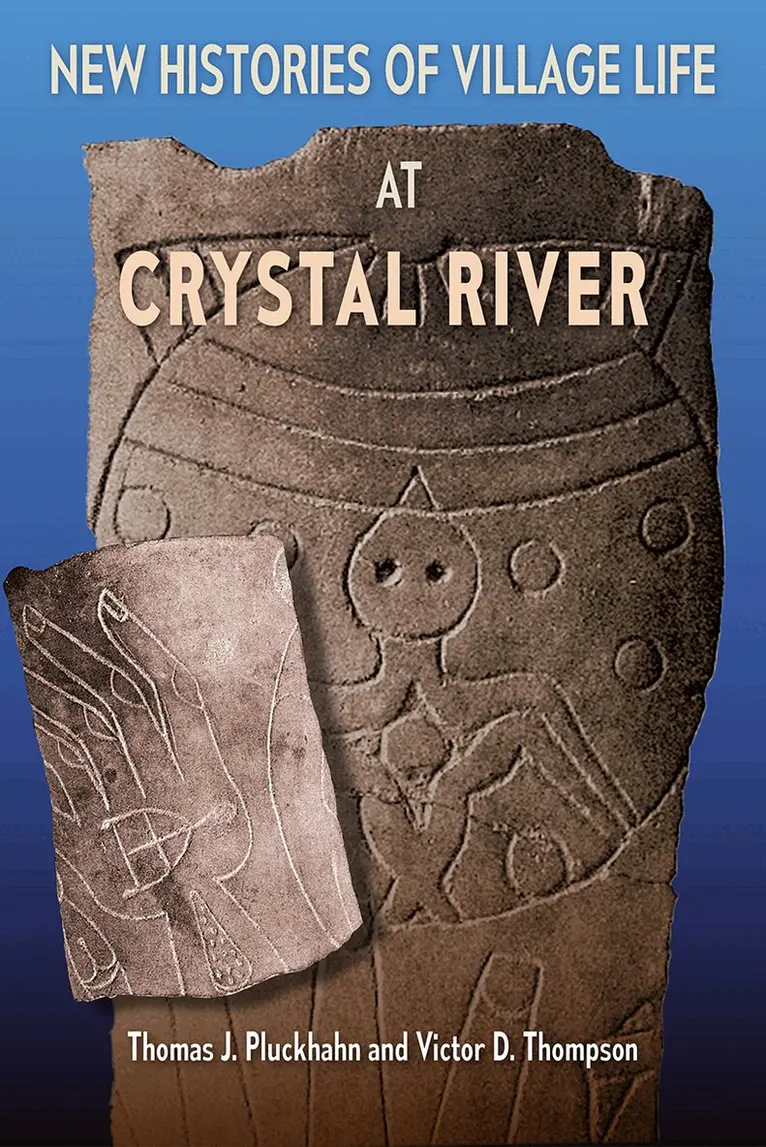
This volume explores how native peoples of the Southeastern United States cooperated to form large and permanent early villages, using the site of Crystal River on Florida's Gulf Coast as a case study.Crystal River was once among the most celebrated sites of the Woodland period (ca. 1000 B.C. to A.D. 1000), consisting of ten mounds and large numbers of diverse artifacts from the Hopewell culture. But a lack of research using contemporary methods at this site and nearby Roberts Island limited a full understanding of what these sites could tell scholars. Thomas Pluckhahn and Victor Thompson reanalyze previous excavations and conduct new field investigations to tell the whole story of Crystal River from its beginnings as a ceremonial center, through its growth into a large village, to its decline at the turn of the first millennium while Roberts Island and other nearby areas thrived.Comparing this community to similar sites on the Gulf Coast and in other areas of the world, Pluckhahn and Thompson argue that Crystal River is an example of an ""early village society."" They illustrate that these early villages present important evidence in a larger debate regarding the role of competition versus cooperation in the development of human societies.
322 kr
Skickas inom 10-15 vardagar
An in-depth study of a Woodland period archaeological site that was occupied for over 1,000 yearsThis volume explores how native peoples of the Southeastern United States cooperated to form large and permanent early villages using the site of Crystal River on Florida’s Gulf Coast as a case study.Crystal River was once among the most celebrated sites of the Woodland period (ca. 1000 B.C. to A.D. 1050), consisting of ten mounds and large numbers of diverse artifacts from the Hopewell culture. But a lack of research using contemporary methods at this site—and nearby Roberts Island—limited a full understanding of what these sites could tell scholars. Thomas Pluckhahn and Victor Thompson reanalyze previous excavations and conduct new field investigations to tell the whole story of Crystal River from its beginnings as a ceremonial center through its growth into a large village to its decline at the turn of the first millennium while Roberts Island and other nearby areas thrived.Comparing this community to similar sites on the Gulf Coast and in other areas of the world, Pluckhahn and Thompson argue that Crystal River is an example of an “early village society.” They illustrate that these early villages present important evidence in a larger debate regarding the role of competition versus cooperation in the development of human societies.A volume in the Florida Museum of Natural History: Ripley P. Bullen Series