Robert A. Cook - Böcker
Visar alla böcker från författaren Robert A. Cook. Handla med fri frakt och snabb leverans.
7 produkter
7 produkter
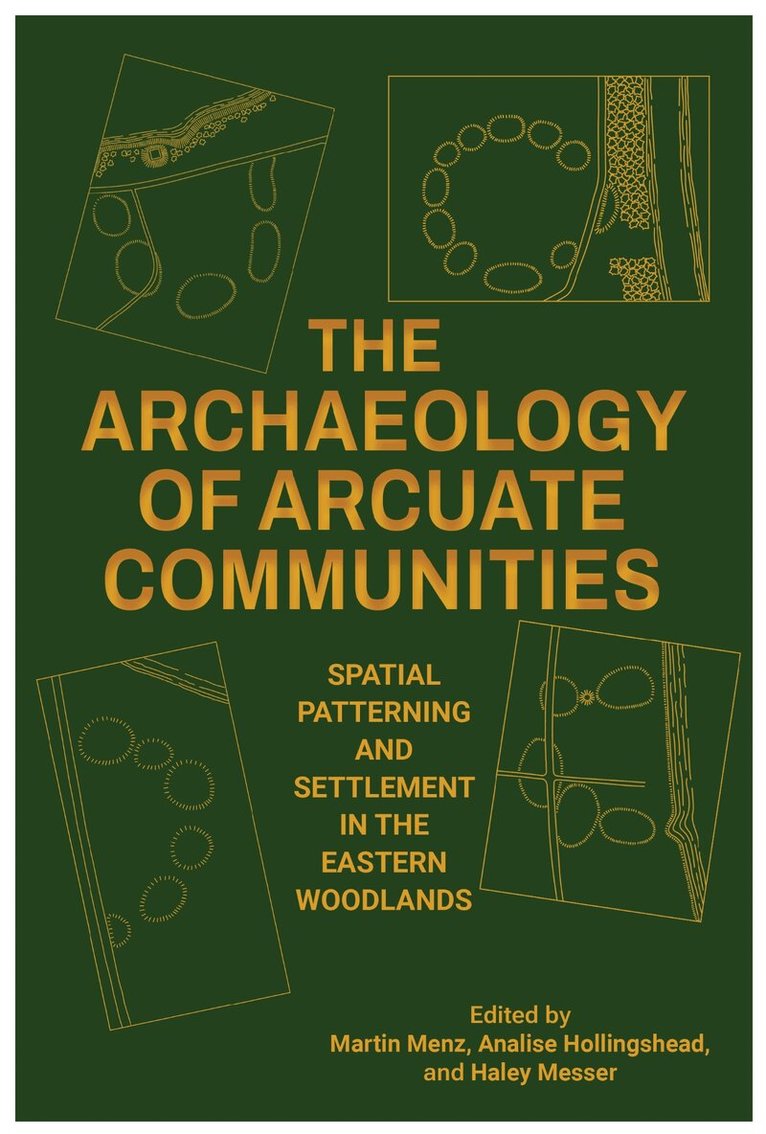
Archaeology of Arcuate Communities
Spatial Patterning and Settlement in the Eastern Woodlands
Inbunden, Engelska, 2024
1 205 kr
Skickas inom 7-10 vardagar
The Archaeology of Arcuate Communities is an edited collection of ten essays that illuminate how Indigenous communities of the Eastern Woodlands, from 10,000 BC to the 1550s, are analyzed and interpreted by archaeologists today. Volume editors Martin Menz, Analise Hollingshead, and Haley Messer define the persistent circular or “arcuate” pattern of Native settlements in this region as a spatial manifestation of community activities that reinforced group identity alongside plazas, mounds, and other architectural features.The varied case studies in this volume focus on specific communities, how they evolved, and the types of archaeological data that have been used to assess them. Part I, “Defining the Domestic Unit in Arcuate Communities,” reveals social distinctions between households and household clusters in arcuate communities, how they differ in terms of stylistic patterns and exchange, and how they combined to form distinct social groups at different scales within a broader community. Part II, “Organizing Principles of Arcuate Communities,” broadens the scope to identify the organizing principles of entire arcuate communities, such as the central role of plazas in structuring their development, how the distribution of households and central features within communities was contested and reorganized, and the importance of mounds in both delineating arcuate communities and marking their position on the landscape. Part III, “Comparison and Change in Arcuate Communities,” comprises case studies that examine changes in the organization of arcuate communities over time. Rounding out the volume is a concluding chapter that assesses how and why communities around the world formed in circular patterns.A valuable resource for archaeologists, this collection will also be of interest to those seeking to learn about Native North American settlement, ceremony, and community organization.
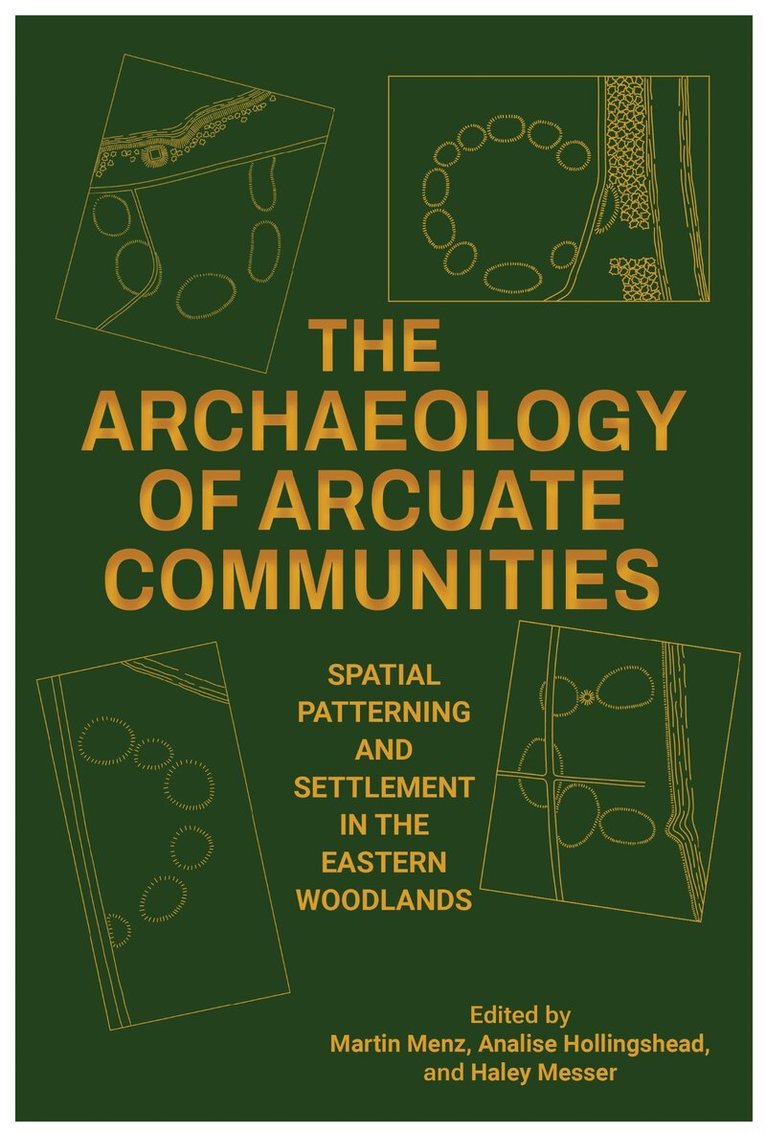
Archaeology of Arcuate Communities
Spatial Patterning and Settlement in the Eastern Woodlands
Häftad, Engelska, 2024
427 kr
Skickas inom 7-10 vardagar
The Archaeology of Arcuate Communities is an edited collection of ten essays that illuminate how Indigenous communities of the Eastern Woodlands, from 10,000 BC to the 1550s, are analyzed and interpreted by archaeologists today. Volume editors Martin Menz, Analise Hollingshead, and Haley Messer define the persistent circular or “arcuate” pattern of Native settlements in this region as a spatial manifestation of community activities that reinforced group identity alongside plazas, mounds, and other architectural features.The varied case studies in this volume focus on specific communities, how they evolved, and the types of archaeological data that have been used to assess them. Part I, “Defining the Domestic Unit in Arcuate Communities,” reveals social distinctions between households and household clusters in arcuate communities, how they differ in terms of stylistic patterns and exchange, and how they combined to form distinct social groups at different scales within a broader community. Part II, “Organizing Principles of Arcuate Communities,” broadens the scope to identify the organizing principles of entire arcuate communities, such as the central role of plazas in structuring their development, how the distribution of households and central features within communities was contested and reorganized, and the importance of mounds in both delineating arcuate communities and marking their position on the landscape. Part III, “Comparison and Change in Arcuate Communities,” comprises case studies that examine changes in the organization of arcuate communities over time. Rounding out the volume is a concluding chapter that assesses how and why communities around the world formed in circular patterns.A valuable resource for archaeologists, this collection will also be of interest to those seeking to learn about Native North American settlement, ceremony, and community organization.
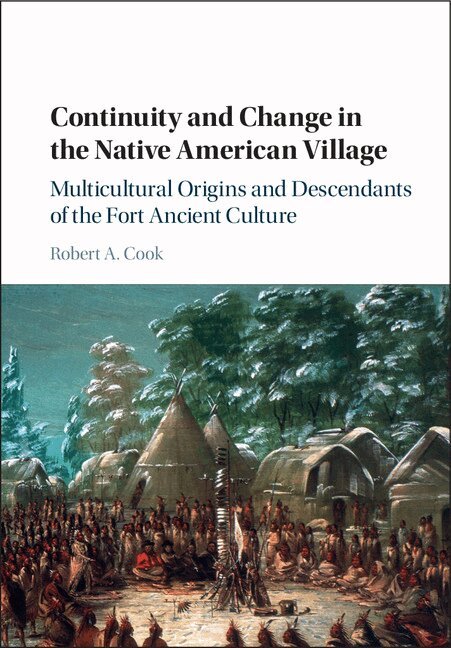
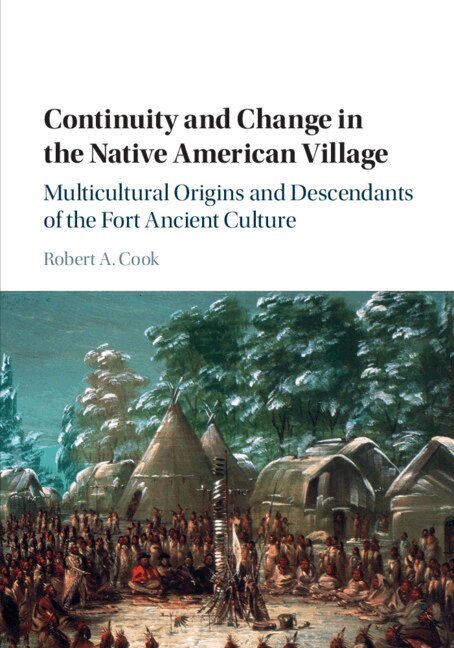
Continuity and Change in the Native American Village
Multicultural Origins and Descendants of the Fort Ancient Culture
Inbunden, Engelska, 2017
1 268 kr
Skickas inom 7-10 vardagar
Two common questions asked in archaeological investigations are: where did a particular culture come from, and which living cultures is it related to? In this book, Robert A. Cook brings a theoretically and methodologically holistic perspective to his study on the origins and continuity of Native American villages in the North American Midcontinent. He shows that to affiliate archaeological remains with descendant communities fully we need to unaffiliate some of our well-established archaeological constructs. Cook demonstrates how and why Native American villages formed and responded to events such as migration, environment and agricultural developments. He focuses on the big picture of cultural relatedness over broad regions and the amount of social detail that can be gleaned from archaeological and biological data, as well as oral histories.
Continuity and Change in the Native American Village
Multicultural Origins and Descendants of the Fort Ancient Culture
Häftad, Engelska, 2021
428 kr
Skickas inom 7-10 vardagar
Two common questions asked in archaeological investigations are: where did a particular culture come from, and which living cultures is it related to? In this book, Robert A. Cook brings a theoretically and methodologically holistic perspective to his study on the origins and continuity of Native American villages in the North American Midcontinent. He shows that to affiliate archaeological remains with descendant communities fully we need to unaffiliate some of our well-established archaeological constructs. Cook demonstrates how and why Native American villages formed and responded to events such as migration, environment and agricultural developments. He focuses on the big picture of cultural relatedness over broad regions and the amount of social detail that can be gleaned from archaeological and biological data, as well as oral histories.
236 kr
Skickas inom 5-8 vardagar
Following the Mississippian Spread
Climate Change and Migration in the Eastern US (ca. AD 1000-1600)
Inbunden, Engelska, 2022
1 624 kr
Skickas inom 10-15 vardagar
The volume provides a broader case study of the links between climate change, migration, and the spread of agriculture that is relevant to archaeologists and anthropologists studying early agricultural societies throughout the world.
Following the Mississippian Spread
Climate Change and Migration in the Eastern US (ca. AD 1000-1600)
Häftad, Engelska, 2023
1 624 kr
Skickas inom 10-15 vardagar
This book is the first to specifically trace the movement of Mississippian maize farmers throughout the US Midwest and Southeast. By providing a backdrop of shifting climatic conditions during the period, this volume also investigates the relationship between farmers and their environments. Detailed regional overviews of key locations in the Mississippi Valley, the Ohio Valley, and the peripheries of the Mississippian culture area reveal patterns and variation in the expression of Mississippian culture and interactions between migrants and local communities. Methodologically, the case studies highlight the strengths of integrating a variety of data sets to identify migration. The volume provides a broader case study of the links between climate change, migration, and the spread of agriculture that is relevant to archaeologists and anthropologists studying early agricultural societies throughout the world. Key patterns of adaptation to and mitigation of the effects of droughts, for example, provide a framework for understanding the options available to societies in the face of climate change afforded by the time-depth of an archaeological perspective.