Thomas Lamarre - Böcker
Visar alla böcker från författaren Thomas Lamarre. Handla med fri frakt och snabb leverans.
7 produkter
7 produkter
273 kr
Skickas inom 7-10 vardagar
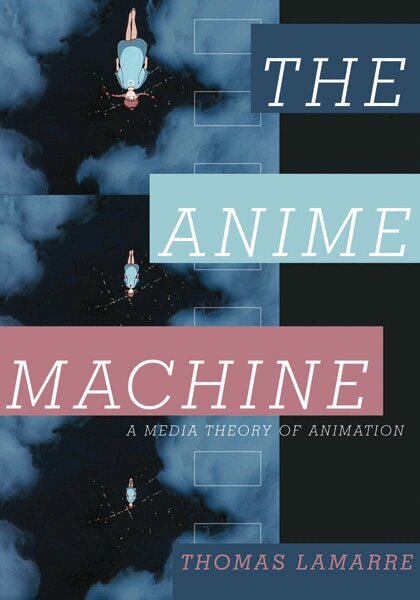
Despite the longevity of animation and its significance within the history of cinema, film theorists have focused on live-action motion pictures and largely ignored hand-drawn and computer-generated movies. Thomas Lamarre contends that the history, techniques, and complex visual language of animation, particularly Japanese animation, demands serious and sustained engagement, and in The Anime Machine he lays the foundation for a new critical theory for reading Japanese animation, showing how anime fundamentally differs from other visual media.The Anime Machine defines the visual characteristics of anime and the meanings generated by those specifically "animetic" effects-the multiplanar image, the distributive field of vision, exploded projection, modulation, and other techniques of character animation-through close analysis of major films and television series, studios, animators, and directors, as well as Japanese theories of animation. Lamarre first addresses the technology of anime: the cells on which the images are drawn, the animation stand at which the animator works, the layers of drawings in a frame, the techniques of drawing and blurring lines, how characters are made to move. He then examines foundational works of anime, including the films and television series of Miyazaki Hayao and Anno Hideaki, the multimedia art of Murakami Takashi, and CLAMP's manga and anime adaptations, to illuminate the profound connections between animators, characters, spectators, and technology.Working at the intersection of the philosophy of technology and the history of thought, Lamarre explores how anime and its related media entail material orientations and demonstrates concretely how the "animetic machine" encourages a specific approach to thinking about technology and opens new ways for understanding our place in the technologized world around us.
320 kr
Skickas inom 11-20 vardagar
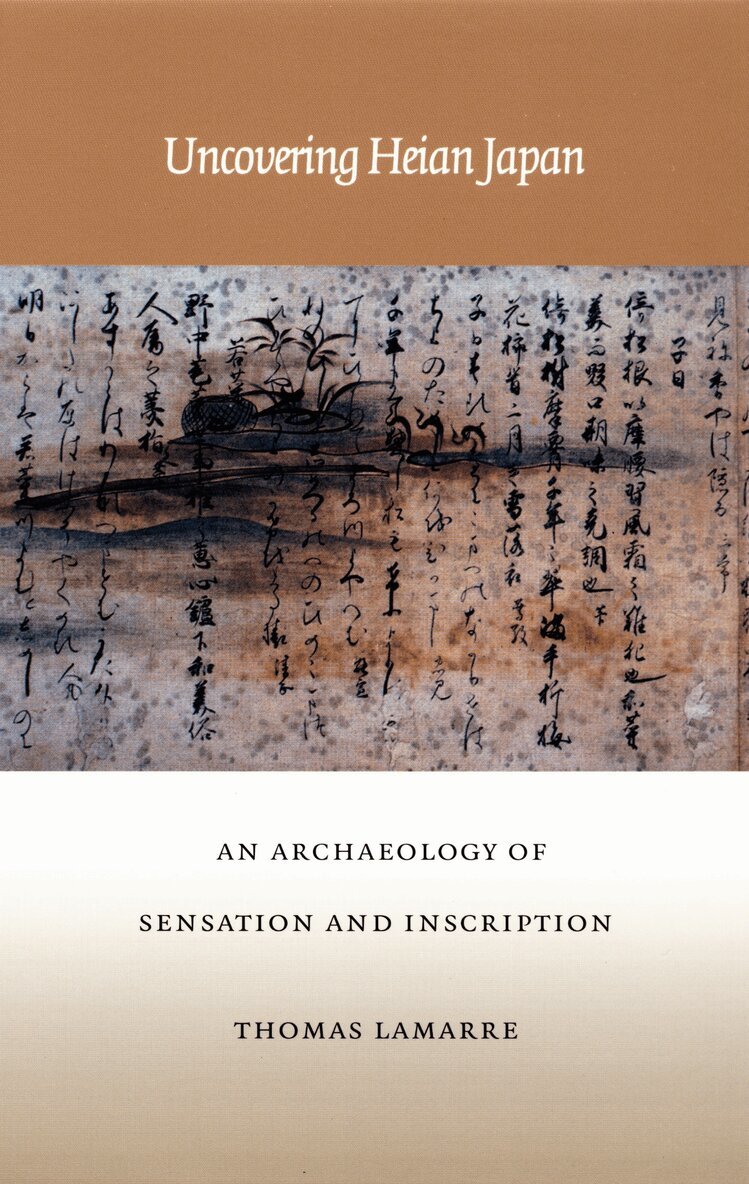
The poetry of the Heian court of Japan has typically been linked with the emergence of a distinct Japanese language and culture. This concept of a linguistically homogeneous and ethnically pure “Japaneseness” has been integral to the construction of a modern Japanese nation, especially during periods of western colonial expansion and cultural encroachment. But Thomas LaMarre argues in Uncovering Heian Japan that this need for a cultural unity-a singular Japanese identity-has resulted in an overemphasis of a relatively minor aspect of Heian poetry, obscuring not only its other significant elements but also the porousness of Heian society and the politics of poetic expression.Combining a pathbreaking visual analysis of the calligraphy with which this poetry was transcribed, a more traditional textual analysis, and a review of the politics of the period, LaMarre presents a dramatically new view of Heian poetry and culture. He challenges the assumption of a cohesive “national imagination,” seeing instead an early Japan that is ethnically diverse, territorially porous, and indifferent to linguistic boundaries. Working through the problems posed by institutionalized notions of nationalism, nativism, and modernism, LaMarre rethinks the theories of scholars such as Suzuki Hideo, Yoshimoto Takaaki, and Komatsu Shigemi, in conjunction with theorists such as Derrida, Karatani, Foucault, and Deleuze. Contesting the notion that speech is central to the formation of community, Uncovering Heian Japan focuses instead on the potential centrality of the more figural operations of poetic practice.Specialists in Japanese history and culture as well as scholars working in other areas of cultural criticism will find that this book enriches their understanding of an early Japan that has exerted so much influence on later concepts of what it means to be Japanese.
292 kr
Skickas
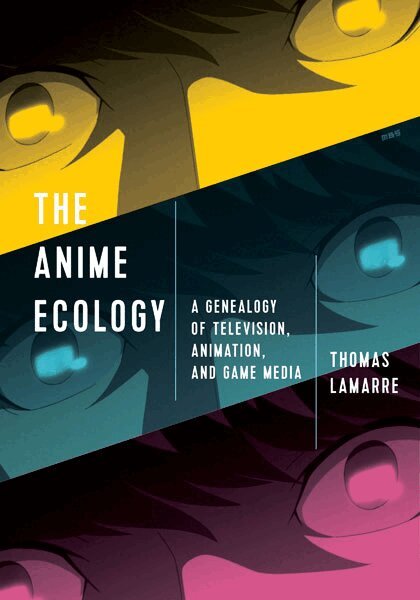
A major work destined to change how scholars and students look at television and animationWith the release of author Thomas Lamarre’s field-defining study The Anime Machine, critics established Lamarre as a leading voice in the field of Japanese animation. He now returns with The Anime Ecology, broadening his insights to give a complete account of anime’s relationship to television while placing it within important historical and global frameworks. Lamarre takes advantage of the overlaps between television, anime, and new media-from console games and video to iOS games and streaming-to show how animation helps us think through television in the contemporary moment. He offers remarkable close readings of individual anime while demonstrating how infrastructures and platforms have transformed anime into emergent media (such as social media and transmedia) and launched it worldwide. Thoughtful, thorough illustrations plus exhaustive research and an impressive scope make The Anime Ecology at once an essential reference book, a valuable resource for scholars, and a foundational textbook for students.
1 390 kr
Kommande
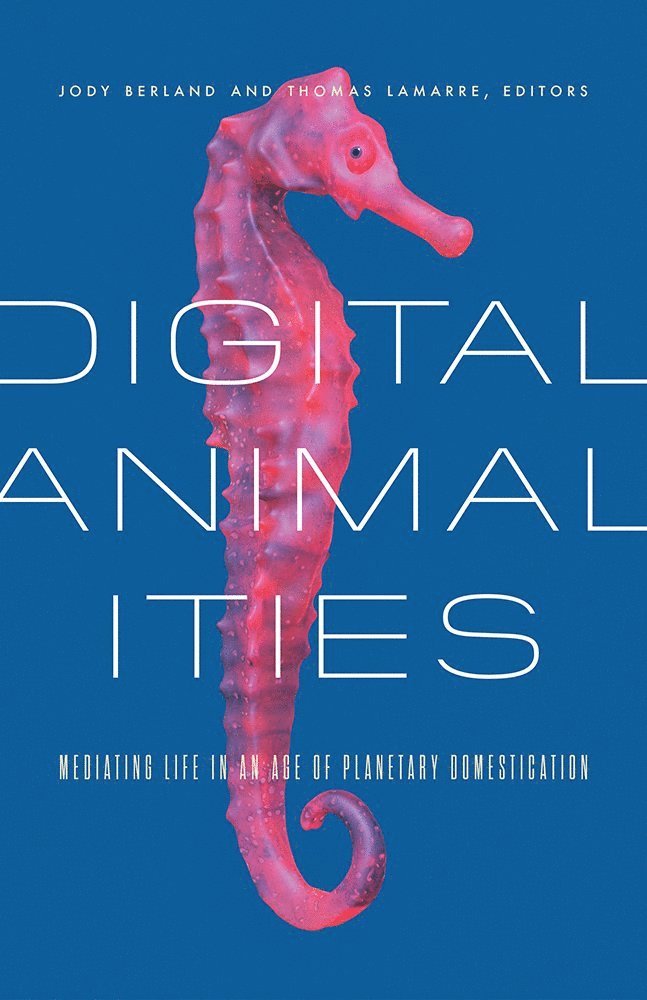
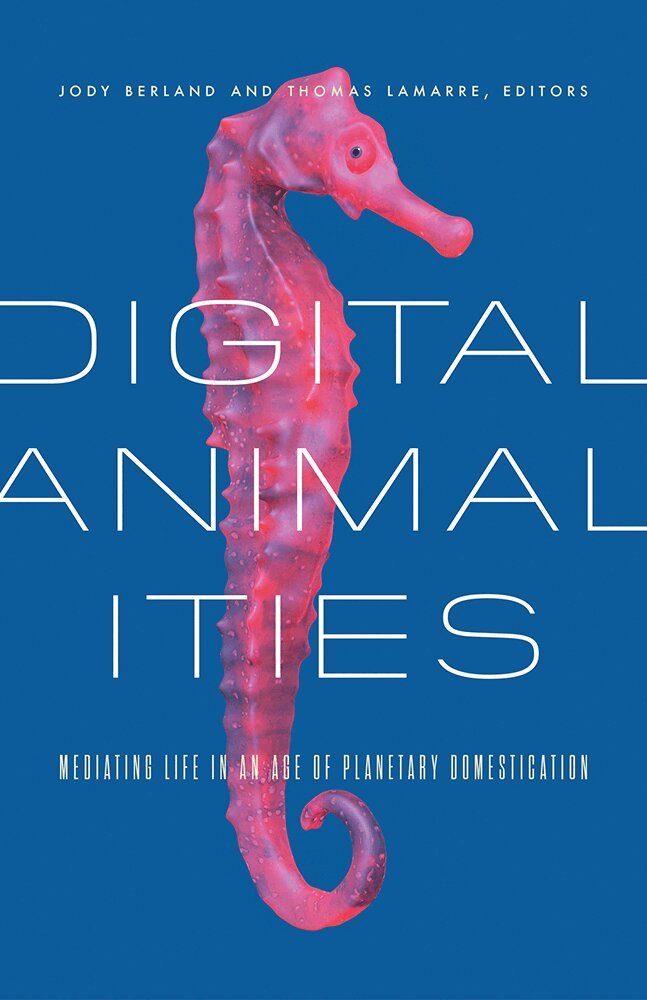
Exploring where animality meets digital media in the shadow of climate crisisDigital Animalities is a groundbreaking investigation into the entanglements of animal life, media infrastructures, and digital technologies in a time of environmental precarity and digital saturation. Revealing the digital as a dynamic site where animal agency and technological systems collide, the contributors eschew simplistic binaries to emphasize complex mediations between animals and digital media.From wildlife camera traps and virtual zoos to gaming environments and animation tools, these essays explore how animals are captured, played with, and consumed through digital technologies, elaborating their agency in these mediations of ecological and biopolitical processes. Rethinking animality as a fluid and contested terrain shaped by climate change, extinction pressures, and emerging ecopolitical paradigms, Digital Animalities shifts how we consider the impact of the digital on sentient lives and their futures.Contributors: Giovanni Aloi, Art Institute of Chicago; Etienne S. Benson, Max Planck Institute for the History of Science, Berlin; Sarah Bezan, U College Cork; Michael Fisch, U of Chicago; Kate Galloway, Rensselaer Polytechnic Institute; Christine L. Marran, U of Minnesota; Brian McCormack; Jonathan Osborn; Hannah Tollefson, U of Toronto Scarborough; Tom Tyler, U of Leeds; Paul Wells, Loughborough U; Hang Wu.Retail e-book files for this title are screen-reader friendly with images accompanied by short alt text and/or extended descriptions.
309 kr
Kommande
Exploring where animality meets digital media in the shadow of climate crisisDigital Animalities is a groundbreaking investigation into the entanglements of animal life, media infrastructures, and digital technologies in a time of environmental precarity and digital saturation. Revealing the digital as a dynamic site where animal agency and technological systems collide, the contributors eschew simplistic binaries to emphasize complex mediations between animals and digital media.From wildlife camera traps and virtual zoos to gaming environments and animation tools, these essays explore how animals are captured, played with, and consumed through digital technologies, elaborating their agency in these mediations of ecological and biopolitical processes. Rethinking animality as a fluid and contested terrain shaped by climate change, extinction pressures, and emerging ecopolitical paradigms, Digital Animalities shifts how we consider the impact of the digital on sentient lives and their futures.Contributors: Giovanni Aloi, Art Institute of Chicago; Etienne S. Benson, Max Planck Institute for the History of Science, Berlin; Sarah Bezan, U College Cork; Michael Fisch, U of Chicago; Kate Galloway, Rensselaer Polytechnic Institute; Christine L. Marran, U of Minnesota; Brian McCormack; Jonathan Osborn; Hannah Tollefson, U of Toronto Scarborough; Tom Tyler, U of Leeds; Paul Wells, Loughborough U; Hang Wu.Retail e-book files for this title are screen-reader friendly with images accompanied by short alt text and/or extended descriptions.
738 kr
Tillfälligt slut
Impacts of Modernities, the third volume of the Traces series, explores the problem of modernity, with an emphasis on the impact of Western modernity on East Asia. While the essays generally acknowledge modernity as a problem or even failure, in order to challenge modernization and modernization theory, the volume presents a number of different approaches to, and evaluations of, modernity in historical and contemporary frameworks. One group of essays looks at the complex relations between modernity and production of space, place and identity. Contributors consider the spatializing tendencies of modernity, looking at how resistance to modernization has tended to rely on the production of national and local identities, which may serve to reproduce and reinforce the logic of modernization in new registers. Of particular importance is the legacy of comparativism in our contemporary disciplines. Other essays explore the historically specific relations that arise between nation, empire and representation.Contributors reconsider the alleged particularity of national languages and scripts, asking whether the insistence on the particular does not already entail an access to the universal and thus maybe to empire. Still other essays question whether the prime characteristics of modern power - subjection and sovereignty - continue to define power relations within the contemporary world order. To what extent is it now possible to think power formations and resistance beyond the modern, otherwise than modernity?
318 kr
Tillfälligt slut
Impacts of Modernities, the third volume of the Traces series, explores the problem of modernity, with an emphasis on the impact of Western modernity on East Asia. While the essays generally acknowledge modernity as a problem or even failure, in order to challenge modernization and modernization theory, the volume presents a number of different approaches to, and evaluations of, modernity in historical and contemporary frameworks. One group of essays looks at the complex relations between modernity and production of space, place and identity. Contributors consider the spatializing tendencies of modernity, looking at how resistance to modernization has tended to rely on the production of national and local identities, which may serve to reproduce and reinforce the logic of modernization in new registers. Of particular importance is the legacy of comparativism in our contemporary disciplines. Other essays explore the historically specific relations that arise between nation, empire and representation.Contributors reconsider the alleged particularity of national languages and scripts, asking whether the insistence on the particular does not already entail an access to the universal and thus maybe to empire. Still other essays question whether the prime characteristics of modern power - subjection and sovereignty - continue to define power relations within the contemporary world order. To what extent is it now possible to think power formations and resistance beyond the modern, otherwise than modernity?