Thomas Ryckman – författare
Visar alla böcker från författaren Thomas Ryckman. Handla med fri frakt och snabb leverans.
11 produkter
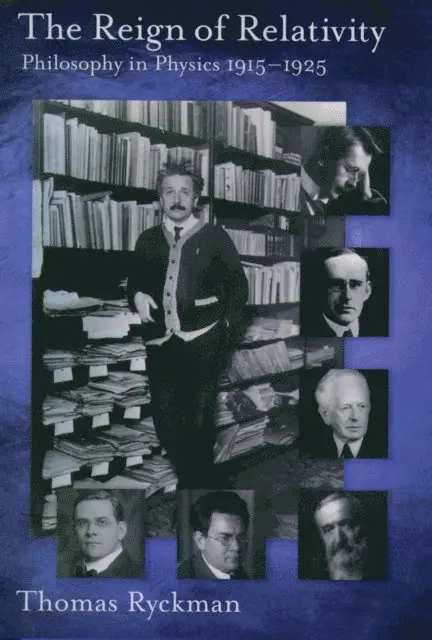
Reign of Relativity
Philosophy in Physics 1915-1925
E-bok, 2005
495 kr
Lägg i varukorg
Universally recognized as bringing about a revolutionary transformation of the notions of space, time, and motion in physics, Einstein''s theory of gravitation, known as "general relativity," was also a defining event for 20th century philosophy of science. During the decisive first ten years of …
The Reign of Relativity
Philosophy in Physics 1915-1925
Inbunden, 2005
2077 kr
Lägg i varukorg
Einstein's theory of 'general relativity' (1915) was a defining event for 20th century philosophy of science. During the decisive first ten years of the theory's existence, two main ideas dominated its philosophical reception. Ryckman's book is an extended argument that the path actually taken, …
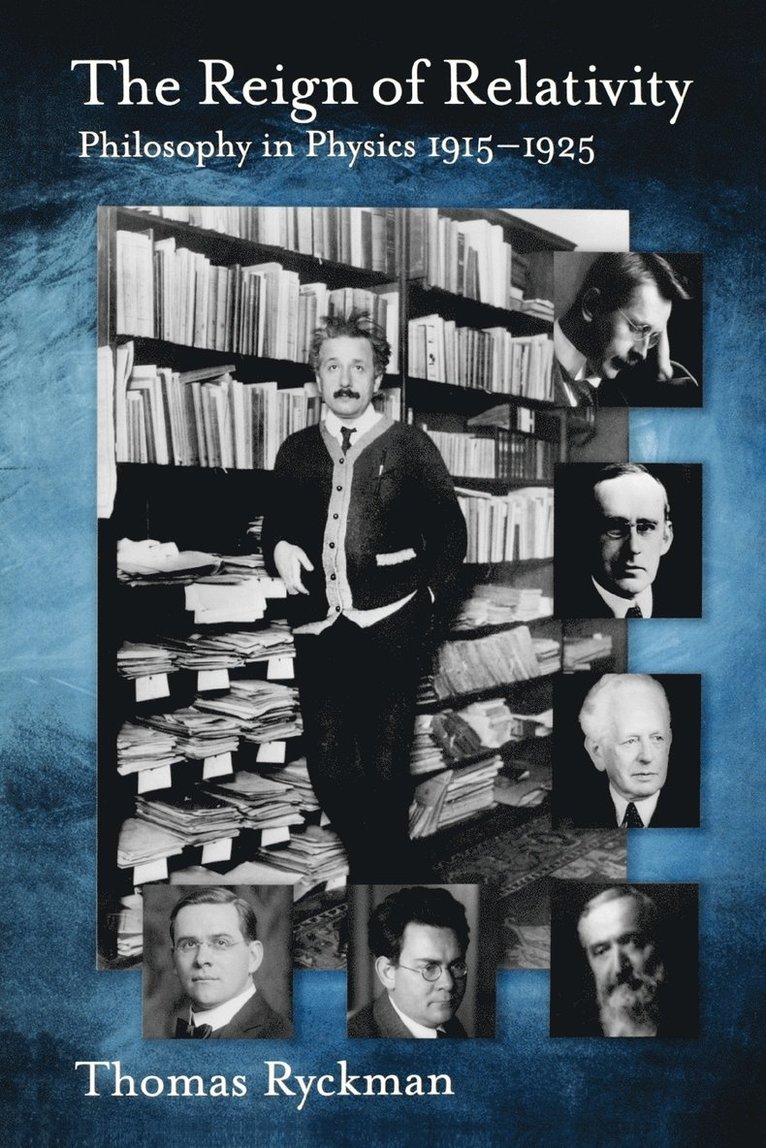
The Reign of Relativity
Philosophy in Physics 1915-1925
Häftad, 2007
764 kr
Lägg i varukorg
Universally recognized as bringing about a revolutionary transformation of the notions of space, time, and motion in physics, Einstein's theory of gravitation, known as "general relativity," was also a defining event for 20th century philosophy of science. During the decisive first ten years of the …
Reign of Relativity
Philosophy in Physics 1915-1925
E-bok, 2005
440 kr
Lägg i varukorg
Universally recognized as bringing about a revolutionary transformation of the notions of space, time, and motion in physics, Einstein''s theory of gravitation, known as "general relativity," was also a defining event for 20th century philosophy of science. During the decisive first ten years of …
Einstein
Inbunden, 2017
2136 kr
Lägg i varukorg
Albert Einstein (1879–1955) was the most influential physicist of the 20th century. Less well known is that fundamental philosophical problems, such as concept formation, the role of epistemology in developing and explaining the character of physical theories, and the debate between positivism and …
Einstein
Häftad, 2017
388 kr
Lägg i varukorg
Albert Einstein (1879–1955) was the most influential physicist of the 20th century. Less well known is that fundamental philosophical problems, such as concept formation, the role of epistemology in developing and explaining the character of physical theories, and the debate between positivism and …
Einstein
E-bok, 2017
399 kr
Lägg i varukorg
Albert Einstein (1879–1955) was the most influential physicist of the 20th century. Less well known is that fundamental philosophical problems, such as concept formation, the role of epistemology in developing and explaining the character of physical theories, and the debate between positivism …
Einstein
E-bok, 2017
399 kr
Lägg i varukorg
Albert Einstein (1879–1955) was the most influential physicist of the 20th century. Less well known is that fundamental philosophical problems, such as concept formation, the role of epistemology in developing and explaining the character of physical theories, and the debate between positivism …
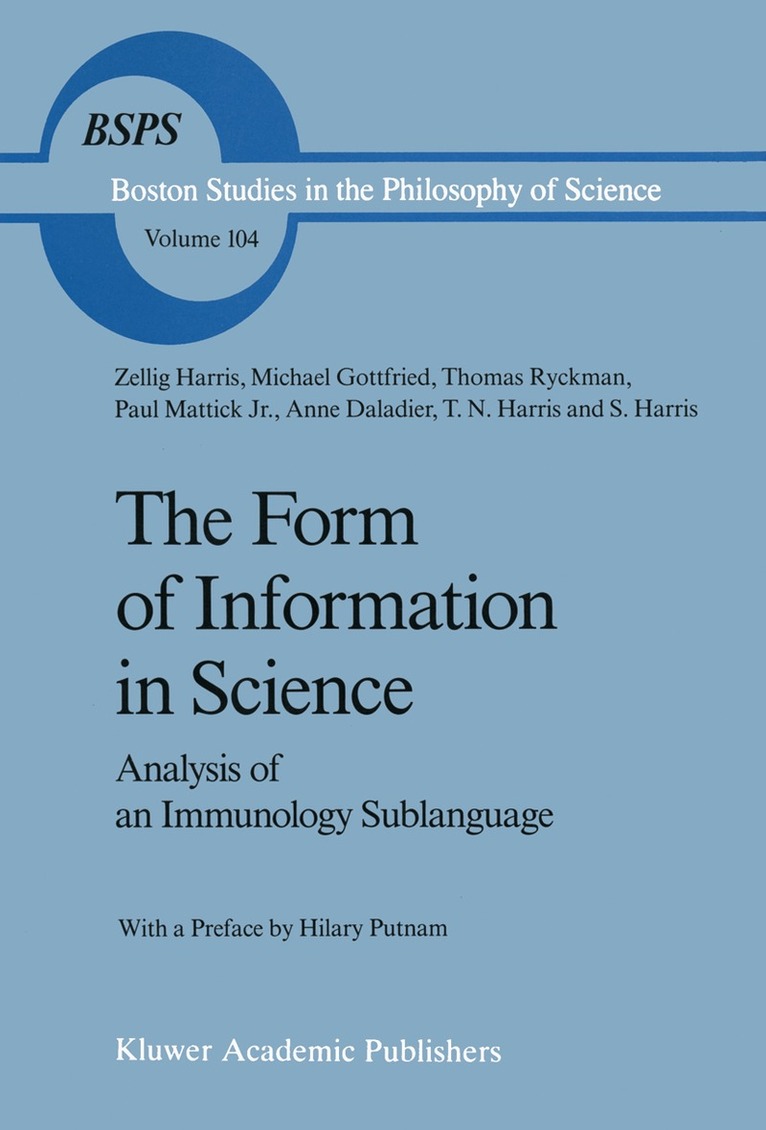
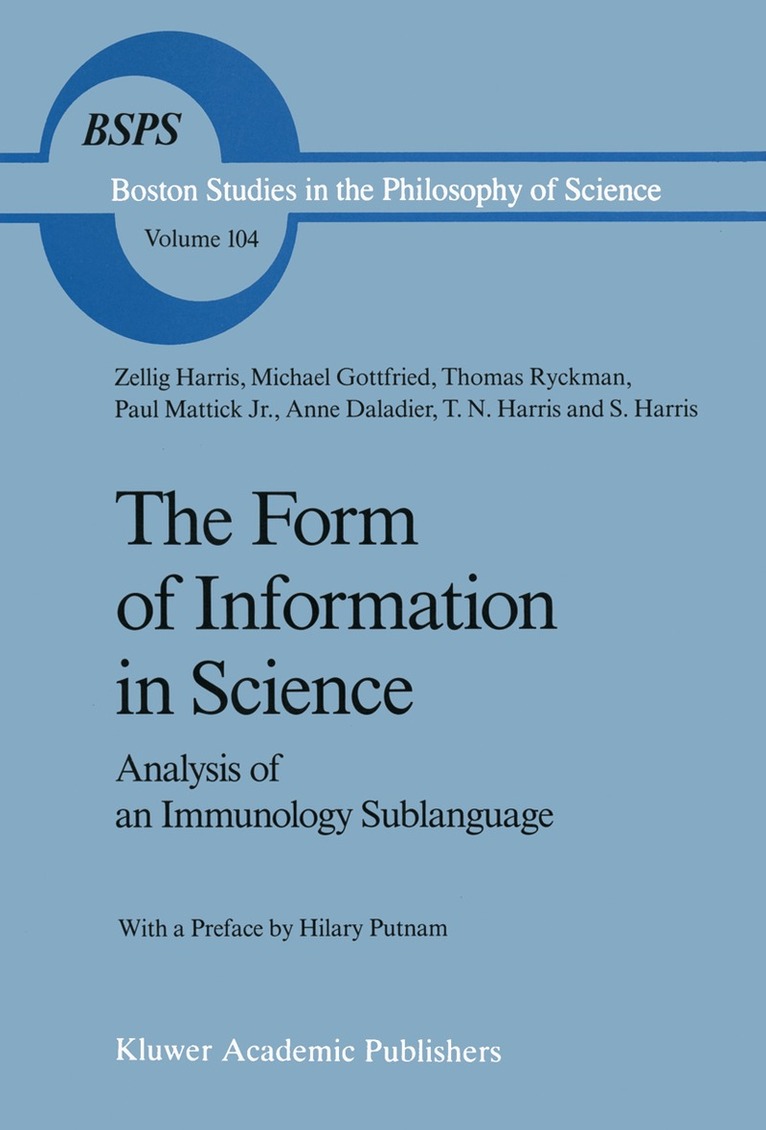
Form of Information in Science
Analysis of an Immunology Sublanguage
Av Z. Harris, Michael Gottfried m. fl.
Inbunden, 1988
2248 kr
Lägg i varukorg
DOES DISCOURSE HAVE A 'STRUCTURE'? HARRIS'S REVOLUTION IN LINGUISTICS As a freshman back in 1947 I discovered that within the various academic divisions and subdivisions of the University of Pennsylvania there existed a something (it was not a Department, but a piece of the Anthropology Department) …
Form of Information in Science
Analysis of an Immunology Sublanguage
Av Paul Mattick, Anne Daladier m. fl.
E-bok, 2012
2925 kr
Lägg i varukorg
DOES DISCOURSE HAVE A ''STRUCTURE''? HARRIS''S REVOLUTION IN LINGUISTICS As a freshman back in 1947 I discovered that within the various academic divisions and subdivisions of the University of Pennsylvania there existed a something (it was not a Department, but a piece of the Anthropology …
Form of Information in Science
Analysis of an Immunology Sublanguage
Av Z. Harris, Michael Gottfried m. fl.
Häftad, 2011
2183 kr
Lägg i varukorg
DOES DISCOURSE HAVE A 'STRUCTURE'? HARRIS'S REVOLUTION IN LINGUISTICS As a freshman back in 1947 I discovered that within the various academic divisions and subdivisions of the University of Pennsylvania there existed a something (it was not a Department, but a piece of the Anthropology Department) …