Thomas W. Zeiler - Böcker
Visar alla böcker från författaren Thomas W. Zeiler. Handla med fri frakt och snabb leverans.
12 produkter
12 produkter
1 720 kr
Skickas inom 5-8 vardagar
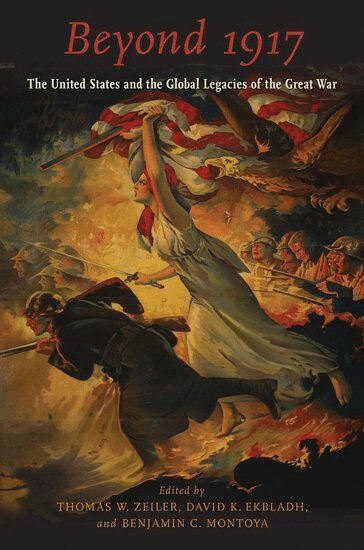
A massively destructive and transformative event, the First World War left in its wake many legacies. Beyond 1917 explores both the consequences of the war for the United States (and the world) and American influence on shaping the legacies of the conflict in the decades after US entry in 1917. From the fields, seas, and airspace of battle, we live today with the consequences of the Great War's poison gas, post-traumatic stress disorder, and technological inventions such as air bombardment of civilians, submarine and tank warfare, and modern surgical techniques. Conscription, pacifism, humanitarian campaigns, and socialist movements emerged from the war to shape politics within countries for decades to come. Governments learned the value of propaganda, both in print and in film. Society changed: women were emancipated in some countries and citizenship was altered in many places, while aristocracy and monarchies went into decline. European empires were transformed and in some cases destroyed; in the Middle East, the change was enormous, beginning with the final collapse of Ottoman hegemony in the region. Fascism and communism, mass migration, independence, militarism, an influenza epidemic, the rise of Wall Street and American economic power, a slowdown in the process of globalization, and the pursuit of world peace by an organization based on collective security numbered among the most significant and lasting legacies of this conflict. Beyond 1917 explores how and why the war has become an integral milepost for human history, reflects the importance of the conflict, the forces that led to it, and the forces it unleashed. On the occasion of the centennial commemorations, an international group of scholars considers the long-term policy, political, social, economic, and cultural consequences of the war for the United States itself and for the world. In addition to interpretive essays, the volume provides a comprehensive bibliography and timeline of events.
446 kr
Skickas inom 5-8 vardagar
A massively destructive and transformative event, the First World War left in its wake many legacies. Beyond 1917 explores both the consequences of the war for the United States (and the world) and American influence on shaping the legacies of the conflict in the decades after US entry in 1917. From the fields, seas, and airspace of battle, we live today with the consequences of the Great War's poison gas, post-traumatic stress disorder, and technological inventions such as air bombardment of civilians, submarine and tank warfare, and modern surgical techniques. Conscription, pacifism, humanitarian campaigns, and socialist movements emerged from the war to shape politics within countries for decades to come. Governments learned the value of propaganda, both in print and in film. Society changed: women were emancipated in some countries and citizenship was altered in many places, while aristocracy and monarchies went into decline. European empires were transformed and in some cases destroyed; in the Middle East, the change was enormous, beginning with the final collapse of Ottoman hegemony in the region. Fascism and communism, mass migration, independence, militarism, an influenza epidemic, the rise of Wall Street and American economic power, a slowdown in the process of globalization, and the pursuit of world peace by an organization based on collective security numbered among the most significant and lasting legacies of this conflict. Beyond 1917 explores how and why the war has become an integral milepost for human history, reflects the importance of the conflict, the forces that led to it, and the forces it unleashed. On the occasion of the centennial commemorations, an international group of scholars considers the long-term policy, political, social, economic, and cultural consequences of the war for the United States itself and for the world. In addition to interpretive essays, the volume provides a comprehensive bibliography and timeline of events.
398 kr
Skickas inom 5-8 vardagar
A wide-ranging history of modern America that argues that free trade has been an engine of US foreign policy and the key to global prosperity.Surprisingly, exports and imports, tariffs and quotas, and trade deficits and surpluses are central to American foreign relations. Ever since Franklin D. Roosevelt took office during the Great Depression, the United States has linked trade to its long-term diplomatic objectives and national security. Washington, DC saw free trade as underscoring its international leadership and as instrumental to global prosperity, to winning wars and peace, and to shaping the liberal internationalist world order. Free trade, in short, was a cornerstone of an ideology of "capitalist peace." Covering nearly a century, Capitalist Peace provides the first chronologically sweeping look at the intersection of trade and diplomacy. This policy has been pursued oftentimes at a cost to US producers and workers, whose interests were sacrificed to serve the purpose of grand strategy. To be sure, capitalists sought a particular type of global trade, which harnessed the market through free trade. This liberal trade policy sought the common good as defined by the needs, aims, and strengths of the capitalist and democratic world. Leaders believed that free trade advanced private enterprise, which, in turn, promoted prosperity, democracy, security, and attendant by-products like development, cooperation, integration, and human rights. The capitalist peace took liberalization as integral to cooperation among nations and even to morality in global affairs. Drawing on new research from the Reagan, George H.W. Bush, Clinton, and George W. Bush presidential libraries, as well as business/ industry and civic association archives, Thomas W. Zeiler narrates this history from the road to World War II, through the Cold War, to the resurgent protectionism of the Trump era and up to the present. Offering a new interpretation of diplomatic history, Capitalist Peace shows how US power, interests, and values were projected into the international arena even as capitalism brought both positive and negative results to the global order.
422 kr
Skickas inom 7-10 vardagar
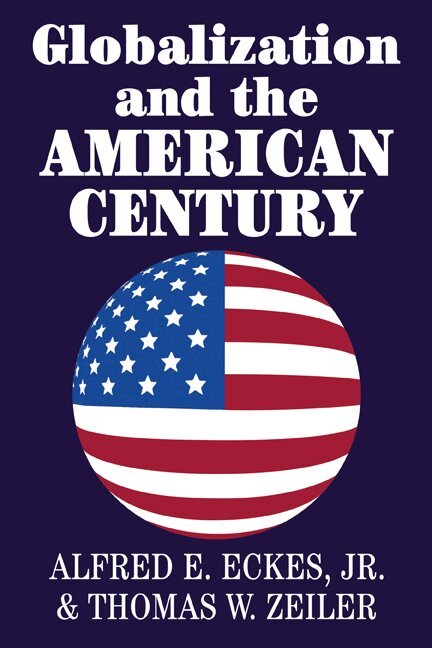
Using globalization as a unifying theme, Eckes and Zeiler offer a bold new approach to American history and diplomacy in the twentieth century. The American Century of global leadership, they show, resulted both from innovations and ideas. Revolutionary improvements in technology (especially satellite communications and jet transportation) combined with the leadership elite's enthusiasm for de-regulation of markets and free trade to fuel American-style globalization. Zeiler and Eckes show this formula helped the nation rise to economic power after the Spanish-American War, and win both world wars and the Cold War. In the decade after the end of the Cold War, America's power and cultural influence soared as business and financial interests pursued the long-term quest for global markets. But the tragic events of September 2001 and the growing volatility of global finance raised questions about whether the era of American-led globalization was sustainable, or vulnerable to catastrophic collapse.
658 kr
Skickas inom 7-10 vardagar
Using globalization as a unifying theme, Eckes and Zeiler offer a bold new approach to American history and diplomacy in the twentieth century. The American Century of global leadership, they show, resulted both from innovations and ideas. Revolutionary improvements in technology (especially satellite communications and jet transportation) combined with the leadership elite's enthusiasm for de-regulation of markets and free trade to fuel American-style globalization. Zeiler and Eckes show this formula helped the nation rise to economic power after the Spanish-American War, and win both world wars and the Cold War. In the decade after the end of the Cold War, America's power and cultural influence soared as business and financial interests pursued the long-term quest for global markets. But the tragic events of September 2001 and the growing volatility of global finance raised questions about whether the era of American-led globalization was sustainable, or vulnerable to catastrophic collapse.
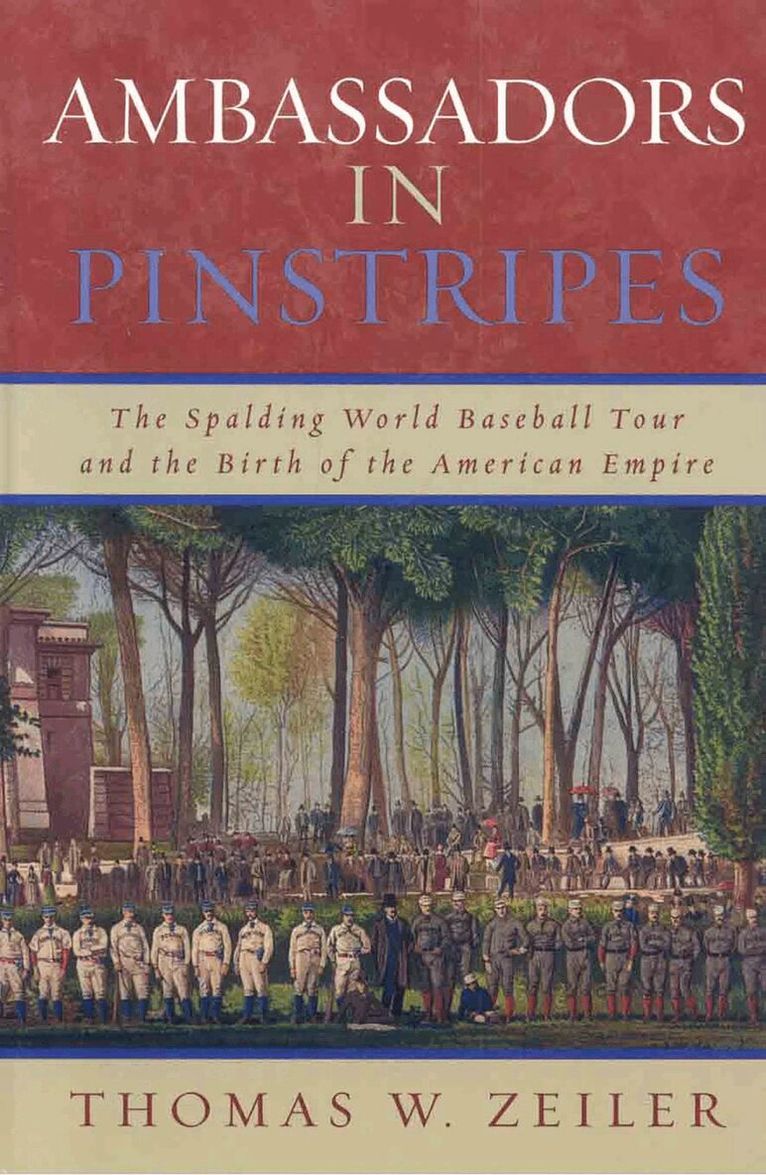
Ambassadors in Pinstripes
The Spalding World Baseball Tour and the Birth of the American Empire
Inbunden, Engelska, 2006
1 567 kr
Skickas inom 10-15 vardagar
Inspired and led by sporting magnate Albert Goodwill Spalding, two teams of baseball players circled the globe for six months in 1888-1889 competing in such far away destinations as Australia, Sri Lanka and Egypt. These players, however, represented much more than mere pleasure-seekers. In this lively narrative, Zeiler explores the ways in which the Spalding World Baseball Tour drew on elements of cultural diplomacy to inject American values and power into the international arena. Through his chronicle of baseball history, games, and experiences, Zeiler explores expressions of imperial dreams through globalization's instruments of free enterprise, webs of modern communication and transport, cultural ordering of races and societies, and a strident nationalism that galvanized notions of American uniqueness. Spalding linked baseball to a U.S. presence overseas, viewing the world as a market ripe for the infusion of American ideas, products and energy. Through globalization during the Gilded Age, he and other Americans penetrated the globe and laid the foundation for an empire formally acquired just a decade after their tour.
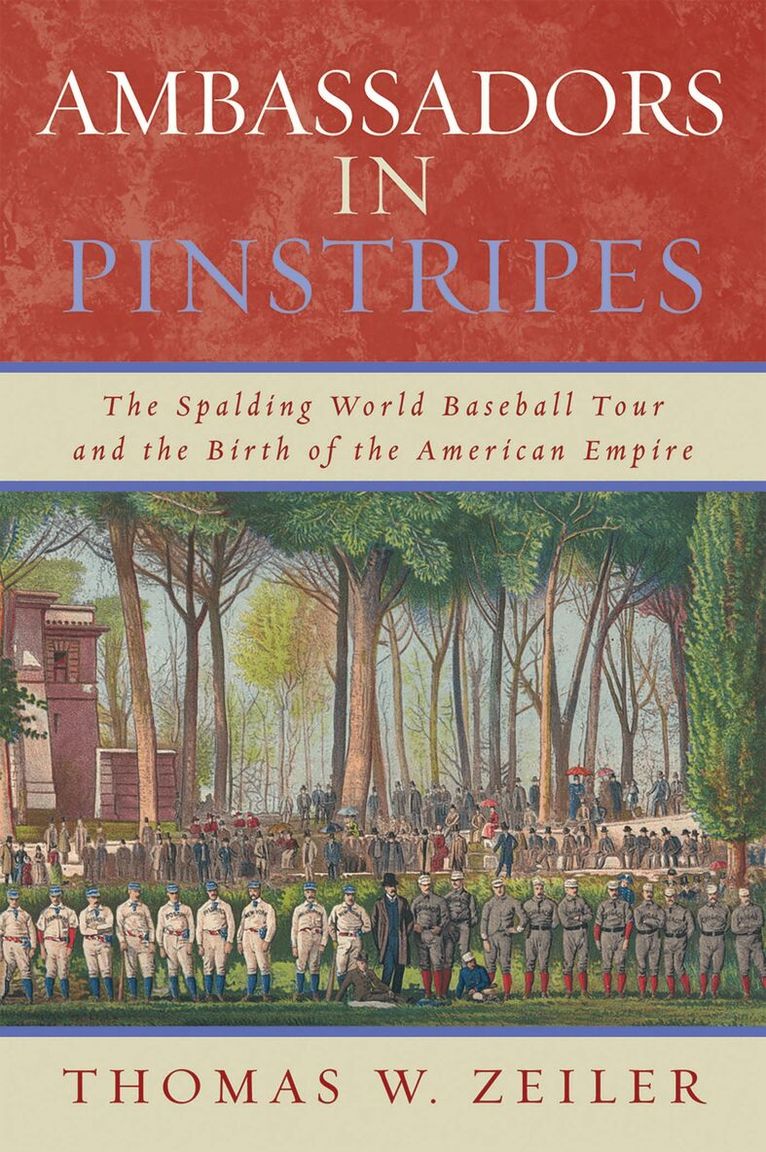
Ambassadors in Pinstripes
The Spalding World Baseball Tour and the Birth of the American Empire
Häftad, Engelska, 2006
560 kr
Skickas inom 10-15 vardagar
Inspired and led by sporting magnate Albert Goodwill Spalding, two teams of baseball players circled the globe for six months in 1888-1889 competing in such far away destinations as Australia, Sri Lanka and Egypt. These players, however, represented much more than mere pleasure-seekers. In this lively narrative, Zeiler explores the ways in which the Spalding World Baseball Tour drew on elements of cultural diplomacy to inject American values and power into the international arena.Through his chronicle of baseball history, games, and experiences, Zeiler explores expressions of imperial dreams through globalization's instruments of free enterprise, webs of modern communication and transport, cultural ordering of races and societies, and a strident nationalism that galvanized notions of American uniqueness. Spalding linked baseball to a U.S. presence overseas, viewing the world as a market ripe for the infusion of American ideas, products and energy. Through globalization during the Gilded Age, he and other Americans penetrated the globe and laid the foundation for an empire formally acquired just a decade after their tour.
1 361 kr
Skickas inom 7-10 vardagar
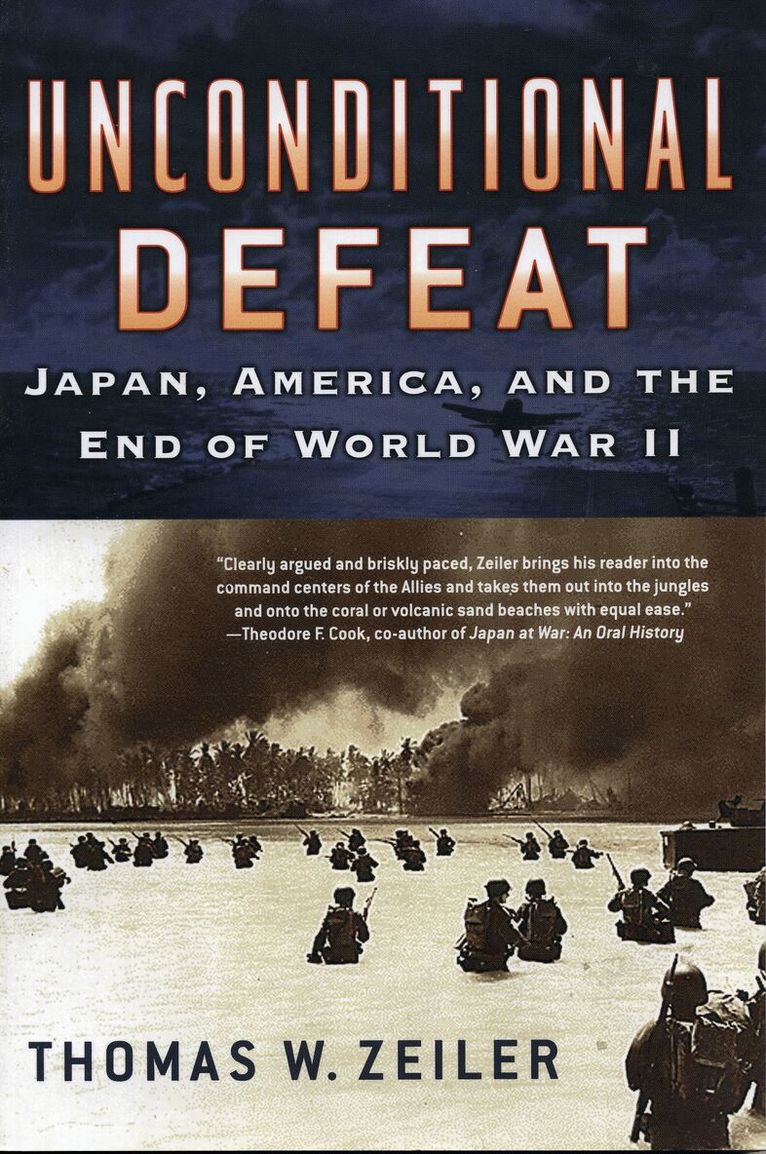
Unconditional Defeat-the second book in a Pacific War trilogy that is part of SR Books' Total War series-examines the concluding stages of World War II in Asia and the Pacific, from November 1943 until September 1945. Thomas W. Zeiler argues that this 'war without mercy' could only come to one conclusion: the complete, unconditional defeat of Japan by a mobilized, overwhelming, vengeful United States. Zeiler describes these final 22 months of the Pacific War as a story of contrasts. While the U.S. launched a methodical, smothering attack with all the means at its disposal, Japan fought a fierce yet hopeless defense with diminishing supplies. By November 1943, Japan lacked the necessities not just for victory, as in the earlier phases of the war, but for adequate defense. The Japanese had no options. The strategic planning rested with the Americans. Zeiler's gripping and thorough overview discusses other contrasts between the two foes. The Americans planned multiple advances in the Pacific Ocean and on the Asian mainland. They used a massive number of troops, devised and adopted new amphibious techniques, and deployed the new nuclear category of weapons. The Japanese stubbornly but desperately clung to their territory, often with the basest of defenses. By August 1945, the United States' forces at sea, on land, and in the air had brought Japan near complete defeat. In addition, the Japanese Empire was diplomatically isolated. Japanese politics was in turmoil, the government faced rebellion, and the Emperor stood on the brink of extinction. Wracked by the destruction of the homeland from the air and blockade by sea, Japanese society veered near chaos and the people peered into the abyss of an uncertain future. In the meantime, America's military had experienced such horrors at the hands of Japan that the U.S. made the difficult decision to unleash the atomic bomb. Despite the stark differences between the U.S. and Japan, argues Zeiler, there was one aspect of the war that both sides held in common: basic savagery. Those who were in combat witnessed the sheer hell of war. The human disaster is a tragic yet essential element to this story, and Zeiler recounts the brutality and suffering experienced by those who fought and lived through the conflict.
Del 11 - Wiley Blackwell Companions to World History
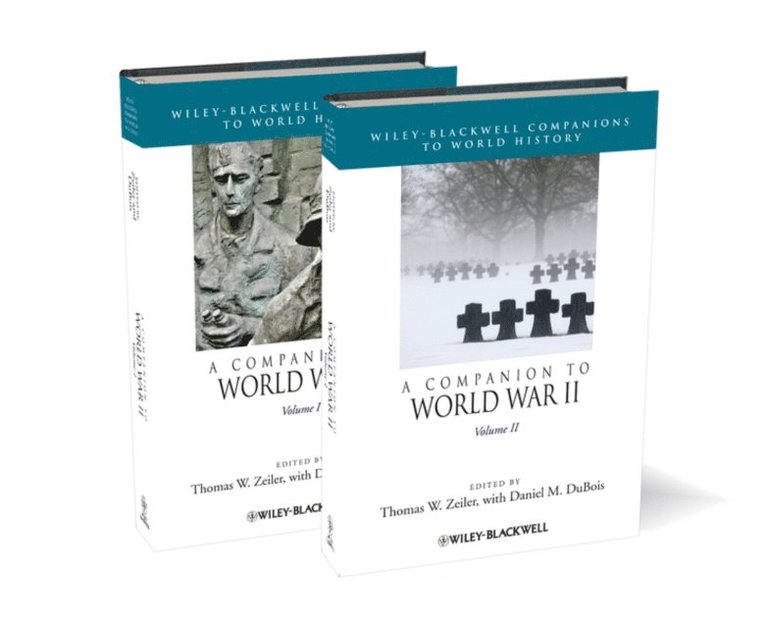
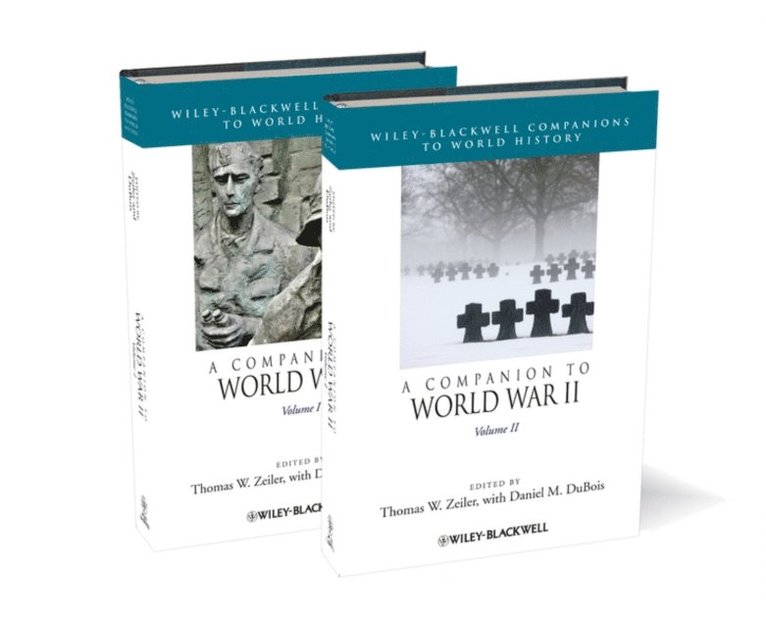
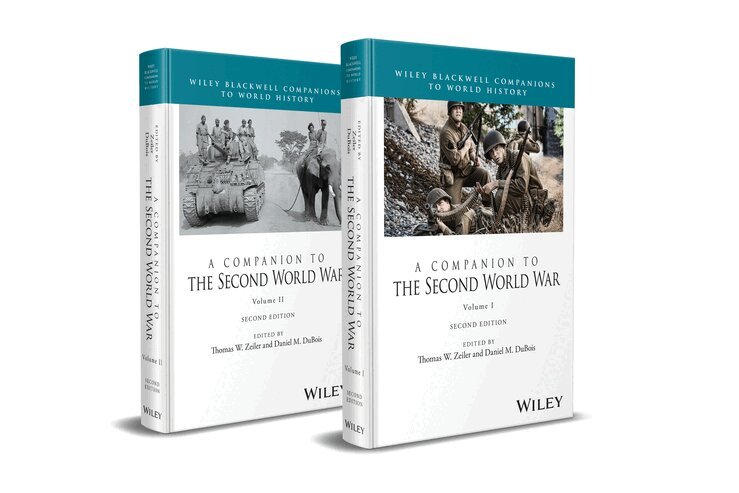
Companion to World War II, 2 Volume Set
Inbunden, Engelska, 2012
3 929 kr
Tillfälligt slut
A Companion to World War II brings together a series of fresh academic perspectives on World War II, exploring the many cultural, social, and political contexts of the war. Essay topics range from American anti-Semitism to the experiences of French-African soldiers, providing nearly 60 new contributions to the genre arranged across two comprehensive volumes. A collection of original historiographic essays that include cutting-edge researchAnalyzes the roles of neutral nations during the warExamines the war from the bottom up through the experiences of different social classesCovers the causes, key battles, and consequences of the war
530 kr
Skickas inom 10-15 vardagar
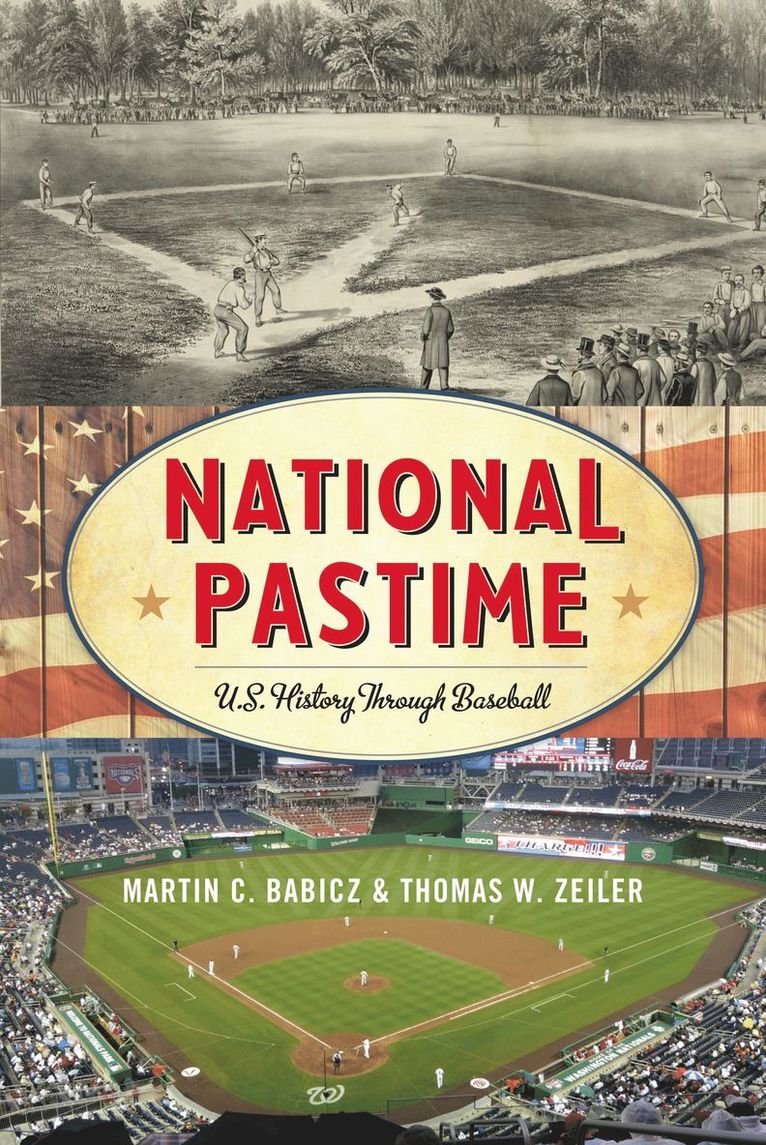
From its modest beginnings in rural America to its current status as an entertainment industry in postindustrial America enjoyed worldwide by millions each season, the linkages between baseball’s evolution and our nation’s history are undeniable. Through war, depression, times of tumultuous upheaval and of great prosperity – baseball has been held up as our national pastime: the single greatest expression of America’s values and ideals. Combining a comprehensive history of the game with broader analyses of America’s historical and cultural developments, National Pastime encapsulates the values that have allowed it to endure: hope, tradition, escape, revolution. While nostalgia, scandal, malaise and triumph are contained within the study of any American historical moment, we see in this book that the tensions and developments within the game of baseball afford the best window into a deeper understanding of America’s past, its purpose, and its principles.
3 370 kr
Skickas inom 3-6 vardagar
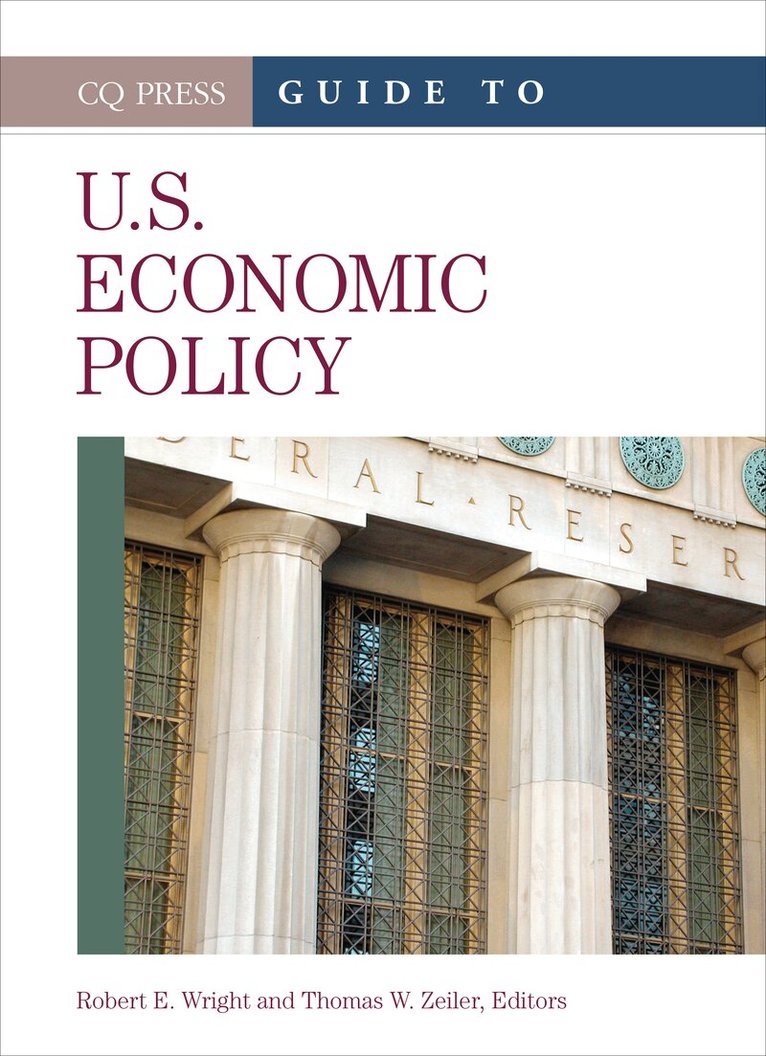
Guide to U.S. Economic Policy shows students and researchers how issues and actions are translated into public policies for resolving economic problems (like the Great Recession) or managing economic conflict (like the left-right ideological split over the role of government regulation in markets). Taking an interdisciplinary approach, the guide highlights decision-making cycles requiring the cooperation of government, business, and an informed citizenry to achieve a comprehensive approach to a successful, growth-oriented economic policy. Through 30 topical, operational, and relational essays, the book addresses the development of U.S. economic policies from the colonial period to today; the federal agencies and public and private organizations that influence and administer economic policies; the challenges of balancing economic development with environmental and social goals; and the role of the U.S. in international organizations such as the IMF and WTO. Key Features: 30 essays by experts in the field investigate the fundamental economic, political, social, and process initiatives that drive policy decisions affecting the nation’s economic stability and success. Essential themes traced throughout the chapters include scarcity, wealth creation, theories of economic growth and macroeconomic management, controlling inflation and unemployment, poverty, the role of government agencies and regulations to police markets, Congress vs. the president, investment policies, economic indicators, the balance of trade, and the immediate and long-term costs associated with economic policy alternatives. A glossary of key economic terms and events, a summary of bureaus and agencies charged with economic policy decisions, a master bibliography, and a thorough index appear at the back of the book.
5 796 kr
Tillfälligt slut
At no time in American history has an understanding of the role and the art of diplomacy in international relations been more essential than it is today. Both the history of U.S. diplomatic relations and the current U.S. foreign policy in the twenty-first century are major topics of study and interest across the nation and around the world. Spanning the entire history of American diplomacy—from the First Continental Congress to the war on terrorism to the foreign policy goals of the twenty-first century—Guide to U.S. Foreign Policy traces not only the growth and development of diplomatic policies and traditions but also the shifts in public opinion that shape diplomatic trends. This comprehensive, two-volume reference shows how the United States gained "the strength of a giant" and also analyzes key world events that have determined the United States’ changing relations with other nations. The two volumes’ structure makes the key concepts and issues accessible to researchers: The set is broken up into seven parts that feature 40 topical and historical chapters in which expert writers cover the diplomatic initiatives of the United States from colonial times through the present day. Volume II’s appendix showcases an A-to-Z handbook of diplomatic terms and concepts, organizations, events, and issues in American foreign policy. The appendix also includes a master bibliography and a list of presidents; secretaries of state, war, and defense; and national security advisers and their terms of service. This unique reference highlights the changes in U.S. diplomatic policy as government administrations and world events influenced national decisions. Topics include imperialism, economic diplomacy, environmental diplomacy, foreign aid, wartime negotiations, presidential influence, NATO and its role in the twenty-first century, and the response to terrorism. Additional featured topics include the influence of the American two-party system, the impact of U.S. elections, and the role of the United States in international organizations. Guide to U.S. Foreign Policy is the first comprehensive reference work in this field that is both historical and thematic. This work is of immense value for researchers, students, and others studying foreign policy, international relations, and U.S history. ABOUT THE EDITORS Robert J. McMahon is the Ralph D. Mershon Professor of History in the Mershon Center for International Security Studies at The Ohio State University. He is a leading historian of American diplomatic history and is author of several books on U.S. foreign relations. Thomas W. Zeiler is professor of history and international affairs at the University of Colorado at Boulder and is the executive editor of the journal Diplomatic History.