Timothy Amos - Böcker
Visar alla böcker från författaren Timothy Amos. Handla med fri frakt och snabb leverans.
4 produkter
4 produkter
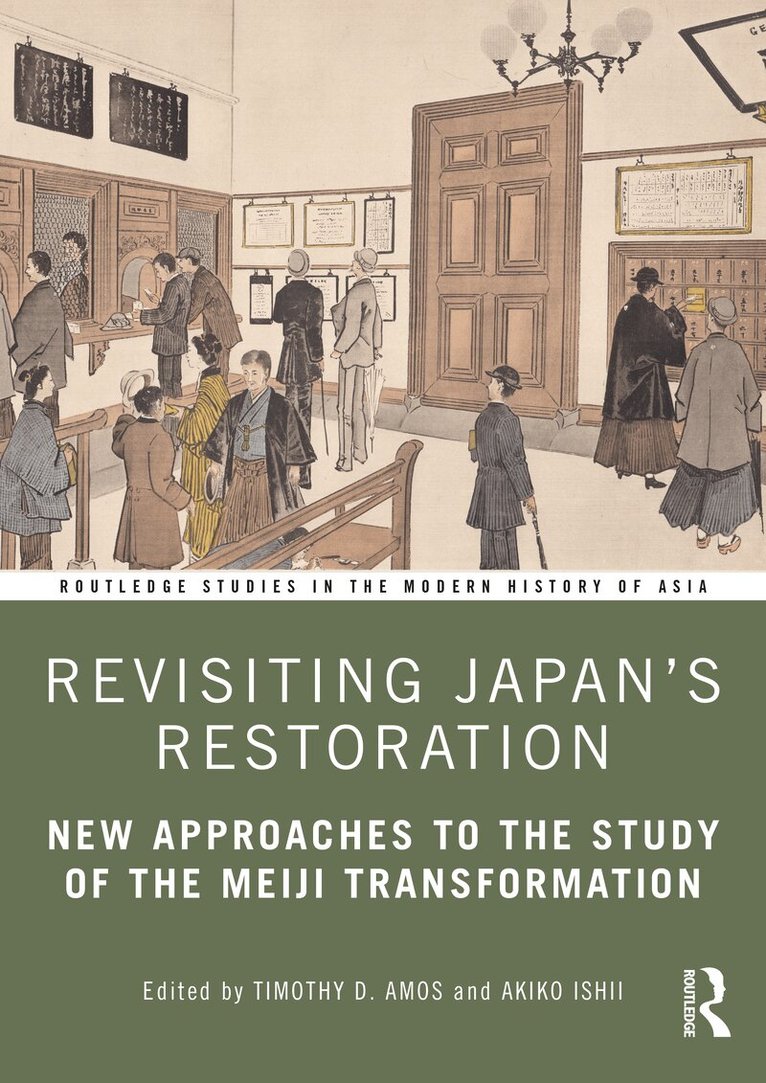
Revisiting Japan’s Restoration
New Approaches to the Study of the Meiji Transformation
Häftad, Engelska, 2021
581 kr
Skickas inom 10-15 vardagar
This volume presents the reader with thirty-one short chapters that capture an exciting new moment in the study of the Meiji Restoration. The chapters offer a kaleidoscope of approaches and interpretations of the Restoration that showcase the strengths of the most recent interpretative trends in history writing on Japan while simultaneously offering new research pathways.On a scale probably never before seen in the study of the Restoration outside Japan, the short chapters in this volume reveal unique aspects of the transformative event and process not previously explored in previous research. They do this in three core ways: through selecting and deploying different time frames in their historical analysis; by creative experimentation with different spatial units through which to ascertain historical experience; and by innovative selection of unique and highly original topics for analysis. The volume offers students and teachers of Japanese history, modern history, and East Asian studies an important resource for coming to grips with the multifaceted nature of Japan’s nineteenth-century transformation.The volume will also have broader appeal to scholars working in fields such as early modern/modern world history, global history, Asian modernities, gender studies, economic history, and postcolonial studies.
Revisiting Japan’s Restoration
New Approaches to the Study of the Meiji Transformation
Inbunden, Engelska, 2021
2 176 kr
Skickas inom 10-15 vardagar
This volume presents the reader with thirty-one short chapters that capture an exciting new moment in the study of the Meiji Restoration. The chapters offer a kaleidoscope of approaches and interpretations of the Restoration that showcase the strengths of the most recent interpretative trends in history writing on Japan while simultaneously offering new research pathways.On a scale probably never before seen in the study of the Restoration outside Japan, the short chapters in this volume reveal unique aspects of the transformative event and process not previously explored in previous research. They do this in three core ways: through selecting and deploying different time frames in their historical analysis; by creative experimentation with different spatial units through which to ascertain historical experience; and by innovative selection of unique and highly original topics for analysis. The volume offers students and teachers of Japanese history, modern history, and East Asian studies an important resource for coming to grips with the multifaceted nature of Japan’s nineteenth-century transformation.The volume will also have broader appeal to scholars working in fields such as early modern/modern world history, global history, Asian modernities, gender studies, economic history, and postcolonial studies.
637 kr
Skickas inom 10-15 vardagar
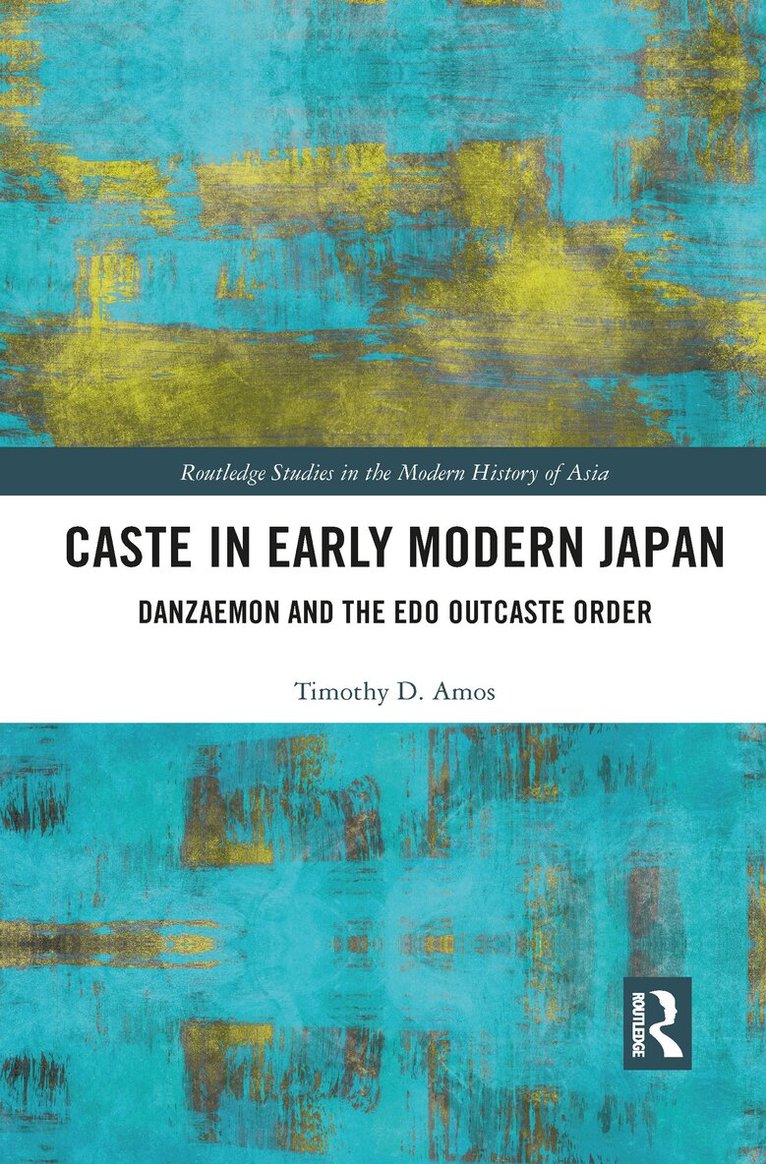
"Caste", a word normally used in relation to the Indian subcontinent, is rarely associated with Japan in contemporary scholarship. This has not always been the case, and the term was often used among earlier generations of scholars, who introduced the Buraku problem to Western audiences. Amos argues that time for reappraisal is well overdue and that a combination of ideas, beliefs, and practices rooted in Confucian, Buddhist, Shinto, and military traditions were brought together from the late 16th century in ways that influenced the development of institutions and social structures on the Japanese archipelago. These influences brought the social structures closer in form and substance to certain caste formations found in the Indian subcontinent during the same period. Specifically, Amos analyses the evolution of the so-called Danzaemon outcaste order. This order was a 17th century caste configuration produced as a consequence of early modern Tokugawa rulers’ decisions to engage in a state-building project rooted in military logic and built on the back of existing manorial and tribal-class arrangements. He further examines the history behind the primary duties expected of outcastes within the Danzaemon order: notably execution and policing, as well as leather procurement. Reinterpreting Japan as a caste society, this book propels us to engage in fuller comparisons of how outcaste communities’ histories and challenges have diverged and converged over time and space, and to consider how better to eradicate discrimination based on caste logic.This book will appeal to anyone interested in Japanese History, Culture and Society.
2 176 kr
Skickas inom 10-15 vardagar
"Caste", a word normally used in relation to the Indian subcontinent, is rarely associated with Japan in contemporary scholarship. This has not always been the case, and the term was often used among earlier generations of scholars, who introduced the Buraku problem to Western audiences. Amos argues that time for reappraisal is well overdue and that a combination of ideas, beliefs, and practices rooted in Confucian, Buddhist, Shinto, and military traditions were brought together from the late 16th century in ways that influenced the development of institutions and social structures on the Japanese archipelago. These influences brought the social structures closer in form and substance to certain caste formations found in the Indian subcontinent during the same period. Specifically, Amos analyses the evolution of the so-called Danzaemon outcaste order. This order was a 17th century caste configuration produced as a consequence of early modern Tokugawa rulers’ decisions to engage in a state-building project rooted in military logic and built on the back of existing manorial and tribal-class arrangements. He further examines the history behind the primary duties expected of outcastes within the Danzaemon order: notably execution and policing, as well as leather procurement. Reinterpreting Japan as a caste society, this book propels us to engage in fuller comparisons of how outcaste communities’ histories and challenges have diverged and converged over time and space, and to consider how better to eradicate discrimination based on caste logic.This book will appeal to anyone interested in Japanese History, Culture and Society.