Timothy Earle - Böcker
Visar alla böcker från författaren Timothy Earle. Handla med fri frakt och snabb leverans.
13 produkter
13 produkter
980 kr
Skickas inom 10-15 vardagar
This work examines the basic social-psychological problems that generate the need for social trust and other acculturation strategies. Social trust is examined within the context of competing social problem-solving tools. The authors analyze the problem of how social trust can be encouraged within a cultural context that favors other socialization strategies, particularly distrust. They look at the relation between social trust and risk communication, specifically how social trust might be used to transform public participation; from an ineffective formalist show into a creative, community-building, problem-solving process. The work distinguishes between two forms of social trust pertinent to our world today: pluralistic, which occurs within groups and is based on existing values, and cosmopolitan, which is an across-group phenomenon and is based on emerging values. Earle and Cvetkovich's study is the story of gradual movement from pluralistic to cosmopolitan social trust.
2 103 kr
Skickas inom 10-15 vardagar
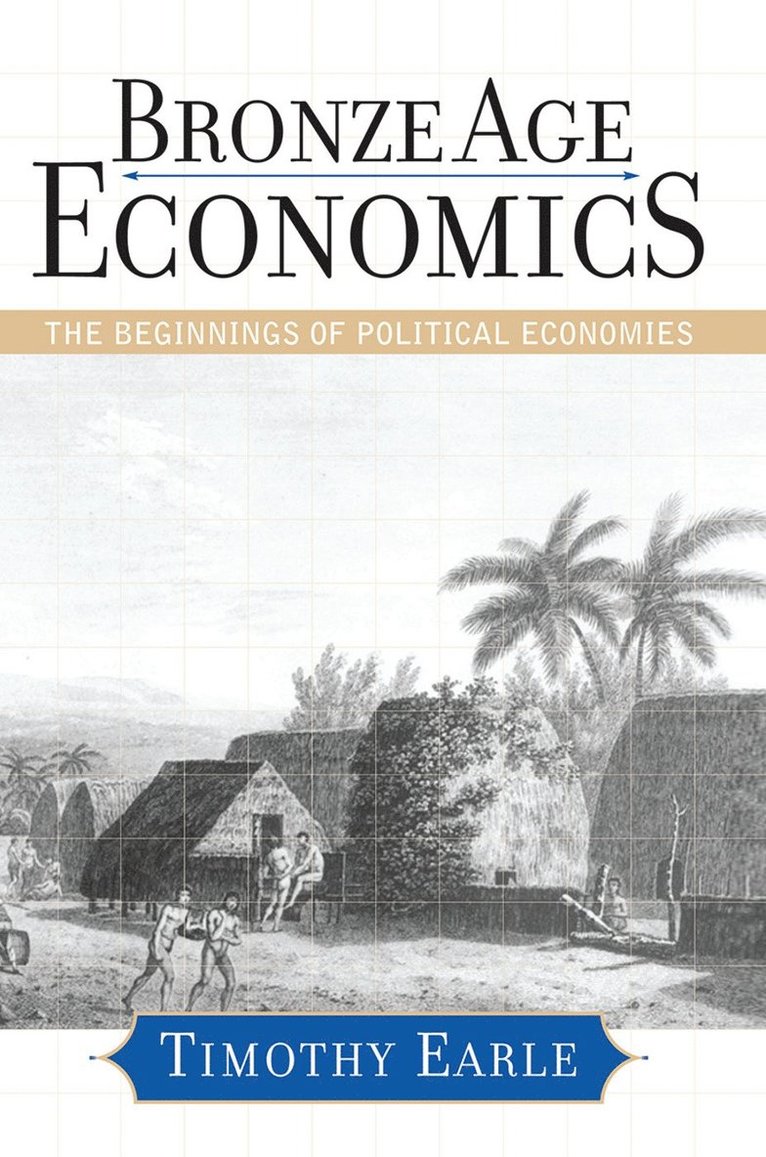
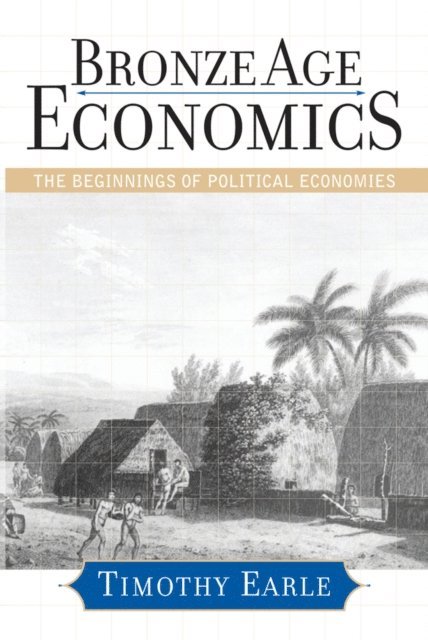
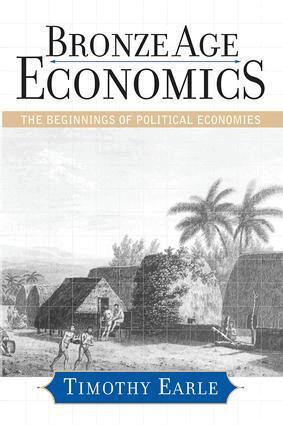
This integrated collection of new and newly revised essays by archaeologist Timothy Earle represents both a personal journey and a growing synthesis of how political economies emerged in human societies. Drawing in detail on the cases of chiefdoms in Hawaii, the Andes, and Denmark, Bronze Age Economics documents how intensification of econ
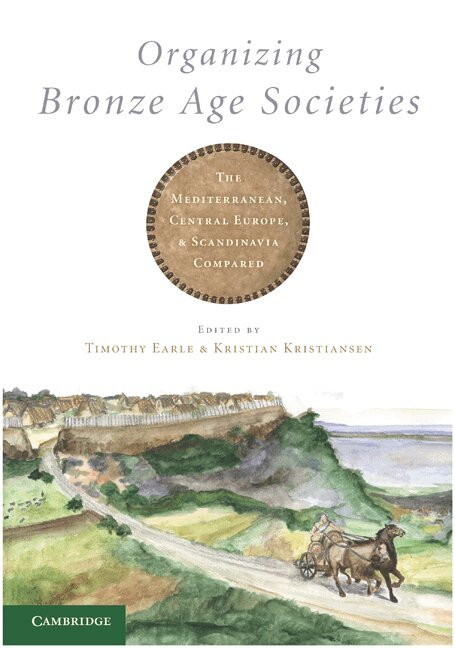
Organizing Bronze Age Societies
The Mediterranean, Central Europe, and Scandanavia Compared
Häftad, Engelska, 2010
448 kr
Skickas inom 7-10 vardagar
The Bronze Age was a formative period in European history when the organisation of landscapes, settlements, and economy reached a new level of complexity. This book presents the first in-depth, comparative study of household economy and settlement in three micro-regions: the Mediterranean (Sicily), Central Europe (Hungary), and Northern Europe (South Scandinavia). The results are based on ten years of fieldwork in a similar method of documentation, and scientific analyses were used in each of the regional studies, making controlled comparisons possible. The new evidence demonstrates how differences in settlement organisation and household economies were counterbalanced by similarities in the organised use of the landscape in an economy dominated by the herding of large flocks of sheep and cattle. This book's innovative theoretical and methodological approaches will be of relevance to all researchers of landscape and settlement history.
Organizing Bronze Age Societies
The Mediterranean, Central Europe, and Scandanavia Compared
Inbunden, Engelska, 2010
1 065 kr
Skickas inom 7-10 vardagar
The Bronze Age was a formative period in European history when the organisation of landscapes, settlements, and economy reached a new level of complexity. This book presents the first in-depth, comparative study of household economy and settlement in three micro-regions: the Mediterranean (Sicily), Central Europe (Hungary), and Northern Europe (South Scandinavia). The results are based on ten years of fieldwork in a similar method of documentation, and scientific analyses were used in each of the regional studies, making controlled comparisons possible. The new evidence demonstrates how differences in settlement organisation and household economies were counterbalanced by similarities in the organised use of the landscape in an economy dominated by the herding of large flocks of sheep and cattle. This book's innovative theoretical and methodological approaches will be of relevance to all researchers of landscape and settlement history.
1 288 kr
Skickas inom 10-15 vardagar
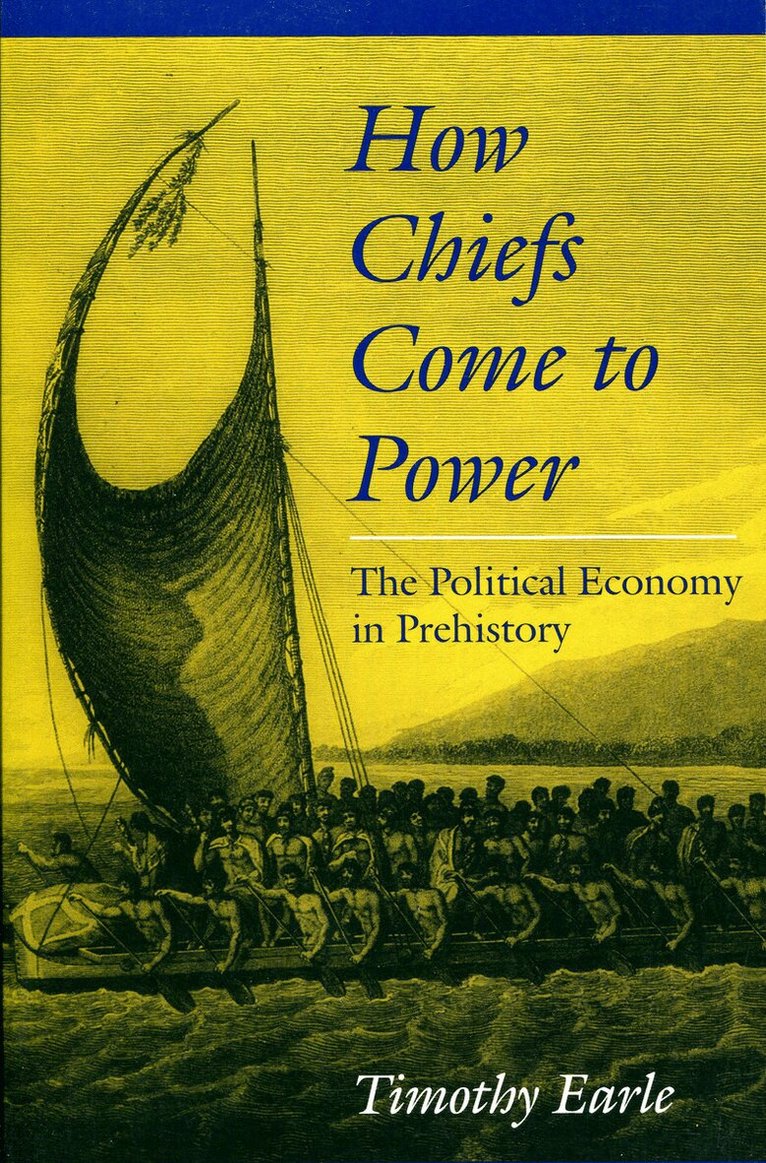
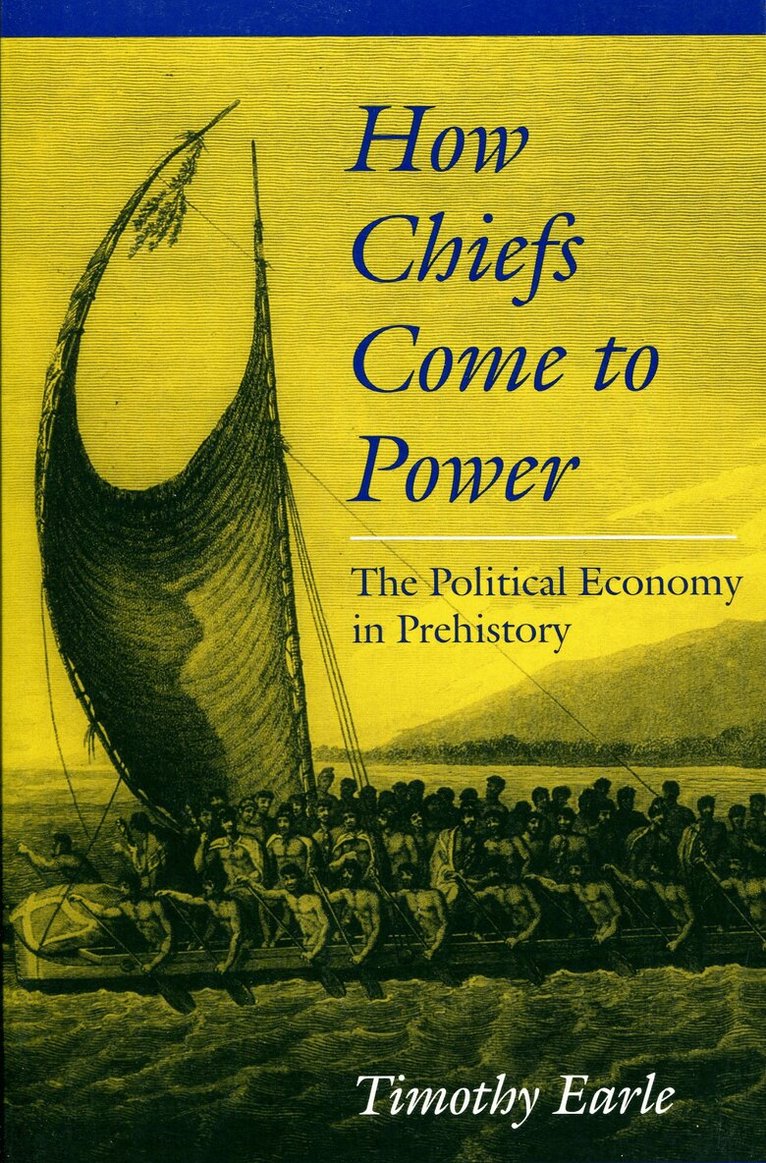
By studying chiefdoms—kin-based societies in which a person's place in a kinship system determines his or her social status and political position—this book addresses several fundamental questions concerning the nature of political power and the evolution of sociopolitical complexity. In a chiefdom, the highest-status male (first son by the first wife) holds both authority and special access to economic, military, and ideological power, and others derive privilege from their positions in the chiefly hierarchy.A chiefdom is also a regional polity with institutional governance and some social stratification organizing a population of a few thousand to tens of thousands of people. The author argues that the fundamental dynamics of chiefdoms are essentially the same as those of states, and that the origin of states is to be understood in the emergence and development of chiefdoms. The history of chiefdoms documents the evolutionary trajectories that resulted, in some situations, in the institutionalization of broad-scale, politically centralized societies and, in others, in highly fragmented and unstable regions of competitive polities. Understanding the dynamics of chiefly society, the author asserts, offers an essential view into the historical background of the modern world.Three cases on which the author has conducted extensive field research are used to develop the book's arguments—Denmark during the Neolithic and Early Bronze Ages (2300-1300 b.c.), the high Andes of Peru from the early chiefdoms through the Inka conquest (a.d. 500-1534), and Hawaii from early in its settlement to its incorporation in the world economy (a.d. 800-1824). Rather than deal with each case separately, the author presents an integrated discussion around the different power sources. After summarizing the cultural history of the three societies over a thousand years, he considers the sources of chiefly power and how these sources were linked together. The ultimate aim of the book is to determine how chiefs came to power and the implications that contrasting paths to power had for the evolutionary trajectories of societies. It attributes particular importance to the way different power bases were bound together and grounded in the political economy.
309 kr
Skickas inom 7-10 vardagar
By studying chiefdoms—kin-based societies in which a person's place in a kinship system determines his or her social status and political position—this book addresses several fundamental questions concerning the nature of political power and the evolution of sociopolitical complexity. In a chiefdom, the highest-status male (first son by the first wife) holds both authority and special access to economic, military, and ideological power, and others derive privilege from their positions in the chiefly hierarchy.A chiefdom is also a regional polity with institutional governance and some social stratification organizing a population of a few thousand to tens of thousands of people. The author argues that the fundamental dynamics of chiefdoms are essentially the same as those of states, and that the origin of states is to be understood in the emergence and development of chiefdoms. The history of chiefdoms documents the evolutionary trajectories that resulted, in some situations, in the institutionalization of broad-scale, politically centralized societies and, in others, in highly fragmented and unstable regions of competitive polities. Understanding the dynamics of chiefly society, the author asserts, offers an essential view into the historical background of the modern world.Three cases on which the author has conducted extensive field research are used to develop the book's arguments—Denmark during the Neolithic and Early Bronze Ages (2300-1300 b.c.), the high Andes of Peru from the early chiefdoms through the Inka conquest (a.d. 500-1534), and Hawaii from early in its settlement to its incorporation in the world economy (a.d. 800-1824). Rather than deal with each case separately, the author presents an integrated discussion around the different power sources. After summarizing the cultural history of the three societies over a thousand years, he considers the sources of chiefly power and how these sources were linked together. The ultimate aim of the book is to determine how chiefs came to power and the implications that contrasting paths to power had for the evolutionary trajectories of societies. It attributes particular importance to the way different power bases were bound together and grounded in the political economy.
Evolution of Human Societies
From Foraging Group to Agrarian State, Second Edition
Inbunden, Engelska, 2000
991 kr
Skickas inom 5-8 vardagar
By combining an original thesis and a representative body of ethnographic data, this ambitious work seeks to describe and explain the growth in complexity of human societies.Its emphasis is on the causes, mechanisms, and patterns of cultural evolution, which the authors explain in terms of a coherent theory of political economy—defined as the mobilization and exchange of goods and services between families. The authors show that the interconnected processes of technological change and population growth are the motor of social change, resulting in three related processes—intensification, integration, and stratification—that transform human societies over time. The validity of their theory rests on evidence drawn from 19 case studies that range widely over time and space.For this new edition, the authors have thoroughly rewritten the theoretical argument for greater clarity, updated the case materials to incorporate new research, and added a new chapter that applies their theoretical perspective to the problems of change since the industrial revolution and the globalization of trade and political influence.Reviews of the First Edition"In a book full of perceptive observations and persuasive arguments . . . Johnson and Earle show in masterly detail how societies articulate to their environments and . . . how they evolve."—Ethnohistory"A major contribution. . . . The book is a marvelous synthesis of ethnographic and historical data."—American Journal of Sociology"A large amount of research and thought has produced sensible and illuminating specific analyses of the mechanisms of evolutionary change. Another plus is that the writing is clear and the argument is neatly conceived."—American Anthropologist
Evolution of Human Societies
From Foraging Group to Agrarian State, Second Edition
Häftad, Engelska, 2000
388 kr
Skickas inom 7-10 vardagar
By combining an original thesis and a representative body of ethnographic data, this ambitious work seeks to describe and explain the growth in complexity of human societies.Its emphasis is on the causes, mechanisms, and patterns of cultural evolution, which the authors explain in terms of a coherent theory of political economy—defined as the mobilization and exchange of goods and services between families. The authors show that the interconnected processes of technological change and population growth are the motor of social change, resulting in three related processes—intensification, integration, and stratification—that transform human societies over time. The validity of their theory rests on evidence drawn from 19 case studies that range widely over time and space.For this new edition, the authors have thoroughly rewritten the theoretical argument for greater clarity, updated the case materials to incorporate new research, and added a new chapter that applies their theoretical perspective to the problems of change since the industrial revolution and the globalization of trade and political influence.Reviews of the First Edition"In a book full of perceptive observations and persuasive arguments . . . Johnson and Earle show in masterly detail how societies articulate to their environments and . . . how they evolve."—Ethnohistory"A major contribution. . . . The book is a marvelous synthesis of ethnographic and historical data."—American Journal of Sociology"A large amount of research and thought has produced sensible and illuminating specific analyses of the mechanisms of evolutionary change. Another plus is that the writing is clear and the argument is neatly conceived."—American Anthropologist
1 138 kr
Skickas inom 10-15 vardagar
"Timothy Earle has set out to offer the most comprehensive view now available of the economic foundations of early societies, and it may well be that he has succeeded. Bronze Age Economics is a pioneering contribution to archaeological theory." —Colin Renfrew, University of Cambridge
1 295 kr
Kommande
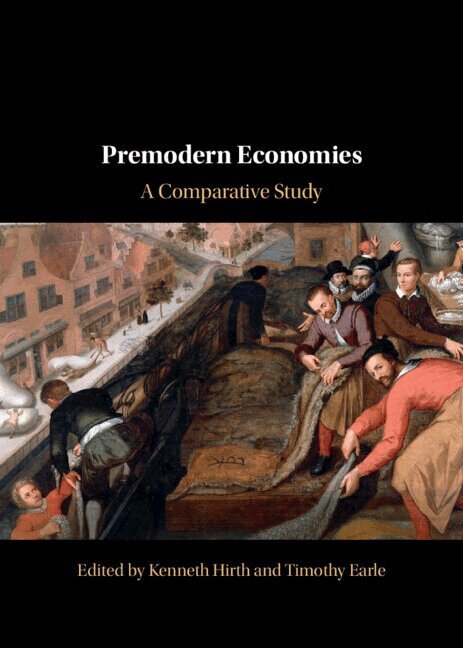
Economies are fundamental to all human societies by providing the material support for their populations and respective social institutions. This volume brings together scholars from archaeology, anthropology, and history in a collaborative examination of how premodern societies produced and mobilized resources to support social, political, and religious institutions. Thirteen societies from horticultural/pastoral groups to expansionistic states are used to develop a truly comparative view of economic development. Topics discussed include the nature of productive self-sufficiency, forms of economic specialization, the economics of labor and resource mobilization, economic inequality and stratification, commerce and the marketplace, and urban and ritual economies. The book's collective discussions have led to the construction of five generalizations and eighteen specific hypotheses about the way that ancient and premodern societies navigated the material worlds in which they lived. These hypotheses will serve as a basis for scholars exploring how societies in other times and places navigated their economic landscapes.
506 kr
Skickas inom 5-8 vardagar
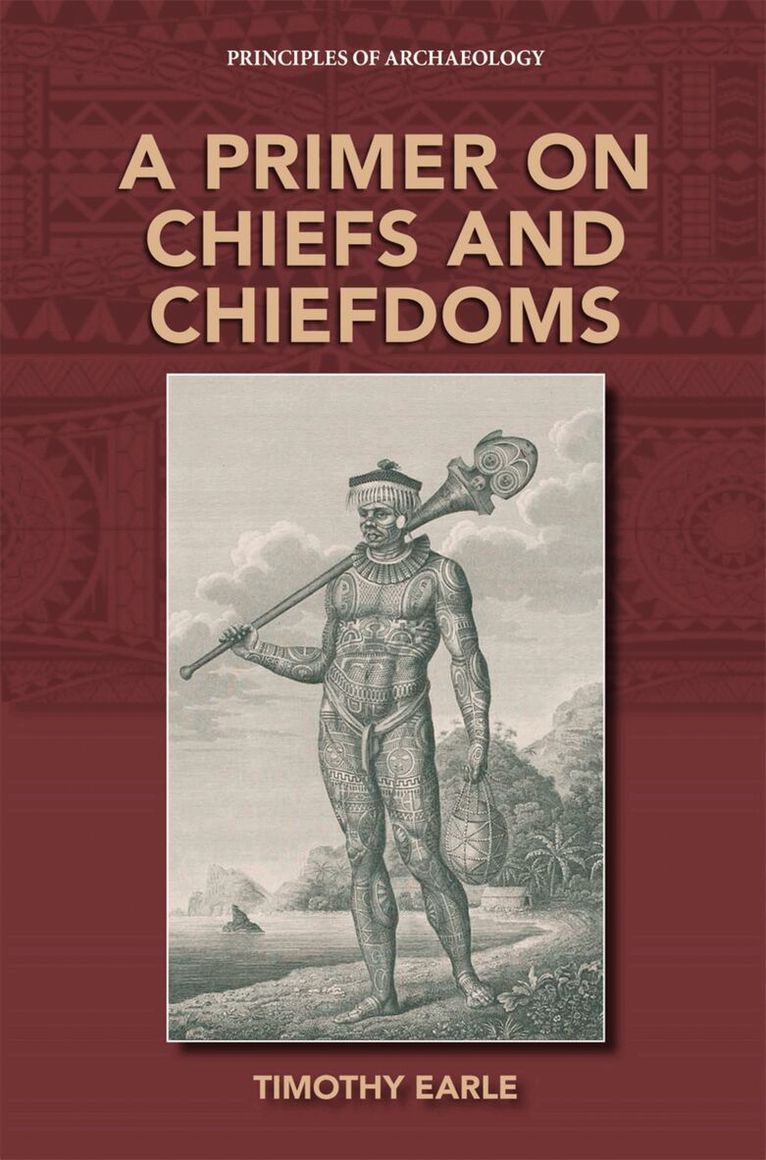
Anthropological archaeology is well suited to pursue the study of chiefs, their leadership institutions (chiefdoms), and long-term historical processes. In this book Timothy Earle argues that studying chiefdoms is essential to understanding the role of elemental powers in social evolution. He studies chiefs and their power strategies, using as illustrations historically independent prehistoric and traditional societies; he discusses how chiefs continue to exist as powerful actors within modern states. Chiefs are political operatives who hold titles of leadership over groups larger than intimate kin-based communities; although they rule with the consent of their group, they are all about building personal power and respect. Many scholars have viewed chiefs as problem solvers: defending groups against aggressors, resolving disputes, providing support under hardship, organizing labour for community projects, and redistributing goods among those in need. Chiefs do these things, but much of what they do is to accumulate benefits for themselves, staying in power and legitimizing control.
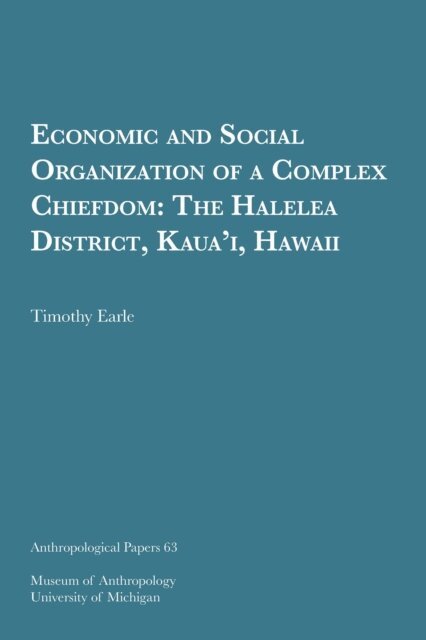
Economic and Social Organization of a Complex Chiefdom
The Halelea District, Kaua’i, Hawaii
Häftad, Engelska, 1978
138 kr
Skickas inom 7-10 vardagar
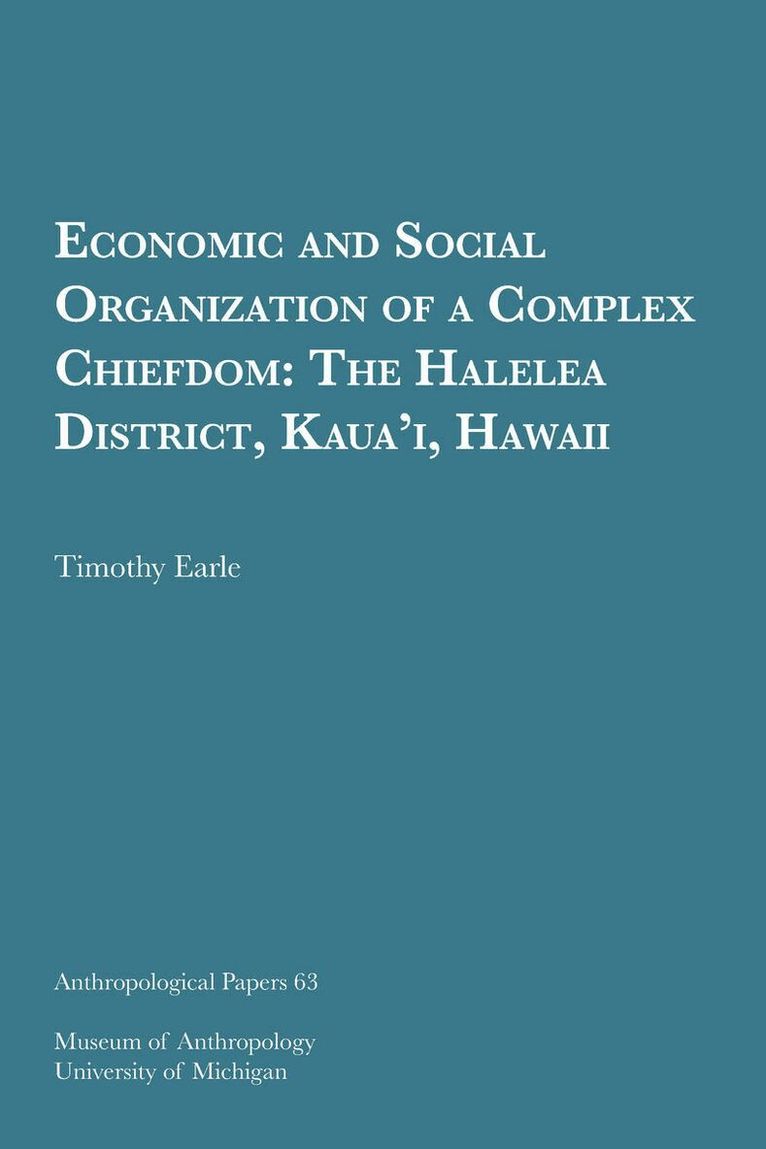
In the early 1970s, Timothy Earle worked with Marshall Sahlins doing archaeological and ethnohistorical research on the Halelea district in Kaua’i, Hawaii. In this volume, Earle reports on his archaeological and historical research on irrigation in this region. He also discusses modern taro agriculture and community organization. Illustrations by Eliza H. Earle.
247 kr
Skickas
A political economy approach to prehistory offers a robust means to understand different pathways to complexity. Why do states with extreme inequality develop quickly in some circumstance, while in others egalitarian societies continue for thousands of years? The search for primary drivers like population density, warfare, trade, irrigation, or information have proven largely inadequate. This essay argues that economic relations and their potential for control of surplus mobilization explain alternative evolutionary trajectories in human societies.