Timothy J. McGee - Böcker
Visar alla böcker från författaren Timothy J. McGee. Handla med fri frakt och snabb leverans.
6 produkter
6 produkter
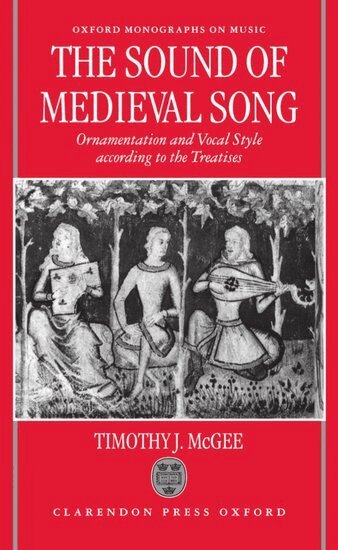
The Sound of Medieval Song
Ornamentation and Vocal Style According to the Treatises
Inbunden, Engelska, 1998
1 944 kr
Skickas inom 5-8 vardagar
The Sound of Medieval Song is a study of how sacred and secular music was actually sung during the Middle Ages. The source of the information is the actual notation in the early manuscripts as well as statements found in approximately 50 theoretical treatises written between the years 600-1500. The writings describe various singing practices and both desirable and undesirable vocal techniques, providing a fairly accurate picture of how singers approached the music of the period. Detailed descriptions of the types and uses of improvised ornament indicate that in performance the music was highly ornate, and included trill, gliss, reverberation, pulsation, pitch inflection, non-diatonic tones, and cadenza-like passages of various lengths. The treatises also provide evidence of stylistic differences in various geographical locations. McGee draws conclusions about the kind of vocal production and techniques necessary in order to reproduce the music as it was performed during the Middle Ages, aligning the practices much more closely with those of the Middle East than has ever been previously acknowledged.
Singing Early Music
The Pronunciation of European Languages in the Late Middle Ages and Renaissance
Häftad, Engelska, 2004
409 kr
Skickas
Praise for the cloth edition:"Commendable in its scholarship . . . should prove of interest to linguists, medievalists, and Renaissance academicians, as well as to fastidious performers of early music." —Choice"Singing Early Music is a pioneering work of surpassing quality that cannot be too highly recommended." —Journal of Singing"Addresses the needs of the performer directly, giving historical pronunciations for a range of languages [and] sample texts. . . . The CD that comes with the book will prove invaluable. . . . David Klausner's recording is admirably consistent and convincing across the wide range of languages." —Early Music
319 kr
Skickas inom 7-10 vardagar
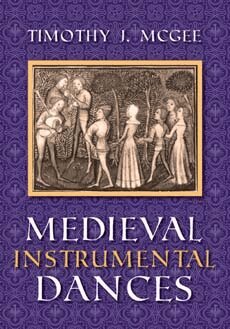
In Europe the tradition of secular dance has continued unbroken until the present. In the late Middle Ages it was an important and frequent event—for the nobility a gracious way to entertain guests, for the peasantry a welcome relaxation from the toils of the day. Now back in print, this collection presents compositions that are known or suspected to be instrumental dances from before ca. 1420. The 47 pieces vary in length and style and come from French, Italian, English, and Czech sources. Timothy McGee relates medieval dances to the descriptions found in literary, theoretical, and archival sources and to the depictions in the iconography of the Middle Ages. In a section on instrumental performance practices, he provides information about ornamenting the dances and improvising in a historically appropriate style. This comprehensive edition brings together in one volume a repertory that has been scattered over many years and countries.
448 kr
Skickas inom 10-15 vardagar
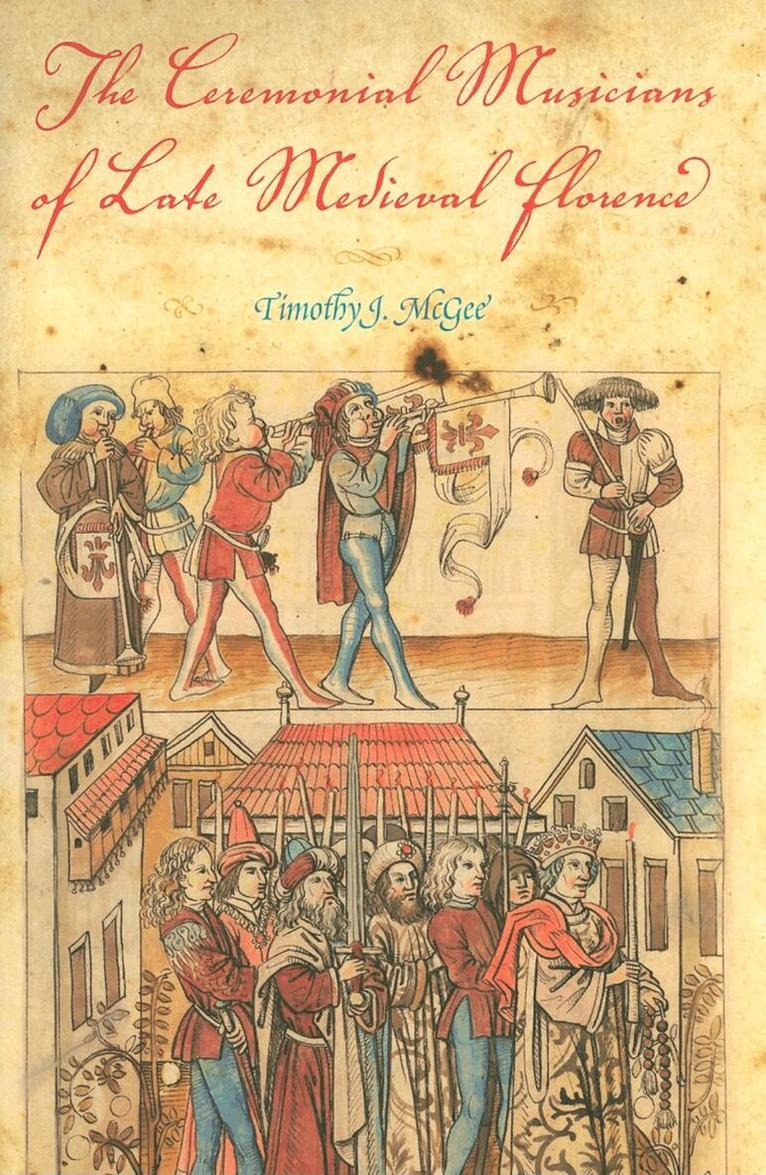
The Ceremonial Musicians of Late Medieval Florence follows the development of Florentine musical ensembles, describing their duties and repertories, placing them in their political and social context, and tracing their changes through the years of the Florentine Republic. From the 13th through the 16th centuries, the city of Florence was the most powerful in Europe. It was a center of finance and trade, as well as art and music. The Republic employed musicians to perform for the enormous number of ceremonial events each year. These musicians were the most visible (and audible) symbols of Florence, playing a major role in displaying the majestic image of the city. Their story, repertory, high-profile involvement in the daily life of the city, and close involvement with the Medici add a new dimension to the history of late-medieval Florence.
430 kr
Skickas inom 3-6 vardagar
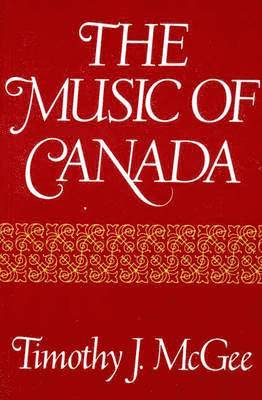
Written by Timothy McGee, professor of music at the University of Toronto, the narrative ranges across the many genres of music that have flourished in Canada: art music, folk and popular music, church music, and jazz. Since the book is non-technical in its approach so that it may be easily understood by those not specifically trained in music, the author has thoughtfully provided separate analytical sections for the more advanced reader.Abounding in music examples and replete with illustrations which vividly reflect each era of Canadian history, the volume also includes an anthology of thirteen complete works (or movements) by prominent Canadian composers, past and present. Each chapter begins with a brief summary of the social and political background of the period under discussion, so that its music may be understood within the context of Canadian history. The double heritage—French and English—which has both enriched and troubled Canadian cultural life, is traced from its origins to the present day. A final chapter departs from this chronological format to focus on the music of the Indian and Inuit people and comment on its sociocultural significance. Finally, an appendix including the sources of all the music discussed, a bibliography, discography, and filmography rounds out this ground-breaking volume.
Del 30 - Early Drama, Art, and Music Monograph
Improvisation in the Arts of the Middle Ages and Renaissance
Inbunden, Engelska, 2003
194 kr
Skickas inom 5-8 vardagar
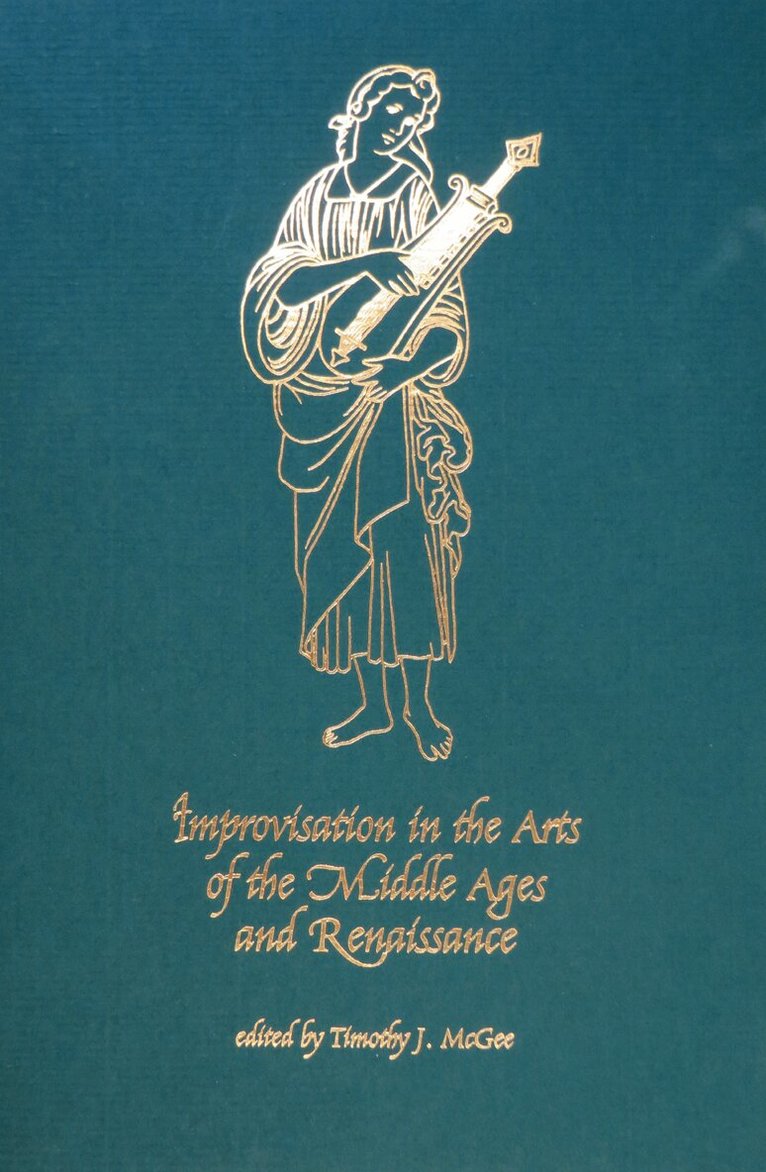
One impression that stands out from this collection is the extent to which improvisation was an important factor in all of the arts. As each of the authors assembles a case by ferreting out bits and pieces of information having to do with a single art, the weight of the assembled material lends additional strength to each case. By considering the overall picture that results, as well as that made by each of the individual studies, the reader is able to see much more clearly the role played by improvisation from the late Middle Ages through to the time of Shakespeare and beyond. A careful reading of the essays brings with it the awareness that to ignore improvisation is to distort the art in a major way. In light of the present volume, the very concept of faithful historical re-creation takes on a much broader and more complex character.