Timothy Milinovich – författare
Visar alla böcker från författaren Timothy Milinovich. Handla med fri frakt och snabb leverans.
10 produkter
Now Is the Day of Salvation
An Audience-Oriented Study of 2 Corinthians 5:16-6:2
Häftad, 2012
300 kr
Lägg i varukorg
A new study of Paul's call for reconciliation in 2 Corinthians, in terms of the epistle's rhetorical structure and its effect on its intended listeners.Is Second Corinthians, one of Paul's most personal and passionate letters, better understood as a text or a performance? Using an audience-oriented …
Now Is the Day of Salvation
An Audience-Oriented Study of 2 Corinthians 5:16--6:2
Inbunden, 2011
417 kr
Lägg i varukorg
Now Is the Day of Salvation
An Audience-Oriented Study of 2 Corinthians 5:16—6:2
E-bok, 2011
416 kr
Lägg i varukorg
Is Second Corinthians, one of Paul''s most personal and passionate letters, better understood as a text or a performance? Using an audience-oriented method, Timothy Milinovich examines the letter as orally performed correspondence, from the view of the authorial (i.e., intended or ideal) audience. …
Now Is the Day of Salvation
An Audience-Oriented Study of 2 Corinthians 5:16-6:2
Häftad, 2011
282 kr
Lägg i varukorg
God in Paul's Letters
Av Timothy Milinovich, Normand Bonneau m. fl.
Inbunden, 2023
412 kr
Lägg i varukorg
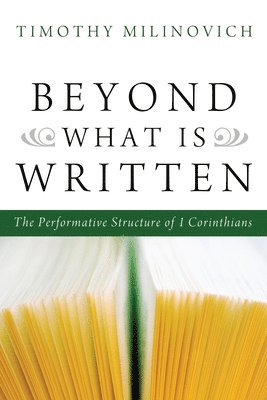
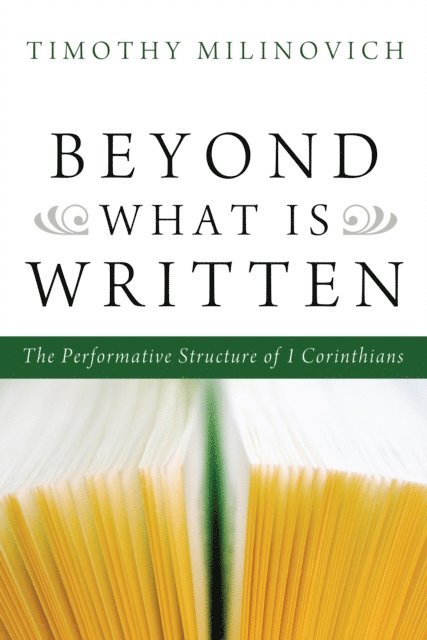
Beyond What Is Written
The Performative Structure of 1 Corinthians
E-bok, 2013
537 kr
Lägg i varukorg
This book engages the structure and message of 1 Corinthians within its most relevant context of late Western antiquity's oral culture. Using a text-centered methodology, Timothy Milinovich demonstrates and analyzes a series of concentric patterns (or ring formations) through which Paul develops …
The Campaign Rhetoric of Paul
Av Timothy Milinovich, T.J. Rogers
Inbunden, 2027
1263 kr
Kommande
How should interpreters read Paul’s letters when authority and legitimacy are contested? This provocative study reframes Pauline discourse through the lens of campaign rhetoric, challenging the long-standing hermeneutic of trust and asking whether Paul’s arguments were always sincere. Drawing on …